Mir
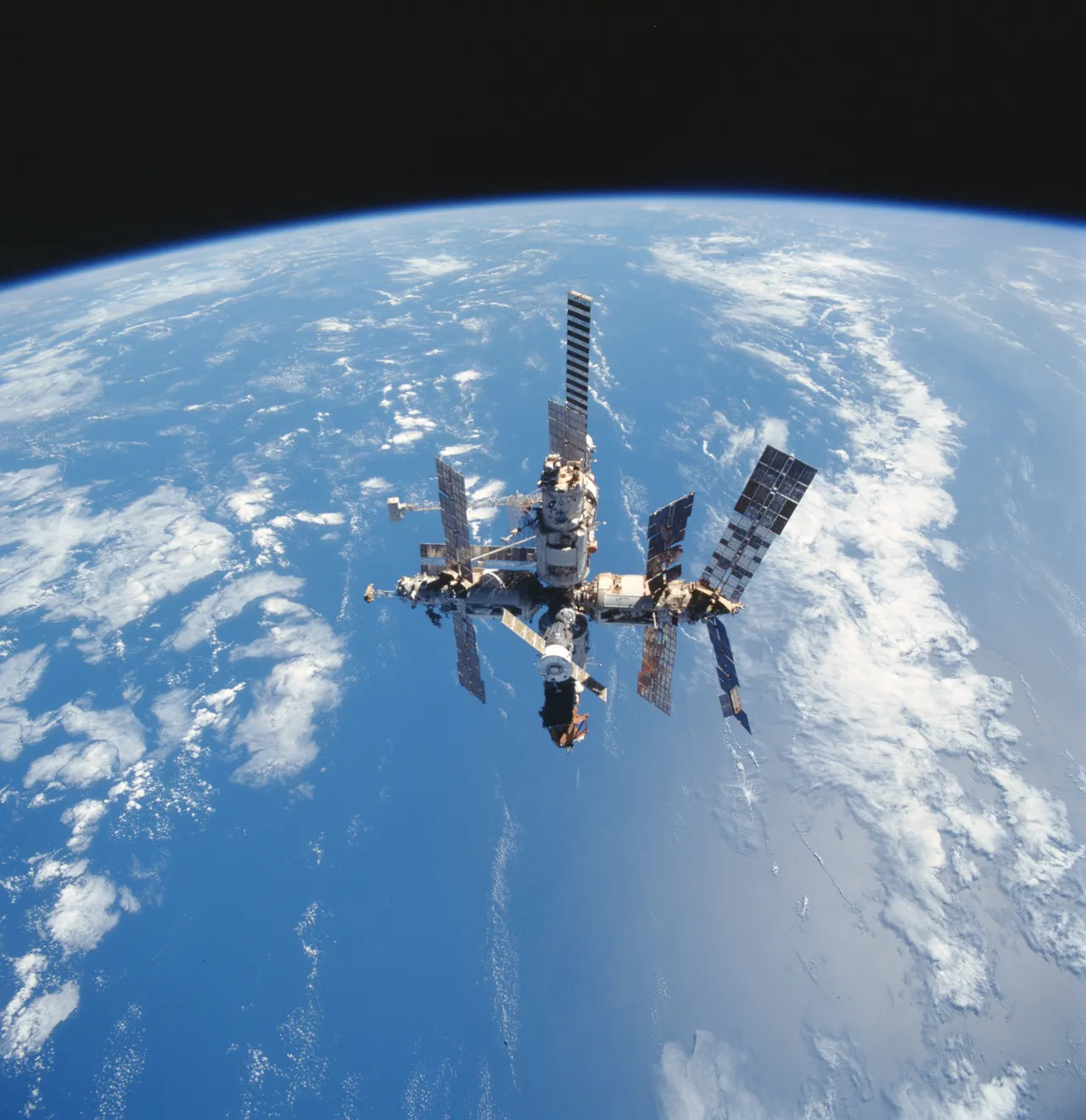
The Soviet, then Russian, space station assembled from seven modules between 1986 and 1996, where crews lived without a break for almost ten years.
- Status
- Retired
- First module launched
- 1986
- February 20
- Span
- 31 m
- 102 ft
- Built by
- Energia
- 7
- modules, launched from 1986 to 1996
- 438 days
- Valeri Polyakov’s stay, 1994–1995, the longest single spaceflight
- 9
- Space Shuttle dockings, 1995–1998
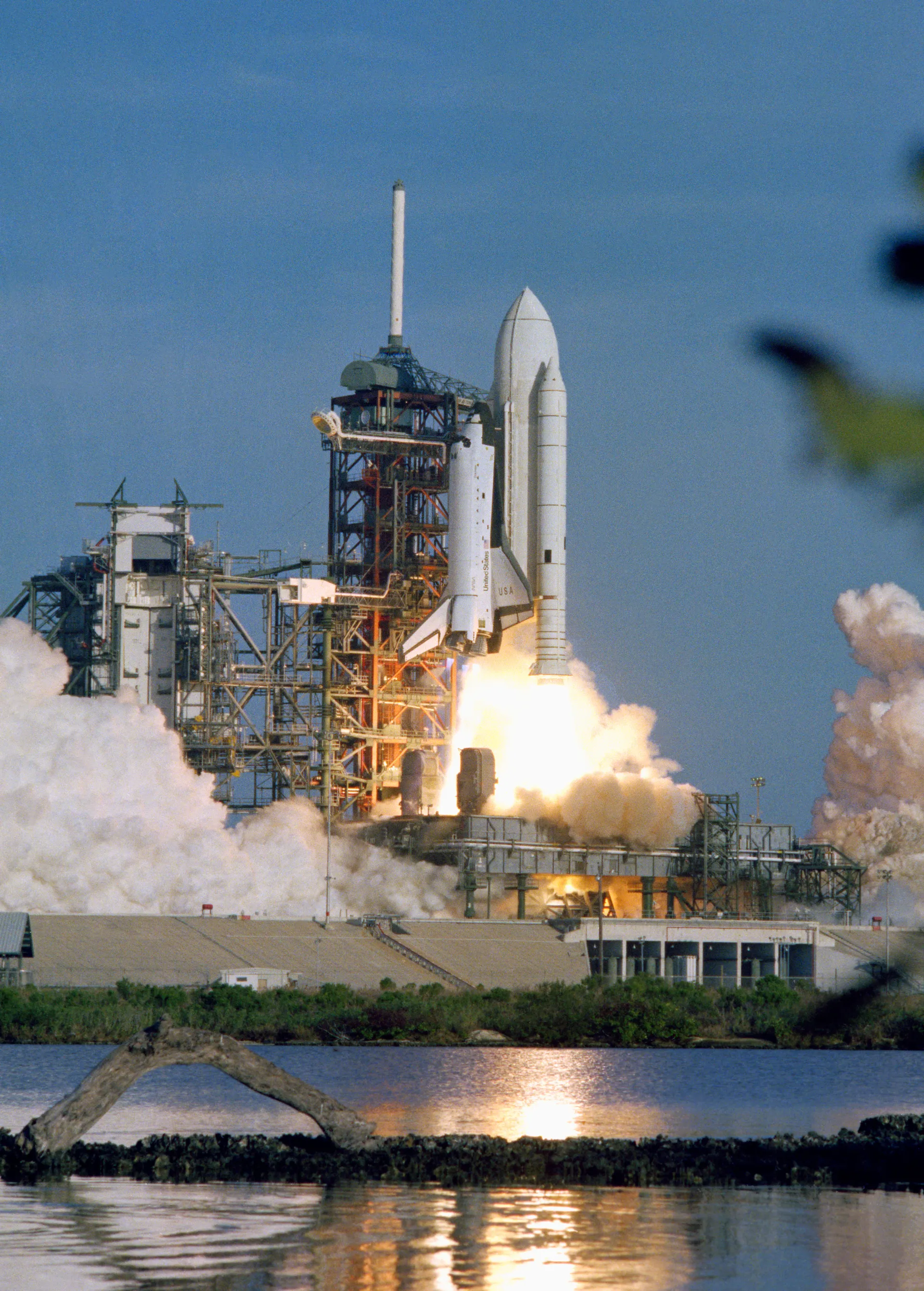
Mir grew out of the Salyut stations and was assembled in orbit. A Proton rocket launched the core module from Baikonur on February 20, 1986, and six more modules followed: Kvant in 1987, Kvant 2 in 1989, Kristall in 1990, Spektr in 1995, a Docking Module brought by the Shuttle Atlantis in November 1995, and Priroda in 1996. The core alone was 13.1 meters long, weighed 20.4 tonnes and gave its crews 90 cubic meters of room.
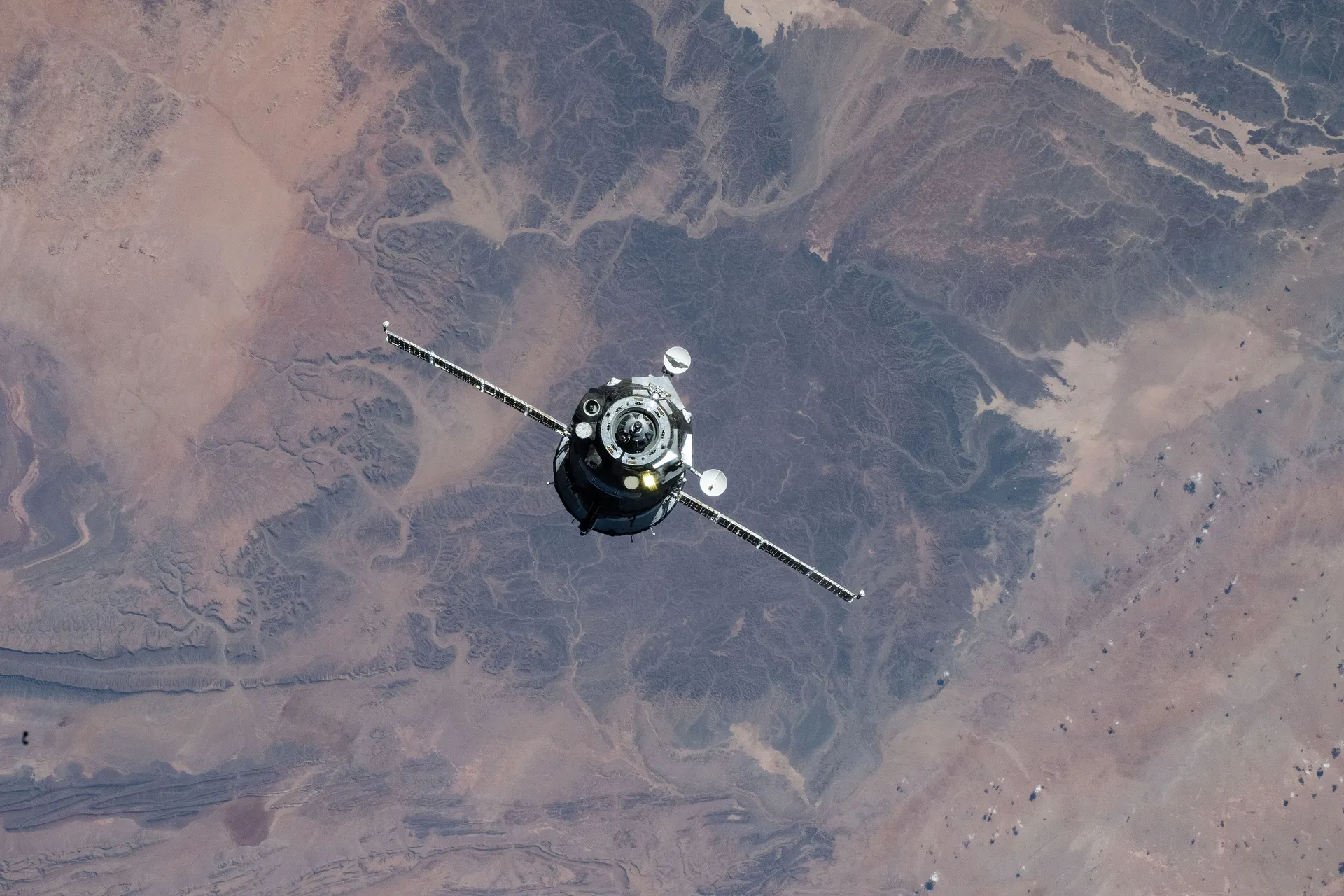
Its first crew, Leonid Kizim and Vladimir Solovyov, arrived in March 1986. From September 1989 people lived aboard without a break for almost ten years, and Valeri Polyakov stayed 438 days in 1994 and 1995, still the longest single spaceflight. Between 1995 and 1998 nine Shuttle flights docked with Mir and seven NASA astronauts lived aboard; in 1997 the station survived a fire and a Progress cargo ship’s collision with Spektr. Mir was brought down into the South Pacific on March 23, 2001, weighing about 134 tons.
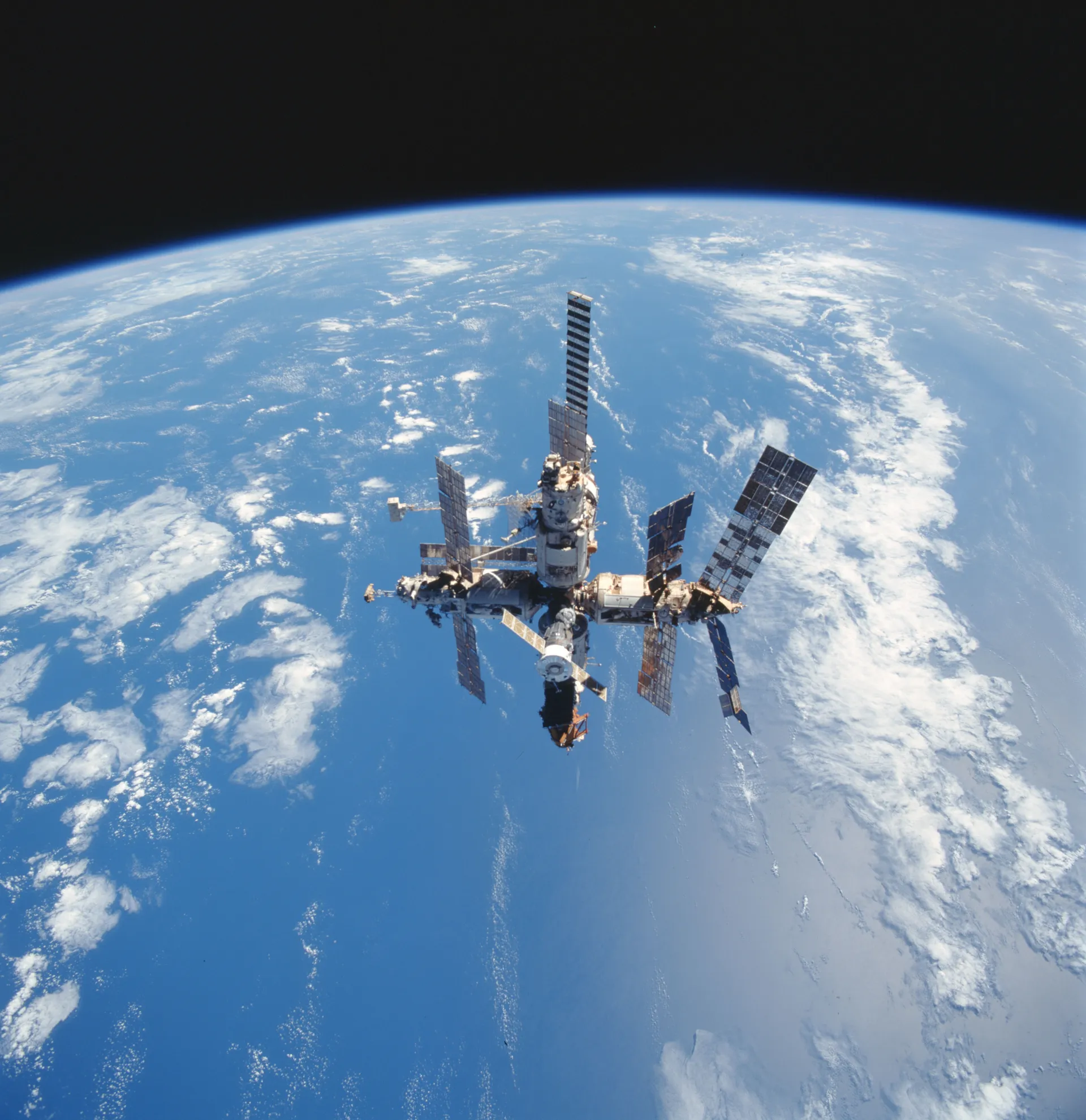
Where Mir appears in the atlas
Sources
- 1
- 2
- 3
- 4