From Sputnik to the next landing
Sixty-nine years in 43 moments, and at the end, the plans that moved — because the dates a program promises are part of its story.
1957–1972The race to the Moon
- October 4, 1957
The Soviet Union launches the first artificial satellite. The United States answers within months.
- January 31, 1958
The first American satellite reaches orbit and finds the radiation belts later named for James Van Allen.
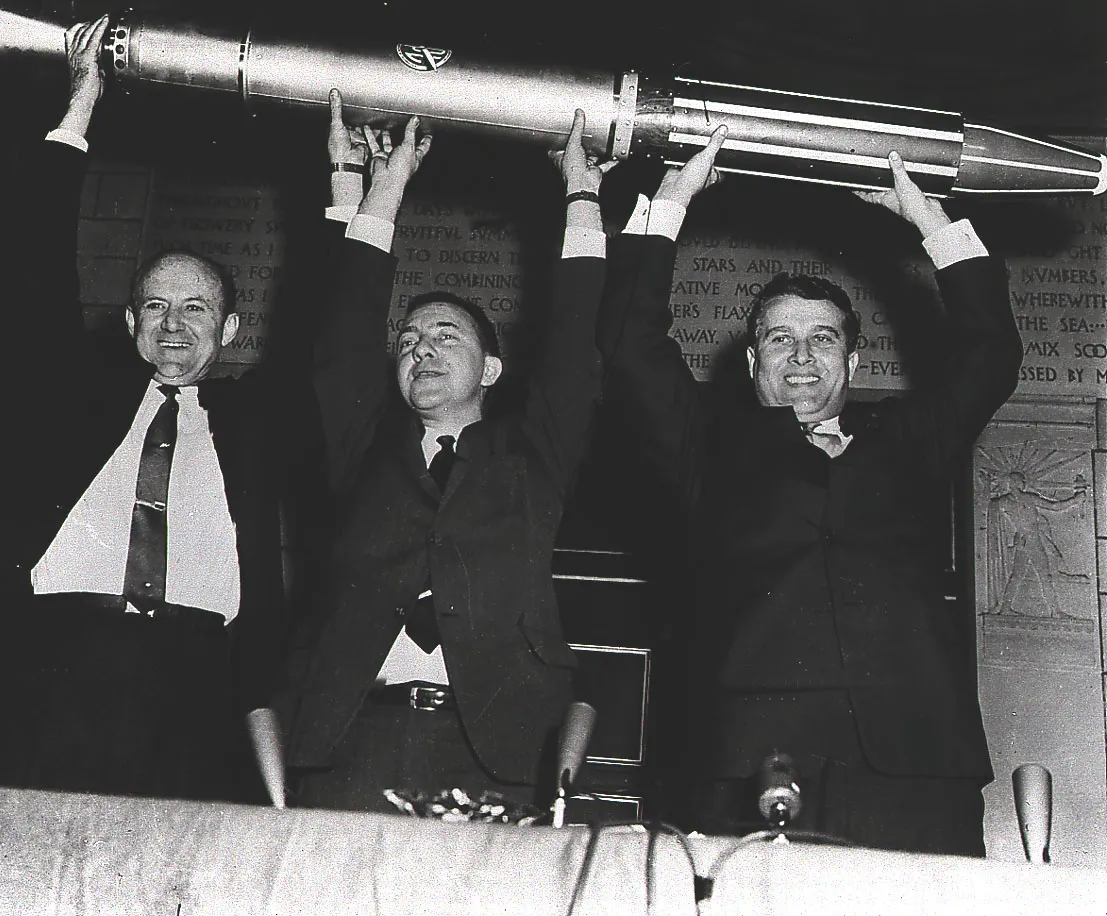
William Pickering, James Van Allen and Wernher von Braun hold up a model of Explorer 1 after its launch. - October 1, 1958
The National Aeronautics and Space Administration begins work, built around the National Advisory Committee for Aeronautics and its laboratories.
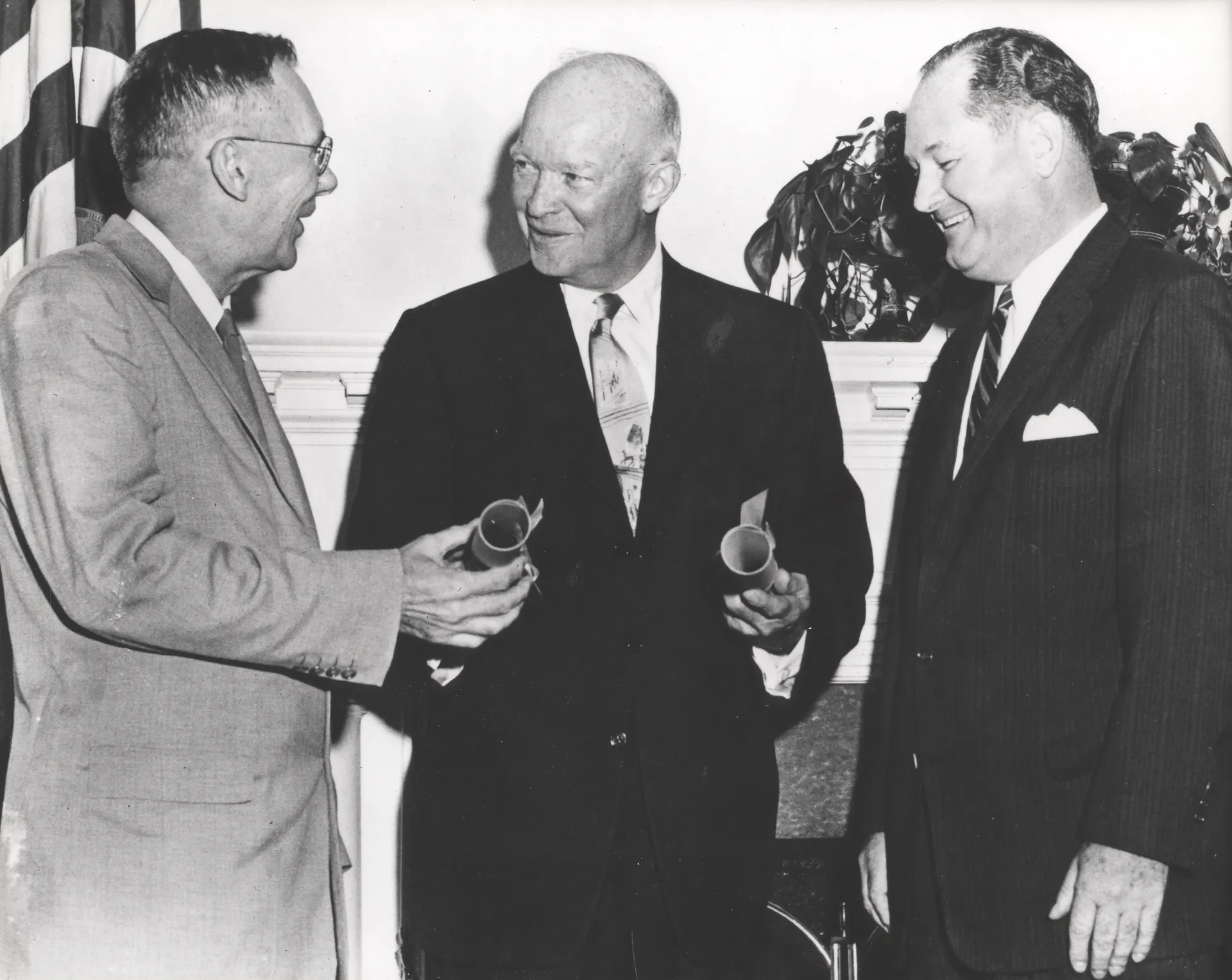
President Eisenhower with T. Keith Glennan and Hugh Dryden, NASA’s first administrator and deputy, in 1958. - May 5, 1961
The first American in space makes a fifteen-minute suborbital flight in a Mercury capsule.
- May 25, 1961
President Kennedy asks Congress to commit to landing a man on the Moon before the decade is out.
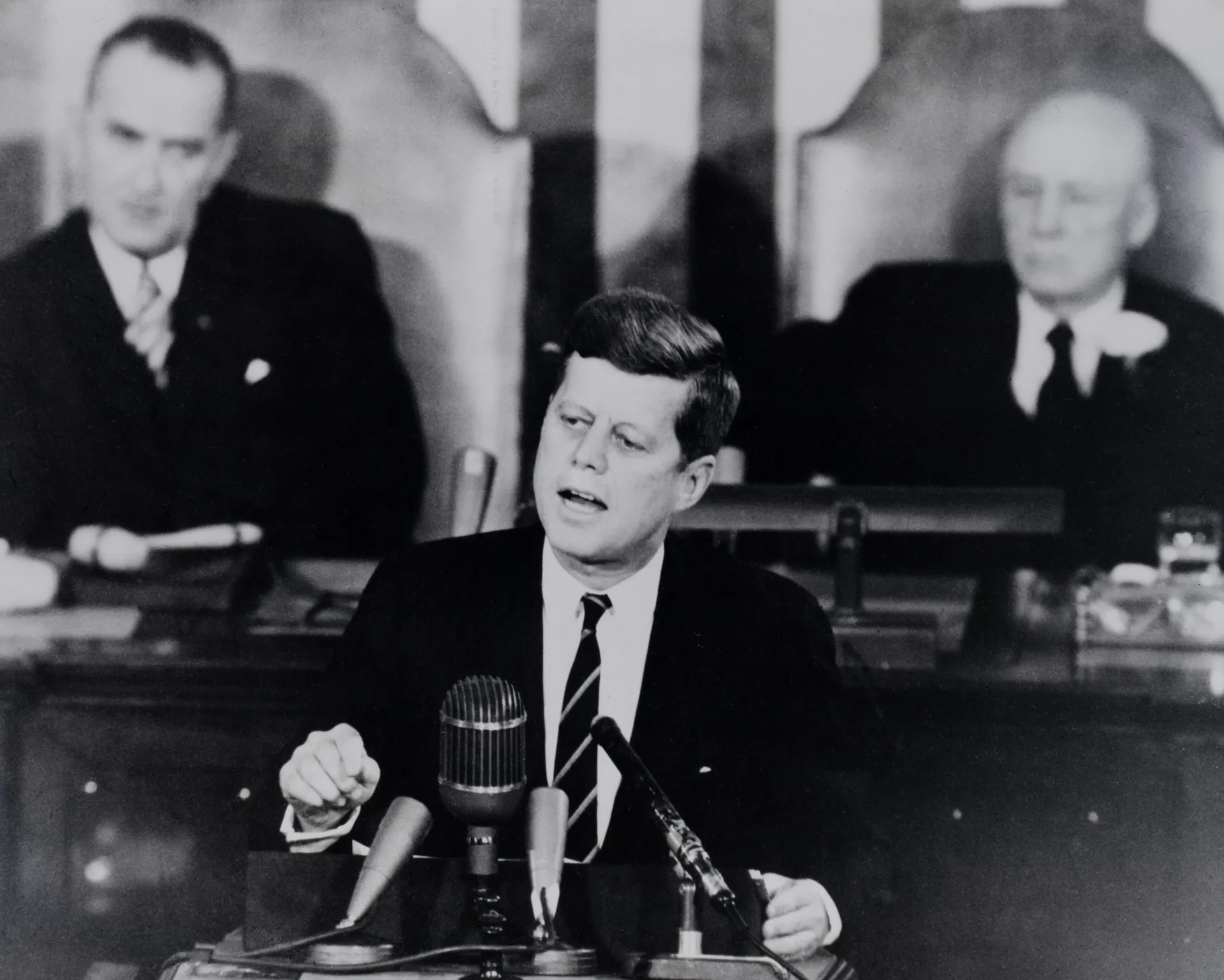
President Kennedy before a joint session of Congress, May 25, 1961. - February 20, 1962
Friendship 7 circles the planet three times.
- 1965–1966
Ten crewed flights practise spacewalks, rendezvous and docking — everything a lunar mission will need.
- January 27, 1967
Gus Grissom, Ed White and Roger Chaffee die in a fire during a ground test. The command module is redesigned.
- December 1968
The first people to orbit the Moon photograph Earth rising over its horizon.
- July 20, 1969
Neil Armstrong and Buzz Aldrin walk on the Moon while Michael Collins orbits above.
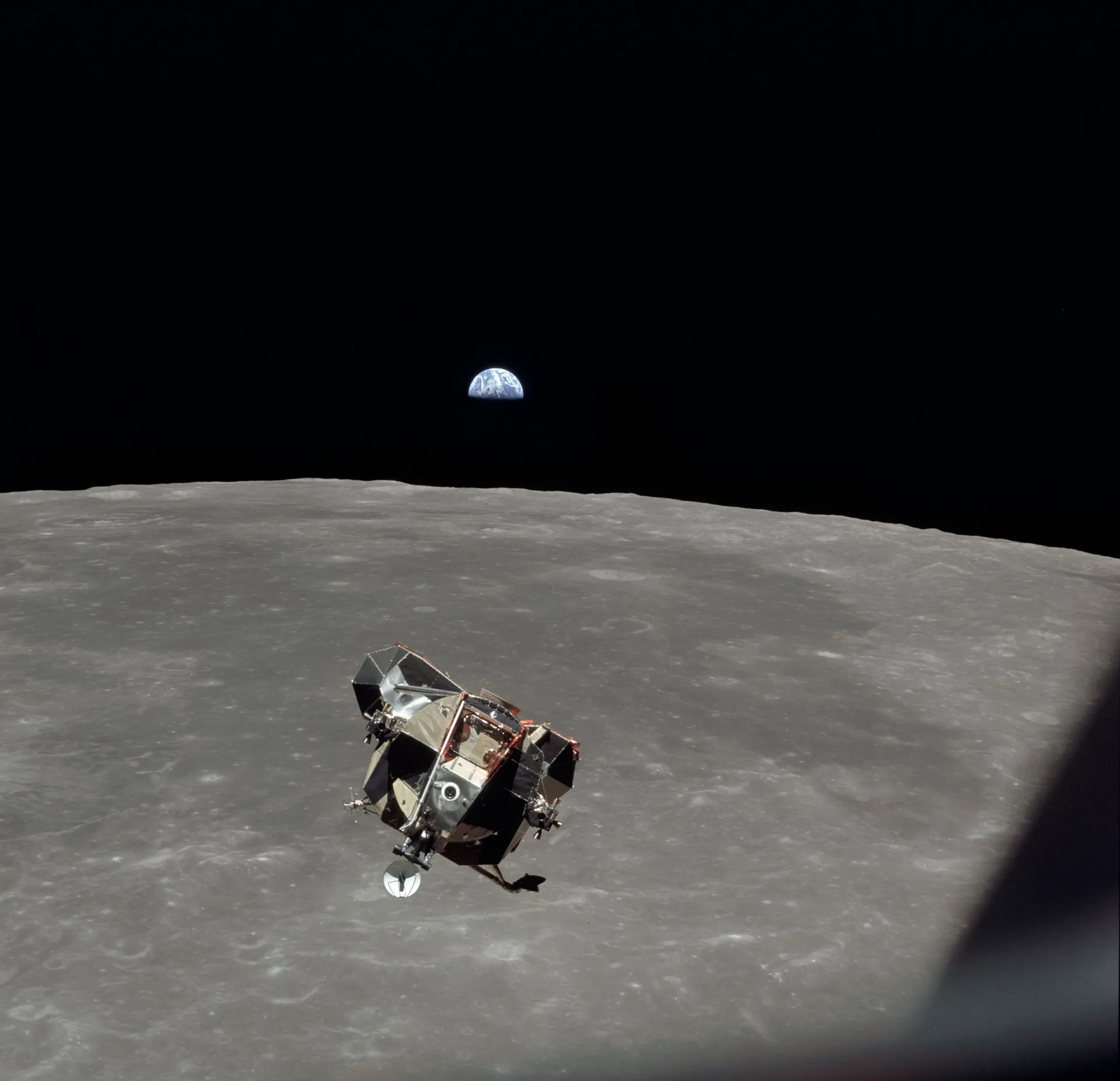
The Apollo 11 lunar module Eagle rises from the Moon to meet Columbia, with Earth beyond. - December 1972
The last crewed landing. Nobody has walked on the Moon since.
1973–1997The Shuttle years
- 1973–1974
Skylab
The last Saturn V launches America’s first space station; three crews live aboard.
- 1977
Twin probes leave for the outer planets. Both are still sending data from interstellar space.
- April 12, 1981
Columbia launches with John Young and Robert Crippen and lands on a runway two days later.
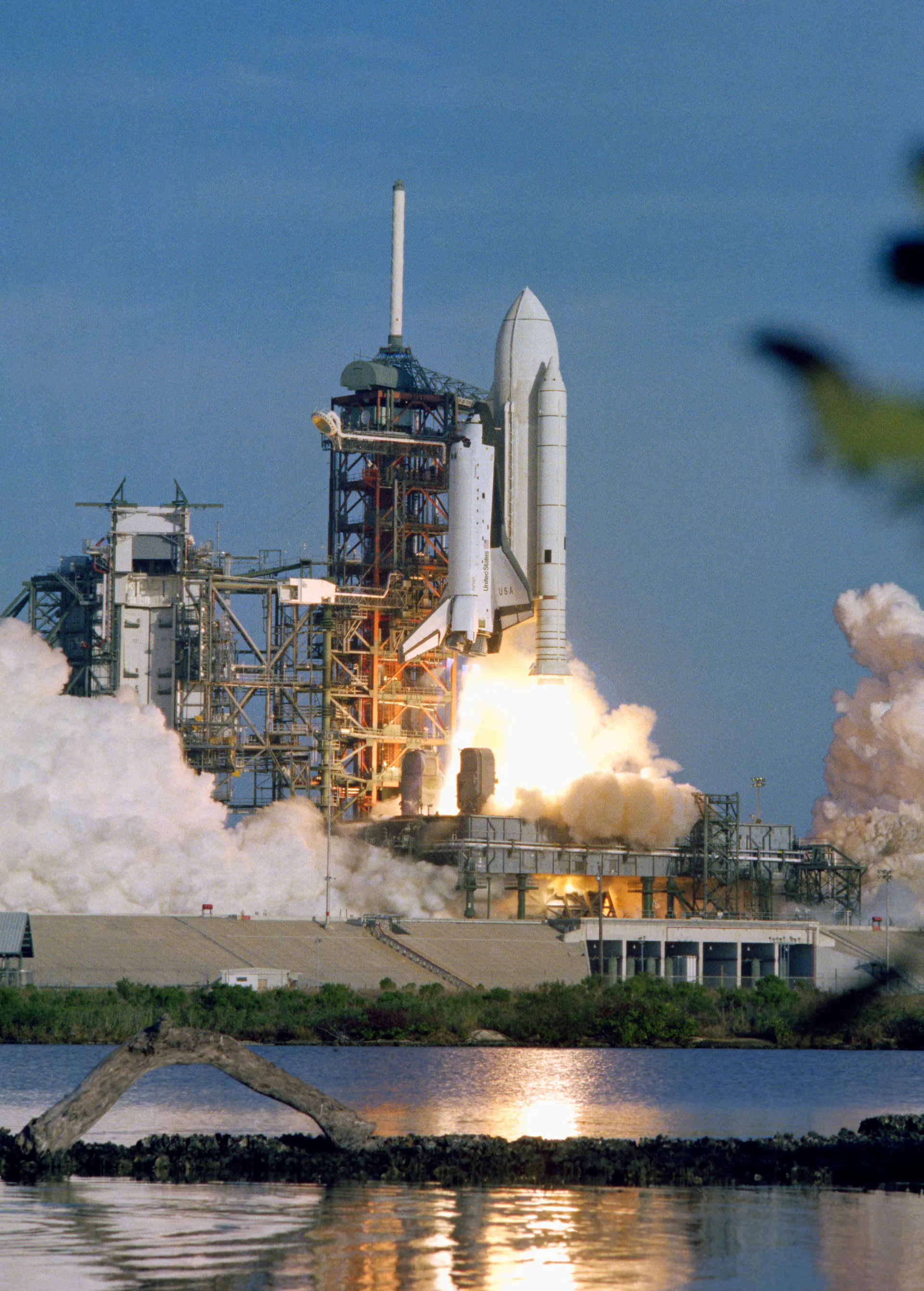
Columbia lifts off on STS-1, April 12, 1981. - January 28, 1986
A booster seal fails 73 seconds after launch. Seven astronauts die; the Shuttle is grounded for almost three years.
- April 24, 1990
The Shuttle Discovery deploys the Hubble Space Telescope. A flaw in its mirror is fixed by astronauts in 1993.
1998–2010Building the station
- November 20, 1998
The first module of the International Space Station, Zarya, reaches orbit.
- November 2, 2000
Expedition 1 arrives at the station. It has been occupied ever since.
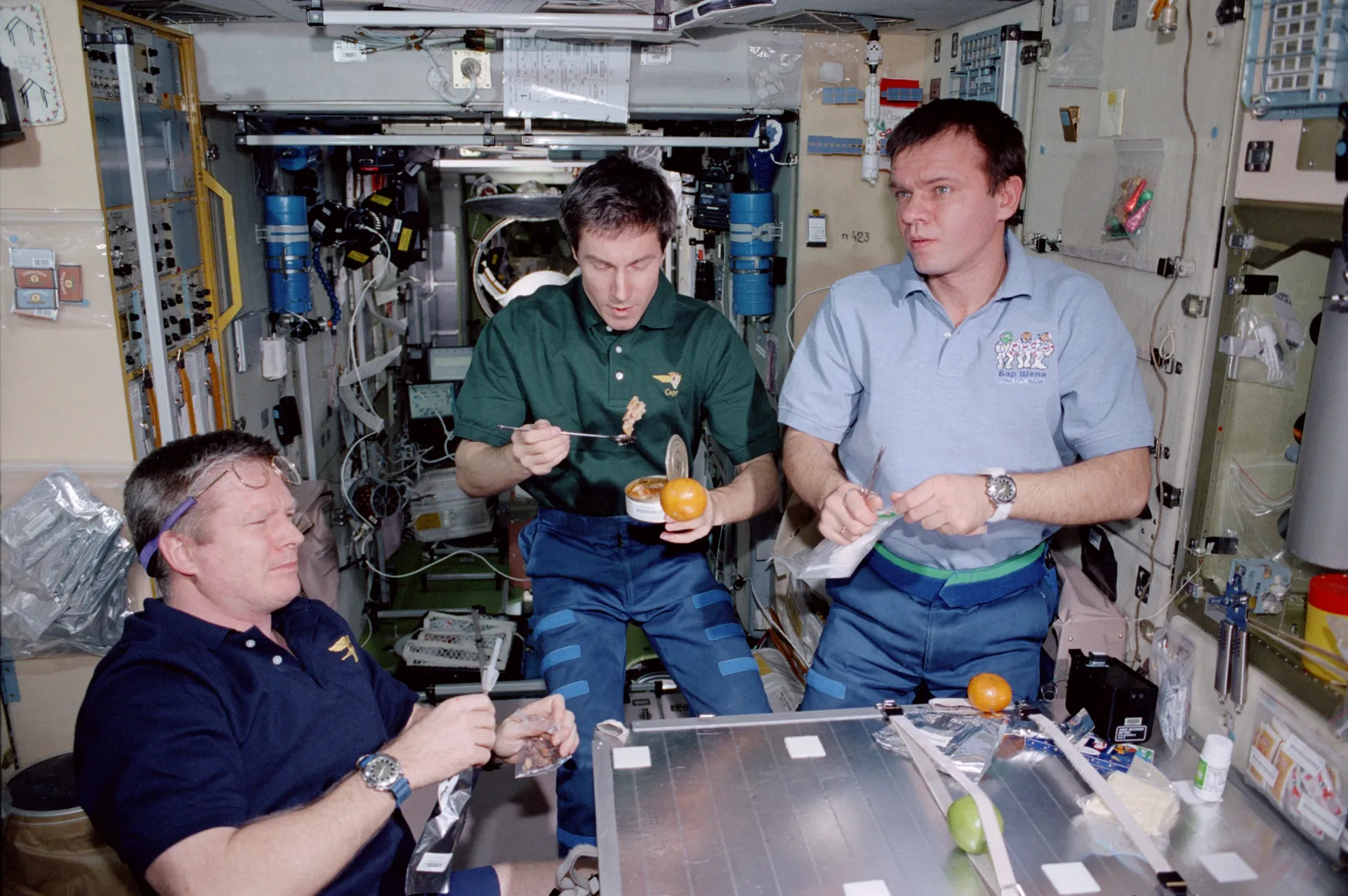
The Expedition 1 crew share a meal aboard the station, early 2001. - February 1, 2003
Damage to the wing from foam shed at launch destroys Columbia during reentry. Seven astronauts die.
- 2006
NASA’s Commercial Orbital Transportation Services program pays companies to develop rockets and cargo ships it does not own.
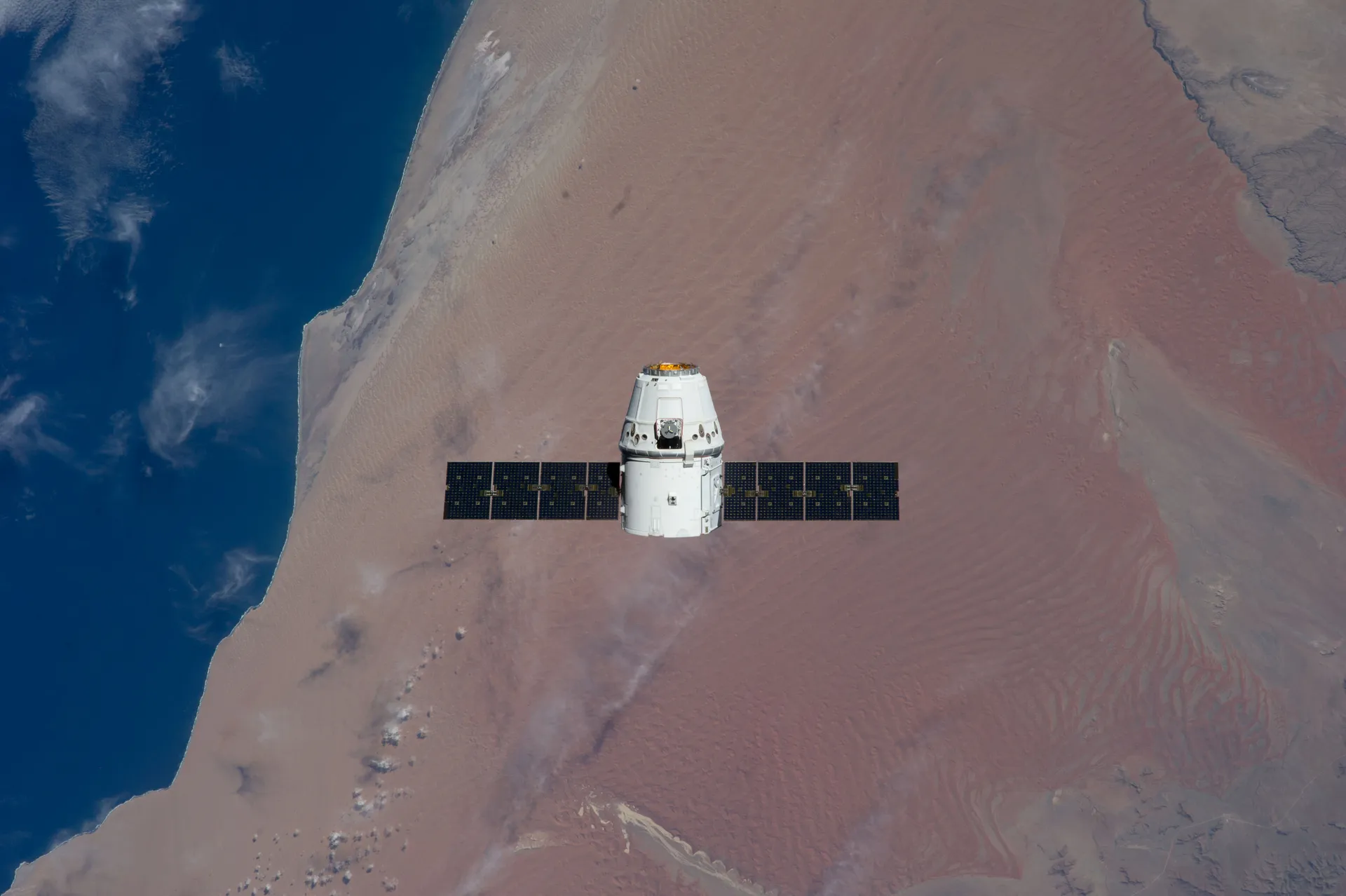
SpaceX’s Dragon cargo ship in the grip of the station’s robotic arm, May 2012.
2011–2019The commercial turn
- August 2012
A car-sized rover is lowered onto Gale Crater by a rocket-powered sky crane.
- July 21, 2011
Atlantis lands after STS-135. For nine years American crews ride Russian Soyuz capsules.
- May 2012
SpaceX’s Dragon becomes the first commercial spacecraft to berth at the International Space Station.
- September 2014
NASA picks Boeing ($4.2 billion) and SpaceX ($2.6 billion) to fly astronauts to the station.
- July 2015
New Horizons makes the first close flyby of Pluto.
- December 21, 2015
A Falcon 9 first stage returns to Cape Canaveral and lands upright for the first time.
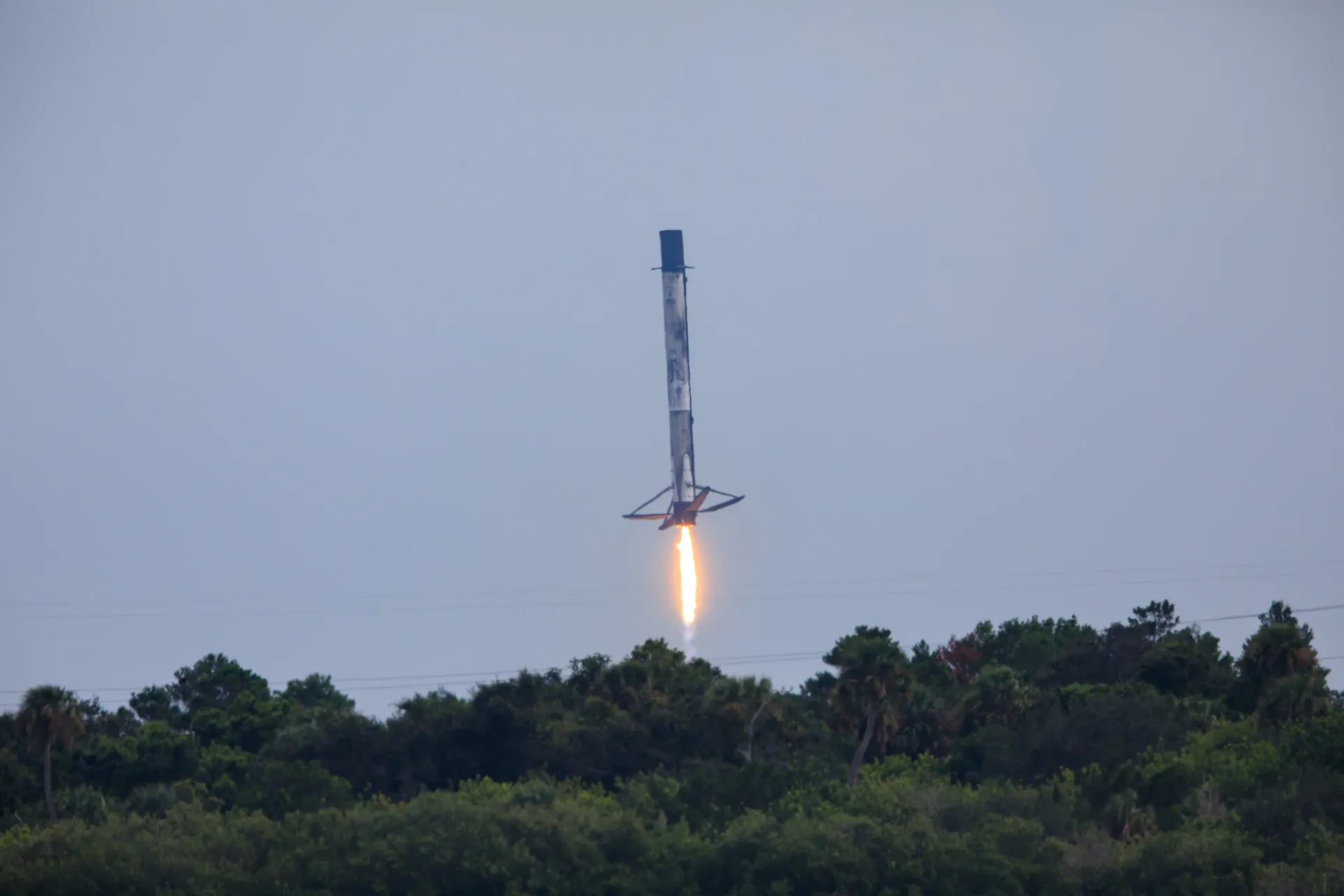
A Falcon 9 first stage lands back at Cape Canaveral after launching Crew-9 in 2024. - December 2017
Space Policy Directive 1 directs NASA to return astronauts to the Moon. The program is named Artemis in 2019.
2020–nowArtemis
- May 30, 2020
Americans launch from home again
Demo-2 carries Doug Hurley and Bob Behnken to the station in a Crew Dragon.
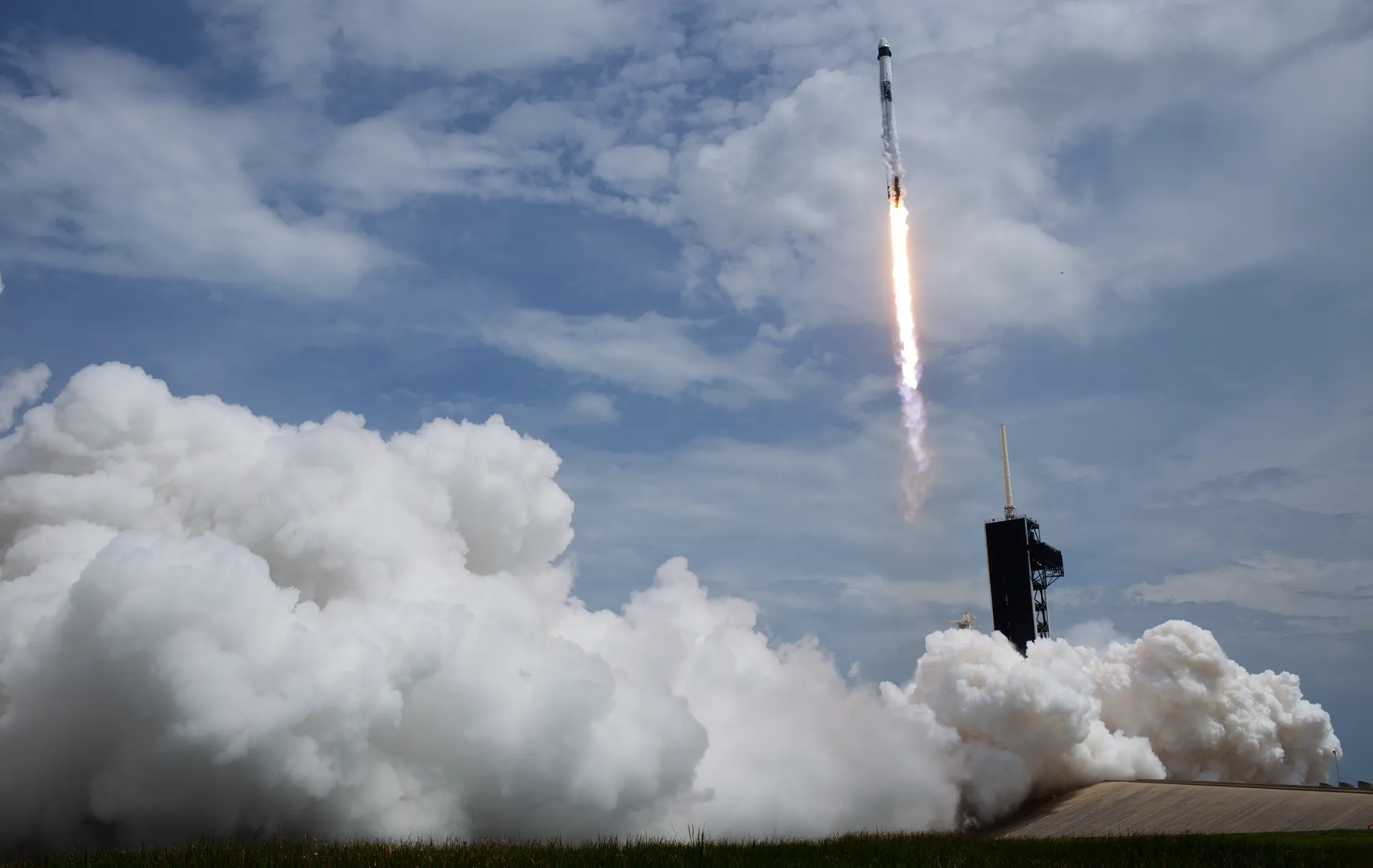
Falcon 9 launches Crew Dragon with Bob Behnken and Doug Hurley, May 30, 2020. - April 2021
NASA selects SpaceX’s Starship to land Artemis astronauts, for $2.9 billion.
- December 25, 2021
The James Webb Space Telescope leaves on an Ariane 5 for a point 1.5 million kilometers away.
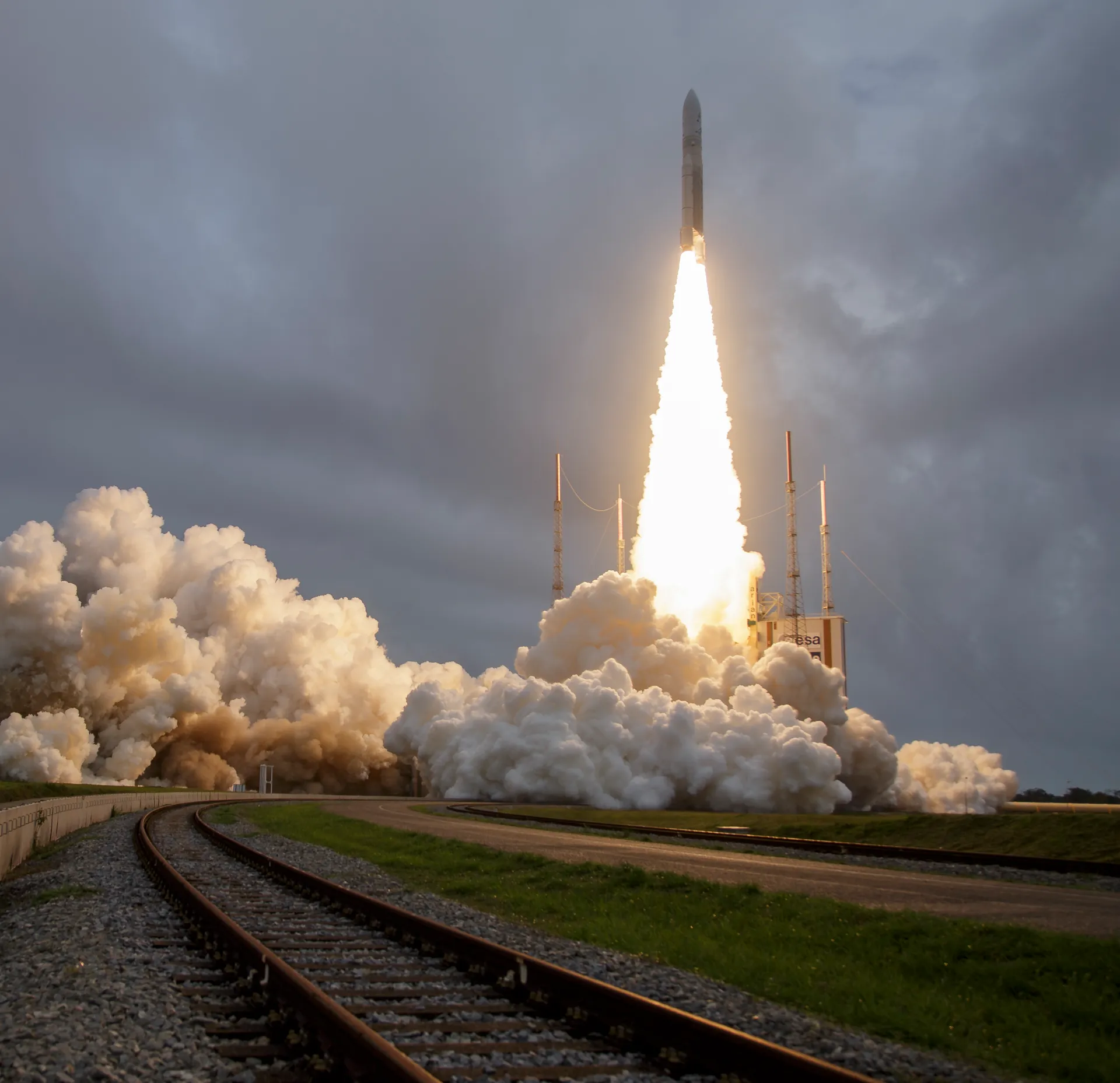
An Ariane 5 launches the James Webb Space Telescope, December 25, 2021. - November 16, 2022
The Space Launch System flies for the first time and sends an uncrewed Orion around the Moon.
- April 20, 2023
The full Starship stack flies for the first time and is lost before stage separation.
- May 2023
NASA picks Blue Origin’s Blue Moon as a second crewed lander, for $3.4 billion.
- October 13, 2024
On Starship’s fifth flight, the launch tower’s arms catch the returning Super Heavy booster.
- January 16, 2025
Blue Origin’s heavy rocket reaches orbit on its first flight.
- March 2, 2025
Firefly’s Blue Ghost becomes the first fully successful commercial lunar landing, under NASA’s CLPS program.
- February 27, 2026
Artemis III becomes a 2027 docking test in Earth orbit; the first landing moves to Artemis IV in 2028.
- April 1–10, 2026
Four astronauts fly around the Moon — the first people to leave Earth orbit since 1972.
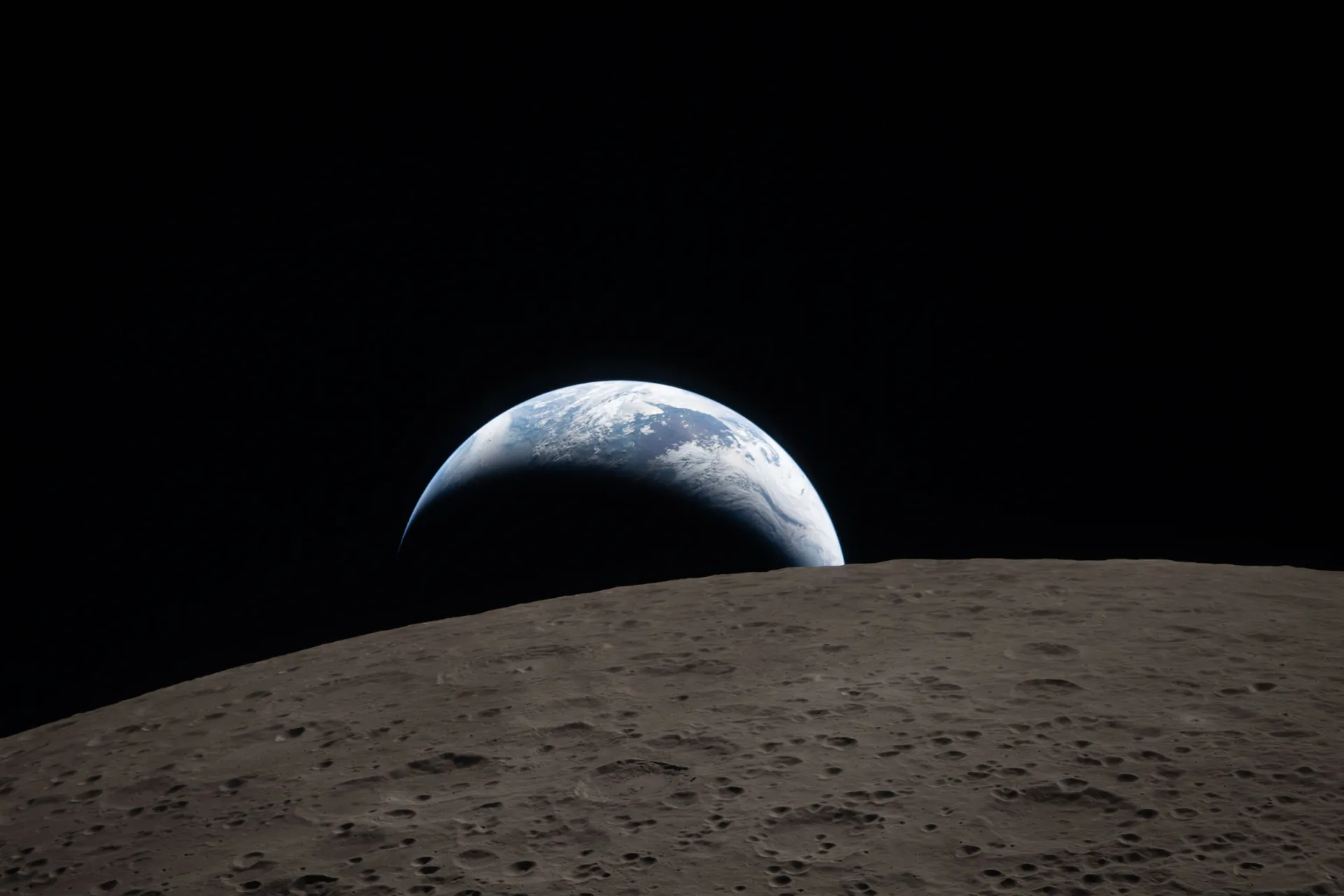
Earth sets behind the Moon, photographed by the Artemis II crew in April 2026. - August 30, 2026
The Nancy Grace Roman Space Telescope launches on a Falcon Heavy.
- September 28, 2026
On its fourteenth flight, Starship reaches orbit for the first time and deploys Starlink satellites.
- 2027 (planned)
Orion is to dock with one or both commercial landers in Earth orbit as a rehearsal.
- 2028 (planned)
The first crewed lunar landing since 1972 is planned, near the south pole.
- About 2030 (planned)
NASA plans to retire the International Space Station and guide it into the Pacific.
Plans that moved
Each line is a plan: it starts when the plan was announced and ends at the date it promised. As new plans pile up beneath the old ones, the promised dates drift to the right.
Announced targets compiled from NASA budget documents, NASA Inspector General and GAO reports. The atlas’s stories on Artemis, SLS, Webb, Commercial Crew and refilling give the sources for each.