International Space Station
A laboratory the size of a football field, occupied without a break since November 2000.
- Type
- Space station
- Status
- Operating
- First flight
- November 20, 1998
- Span
- 109 m (358 ft)
- 25
- years continuously occupied, November 2, 2025
- 295
- people from 26 countries have visited, as of September 30, 2026
- 2030
- planned retirement, per NASA and GAO (June 2026)
Built in orbit over thirteen years, occupied without a break since 2000
Drawn from 15 sources: NASA (7), NASA Office of Inspector General (2), SpacePolicyOnline (2), NASA History Office and 3 others. About 10 minutes. Checked October 1, 2026.
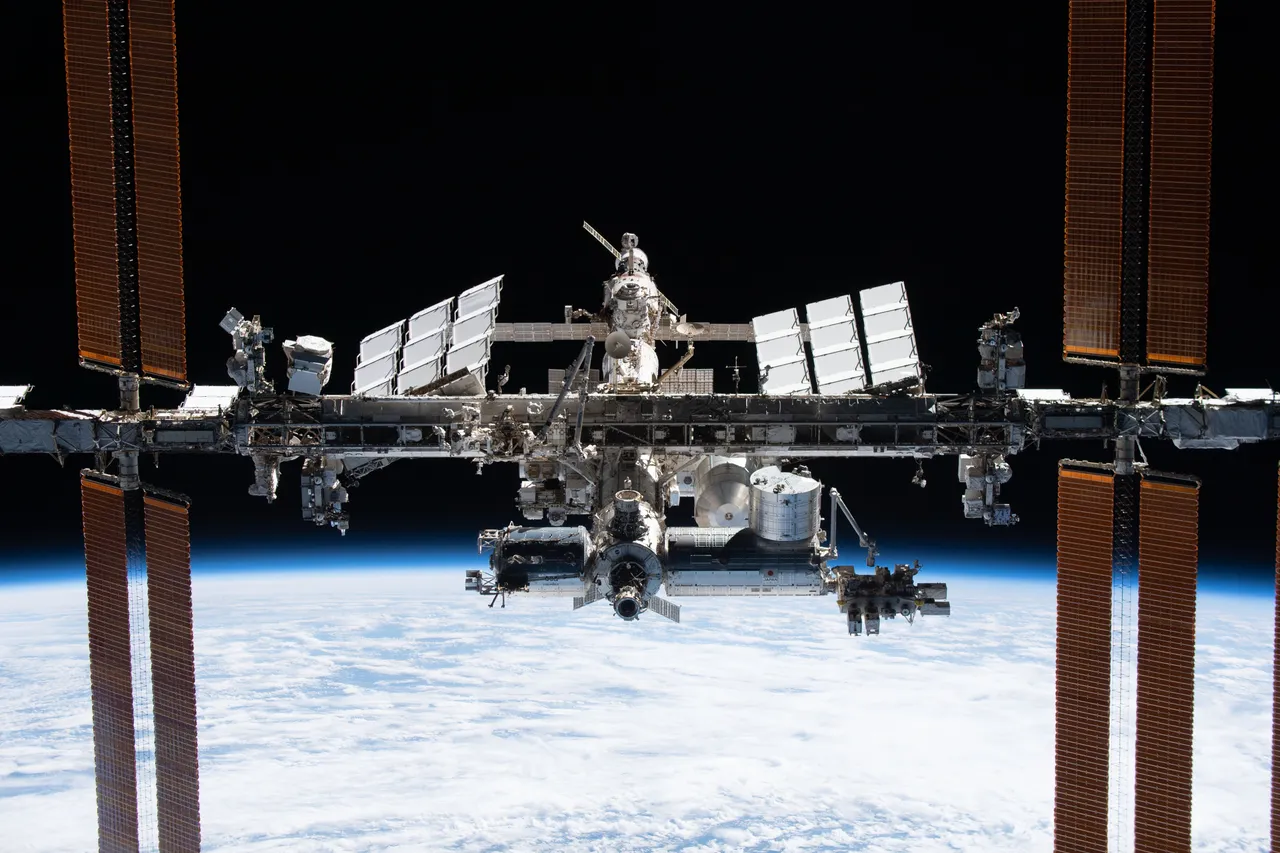
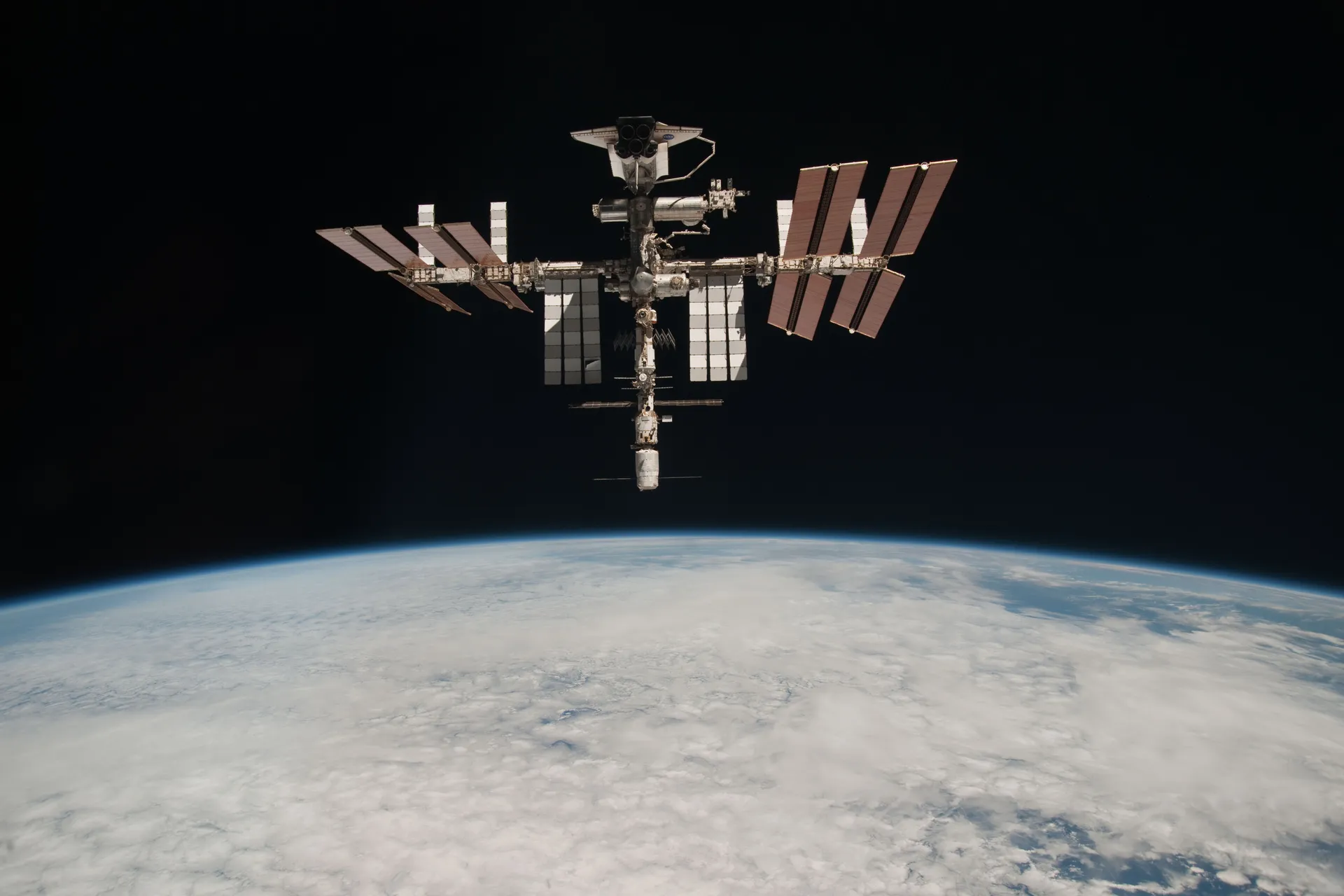
The International Space Station is the largest humanmade object ever to orbit Earth. Its pressurized volume, about 1,005 cubic meters (35,491 cubic feet), equals that of a Boeing 747; it has a mass of about 419,700 kilograms (925,000 pounds); and from one end of its solar arrays to the other it measures 109 meters (356 feet), one yard shy of the full length of an American football field including the end zones.1,3 Like a Lego set, each piece of the station was launched separately and assembled in space, using robotic arms and humans in spacesuits who connected fluid lines and electrical wires.1 It flies between 370 and 460 kilometers up, on an orbit inclined 51.6 degrees to the equator that carries it over 90 percent of the inhabited Earth, and it circles the planet 16 times a day.1,3
Five partner agencies operate it: the Canadian Space Agency, the European Space Agency, the Japan Aerospace Exploration Agency, NASA and the State Space Corporation Roscosmos, each responsible for managing and controlling the hardware it provides. The station was designed from the outset to be interdependent and relies on contributions from across the partnership to function.1 When its first elements launched in 1998, Russia and the United States were each responsible for providing half of the station, and the station still depends on Russian propulsion to hold its altitude and attitude.5
Space Station Freedom became a partnership with Russia
The station was officially approved by President Reagan, and a budget approved by Congress, in 1984. NASA Administrator James Beggs immediately set out to find international partners; Canada, Japan and many nations of the European Space Agency began to participate soon after. The station was designed between 1984 and 1993, and elements were in construction throughout the United States, Canada, Japan and Europe beginning in the late 1980s.1 That design, Space Station Freedom, was never completed. NASA spent about $11 billion on it before it evolved into the International Space Station.5
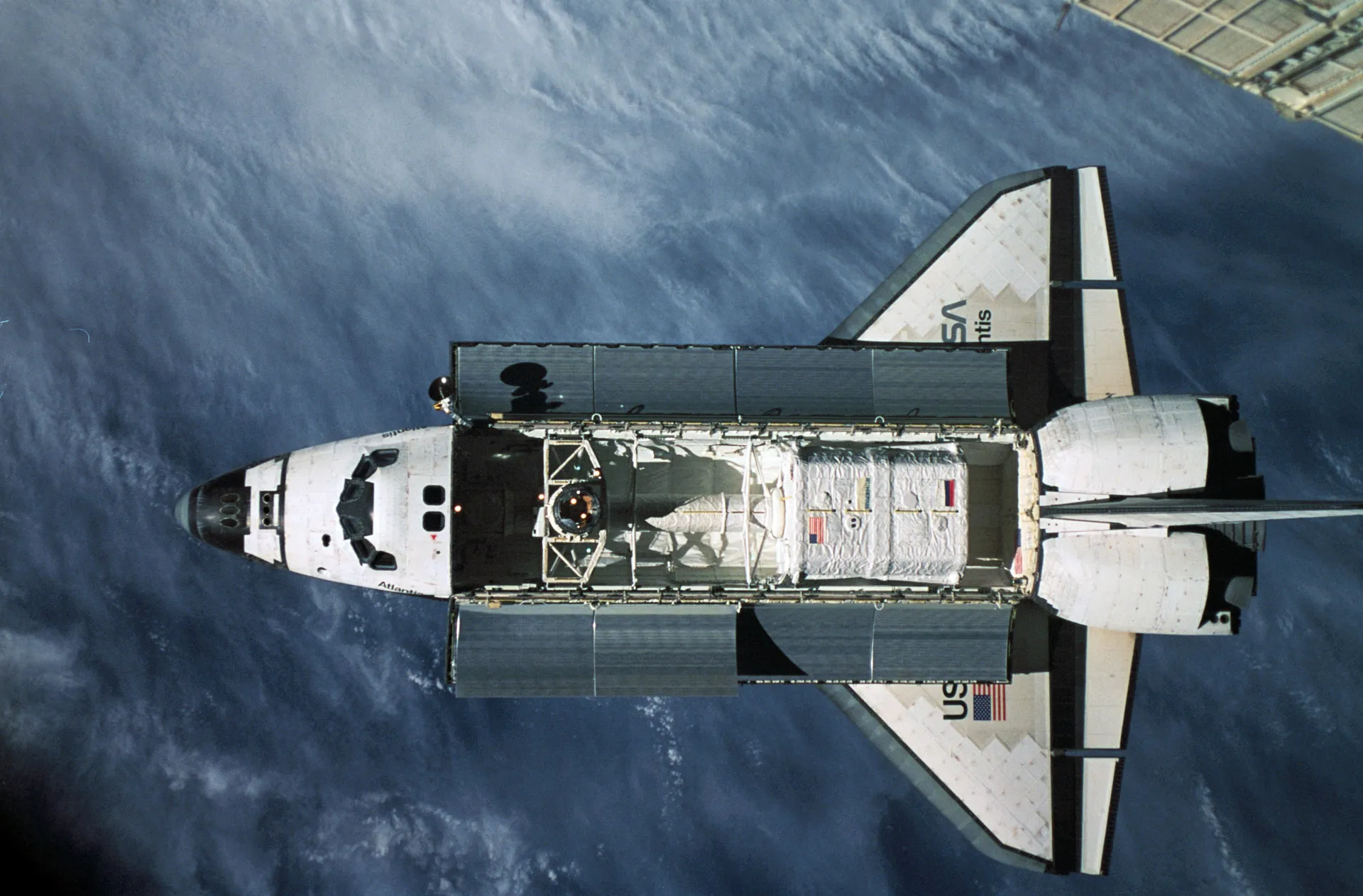
In 1993, as the station was undergoing a redesign, the Russians were invited to participate. The partners agreed to proceed in two phases. In the first, called NASA-Mir, Space Shuttles carried astronauts and cosmonauts to the Russian Mir station between 1995 and 1998. The United States helped modify two Russian-built modules to house U.S. and international experiments and to establish working processes between the nations.1
Eleven Shuttle launches went to Mir, the last ten docking to it, and the two new Russian modules, Spektr and Priroda, housed dozens of U.S. payloads and seven U.S. astronauts. In the second phase, all the partners would contribute elements and crew members to a new station, whose first pieces launched in 1998.1
Two segments joined around a Russian-built first module
A truss for power, a stack of rooms for people
The long beam is the integrated truss, 94 meters across. It carries the eight main solar arrays, which supply 75 to 90 kilowatts, and the radiators that reject the heat. Below it hangs the pressurized stack: the U.S. segment, which includes European, Japanese and Canadian hardware, forward; the Russian segment aft.2,3,5
Where the station began
Zarya, the first module, launched on a Proton rocket from Baikonur on November 20, 1998. It was built under contract to NASA by the Khrunichev center in Moscow and served as a temporary control module. Zvezda, the service module, arrived in July 2000 and made long-term habitation possible.2
The laboratories came after the power
With the first U.S. solar arrays installed, the Destiny laboratory followed in February 2001. Harmony, added in 2007, provided the berthing ports for the partners’ laboratories, and Europe’s Columbus and Japan’s Kibo arrived in 2008. Harmony also increased the habitable volume by nearly 20 percent, room for the crew quarters needed when the crew grew to six.2
Power first, then laboratories: the order of assembly
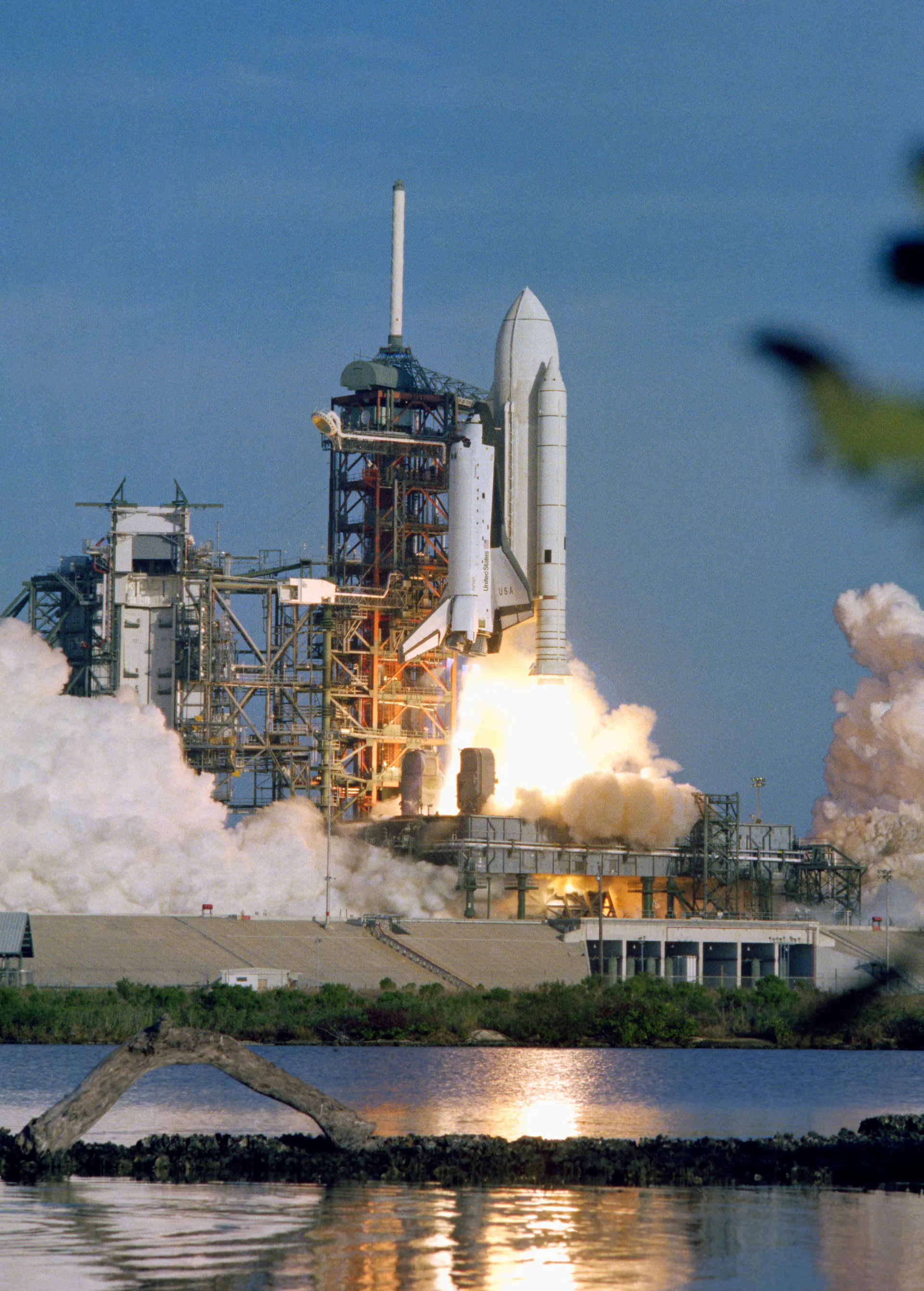
The largest international construction project in space began on the steppe of Kazakhstan. Nine minutes after its launch, Zarya was in orbit and began unfurling its antennas and solar panels. On December 4, 1998, Space Shuttle Endeavour lifted off from Kennedy Space Center carrying Unity, the first American component, built by Boeing at NASA’s Marshall Space Flight Center. Two days later the crew captured Zarya with the Shuttle’s robotic arm and mated it with Unity. Designed and built by engineers thousands of miles apart and never joined together on Earth, the first two modules fit perfectly when they met in space.2
By 2019, assembly had required 37 Space Shuttle flights, two launches each of Russia’s Proton and Soyuz rockets, and three commercial Falcon 9s.2 The order mattered. With a permanent crew aboard from November 2000, the Z1 truss segment added communications and the P6 segment brought the first set of U.S. solar arrays; only with that power could the Destiny laboratory and its first research racks follow. Canadarm2, one of Canada’s major contributions, added the robotic capability essential for later assembly and maintenance.2
The Columbia accident on February 1, 2003, halted Shuttle flights for more than two years and brought a temporary halt to assembly. Without Shuttle resupply, the resident crew was cut from three to two. When the Shuttle returned to flight in 2005, new truss segments and solar arrays significantly increased the power available, preparing the station for the partners’ research modules.2
What was added, and when
November 20, 1998
Zarya launches on a Proton2
The first element, built under contract to NASA, is a temporary control module.
December 1998
Unity joins Zarya1
STS-88 mates the first U.S. node to Zarya; Jerry Ross and James Newman make the first station spacewalk on December 7.
July 2000
Zvezda service module2
Living quarters, life support and propulsion for a resident crew.
November 2, 2000
Expedition 1 moves in4
Continuous occupation begins.
February–April 2001
Destiny laboratory and Canadarm22
July–September 2001
Quest and Pirs airlocks2
U.S. spacewalks no longer need a visiting Shuttle.
2002–2009
The truss and its solar arrays2
Built out in segments, interrupted by the Columbia accident; the final S6 segment arrives in 2009 and the crew grows to six.
2007–2008
Harmony, Columbus and Kibo2
The node with berthing ports, then the European and Japanese laboratories.
2010
Tranquility and the Cupola2
Regenerative life support, room for exercise equipment and a toilet, and large Earth-facing windows.
May–July 2011
Last Shuttle assembly flights2
The Alpha Magnetic Spectrometer arrives on the penultimate Shuttle mission.
July–November 2021
Nauka and Prichal3
The most recent modules, both Russian.
The station growing, 1998–2021
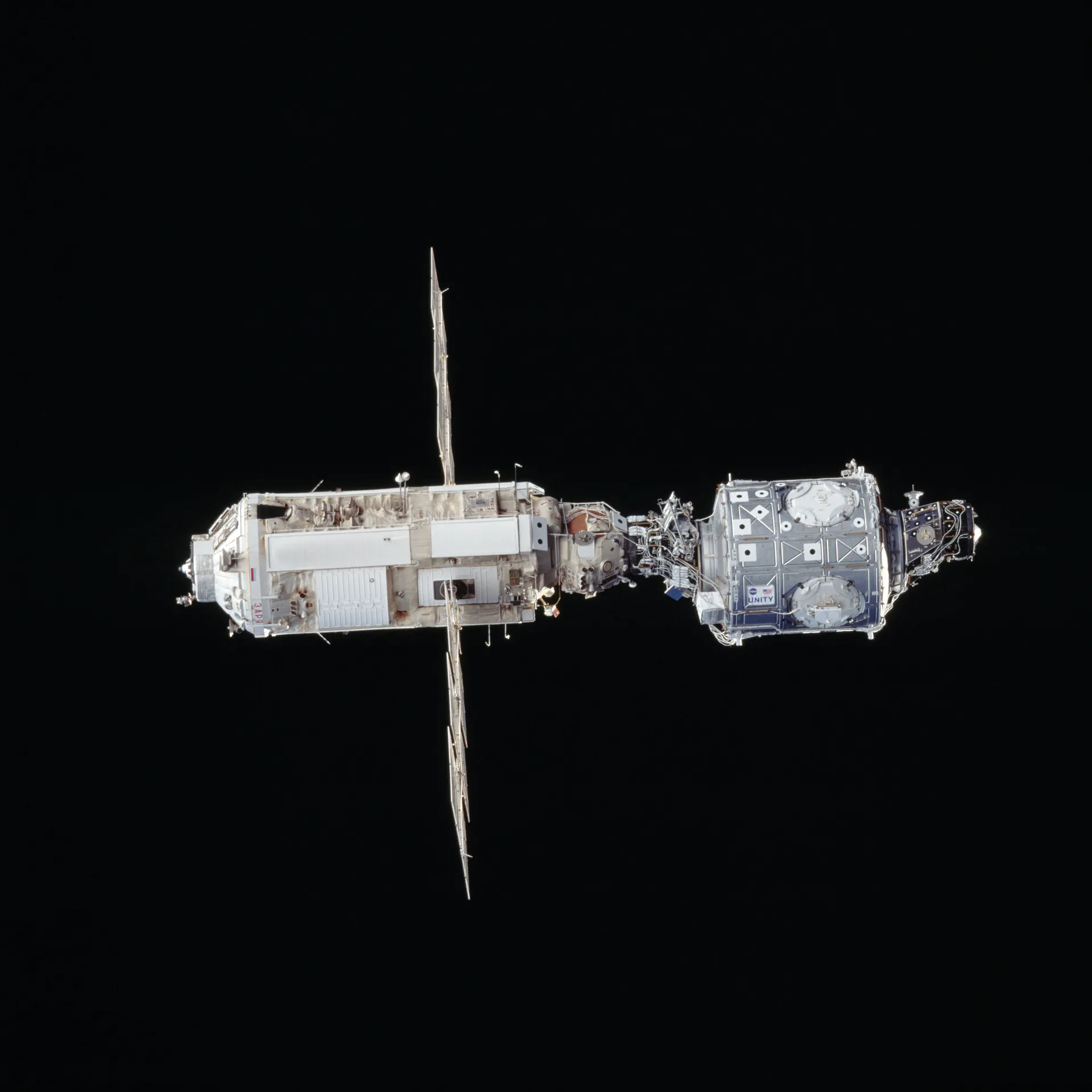
December 1998: Unity (bottom) and Zarya, photographed from Endeavour at the end of STS-88. NASA
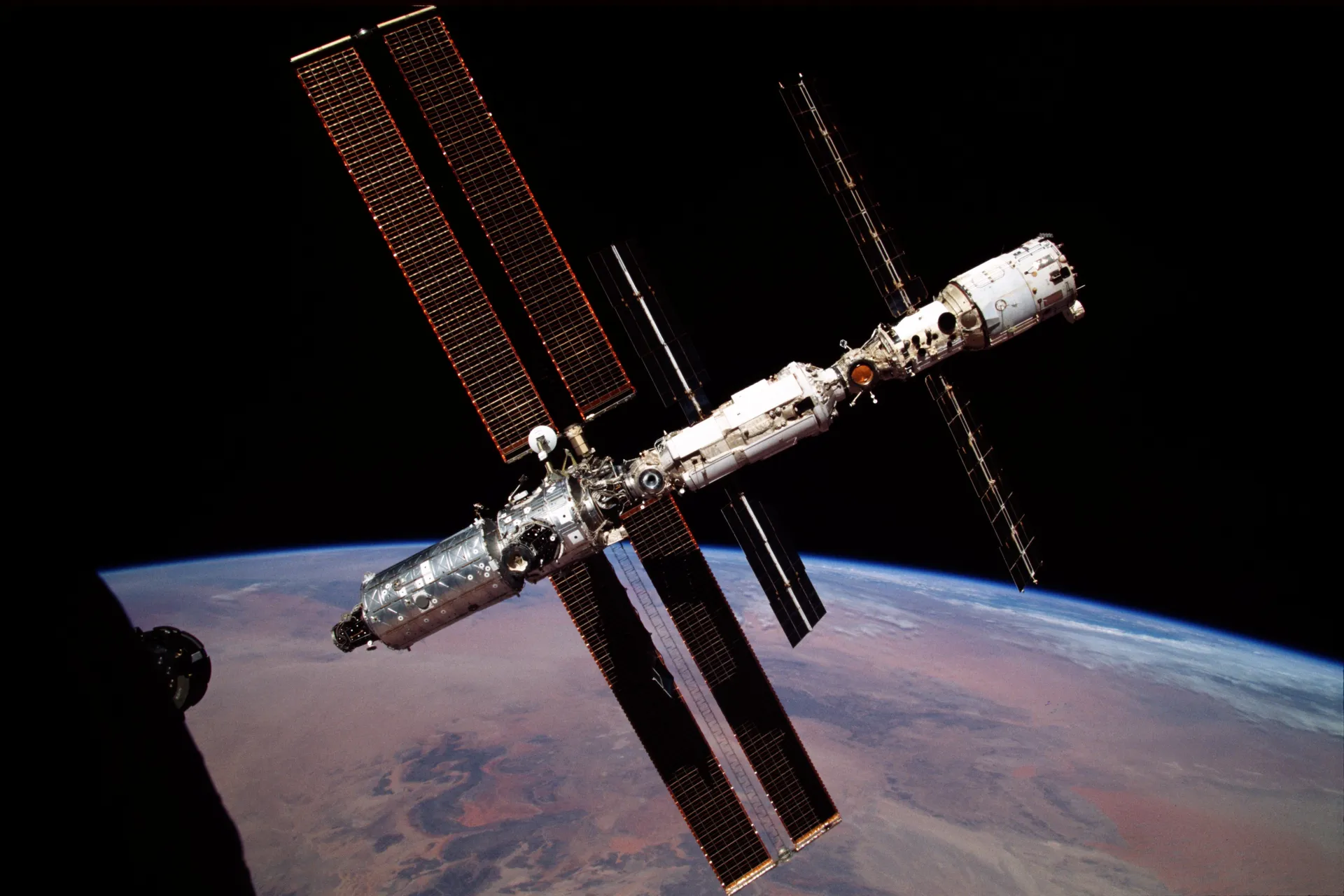
February 2001: the Expedition 1 crew photographs the station from their Soyuz, after Destiny was added beneath the first U.S. solar arrays. NASA
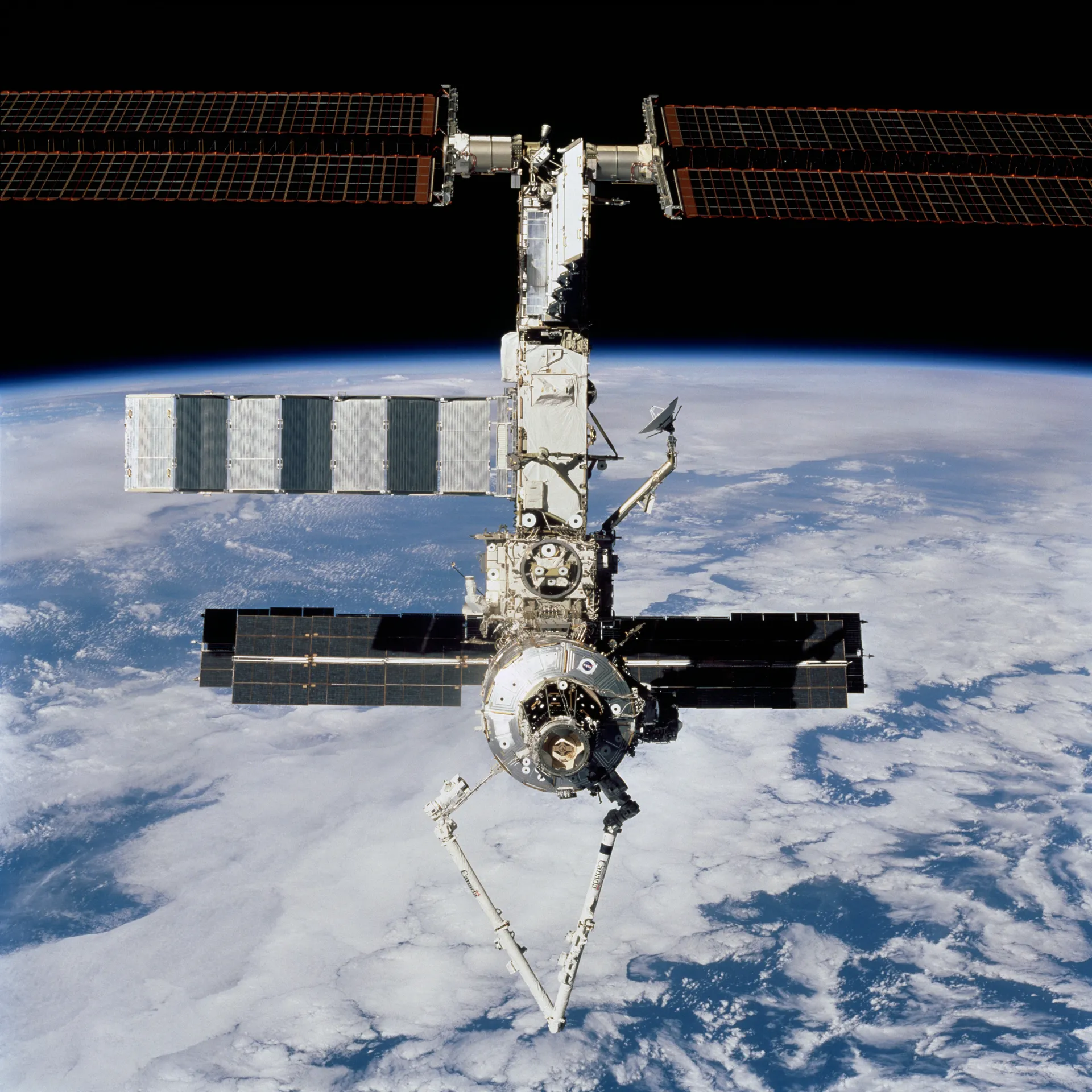
April 2001: Canadarm2, newly installed, hangs below the station after STS-100. NASA
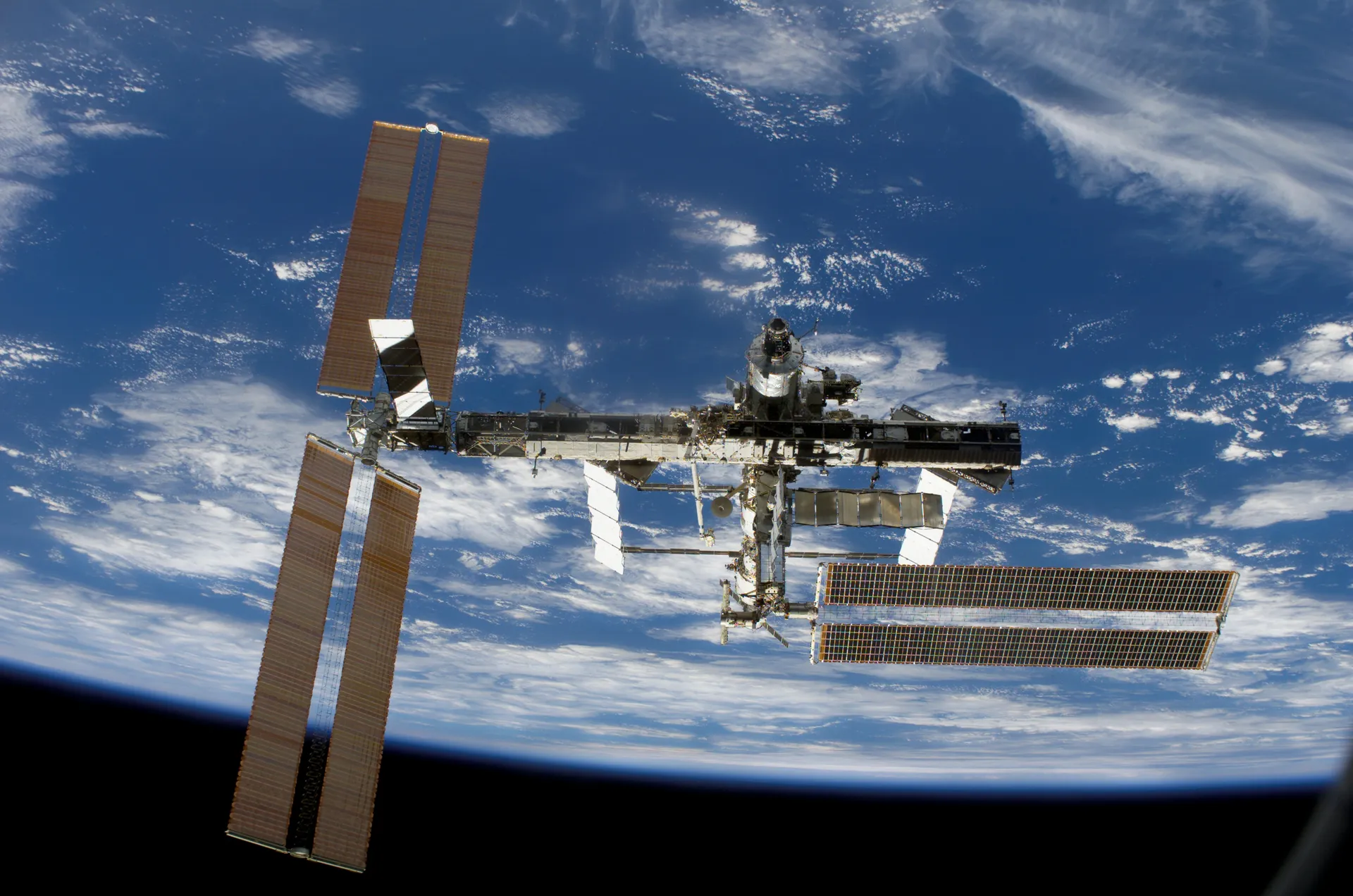
December 2006: the truss is about half built, seen from Discovery at the end of STS-116. NASA
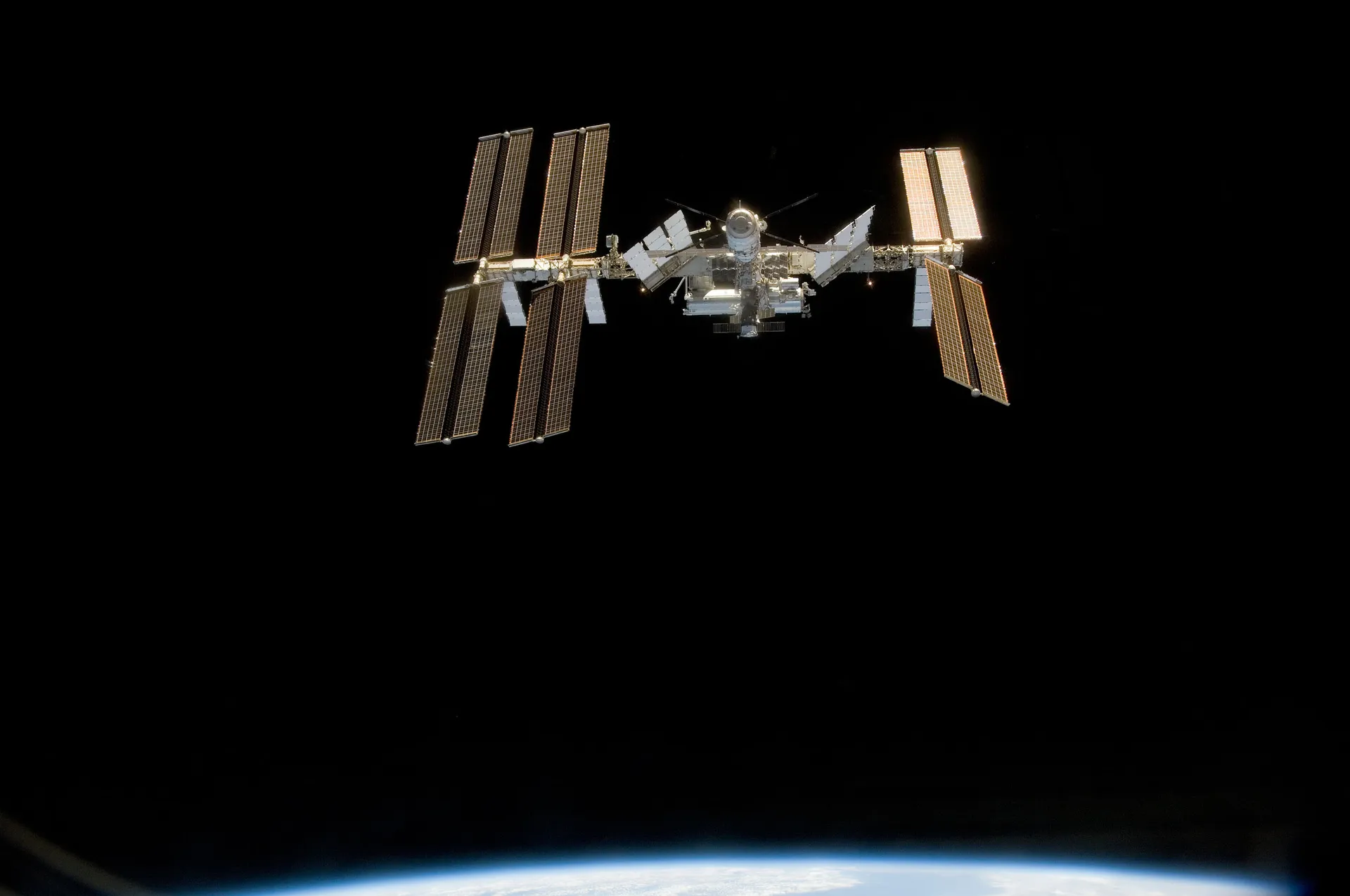
June 2008: Japan’s Kibo laboratory has just been attached, during STS-124. NASA
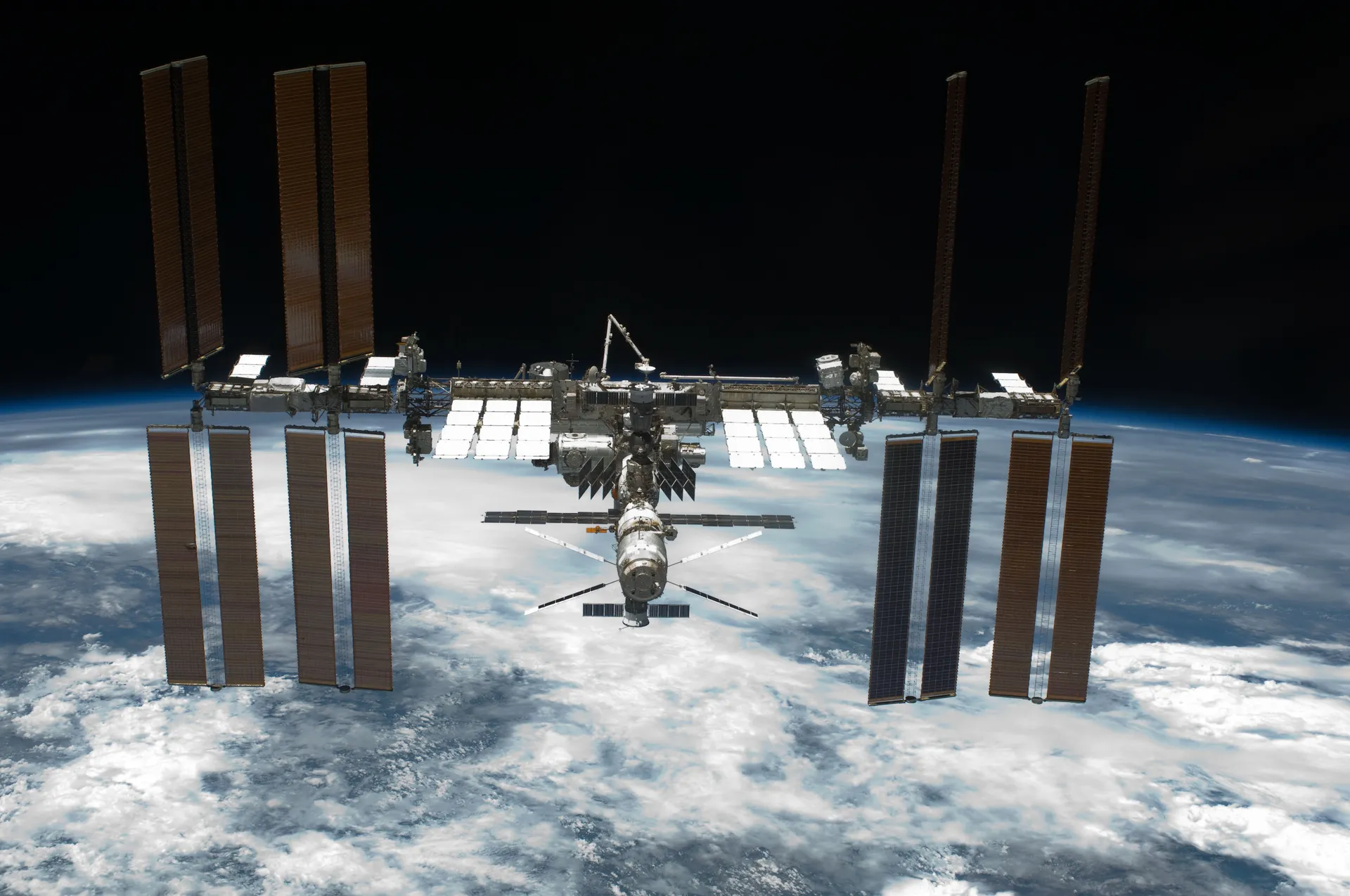
May 2011: the station essentially complete, seen from Endeavour on the second-to-last Shuttle flight. NASA
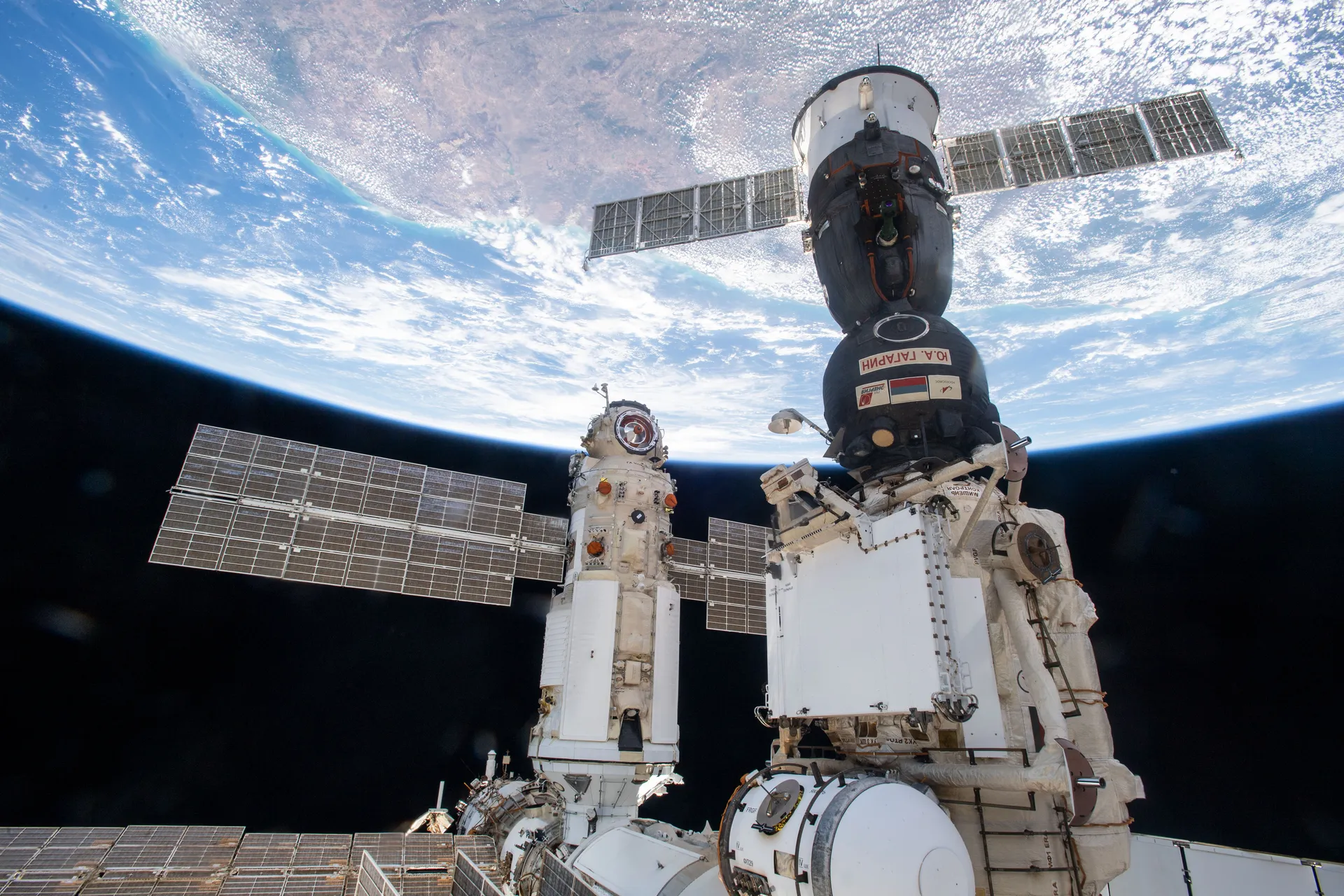
July 2021: Russia’s Nauka laboratory, minutes after docking to Zvezda’s Earth-facing port, with a Soyuz in the foreground. NASA
More spacewalks than in all earlier programs combined
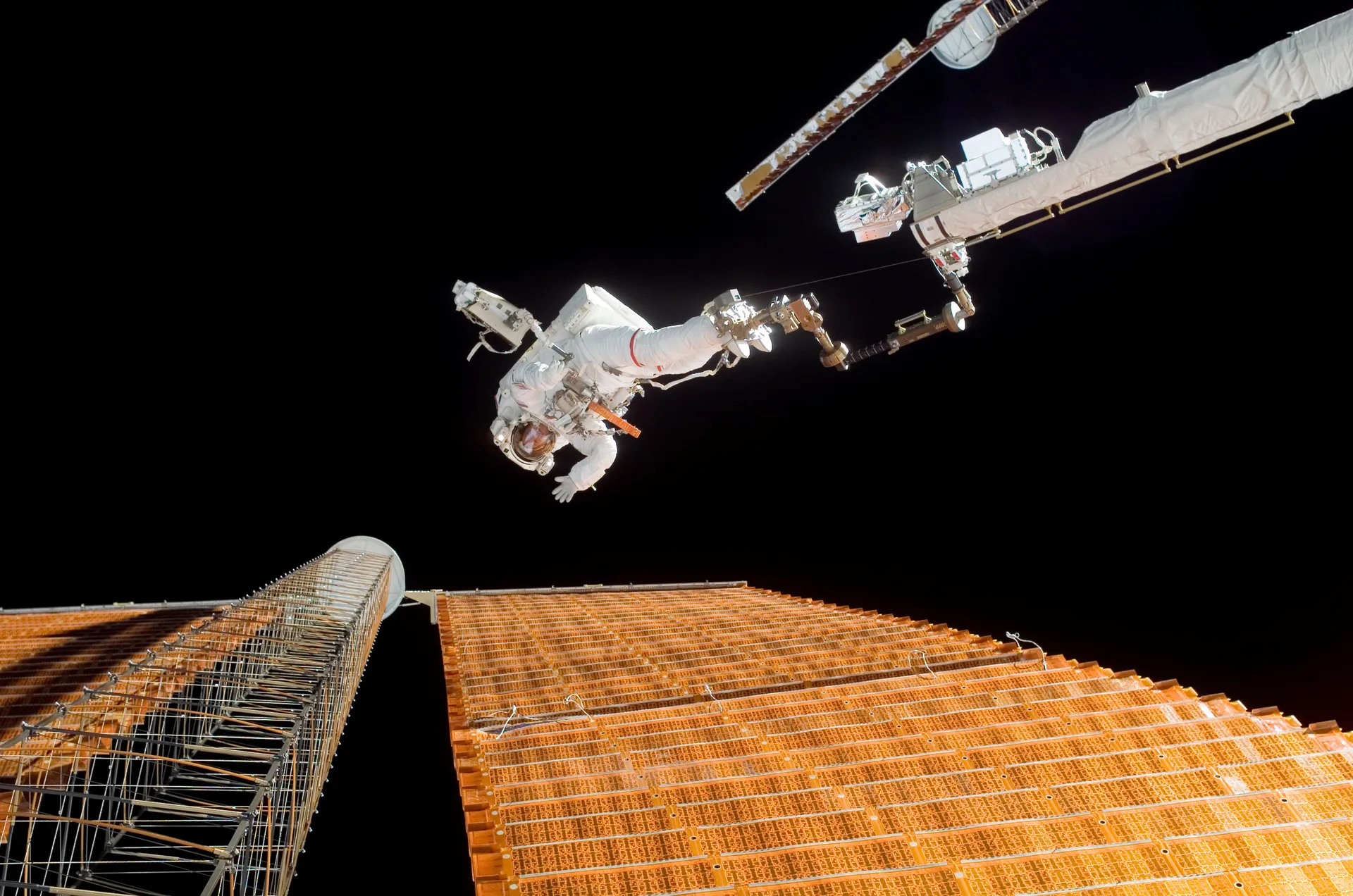
The assembly would have been impossible without spacewalking astronauts and cosmonauts. At one time “the wall of spacewalks” was seen as a formidable obstacle to building the station, but more spacewalks have been conducted during the station program than in all prior programs combined.1 More than 270 spacewalks dedicated to the station were accomplished in its first quarter century.4
Between December 2000 and April 2003, 38 astronauts and cosmonauts completed 41 spacewalks. On March 10, 2001, James Voss and Susan Helms worked outside for eight hours and 56 minutes, still the longest spacewalk in U.S. history.1,4
Some were improvised. In October 2007, STS-120 moved the P6 truss segment to the end of the port-side truss. As its second solar array unfurled, the crew noticed a tear and halted the deployment. Mission managers devised a plan to have one of the astronauts essentially suture the panel. Scott Parazynski, also a physician, was hoisted on the station’s robotic arm and the Shuttle’s inspection boom, which together gave just enough reach, and he secured five improvised “cufflinks” to the damaged panel before the crew extended the array.1
$118 billion from NASA, and about $3 billion a year to operate
The partners share the station’s common costs in proportion to the research resources each has a right to use. Cost sharing is key to the station’s affordability: by 2022, NASA alone had invested about $118 billion in its development and operation. That total, in dollars not adjusted for inflation, includes about $11 billion for Space Station Freedom, $74 billion for development, operations, research and the associated Shuttle flights from 1994 through 2013, and about $33 billion from 2014 through 2022, including the Commercial Crew Program.5
- $118B
- invested by NASA in the station through 20225
- $3B
- a year for operations, research and crew and cargo flights, 2013–20235
- 16%
- of NASA’s budget, about $4.1 billion a year with supporting costs5
From 2013 to 2023, NASA spent about $3 billion a year on station operations, maintenance, research and crew and cargo transportation, and nearly $1 billion more on communications, human research, flight operations and training that support it.5 The station program’s own budget line was $1.24 billion in fiscal year 2026; the administration’s request for fiscal 2027 would cut it to $921 million.14 NASA estimates that buying services from privately owned stations instead would save it between $1.3 billion and $1.8 billion a year.5
Twenty-five years without an empty station
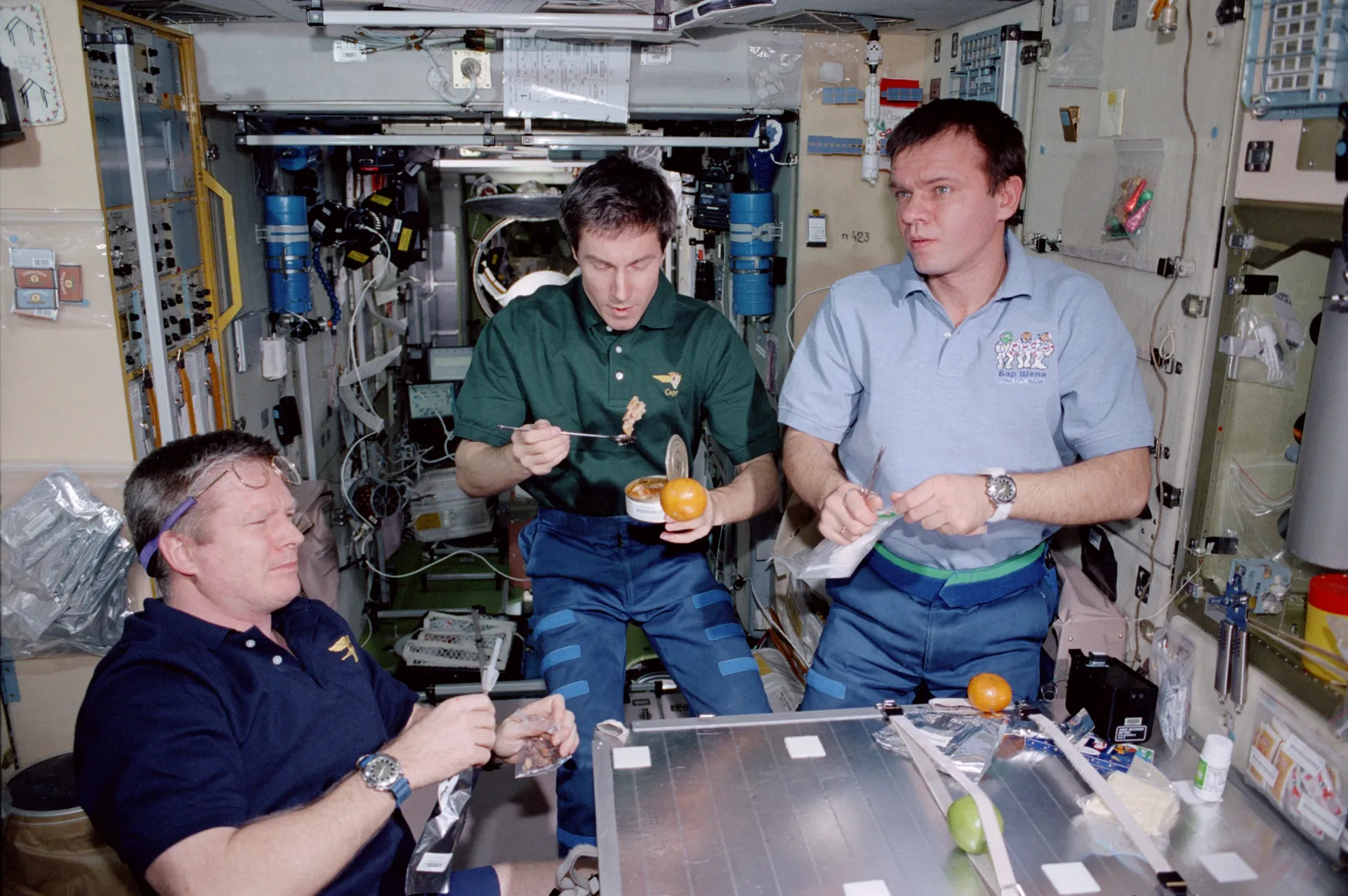
Expedition 1 crew members William Shepherd of NASA and cosmonauts Yuri Gidzenko and Sergei Krikalev launched from Baikonur on October 31, 2000, and boarded the station two days later. Their primary tasks during a four-month mission were to install and activate the life support and communications systems and to work with three visiting Shuttle crews on assembly.4 A pre-launch NASA press release predicted that, if all went well, it would be the last time there were no humans in space.2
That prediction has held. In October 2010 the station passed the record for continuous occupation, 3,645 days, set aboard Mir between 1989 and 1999.2 The resident crew grew from three to six in 2009.2 Commercial crew vehicles later let it grow to seven. The first arrived on May 31, 2020: Robert Behnken and Douglas Hurley on SpaceX’s Demo-2, the first launch of American astronauts from U.S. soil since the Shuttle’s retirement in 2011.3,4 At least 290 people from 26 countries had visited by the 25th anniversary, on November 2, 2025.4
The rotation continues. On October 1, 2026, NASA astronauts Jessica Watkins and Luke Delaney, Canadian Space Agency astronaut Joshua Kutryk and Roscosmos cosmonaut Sergey Teteryatnikov launched from Cape Canaveral on Crew-13, on a flight planned to reach the station in just under eight hours, the fastest launch-to-docking by a U.S. spacecraft in its history. They join the Expedition 75 crew of Anil Menon, Pyotr Dubrov and Anna Kikina; after a brief handover, Crew-12 returns to Earth.13
Cracks in a Russian tunnel, the station’s top-rated risk
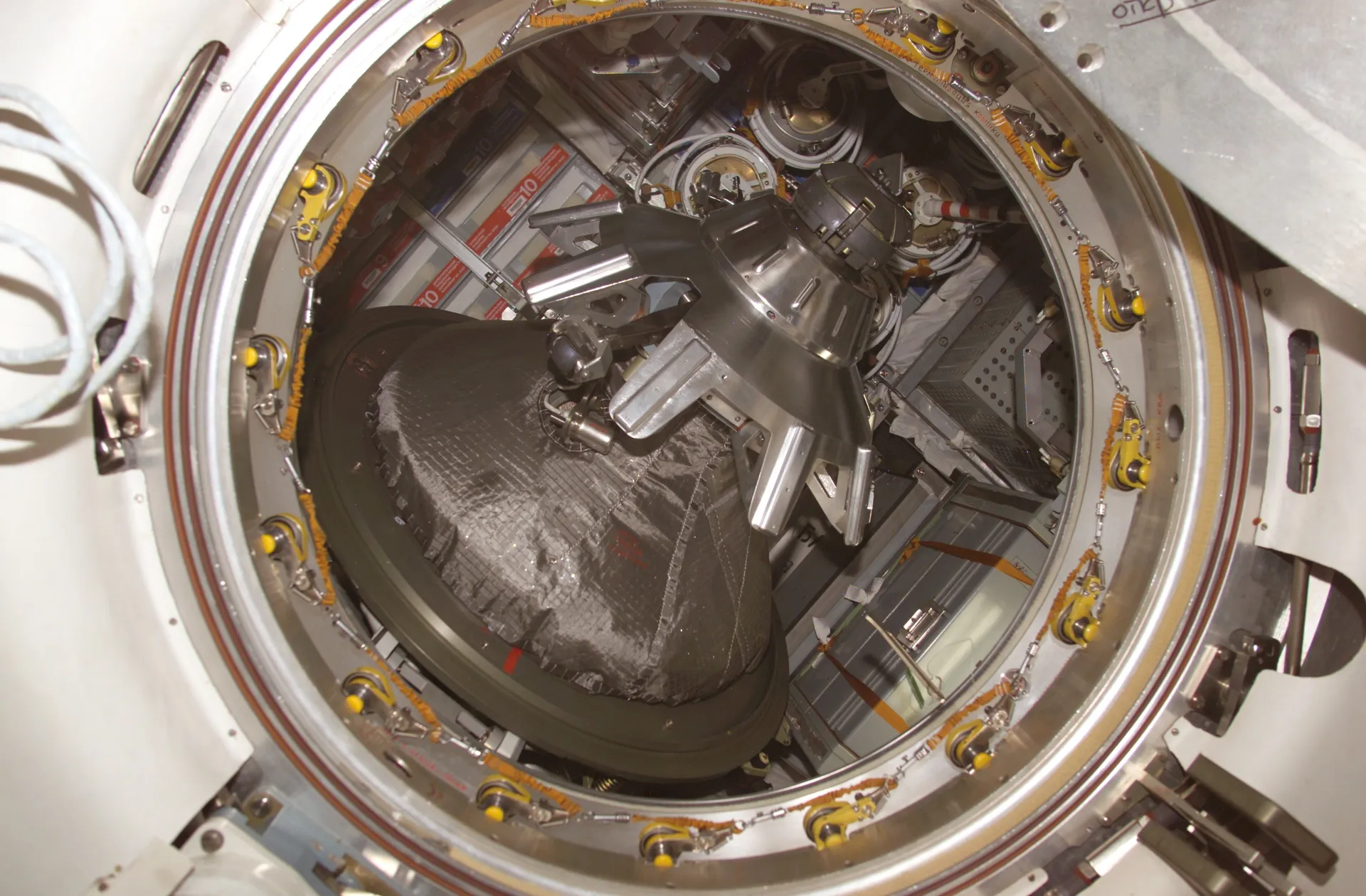
The Zvezda service module’s transfer tunnel, known as the PrK, has had cracks since 2019 that have caused small leaks of the station’s atmosphere.6 The tunnel connects the service module to one of the station’s eight docking ports, the aft port used by Russian cargo ships.5,7 NASA and Roscosmos have investigated the cracks and leaks, shared sample metals, welds and investigation reports, and narrowed their search for the root cause to internal and external welds.5
In February 2024 NASA identified an increase in the leak rate, and in April it reached its highest level to date. The station program raised the risk to the top of its five-by-five scale. Officials of both agencies told the inspector general the leak was not an immediate risk to the structure, and Roscosmos was confident it could close the hatch before the rate became untenable, but the two had not agreed on where that point lies.5 The crews keep the hatch closed when access is not required. The station could operate with it closed permanently, at the cost of one cargo port and extra propellant.5
The problem has not gone away. NASA told Congress in March 2026 that the leaks had stopped, but they reappeared.7 In the week of June 1, 2026, while unloading the Progress 95 cargo ship, Roscosmos measured an increase to two pounds of air a day and found new suspected leak areas. It planned an inspection that involved cutting a bracket, a method that could have raised the risk to the structure, and NASA ordered the four Crew-12 members and astronaut Chris Williams to shelter in their Dragon during the work. Roscosmos then paused the repair in favor of more measurements, and the crew returned to normal operations.6 When NASA Administrator Jared Isaacman met the head of Roscosmos in July, the agency said, the two discussed “a PrK resolution.”7
An $843 million spacecraft to steer the station into the ocean
The station’s original parts still lie at its core: the modules where the crew lives and the truss that provides power, cooling and communications. They were designed for a 30-year structural life in low Earth orbit. By 2030, Zarya and Unity will have been operating for 32 years. Solar arrays, life support equipment and science hardware can be repaired or replaced in orbit, but the primary structure cannot. It is loaded each time a spacecraft docks or undocks and each time the station passes in and out of Earth’s shadow.8
How the end of operations moved5
NASA considered the alternatives and rejected them. An uncontrolled reentry would scatter very large pieces of debris over a large footprint. Taking the station apart was impractical: its modules and truss were not designed to be disassembled, and returning them would need a spacecraft with a cargo bay like the Shuttle’s, which no longer exists. Boosting it to a higher orbit would require propulsive and tanker vehicles that do not exist and would move it into worse debris: the average time between penetrating impacts would fall from about 51 years at the current altitude to less than four years at 800 kilometers.8 Some smaller items will be saved; NASA has worked with the Smithsonian National Air and Space Museum on a preservation plan.8
The station will instead be lowered by natural decay and, once all crew have returned to Earth, pushed by a final burn into a remote area of ocean.8 Russian Progress ships cannot provide enough margin to lower the risk to the public to U.S. government standards.8 In June 2024, NASA selected SpaceX to build the U.S. Deorbit Vehicle under a single-award contract with a total potential value of $843 million. NASA will take ownership after development and operate it, and, along with the station, it is expected to break up during reentry. The launch will be bought separately.9 The solicitation asked for delivery by August 1, 2028, with May 1, 2029, the latest acceptable date; the target is a debris footprint of 6,000 kilometers or less in an uninhabited region of the South Pacific.10
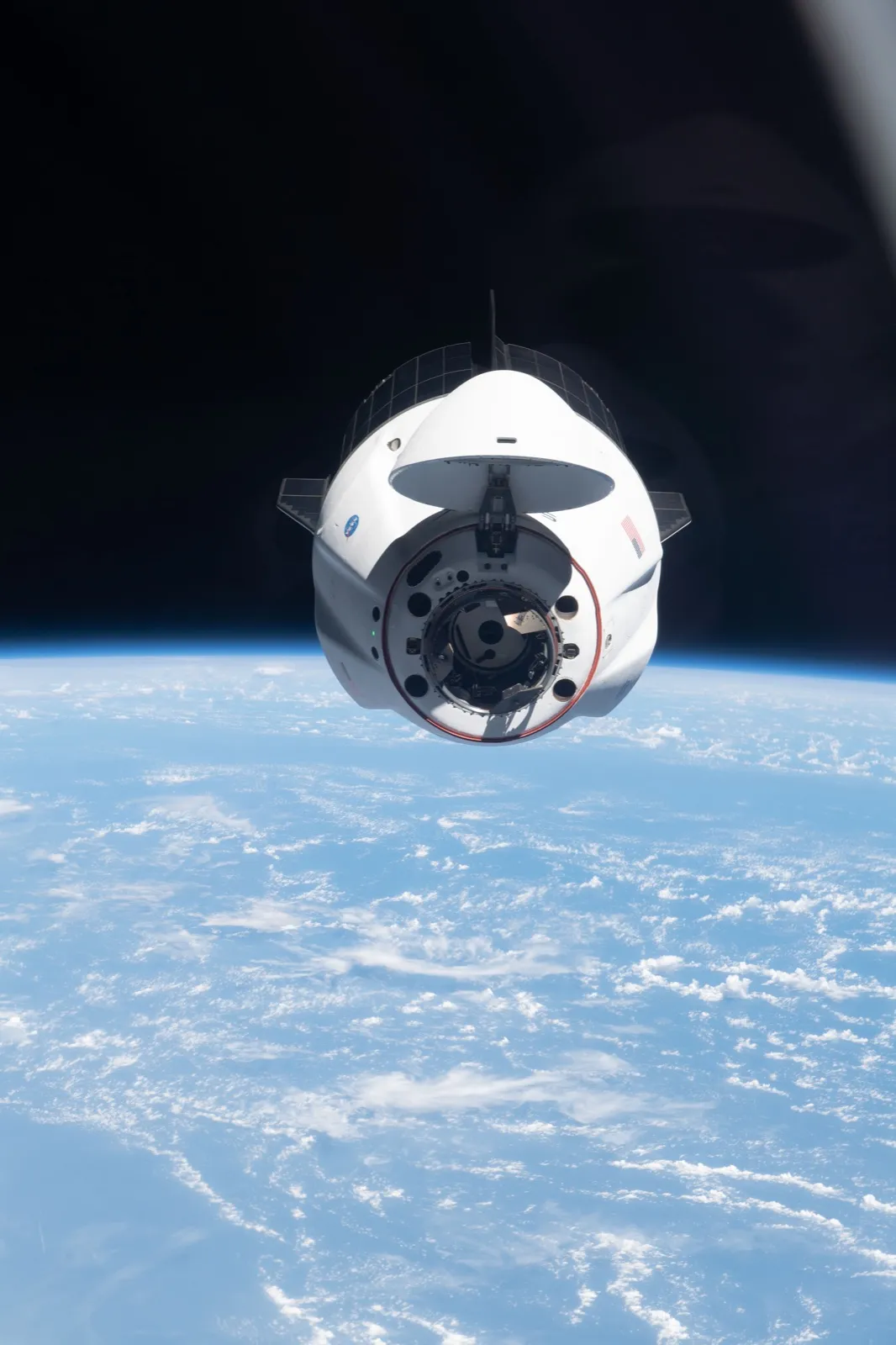
The vehicle is a Dragon with an enlarged trunk. SpaceX told reporters it would have about six times a cargo Dragon’s propellant, 46 Draco thrusters and a mass of about 35 metric tons, too heavy for a Falcon 9, and NASA put the full cost with launch at about $1.5 billion.11 NASA’s inspector general called the schedule unrealistic: major NASA spaceflight programs have taken about eight and a half years on average from contract award to first operational flight, against roughly five and a half for this one.5
Russia was committed only through 2028 until July 2026, when Roscosmos Director General Dmitry Bakanov agreed with Isaacman to support operations through 2030 and to continue the seat swaps in which each country flies the other’s crew members.7 What follows the station is less settled. GAO reported in June 2026 that NASA must decide in 2027 whether to launch the deorbit vehicle in 2029 or extend station operations, and that the agency had not assessed the likelihood or length of a gap in U.S. crew presence in low Earth orbit if commercial stations are not ready in time.12 Congress has held hearings on extending operations to 2032.15 If operations do go past 2030, NASA says, the deorbit vehicle can wait on the ground for a final decision.8
Sources
The text above is drawn from these 15 sources. Government works are adapted closely; company and press material is summarized. Numbers in the text point here. Last checked October 1, 2026.
Show all 15 sourcesShow fewer
Continue
Related stories
- Commercial crewHow NASA stopped owning its crew vehicles and started buying rides, why SpaceX’s Dragon has flown every rotation since 2020, and what still stands between Boeing’s Starliner and its first crew.
- Commercial stationsSince 2020 NASA has paid companies to design stations it could rent after 2030. In 2025 and 2026 the plan changed three times, the money stayed short, and GAO warned of a gap in U.S. crew presence.
- The Space ShuttleNixon approved a $5.5 billion reusable spaceplane in 1972 to make spaceflight routine and cheap. It repaired Hubble and built a space station, lost two crews, and never flew more than nine times in a year.