Getting to orbit
How does anything get to space, and who builds the rockets?
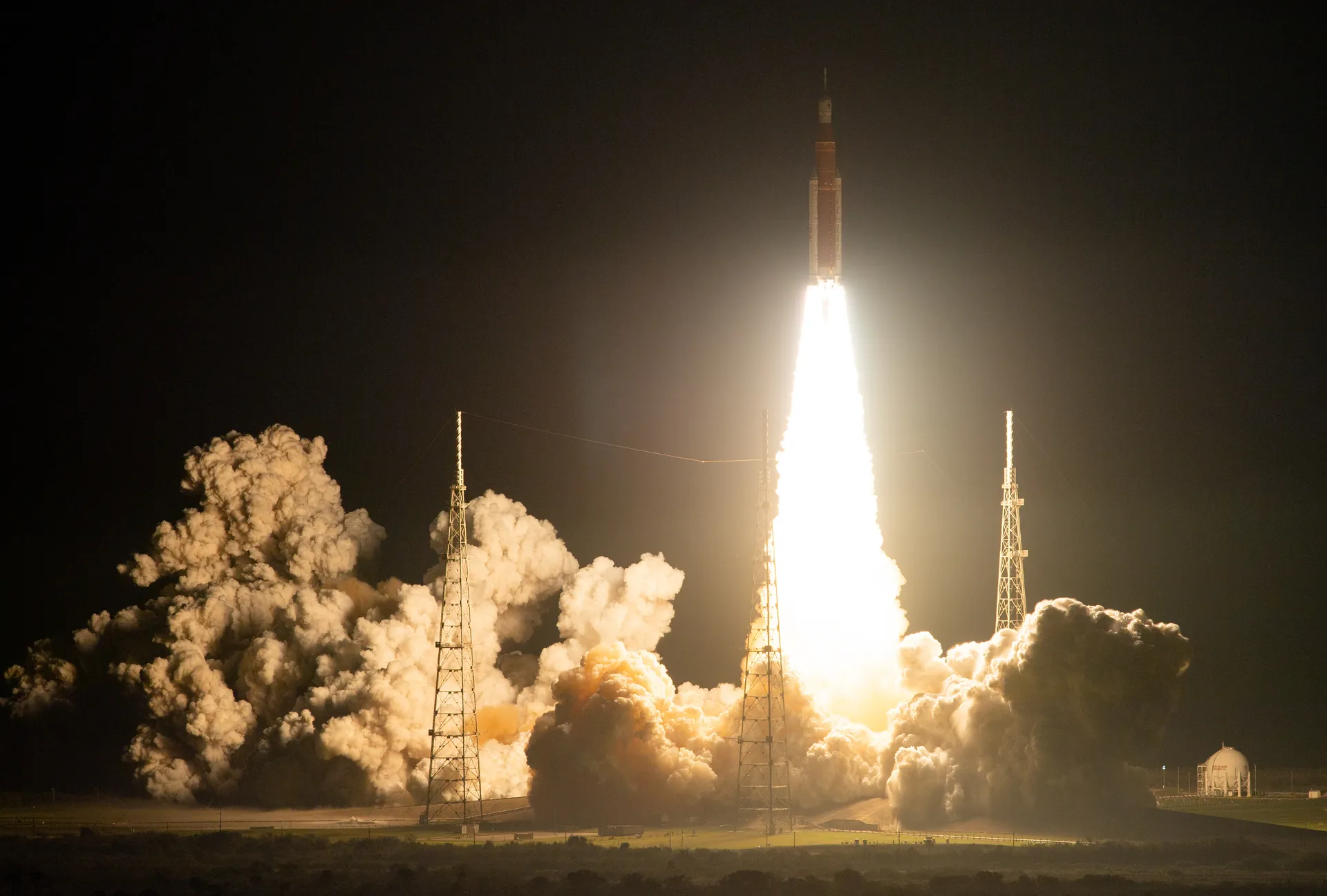
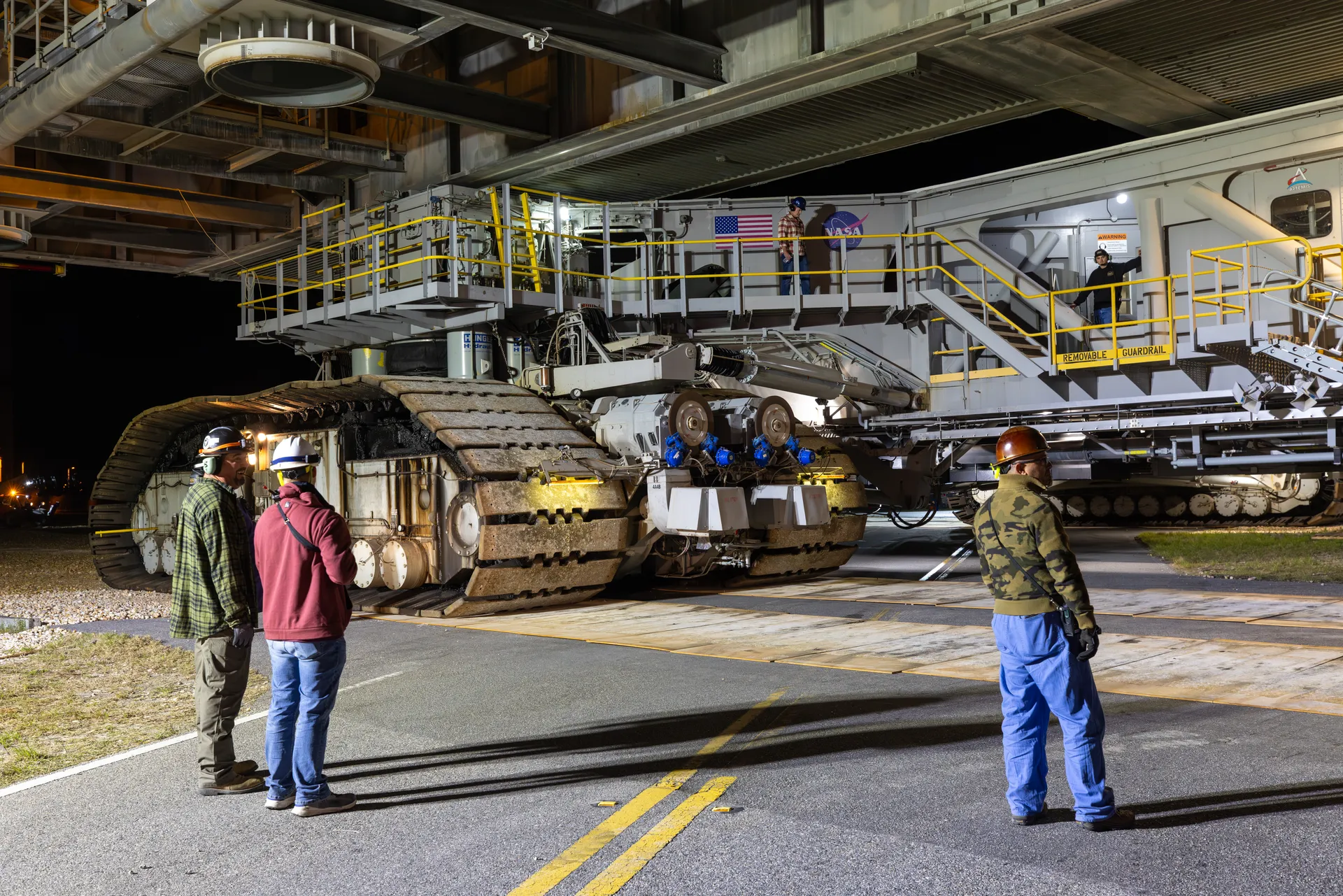
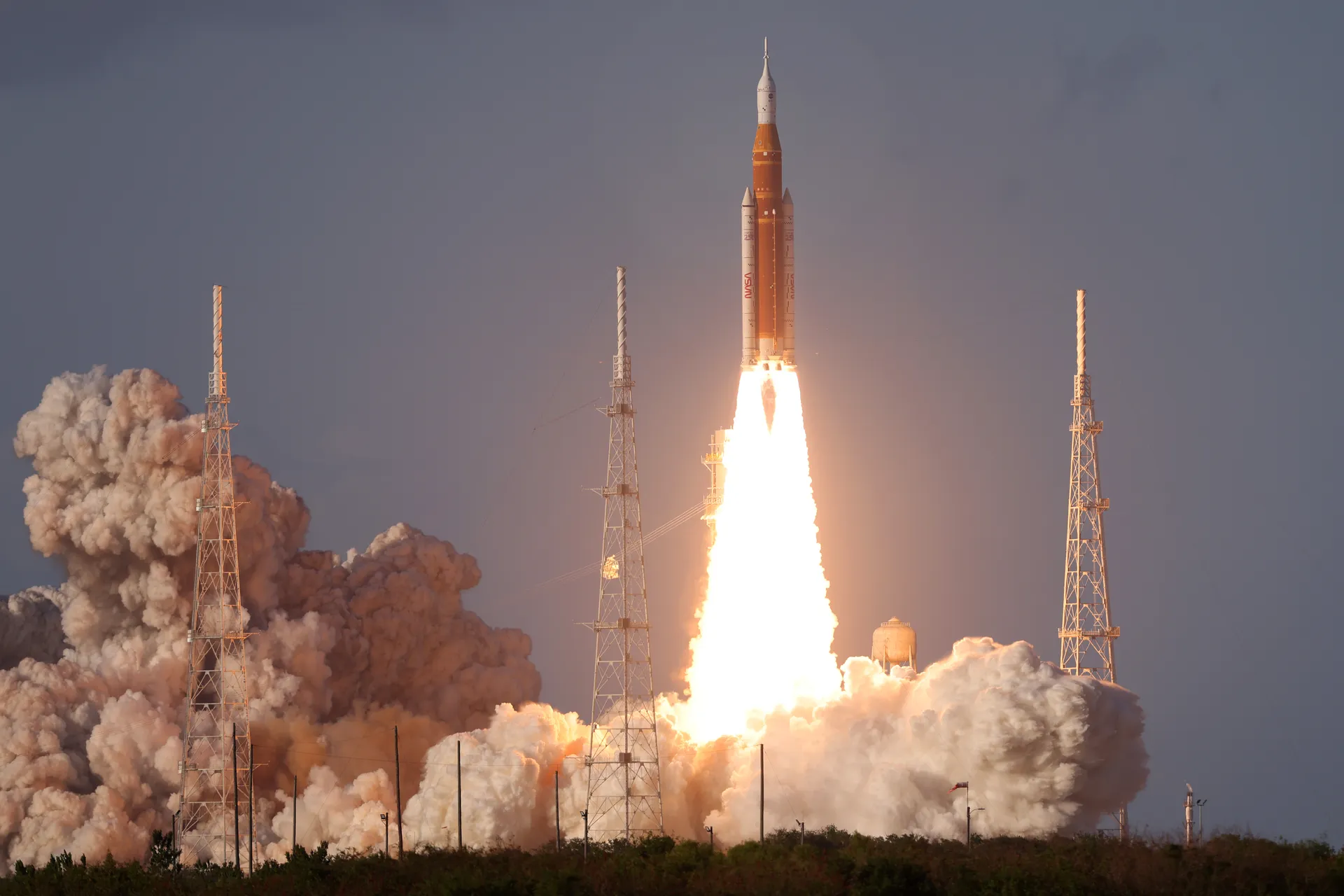
NASA/Michael DeMocker, Artemis II, April 1, 2026
Nothing else in this atlas happens without a launch. Reaching low Earth orbit means accelerating to about 17,500 miles per hour, and the machines that do it are mostly propellant tanks with engines at the bottom.
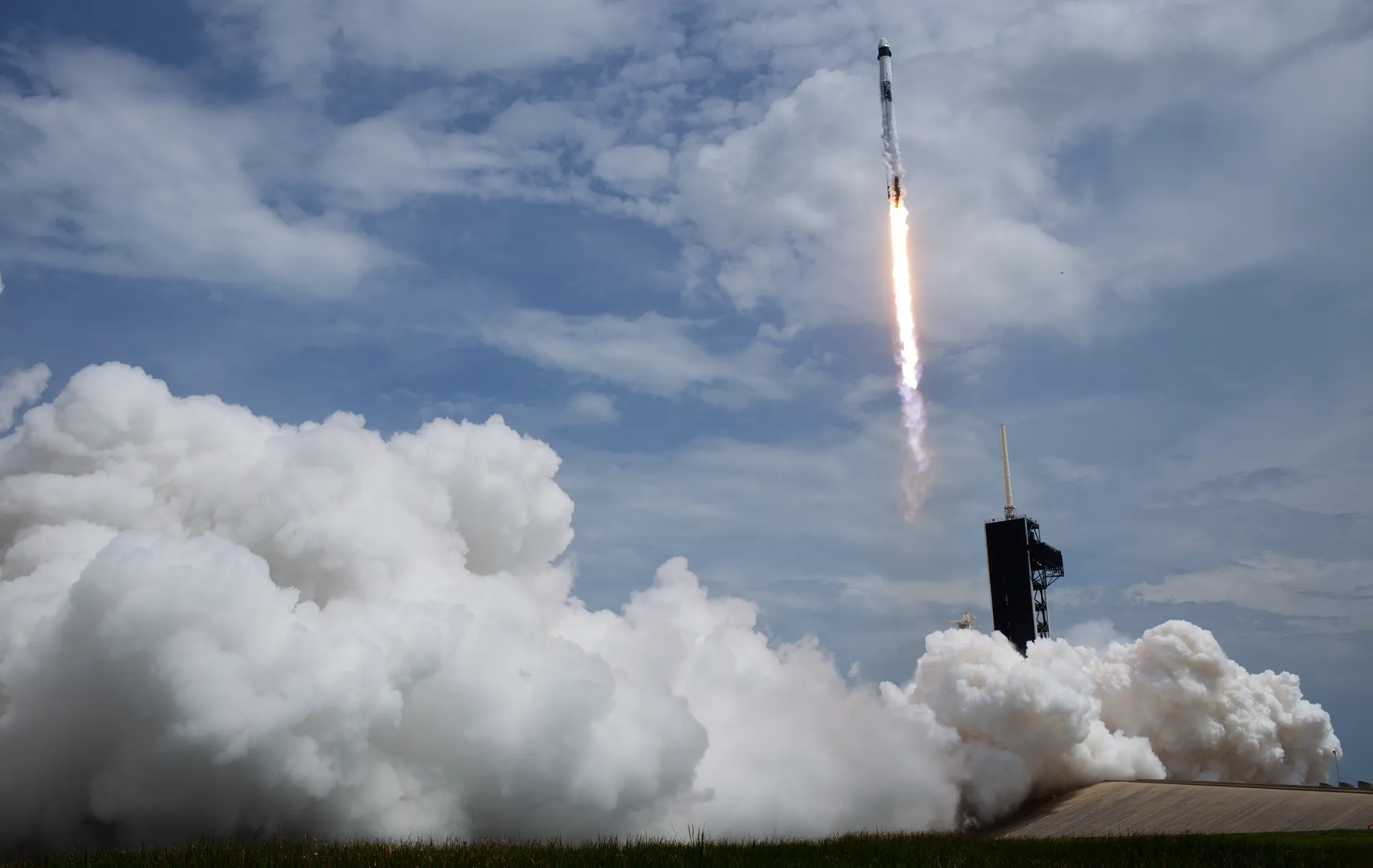
The American fleet now combines very different answers to the same problem. Falcon 9 lands its first stage and flies it again; Starship is trying to make an entire launch system reusable; NASA’s Space Launch System throws Orion toward the Moon and is expended every time.
Begin with How rockets reach orbit- 1
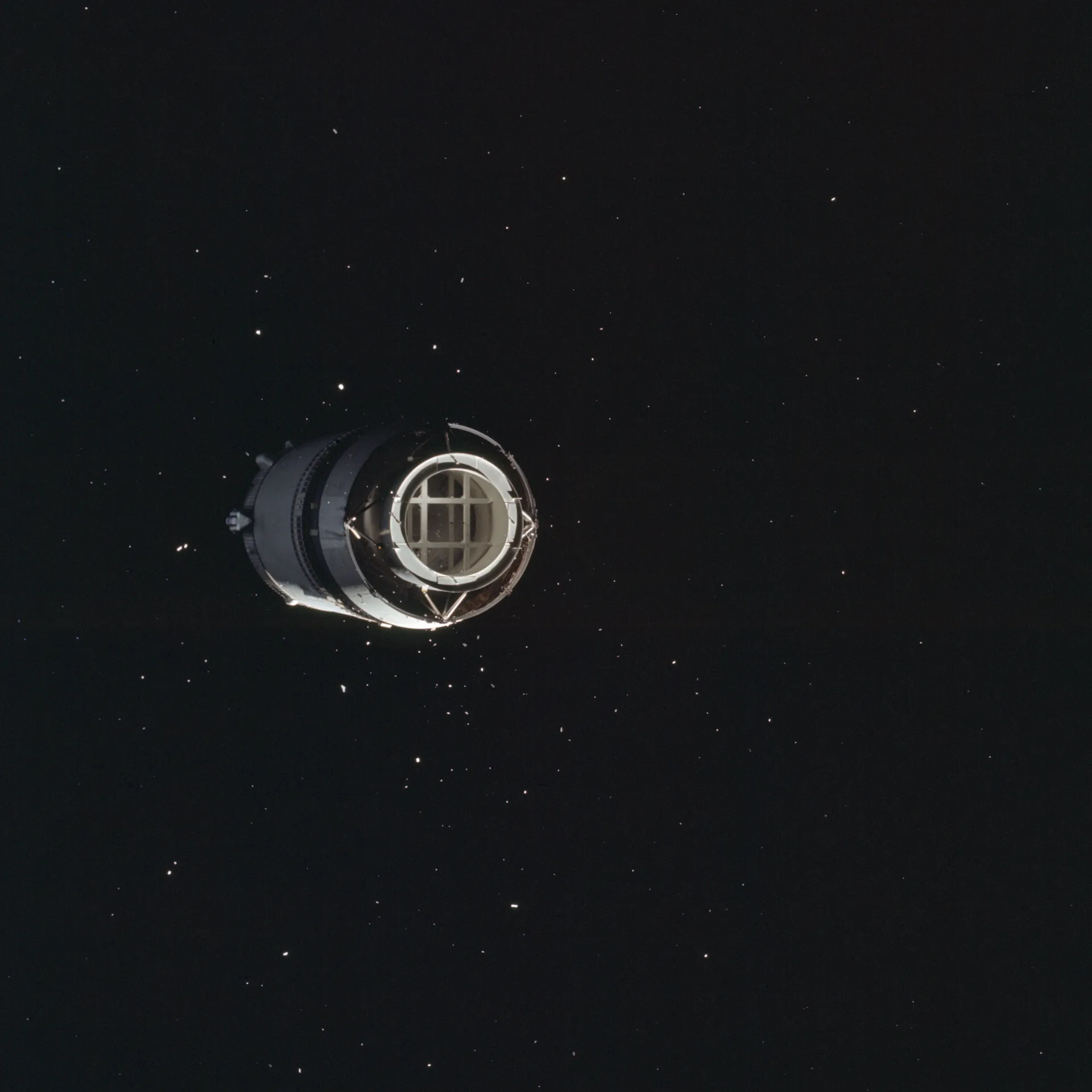
Why reaching orbit is a problem of speed, and rockets are mostly propellantOrbit means moving sideways at about 17,500 mph. The rocket equation explains why that speed costs so much propellant, why rockets drop stages, and why a Moon lander must be refilled in orbit.
- 2
From a $278 million NASA cargo agreement to America’s workhorse rocketNASA paid for milestones, not a rocket of its own design. The result now flies half the world’s launches and every American crew to orbit.
- 3
Starship reached orbit on its 14th flight; refilling in orbit comes nextSpaceX built the largest rocket ever flown by launching prototypes and fixing what broke. NASA’s Moon landings depend on the step it has not yet taken: moving propellant between ships.
- 4
The Moon rocket Congress ordered from Shuttle parts in 2010Congress wrote SLS into law in 2010, with Shuttle engines and boosters and a 2016 goal. It first flew in 2022, at an estimated $4.1 billion a launch with Orion, and in 2026 NASA stopped upgrading it.
- 5
Two new heavy rockets share one engine, and both were grounded in 2026Blue Origin’s BE-4 powers its own New Glenn and United Launch Alliance’s Vulcan. Both entered service in 2024–2025; by mid-2026 neither could fly, for different reasons.
- 6
How America’s launch sites work, from the Cape to StarbaseFor decades most American rockets have left from one stretch of Florida coast, chosen in the late 1940s. The assembly building, crawlers and pads NASA built there for Apollo still set the pattern for how the biggest rockets fly.