Hubble, Webb and Roman: three telescopes, and why none replaces another
A 1990 telescope that astronauts rebuilt five times, a $9.7 billion infrared observatory a million miles out, and a survey telescope launched in August 2026: what each one sees, what each cost, and why NASA flies them together.
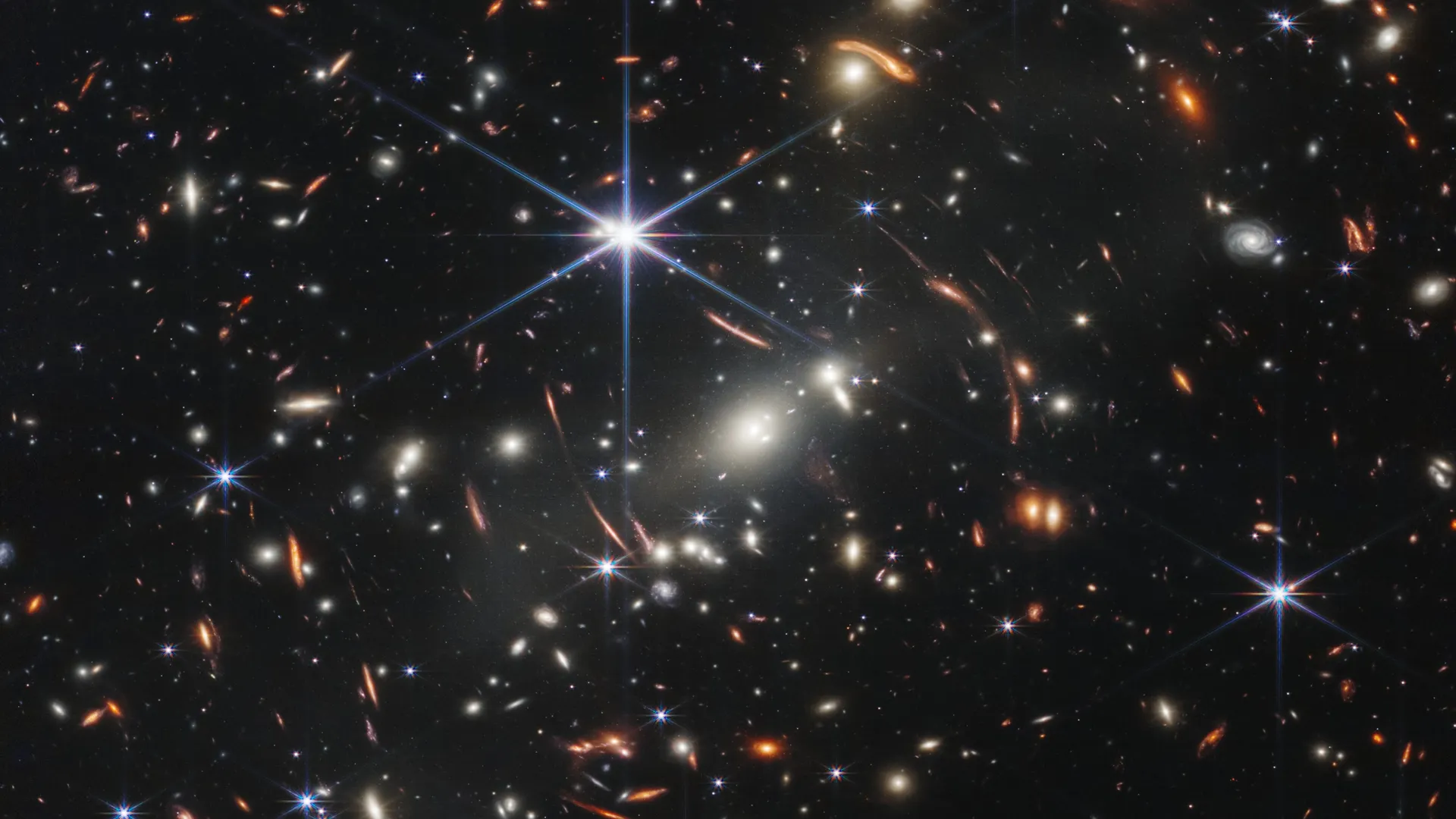
NASA/ESA/CSA/STScI · Webb’s First Deep Field, July 2022
Drawn from 28 sources: NASA (21), U.S. Government Accountability Office (3), Congressional Research Service, U.S. Senate Committee on Appropriations and 2 others. About 12 minutes. Checked October 1, 2026.
NASA now flies three large telescopes that were built around different questions. The Hubble Space Telescope has circled Earth since 1990, just above the atmosphere. The James Webb Space Telescope has watched the infrared sky since 2022 from about a million miles away. The Nancy Grace Roman Space Telescope launched on August 30, 2026, and is still traveling out to join Webb. A common misconception is that Webb would “replace” Hubble, and Roman both of them. NASA’s own answer is that Webb has different capabilities than Hubble, and that Roman is a successor to neither: it joins the other two in an ongoing partnership, surveying wide swaths of sky while Hubble and Webb focus in on specific objects.7,16
Hubble’s domain extends from the ultraviolet through visible light into the near-infrared. Webb sees from red light to the mid-infrared, which lets it reach the faint, stretched light of the first galaxies and look through clouds of dust. Roman has a mirror the same size as Hubble’s, but its optics give it a view 100 times larger, built for surveys rather than close study.1,9,16
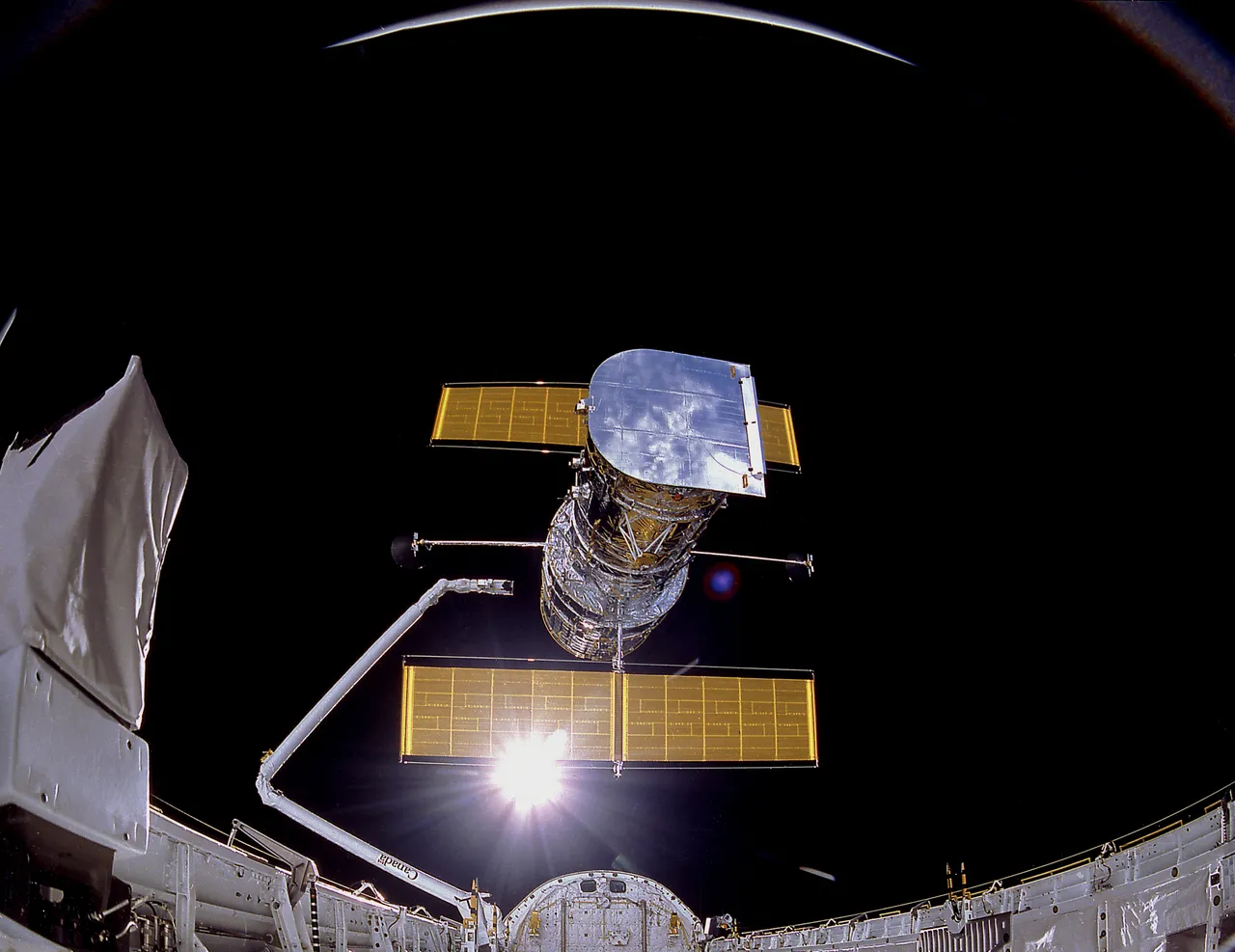
A telescope sized to fit the Shuttle’s cargo bay
In 1946, Princeton astrophysicist Lyman Spitzer wrote about the scientific benefits of a telescope in space, above Earth’s turbulent atmosphere. It would become a driving focus of his career. In 1969 the National Academy of Sciences gave its approval for a Large Space Telescope, but after the Moon landing, funding for NASA programs began to dwindle and planners had to design the telescope under budget constraints. The main mirror was reduced from 120 inches to 94.2
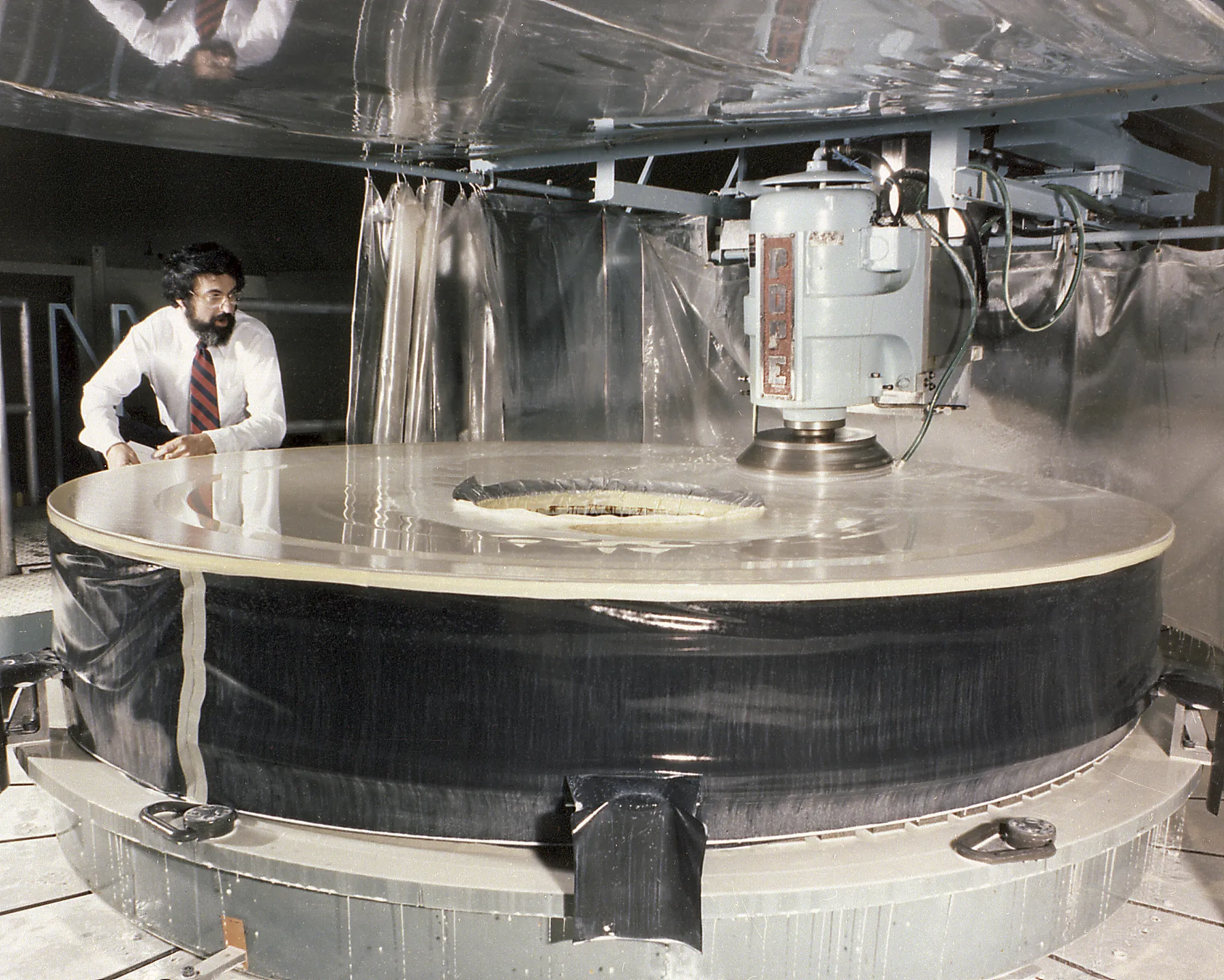
The Space Shuttle, then being developed, could carry the telescope into orbit and reel it back, so the designers made the telescope fit snugly inside the Shuttle’s cargo bay. NASA suggested a lifetime of 15 years, which meant instruments would have to be replaced periodically. The European Space Agency joined in 1975 and provided 15 percent of the funding through the Faint Object Camera and the solar arrays, in return for at least 15 percent of observing time for European astronomers. In 1977, Congress approved the money to build it.2
Marshall Space Flight Center led the design and construction. Marshall gave Perkin-Elmer the Optical Telescope Assembly and the Fine Guidance Sensors, and chose Lockheed Missiles and Space Company—now Lockheed Martin—to build the spacecraft’s structure and support systems and to assemble the telescope. Goddard Space Flight Center led the scientific instruments and ground control; the Space Telescope Science Institute in Baltimore began operations in 1983 to choose and manage observations.2
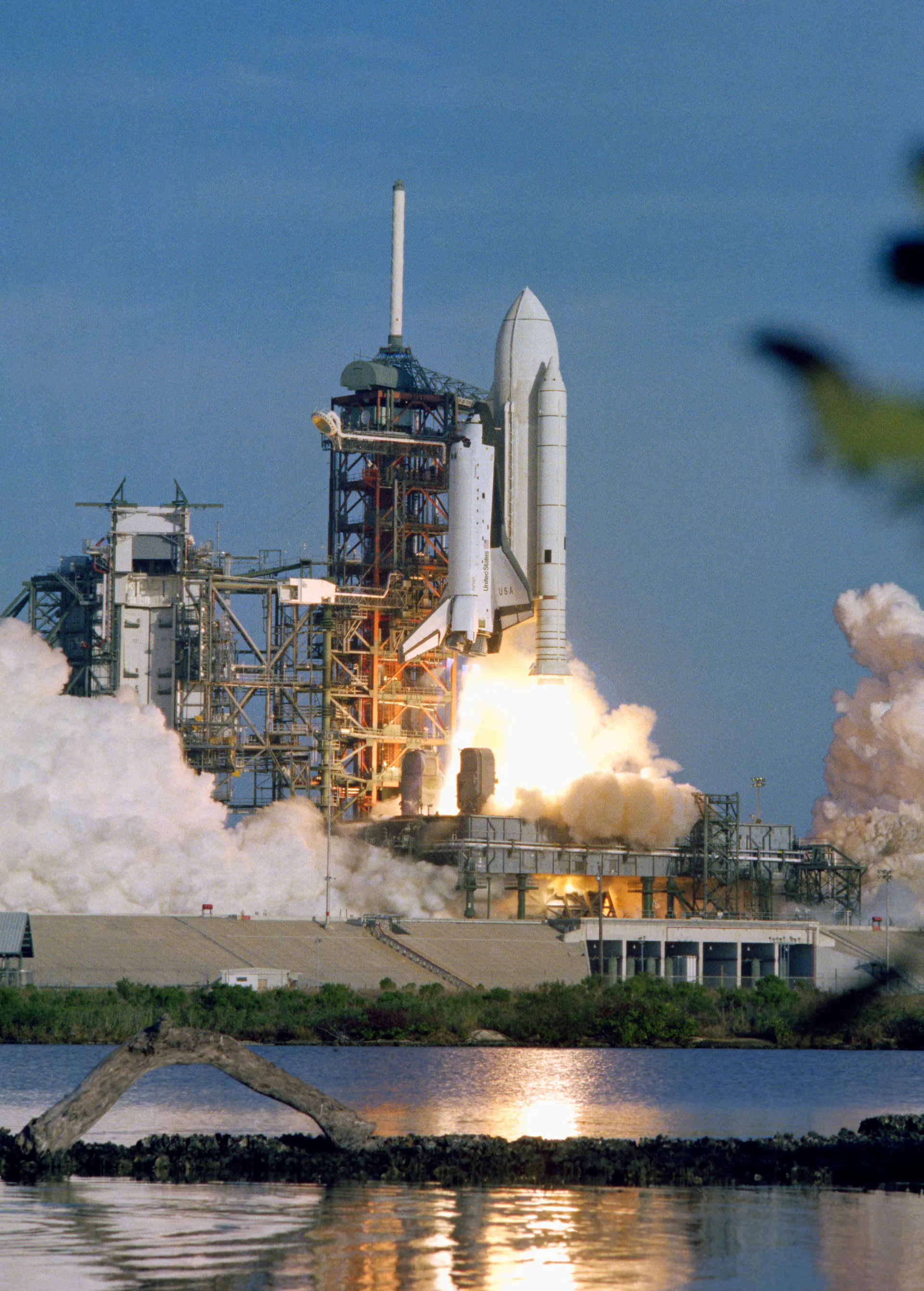
Delays from underestimating the cost and engineering of the telescope moved its launch from December 1983 to the second half of 1986. Then the Challenger accident grounded the Shuttle fleet for two years. On April 24, 1990, Discovery lifted off with Hubble in its bay, and the next day the telescope was released into orbit.2 NASA puts the mission’s cost since its official start in 1977 at about $16 billion in 2021 dollars, not counting the Shuttle flights that launched and serviced it.7
A mirror polished to the wrong shape
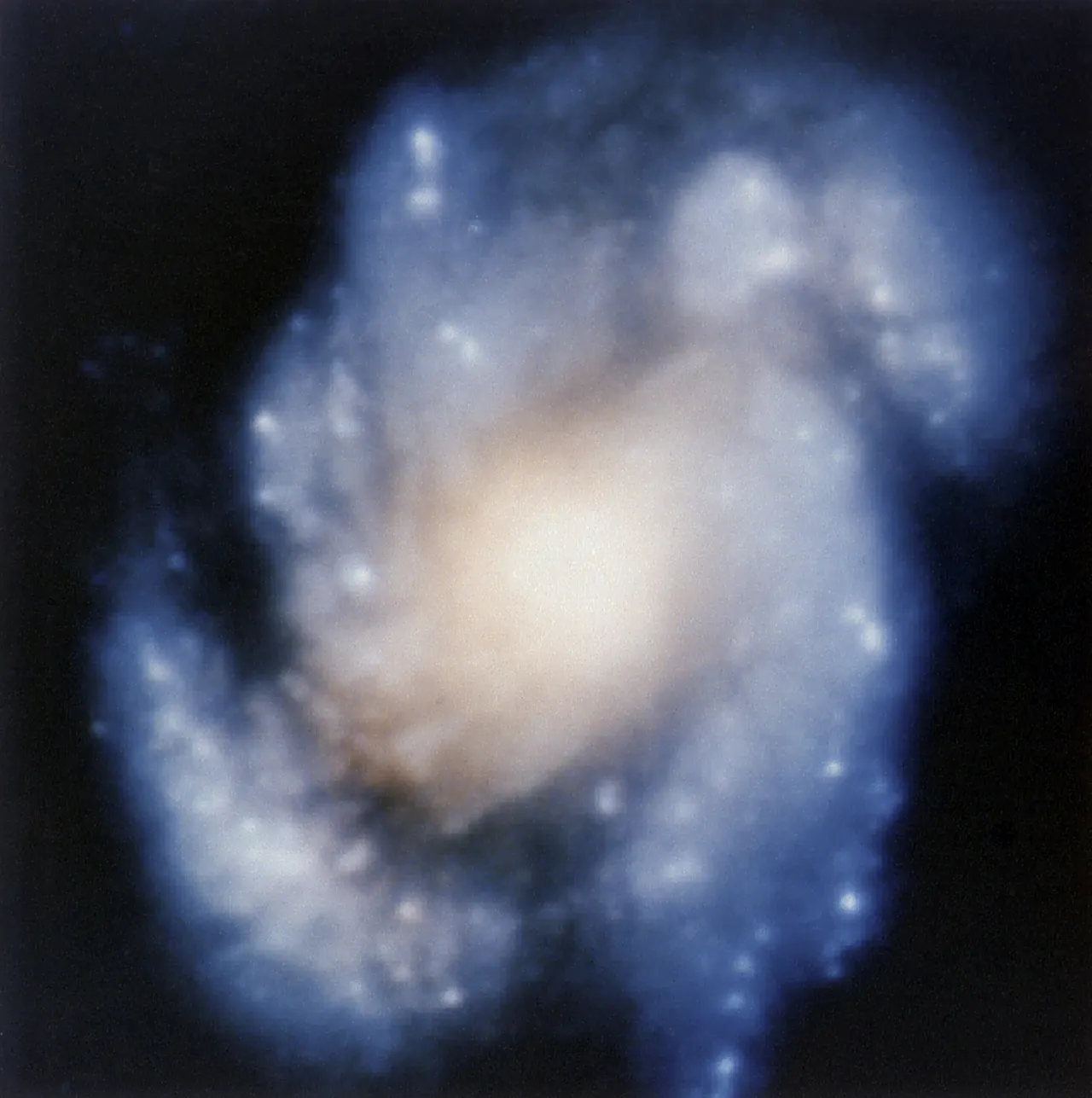
Two months after launch, on June 27, 1990, NASA announced that the telescope was flawed. Both of Hubble’s cameras showed the same distortion, called spherical aberration. A board of investigation found that the primary mirror had the wrong curve: it was too flat near its outer edge, by an error ten times larger than the tolerance its design required.3
The contractor had set up a test device for the mirror, called a null corrector, incorrectly during final shaping and polishing. Investigators found the device undisturbed, still in the configuration used nine years earlier, and traced the mistake to a lens spaced 1.3 millimeters out of place. Because light landing on the flattened outer edge came to a different focus than light from the rest of the mirror, Hubble’s images were blurry. Stars appeared surrounded by large, fuzzy halos.2,3
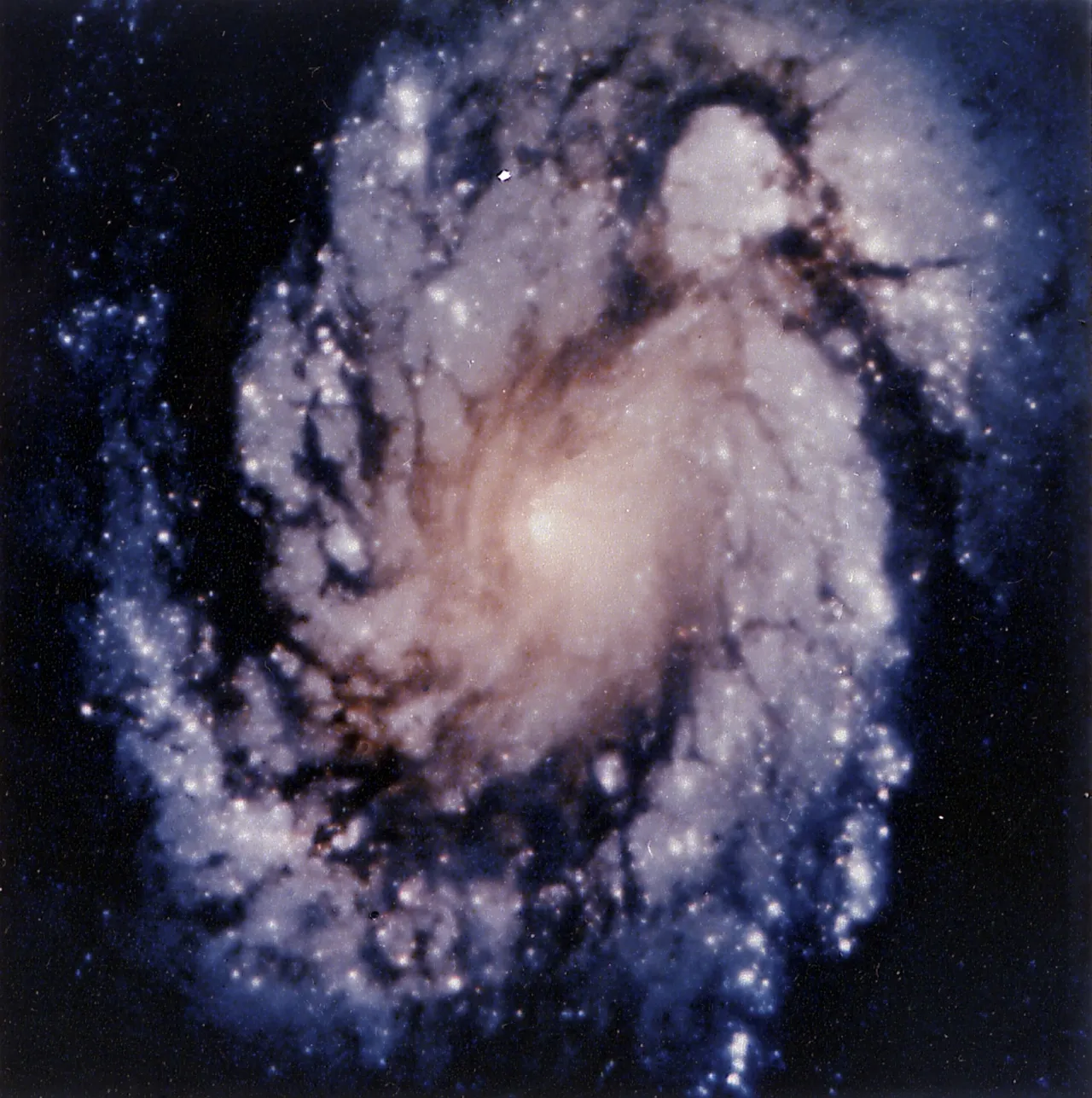
The primary mirror could not be replaced, but Hubble had been built for astronauts to upgrade in orbit, and that led to the solution. Before launch, engineers had already been building a second-generation camera, the Wide Field and Planetary Camera 2, for astronauts to install later; they redesigned it with internal optics that brought Hubble’s blurry light into focus. For the other instruments they built COSTAR, a refrigerator-sized package that placed small corrective mirrors in the light path—a pair of eyeglasses for the telescope. Astronauts installed both in December 1993. Every instrument installed afterward carried its own correction, and COSTAR came out in 2009; it is now on display at the National Air and Space Museum.2,3
Five Shuttle crews, five rebuilds
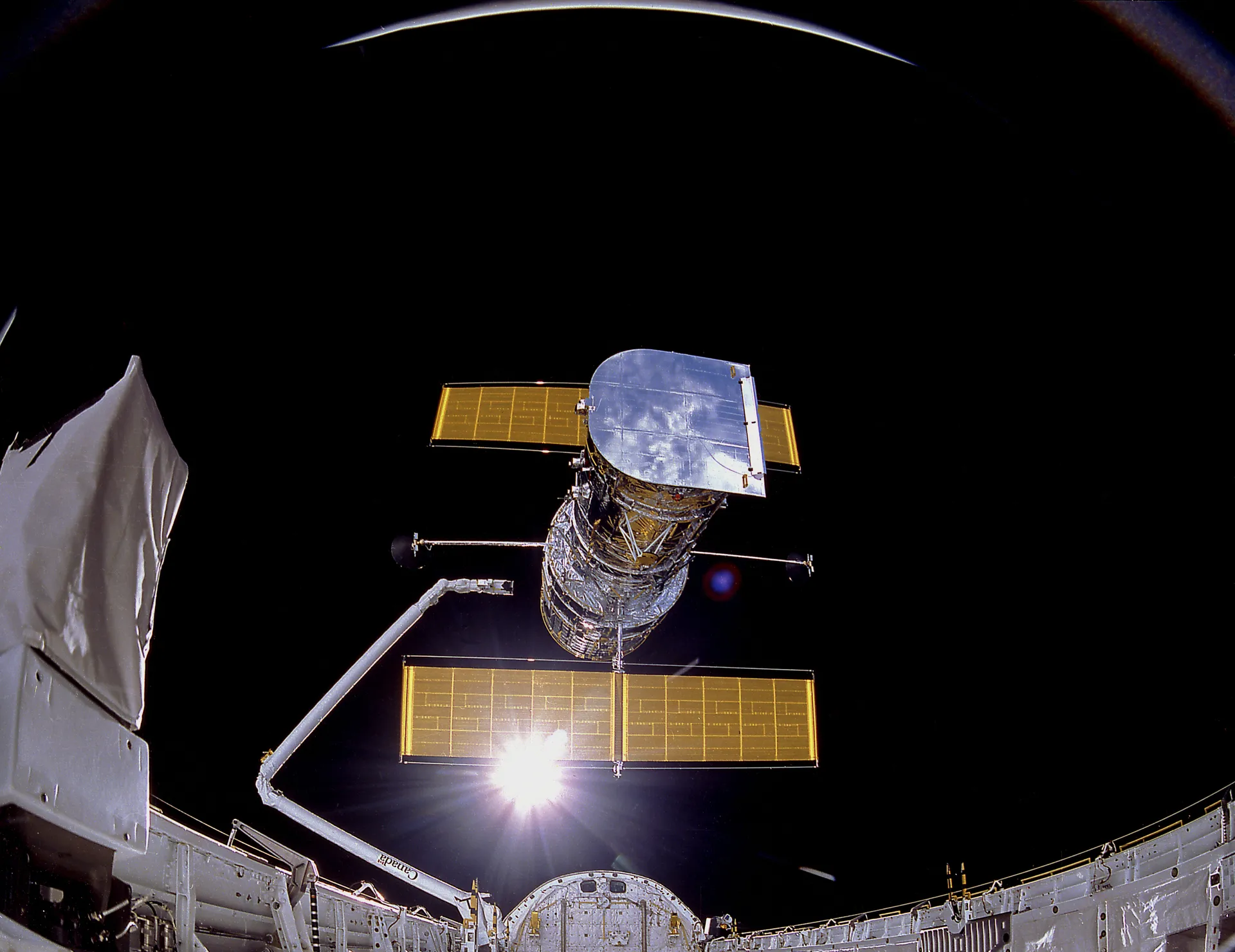
Hubble was the first observatory designed to be serviced by astronauts in orbit. Five servicing missions between 1993 and 2009, flown by Endeavour, Discovery, Columbia and Atlantis, replaced instruments, gyroscopes, batteries and solar arrays; in all, 32 astronauts flew on Hubble’s Shuttle missions. Each time, the Shuttle’s robotic arm captured the telescope and brought it into the cargo bay; spacewalkers worked over three to five days; and the Shuttle’s thrusters often carried Hubble into a slightly higher orbit before release, keeping it from deorbiting under atmospheric drag.4 The fifth mission was canceled after the Columbia accident and restored only once NASA had developed ways to reduce the risks of another Shuttle flight to Hubble.5
Dec. 2–13, 1993
Servicing Mission 1 (Endeavour)2
Astronauts install WFPC2 and COSTAR to correct the mirror flaw. On December 18, astronomers cheer the first sharp WFPC2 image.
Feb. 11–21, 1997
Servicing Mission 2 (Discovery)4
Two new instruments, STIS and NICMOS, extend Hubble’s range into the near-infrared.
Dec. 19–27, 1999
Servicing Mission 3A (Discovery)4
Split off as an emergency flight after the fourth of six gyroscopes failed on November 13 and Hubble went into safe mode.
Mar. 1–12, 2002
Servicing Mission 3B (Columbia)4
New solar arrays and the Advanced Camera for Surveys, which replaced the last original instrument.
May 11–24, 2009
Servicing Mission 4 (Atlantis)2
Two new instruments, two failed ones repaired in orbit, and new batteries, gyroscopes and a science computer.
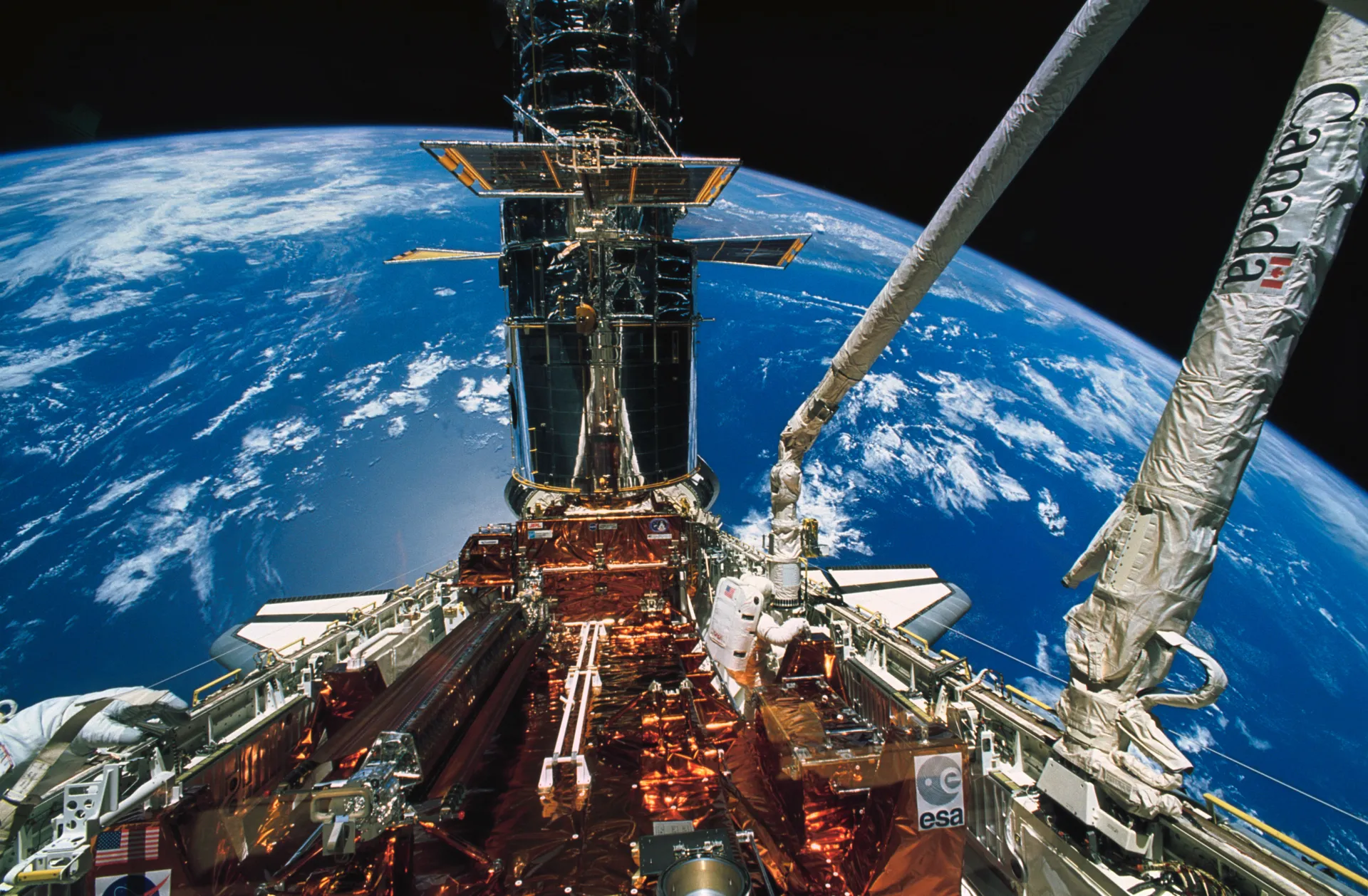
Hubble at 36: one gyroscope and 200,000 orbits
Hubble points with gyroscopes, and its gyros wear out: thin wires inside them corrode until they break. Of the six installed in 2009, three have failed. For six months, one of the remaining three increasingly returned faulty readings and sent the spacecraft into safe mode several times. After it did so again in late May 2024, NASA moved Hubble to a mode it had first developed more than 20 years earlier: science with one gyro, keeping another available for future use.5,6
In that mode Hubble needs more time to slew and lock onto a target, loses roughly 12 percent of its efficiency, and can no longer track objects closer than Mars. Combined with the smaller area of sky it can reach at any moment, NASA expects productivity to fall by roughly 20 to 25 percent from the three-gyro years.5 With the Shuttle retired, no servicing mission is planned. Atmospheric drag is slowly lowering the telescope, which is not expected to reenter until the mid-2030s at the earliest; a propulsion module will eventually be attached either to bring it down into the South Pacific or to boost it higher.2,7
On September 19, 2026, Hubble completed its 200,000th orbit. It has made more than 1.7 million observations over 36 years, and astronomers still request about seven times as much observing time as is available each year.8
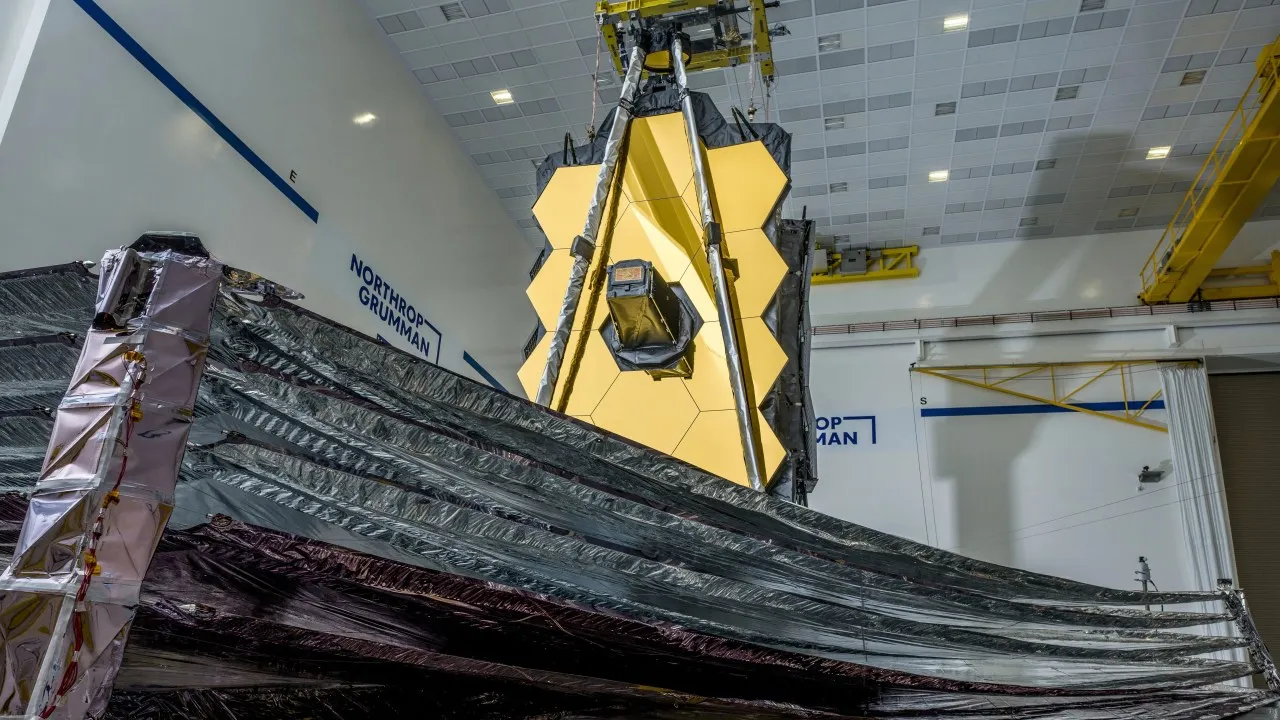
Webb: a mirror that unfolds behind a sunshield
Webb’s 21.3-foot (6.5-meter) primary mirror gives it more than six times Hubble’s light-collecting area. That matters because the universe is expanding: light from distant objects is stretched toward longer, redder wavelengths, and arrives dimmer. A Hubble-style mirror of that size would have been too heavy to launch, so Webb’s is made of beryllium in 18 hexagonal segments, each coated with a thin layer of gold, which reflects infrared light efficiently. Each segment has actuators that align it with the others and adjust its curvature, so that all 18 act as one mirror.9
Infrared light is heat. To capture the faint remnant warmth of objects so far away, Webb has to be extremely cold, about −364 degrees Fahrenheit (−220 Celsius), and shielded from the Sun, Earth and Moon. Its five-layer sunshield gives the telescope the equivalent of SPF one million: the hot side can reach 185 degrees Fahrenheit, while the coldest instrument, MIRI, runs at 7 kelvins, a few degrees above absolute zero. The whole observatory is so big that it was folded, origami-style, to fit inside its rocket.9,10
NASA’s Goddard Space Flight Center managed development; Northrop Grumman was the main industrial partner; the European and Canadian space agencies were partners; and the Space Telescope Science Institute operates the observatory. The telescope was first called the Next Generation Space Telescope and was renamed in September 2002 for James E. Webb, who ran NASA from 1961 to 1968.10
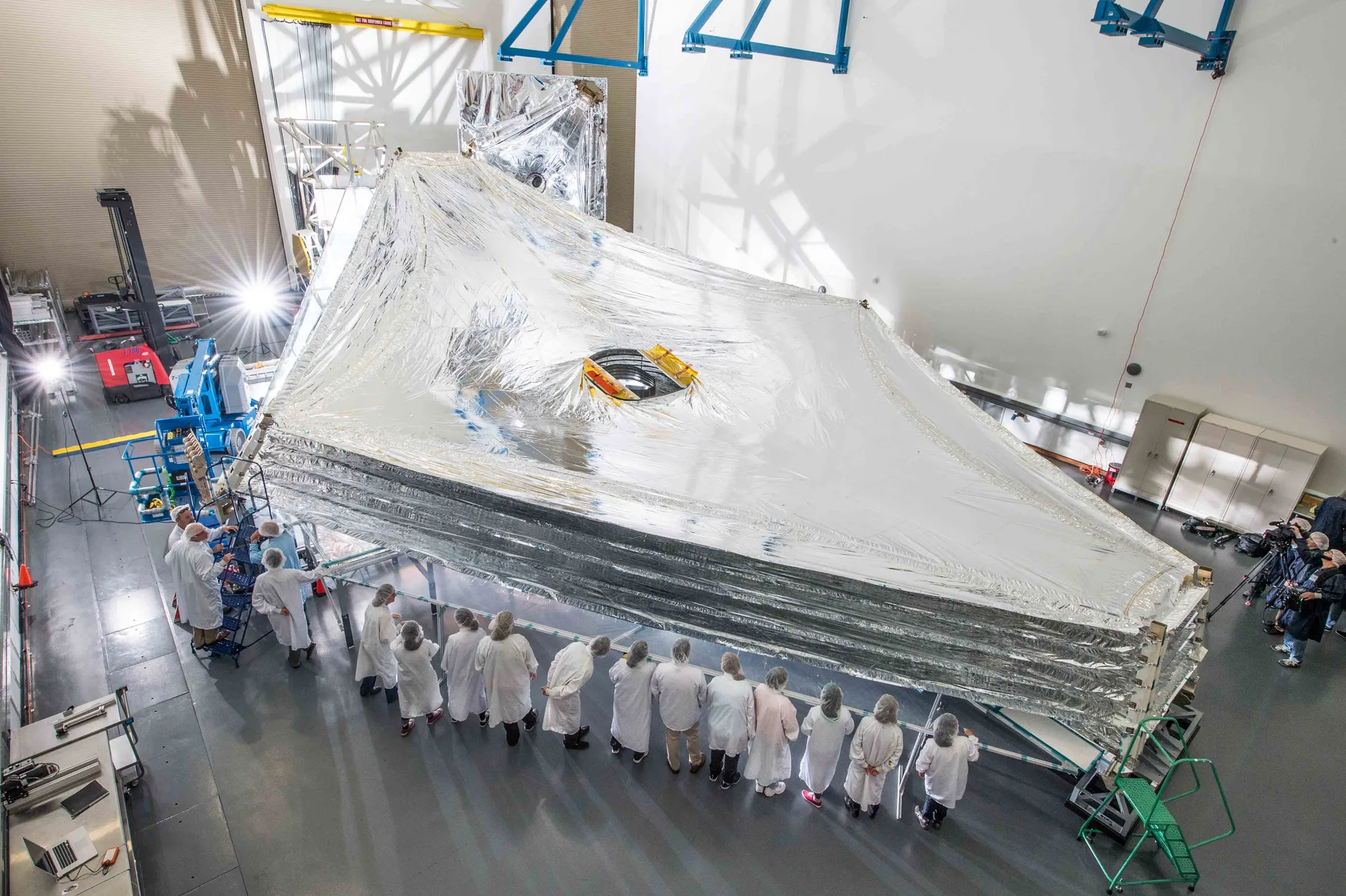
From $1 billion to $9.7 billion
Before Webb was approved for development, its cost estimates ranged from $1 billion to $3.5 billion, with launch dates from 2007 to 2011. In April 2009 NASA set a baseline of $4.964 billion and a launch in June 2014. Early technical and management challenges, contractor performance issues, low cost reserves and poorly phased funding caused the project to delay work after the baseline was set, which contributed to significant cost and schedule overruns.12,13
An independent review panel concluded in October 2010 that the baseline funding did not reflect the most probable cost with adequate reserves in each year, which made the project unexecutable. NASA replanned in September 2011, and Congress capped development at $8 billion. The new life-cycle estimate was $8.835 billion, with launch in October 2018.13
Integration and testing then ran into trouble. In 2017 NASA asked for a launch window five to eight months later. In June 2018 an independent review board found that technical issues, including human errors, had greatly impacted the schedule; NASA cited environmental testing and work performance challenges by Northrop Grumman on the sunshield and propulsion system, and set a new launch date of March 30, 2021 and a life-cycle cost of $9.66 billion.13,14 In July 2020 the date moved again, to October 2021. By then, the Government Accountability Office calculated, costs had risen 95 percent and the launch had slipped 88 months since the 2009 baseline.15
Webb’s life-cycle cost estimate, by plan13
Show the numbers
| plan | Life-cycle cost |
|---|---|
| 2009 baseline | $5B |
| 2011 replan | $8.8B |
| 2018 replan | $9.7B |
When NASA said Webb would launch15
A million miles out, where no one can service it
Webb launched on December 25, 2021, from French Guiana on an Ariane 5. It took about 30 days to reach the start of its orbit around the second Lagrange point, L2—only three days to pass the Moon’s distance, a quarter of the way there.10,11
Webb does not orbit Earth. It orbits the Sun with Earth, about 1.5 million kilometers (one million miles) away, where the combined pull of the Sun and Earth lets it keep pace with Earth and hold position with relatively little thrust. From there the Sun, Earth and Moon always sit in the same part of the sky, behind the sunshield. Its halo orbit around L2 is roughly the size of the Moon’s orbit around Earth and takes about six months to complete; unlike Hubble, which goes in and out of Earth’s shadow every 95 minutes, Webb can observe around the clock.1,11
160 to 2,000 km up
Low Earth orbit
The Space Station circles at about 420 km, once every 92 minutes. Crew capsules, cargo ships and most Earth-observing satellites work here.
1.5 million km away
Sun–Earth L2
Webb orbits a balance point on the far side of Earth from the Sun, where Sun, Earth and Moon all stay behind its sunshield.
Drag to turn. Distances and sizes are to scale.
Hubble was designed for astronauts to reach it; at four times the Moon’s distance there is no servicing capability or plan for Webb, and its design does not rely on any.9 It did arrive with fuel to spare: after launch and two mid-course corrections, the team found the observatory should have enough propellant for significantly more than a 10-year science lifetime, against a minimum baseline of five.26 Four years into its science mission, Webb is still producing new results—on September 15, 2026, one of the largest images it has yet released, of the star-forming region IC 348.27
The same pillars, in two kinds of light
Despite its larger size, Webb delivers about the same resolution in near-infrared light as Hubble achieves in visible light, because resolution depends on mirror size divided by wavelength. With similar sharpness, the two can observe the same objects and be compared directly.9 Hubble made the Pillars of Creation in the Eagle Nebula famous with its first image in 1995 and photographed them again in visible light in 2014. In October 2022 Webb’s Near-Infrared Camera showed the same columns of cool gas and dust as semi-transparent, with newly formed stars glowing red around them.28
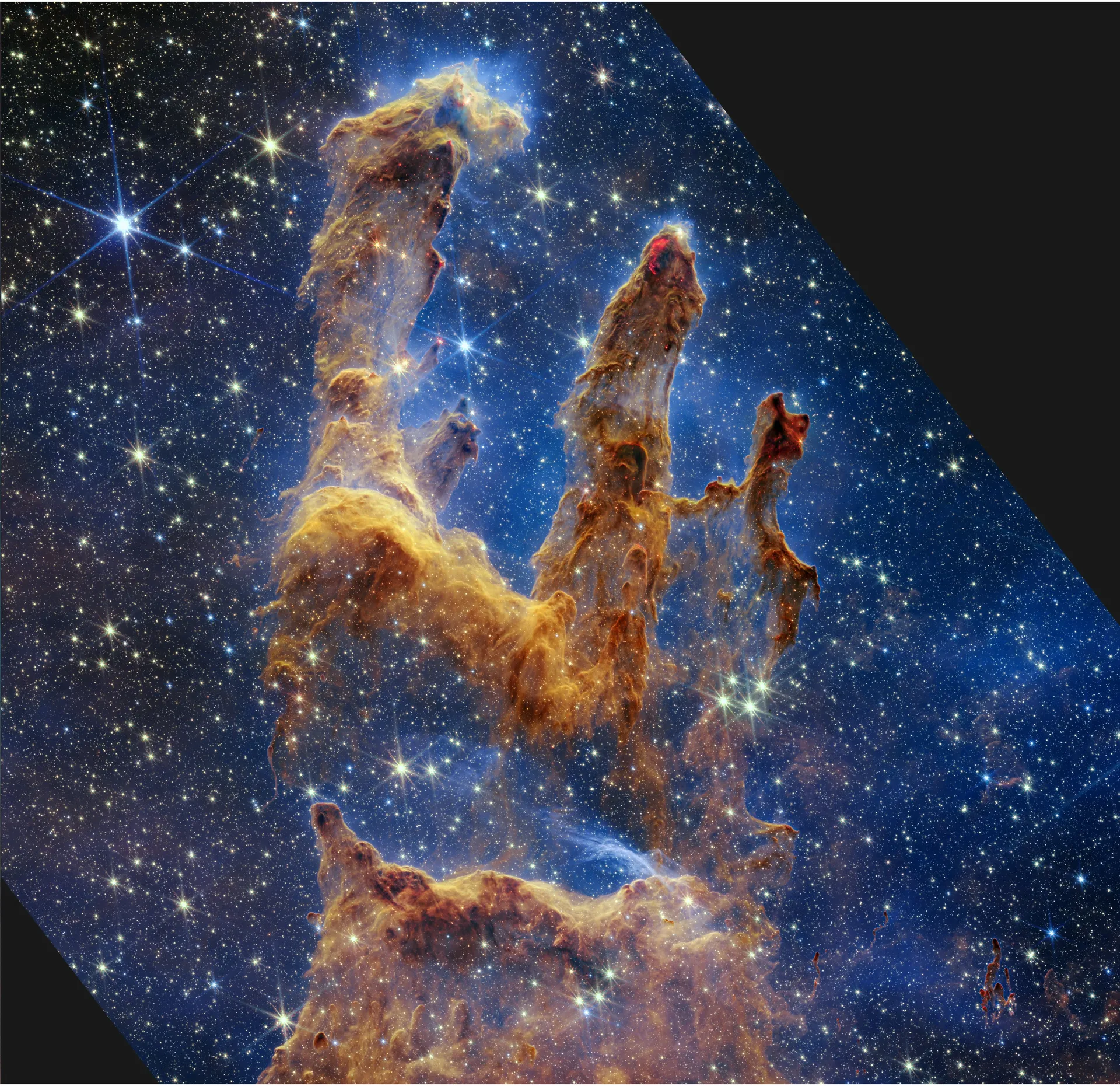
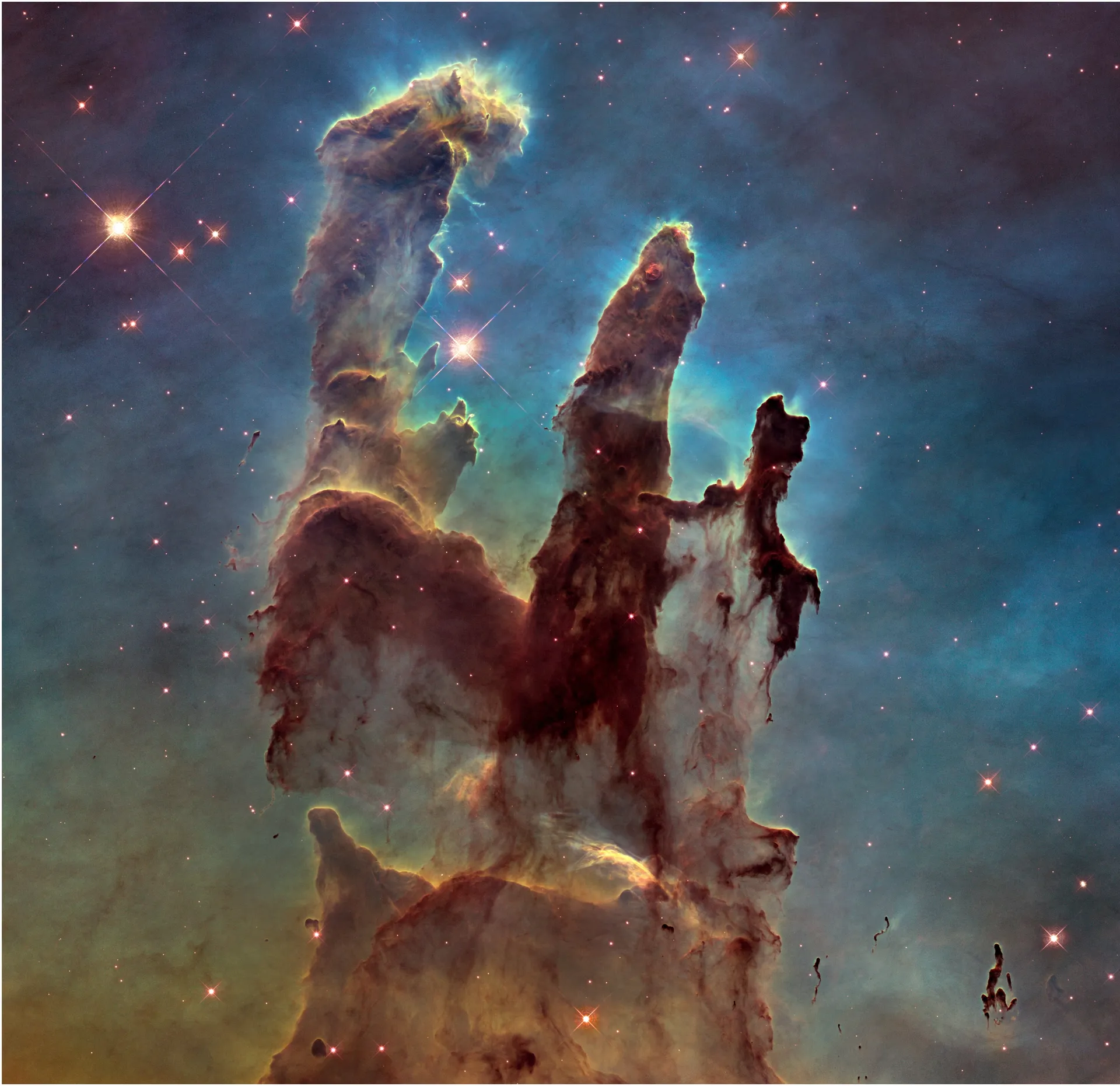
Webb’s view goes past Hubble’s near-infrared limit—0.6 to 28.5 microns against Hubble’s 0.1 to 2.5—into the mid-infrared, where it can study distant exoplanet atmospheres. Hubble was optimized for the shorter ultraviolet and visible wavelengths, so together the two cover a broad range of wavelengths.9
Roman: Hubble’s mirror size, a hundred times the view
Roman’s primary mirror is the same 2.4 meters across as Hubble’s, but it weighs 410 pounds against Hubble’s 1,825, and its three-mirror design gives a focal length roughly three times shorter. The shorter the focal length relative to the mirror, the wider the field of view: Roman’s Wide Field Instrument sees an area 100 times larger in each image. In more than three decades, Hubble has seen about one-tenth of one percent of the sky; in its first five years, Roman is expected to image 50 times as much sky as Hubble covered in 30.16
In NASA’s comparison, Roman is a wide-angle lens in infrared light and Hubble the zoom lens in ultraviolet and visible light. Roman can survey the universe a thousand times faster than Hubble and will send back 1.4 terabytes of data a day, the most of any NASA astrophysics mission so far. Its surveys are aimed at dark energy and dark matter—by charting how visible matter moves—and at exoplanets; its second instrument, a coronagraph, will test technology for blocking starlight to photograph planets.16,17
Launched early, a month into commissioning
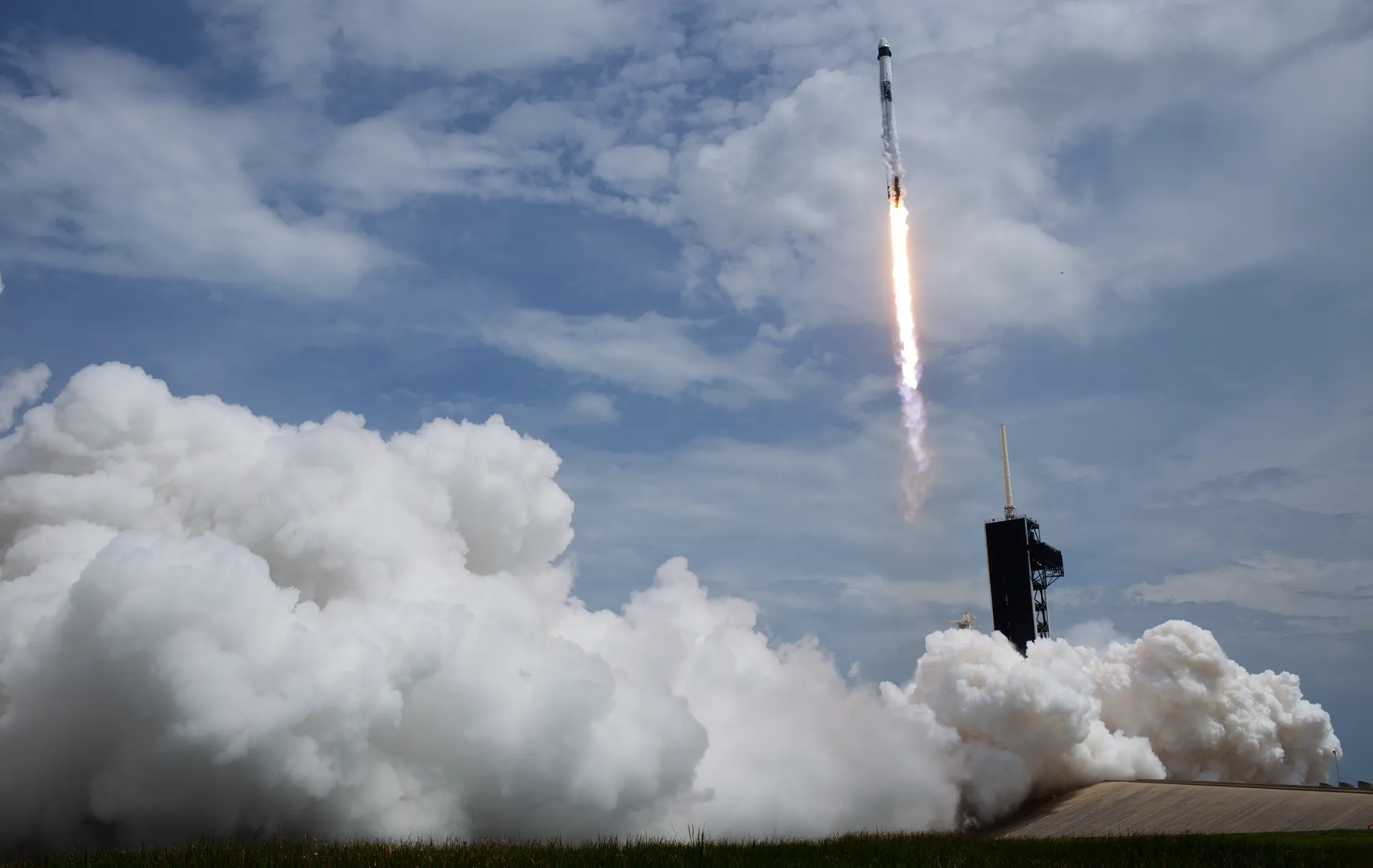
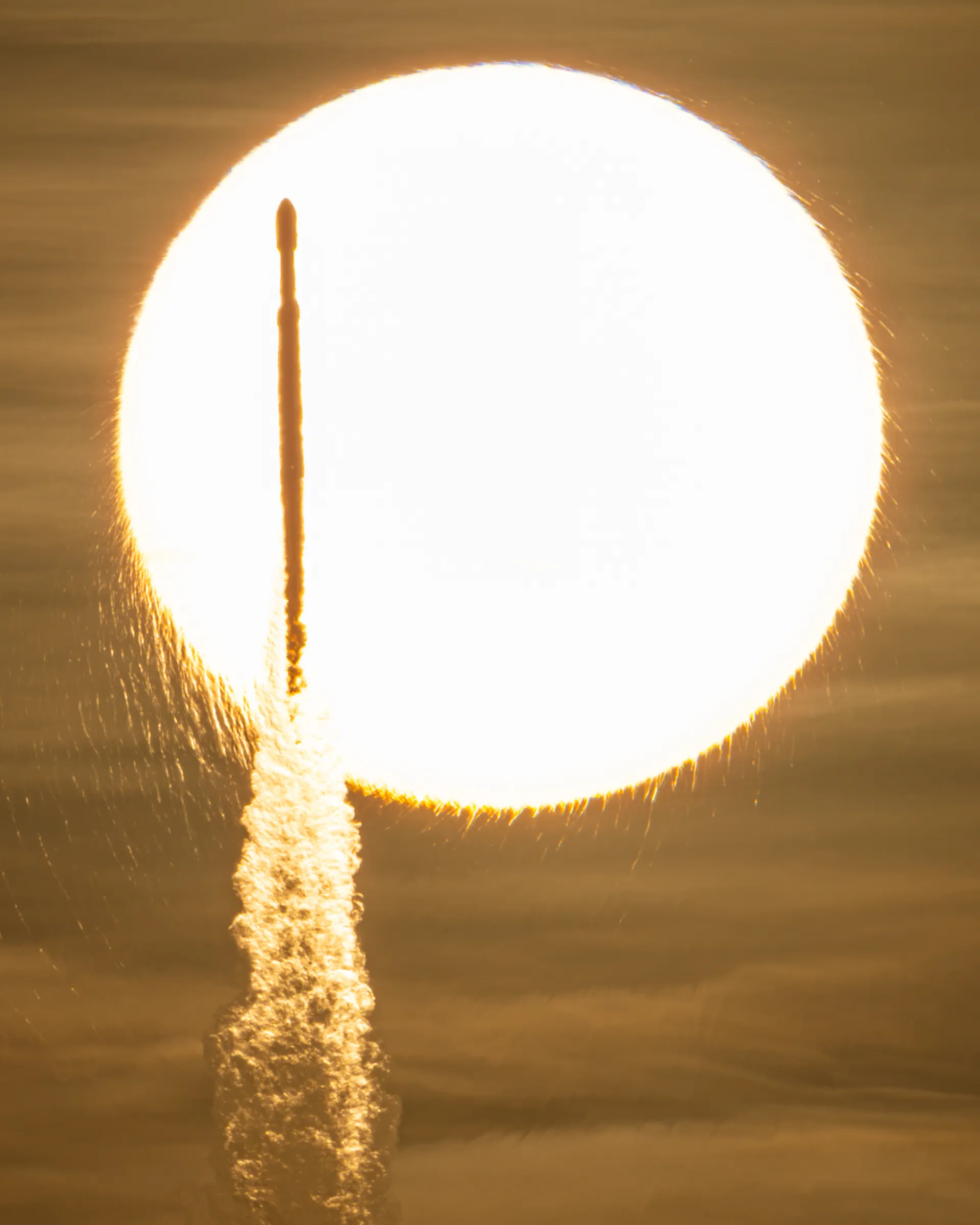
Roman lifted off at 7:26 a.m. EDT on August 30, 2026, on a SpaceX Falcon Heavy from Launch Complex 39A—the fourth NASA primary mission on that rocket. Earlier in the year, NASA’s Launch Services Program had worked with SpaceX to move the launch forward because the observatory was finished early. “Delivered ahead of schedule and on budget,” Administrator Jared Isaacman said.17 NASA’s 2027 budget request, released in April, had described a launch as early as September 2026 against a baseline launch-readiness date of May 2027.21
The first mid-course burn, on August 31, was more than 99 percent accurate and used about 40 pounds of propellant instead of the 441 budgeted. Together with fuel loaded beyond the 10-year requirement, that leaves Roman enough for at least 22 years.18 On September 11 the team cooled the Wide Field Instrument and switched on its 18 infrared detectors; the first starlight, recorded with the detector array still stowed as it was for launch, was far from best focus.19 The fine-guidance system passed its tests between September 15 and 21, and on September 22 the coronagraph took its first look at space.20
Roman should enter its final orbit around L2 about 100 days after launch, in early December. NASA expects its first science images by early 2027; as of October 1 there are no science results yet.18,19
A 65 percent cut proposed for astrophysics
The three telescopes share one budget line. Congress gave NASA Astrophysics $1.595 billion for fiscal 2026, rejecting a request to cut NASA science by 47 percent; within it were $98.3 million for Hubble, $208 million for Webb and $300 million to finish Roman, against requests of $85 million, $140 million and $156.6 million.22,23,24
NASA astrophysics funding22
Show the numbers
| year | Astrophysics |
|---|---|
| 2025 enacted | $1,530M |
| 2026 enacted | $1,595M |
| 2027 request | $552M |
The fiscal 2027 request, released in April 2026, would cut Science from $7.25 billion to $3.89 billion, or 46 percent, and Astrophysics to $552 million, a 65 percent cut. Within that, it asks $213 million to operate Webb and Hubble together and $167 million for Roman.21,22 Congress has not settled the question. In May the House Appropriations Committee approved $6 billion for NASA science; as of September the Senate Appropriations Committee had reported none of its 2027 bills. A continuing resolution signed on September 2 keeps NASA at its 2026 level through December 11.22,25
A supernova Webb found, and Hubble waits to see again
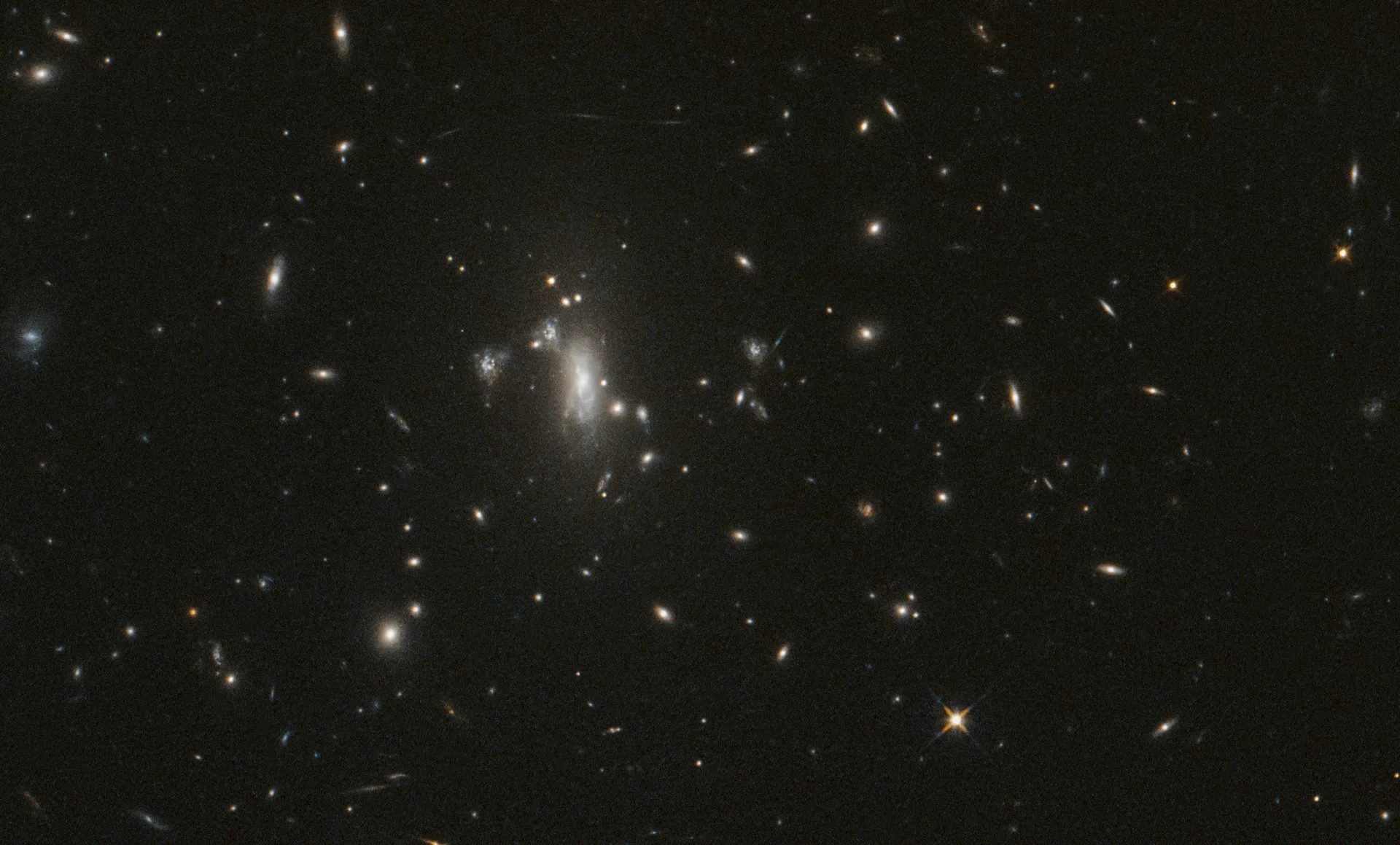
The galaxy cluster MACS J0417, photographed by Hubble in September 2026 while it watches for the next appearance of the supernova Athena.
On the day of its 200,000th orbit, Hubble was watching the galaxy cluster MACS J0417 for the return of a supernova named Athena. The cluster acts as a gravitational lens, so light from one stellar explosion reaches Earth along several paths and the same supernova appears more than once, months or years apart. Webb discovered Athena in 2025; Hubble is watching for the next appearance, predicted between now and early March 2027. Measuring the timing helps map the cluster’s mass and refine the expansion rate of the universe, one of Hubble’s defining scientific legacies.8
That is the division of labor NASA describes: as Roman surveys the sky, its discoveries will guide Hubble and Webb toward targets that need a closer look, or a specific wavelength of light, to understand.16
Sources
The text above is drawn from these 28 sources. Government works are adapted closely; company and press material is summarized. Numbers in the text point here. Last checked October 1, 2026.
Show all 28 sourcesShow fewer
- 1Back to the text
- 2Back to the text
- 3Back to the text
- 4Back to the text
- 5Back to the text
- 6Back to the text
- 7Back to the text
- 8Back to the text
- 9Back to the text
- 10Back to the text
- 11Back to the text
- 12Back to the text
- 13Back to the text
- 14Back to the text
- 15Back to the text
- 16Back to the text
- 17Back to the text
- 18Back to the text
- 19Back to the text
- 20Back to the text
- 21Back to the text
- 22Back to the text
- 23Back to the text
- 24Back to the text
- 25Back to the text
- 26Back to the text
- 27Back to the text
- 28Back to the text
Continue
Related stories
- OrbitsHeight sets a satellite’s speed; tilt and shape set what it sees. Five neighborhoods, from the station about 400 km up to Webb 1.5 million km away, and the work each one makes possible.
- The Space ShuttleNixon approved a $5.5 billion reusable spaceplane in 1972 to make spaceflight routine and cheap. It repaired Hubble and built a space station, lost two crews, and never flew more than nine times in a year.
- NASA’s budgetIn 1966 NASA spent 4.4 cents of every federal dollar; today about a third of a cent. Where its roughly $25 billion a year goes, how it is decided, and why Congress keeps rejecting an $18.8 billion request.