James Webb Space Telescope
An infrared observatory a million miles from Earth, behind a sunshield the size of a tennis court.
- Type
- Observatory
- Status
- Operating
- First flight
- December 25, 2021
- Size
- 21.2 m (70 ft)
- Built by
- Northrop Grumman, NASA, ESA
- $9.7B
- life-cycle cost; the 2009 baseline was $5.0 billion (GAO)
- 7+ years
- launch delay from the 2014 baseline to December 2021
- 1.5M km
- from Earth, orbiting the Sun–Earth L2 point
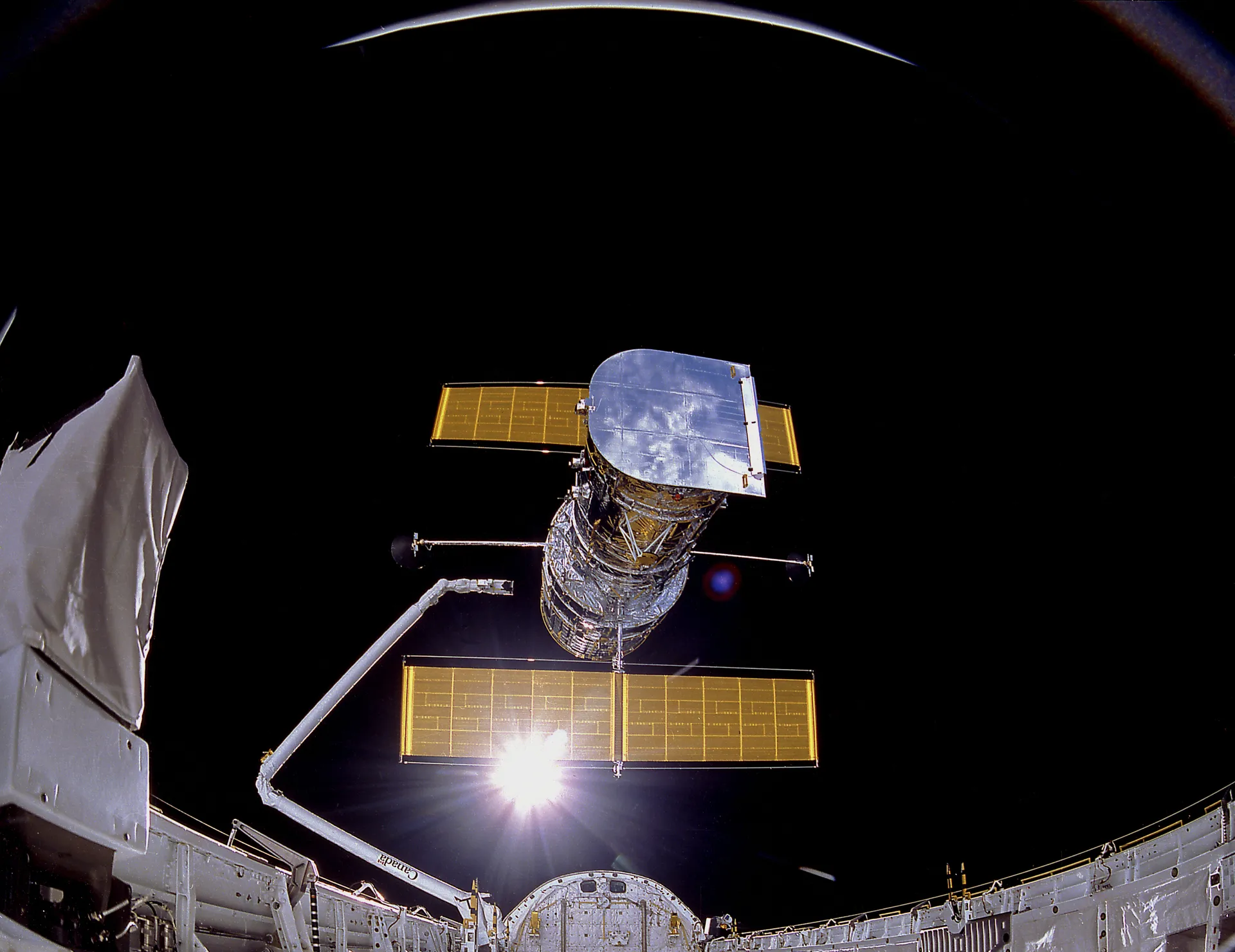
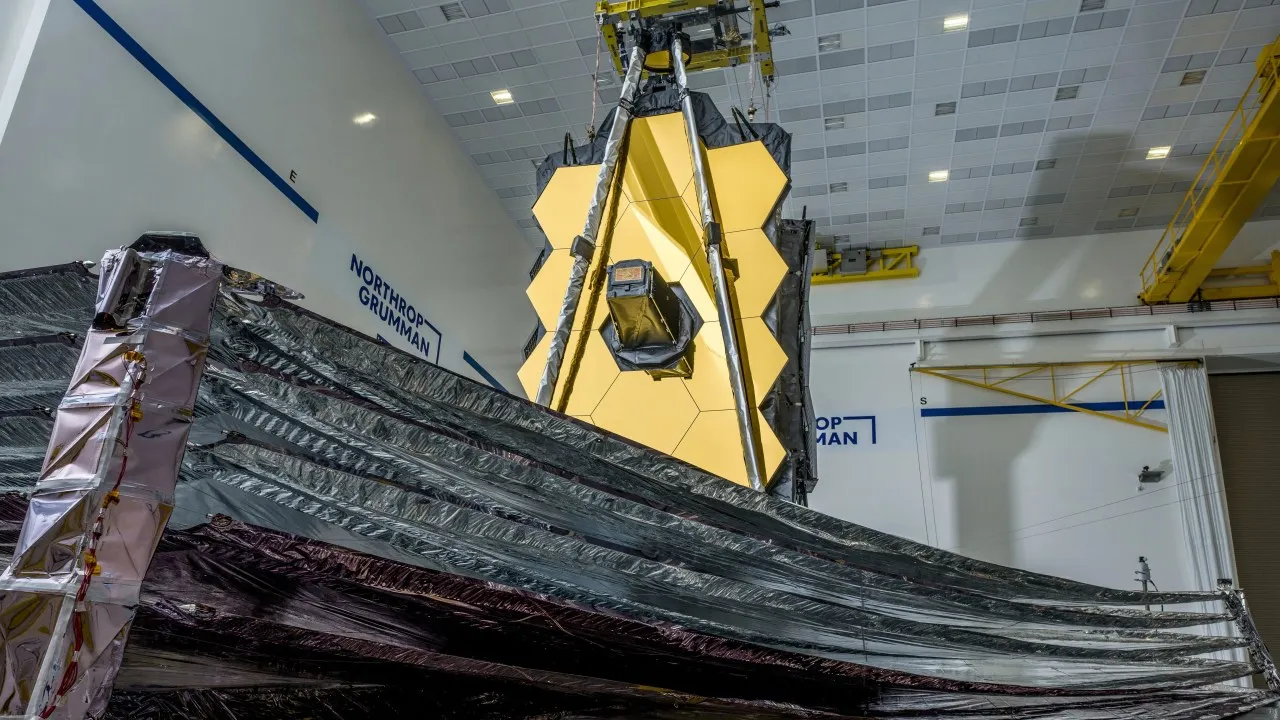
The James Webb Space Telescope is an infrared observatory built by NASA with the European and Canadian space agencies. Its 6.5-meter primary mirror, made of 18 gold-coated beryllium segments, has more than six times Hubble’s light-collecting area, so it can see the faint, stretched light of the first galaxies and look through clouds of dust. A five-layer sunshield about the size of a tennis court keeps the telescope at about −364 degrees Fahrenheit. Goddard Space Flight Center managed its development, Northrop Grumman was the main industrial partner, and the Space Telescope Science Institute operates it.
Before Webb was approved for development, its cost estimates ranged from $1 billion to $3.5 billion; it was baselined in 2009 at $4.964 billion for a June 2014 launch, replanned in 2011 at $8.835 billion, and replanned again in 2018 at $9.66 billion. The Government Accountability Office counted 95 percent cost growth and 88 months of delay against the 2009 baseline.
Webb launched on an Ariane 5 from French Guiana on December 25, 2021, and orbits the Sun about 1.5 million kilometers from Earth at the second Lagrange point, where no servicing is possible. The precision of its launch left enough propellant for significantly more than a 10-year science lifetime.
Read more about James Webb Space Telescope
Sources
- 1
- 2
- 3
- 4
- 5
- 6