Sixteen crewed flights that taught NASA how to work in orbit
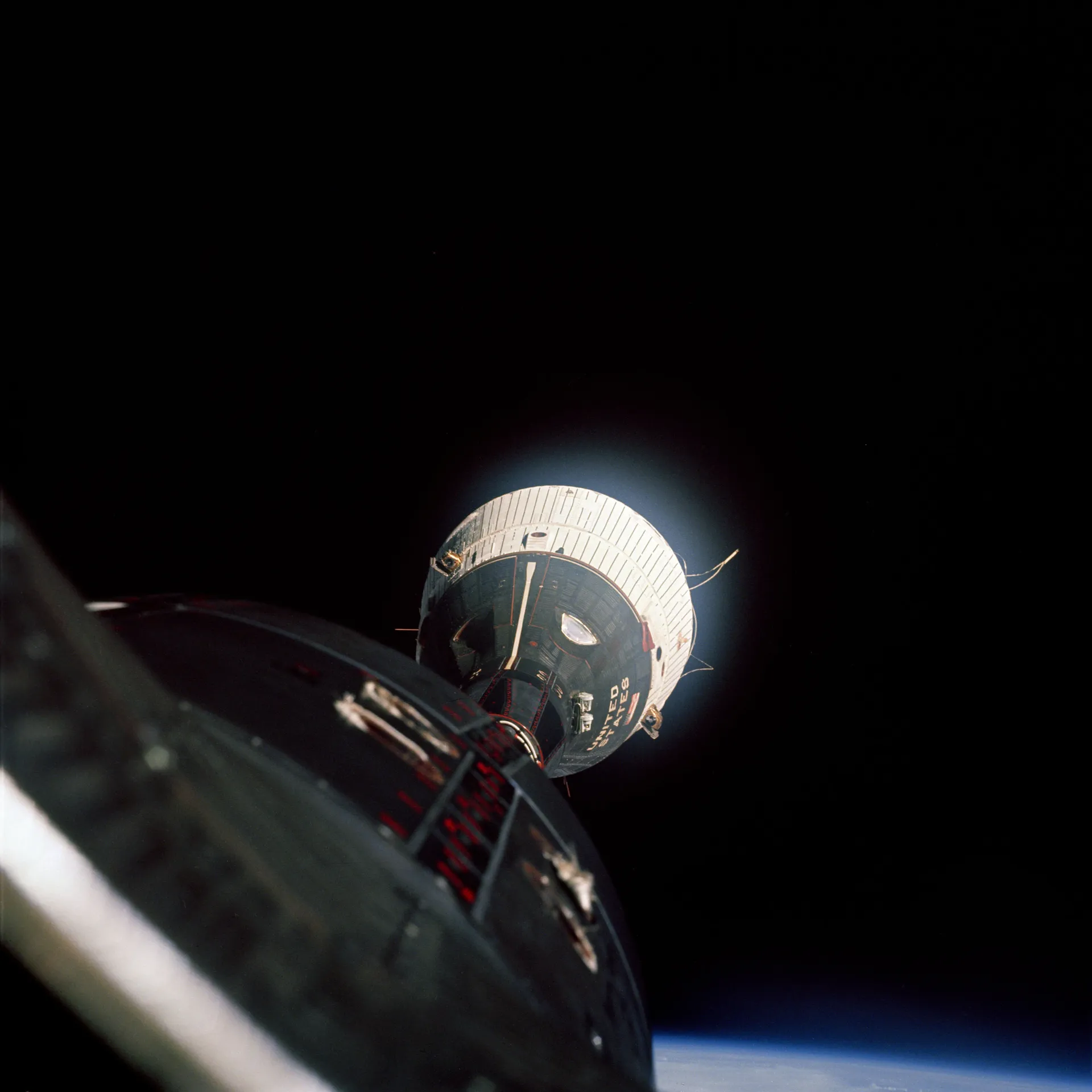
Mercury’s six flights showed a person could ride to orbit and come home. Gemini’s ten taught maneuvering, rendezvous, docking, spacewalks and two-week flights—at about double the first estimate.
NASA
Drawn from 13 sources: NASA (12) and NASA Kennedy Space Center. About 9 minutes. Checked October 1, 2026.
In October 1958, just six days after NASA formally organized, America’s first human spaceflight program was born. Its objectives, as stated at the go-ahead, were specific: place a crewed spacecraft in orbit around Earth, investigate a person’s ability to function in space, and recover the astronaut and the spacecraft safely. Project Mercury’s crewed flights spanned just two years, from May 1961 to May 1963. Gemini followed in 1965 and 1966 with ten more. Between them the two programs turned a one-person experiment into a routine of launch, maneuver, rendezvous and recovery that Apollo could build on.1,2
Seven test pilots and a capsule built in St. Louis
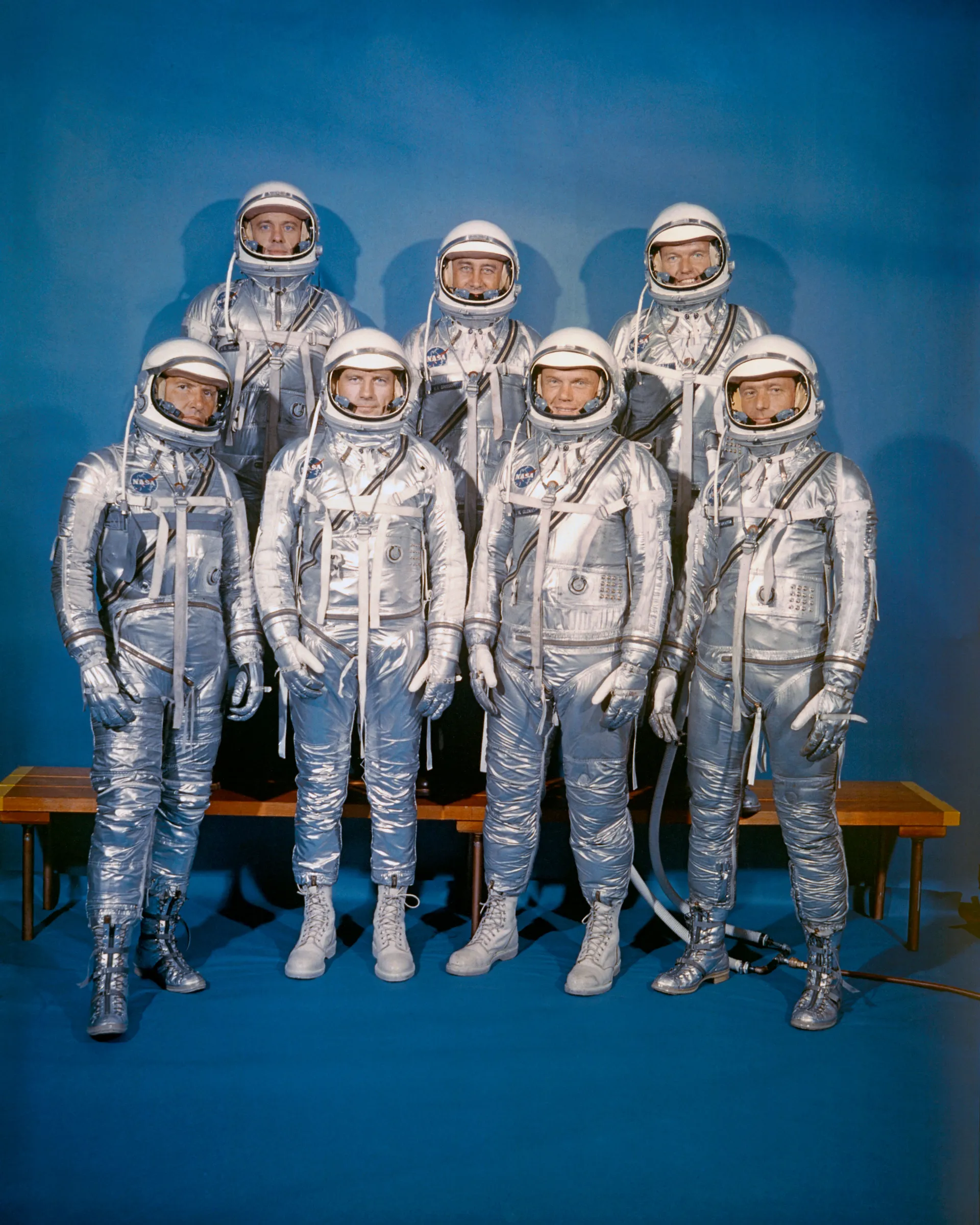
NASA’s astronaut selection committee decided in December 1958 that candidates would come from military test pilots. In January 1959 it screened the service records of 508 men; by February the pool was 110, by March 32. On April 9, 1959, at a press conference in Washington, the public met the seven chosen: Scott Carpenter, Gordon Cooper, John Glenn, Virgil “Gus” Grissom, Walter Schirra, Alan Shepard and Donald “Deke” Slayton. They were called astronauts, a cross between “aeronauts,” as ballooning pioneers were known, and “Argonauts,” the Greeks who sailed in search of the Golden Fleece.1,2
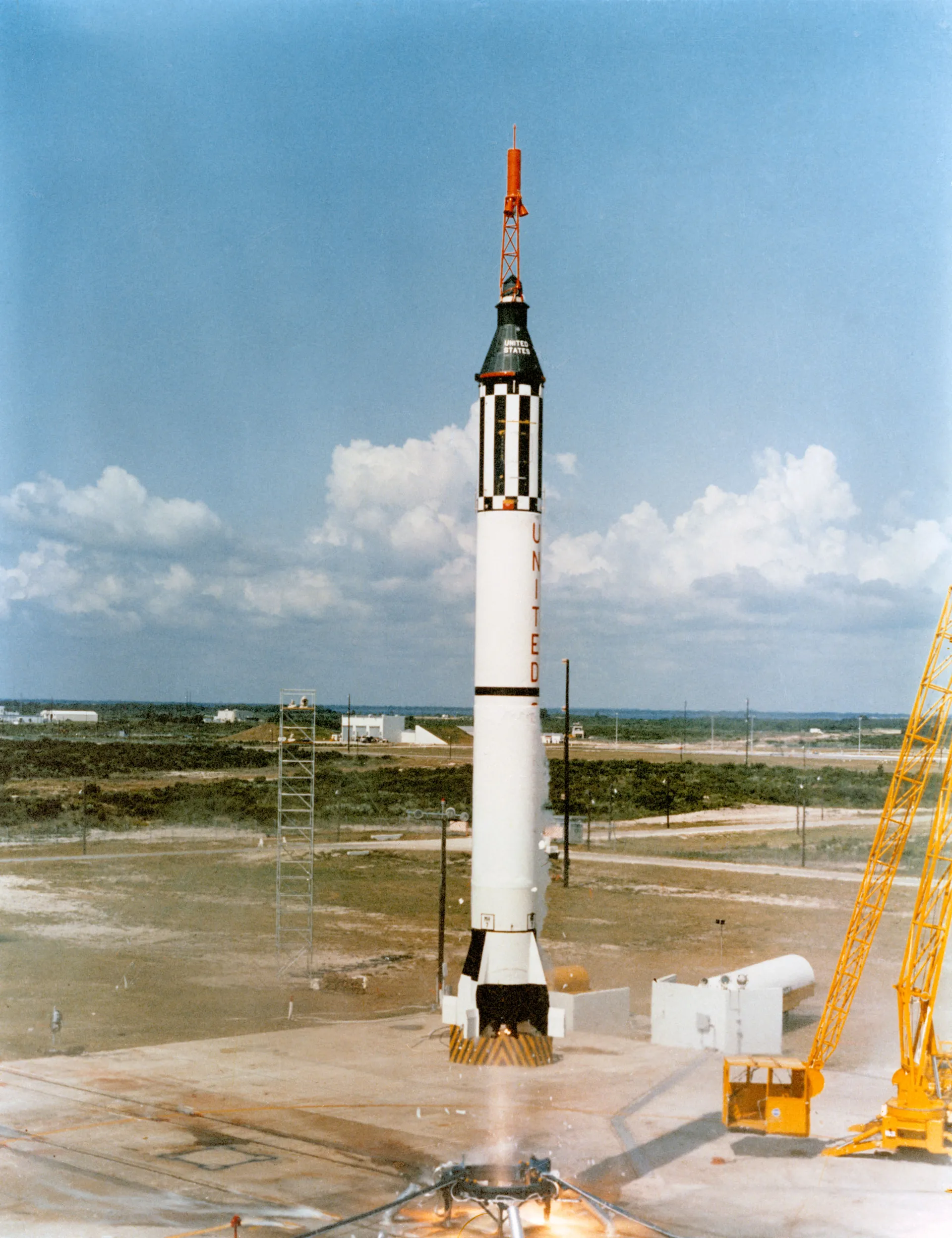
The first U.S. spaceship was a cone-shaped, one-person capsule. Its blunt end was covered with a heat shield against the roughly 3,000-degree heat of reentry; parachutes slowed it for a splashdown in the ocean, where ships recovered the astronaut and the vehicle. Each astronaut named his capsule and added the numeral 7 for the team. Two launch vehicles were used: a Redstone for suborbital flights and an Atlas, a modified intercontinental ballistic missile, for orbital ones.1,4
The capsule was designed by the Space Task Group at Langley and built by McDonnell Aircraft in St. Louis. For a year before it won the prime contract, McDonnell had studied the design with company money; its advanced-design group grew from 12 engineers in January 1958 to about 40 by the time it submitted its proposal. Maxime Faget and his Space Task Group colleagues had written a 50-page specification for the capsule and some 15 subsystems, and NASA and McDonnell engineers began working together officially on January 12, 1959. The relationship that followed was one of almost organically close teamwork.4
Six flights, from fifteen minutes to thirty-four hours
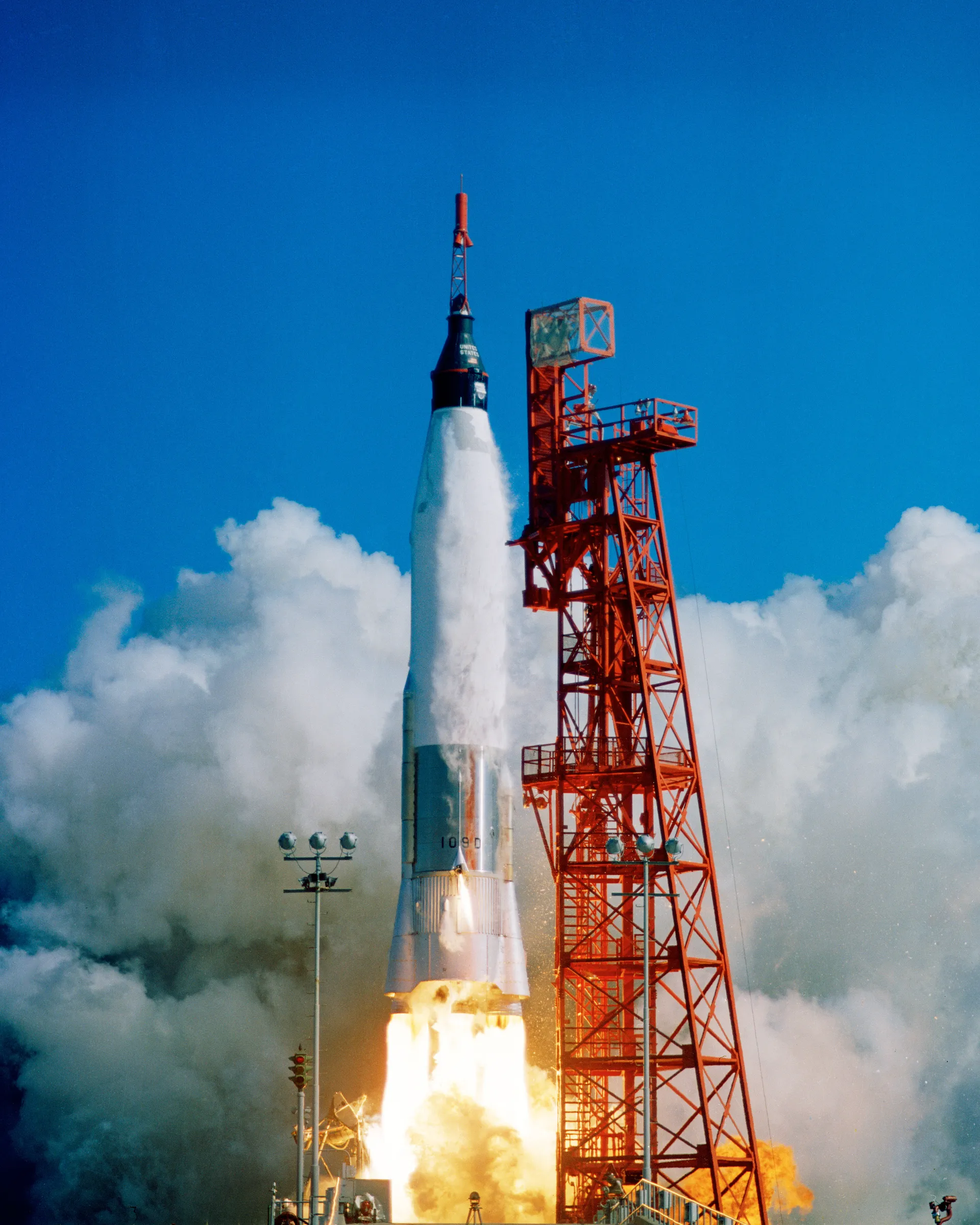
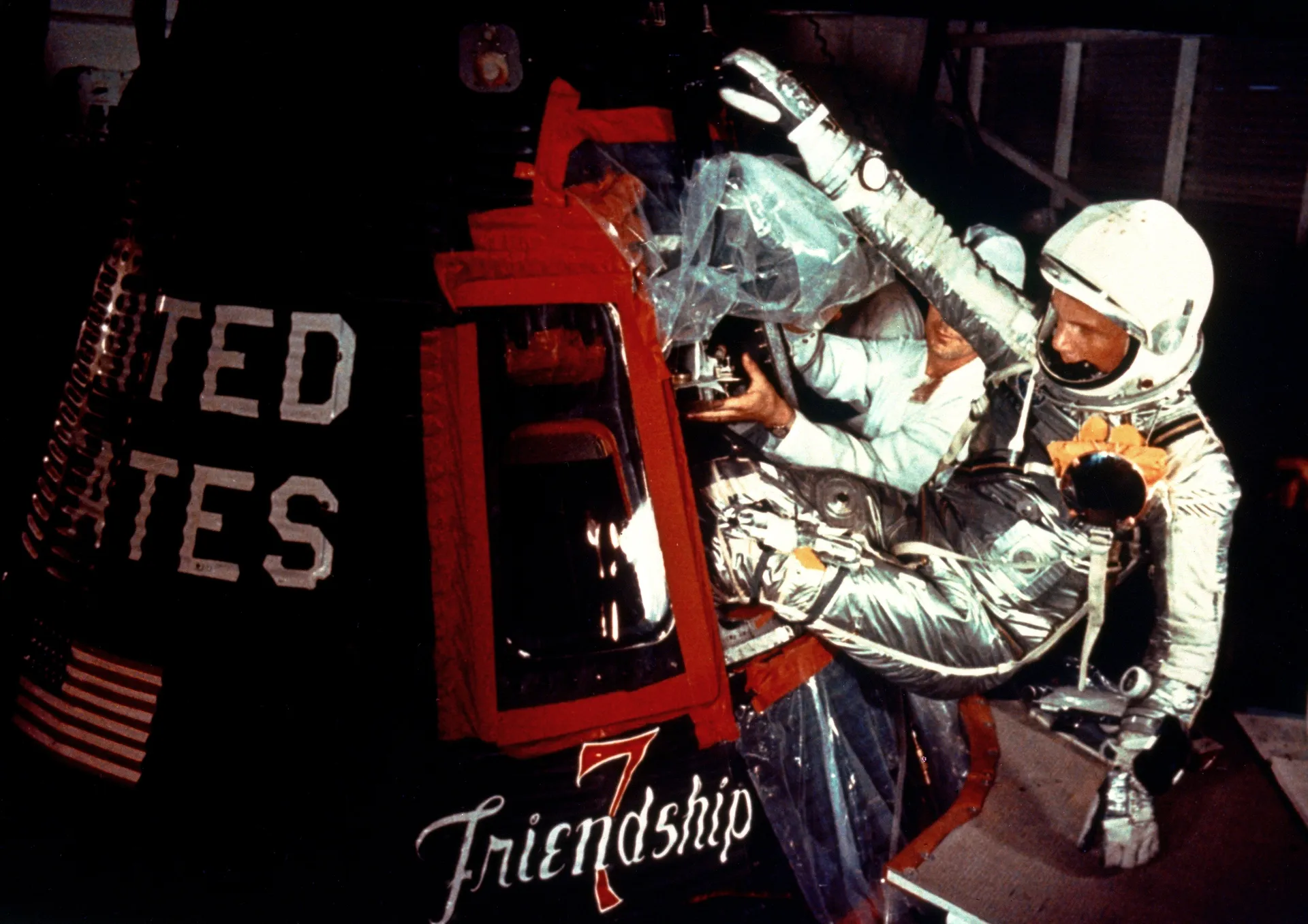
John Glenn climbs into Friendship 7 on the morning of February 20, 1962.
May 5, 1961
Freedom 7: Alan Shepard3
Suborbital, 15 minutes 28 seconds. The first American in space.
July 21, 1961
Liberty Bell 7: Gus Grissom3
Suborbital, 15 minutes 37 seconds. The capsule sank after splashdown.
February 20, 1962
Friendship 7: John Glenn3
Three orbits, 4 hours 55 minutes. The first American in orbit.
May 24, 1962
Aurora 7: Scott Carpenter3
Three orbits, repeating Glenn’s flight.
October 3, 1962
Sigma 7: Walter Schirra3
Six orbits, 9 hours 13 minutes. An engineering test.
May 15–16, 1963
Faith 7: Gordon Cooper3
22 orbits, 34 hours 20 minutes. More than a full day in space.
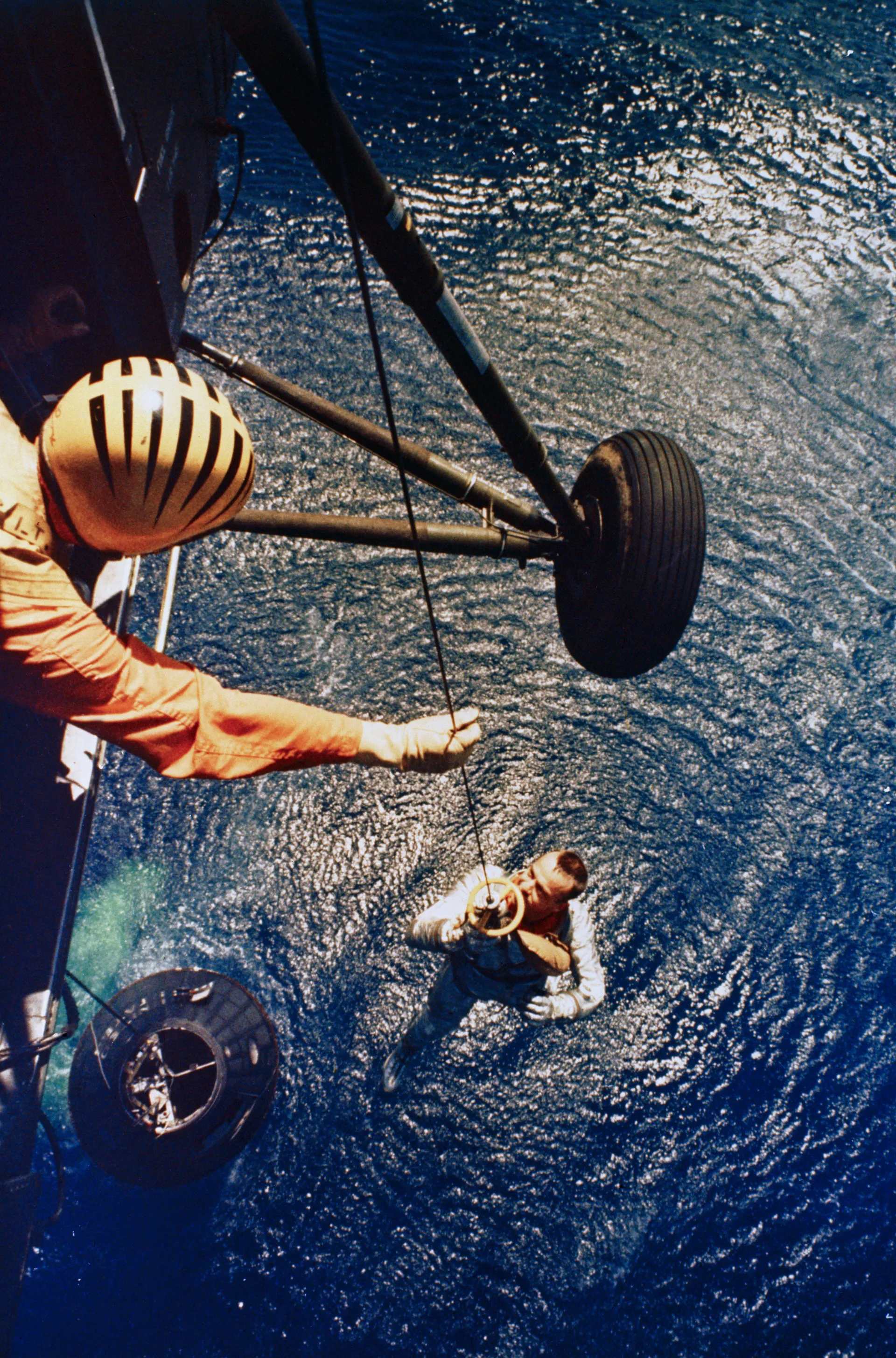
Alan Shepard became the first American in space on May 5, 1961. His Freedom 7 capsule rode a Redstone from Complex 5 at Cape Canaveral, reached an altitude of 116 miles and splashed down 304 miles out in the Atlantic; the flight lasted just over 15 minutes. On the second suborbital flight, in July, the hatch on Grissom’s capsule blew off prematurely after splashdown. He jumped out and was rescued by a helicopter crew, but Liberty Bell 7 sank.1,6
On February 20, 1962, John Glenn became the first American to orbit Earth, circling it three times in Friendship 7 before splashing down in the Atlantic 800 miles southeast of Bermuda.1 The flight produced one of the most dramatic moments of the program. A signal from the spacecraft, known as segment 51, suggested that the heat shield and the landing bag behind it might be loose. Flight directors Christopher Kraft and Walter Williams decided that Glenn should keep the retrorocket pack strapped over the heat shield during reentry. In the Mercury Control Center, at the tracking stations and on recovery ships around the globe, engineers, physicians and fellow astronauts listened to the circuits and waited. The heat shield held, and the landing bag deployed normally just before splashdown.4
The last flight, Gordon Cooper’s Faith 7 in May 1963, ran for 22 orbits. On the 21st, a short circuit left the automatic stabilization and control system without power, and carbon dioxide began rising in his suit and cabin. “Things are beginning to stack up a little,” Cooper told Carpenter, and said he would make a manual reentry. With Glenn giving the countdown from a tracking ship, Cooper held his attitude by the reticle on his window and fired the retrorockets by hand. He splashed down four miles from the recovery carrier, 34 hours and 20 minutes after liftoff.4
Among the original seven, only Slayton did not fly in Mercury; he flew in 1975 on the Apollo-Soyuz Test Project. Three of the seven went on to fly Gemini, three flew in Apollo, and Shepard walked on the Moon.1
A worldwide network to watch a single capsule
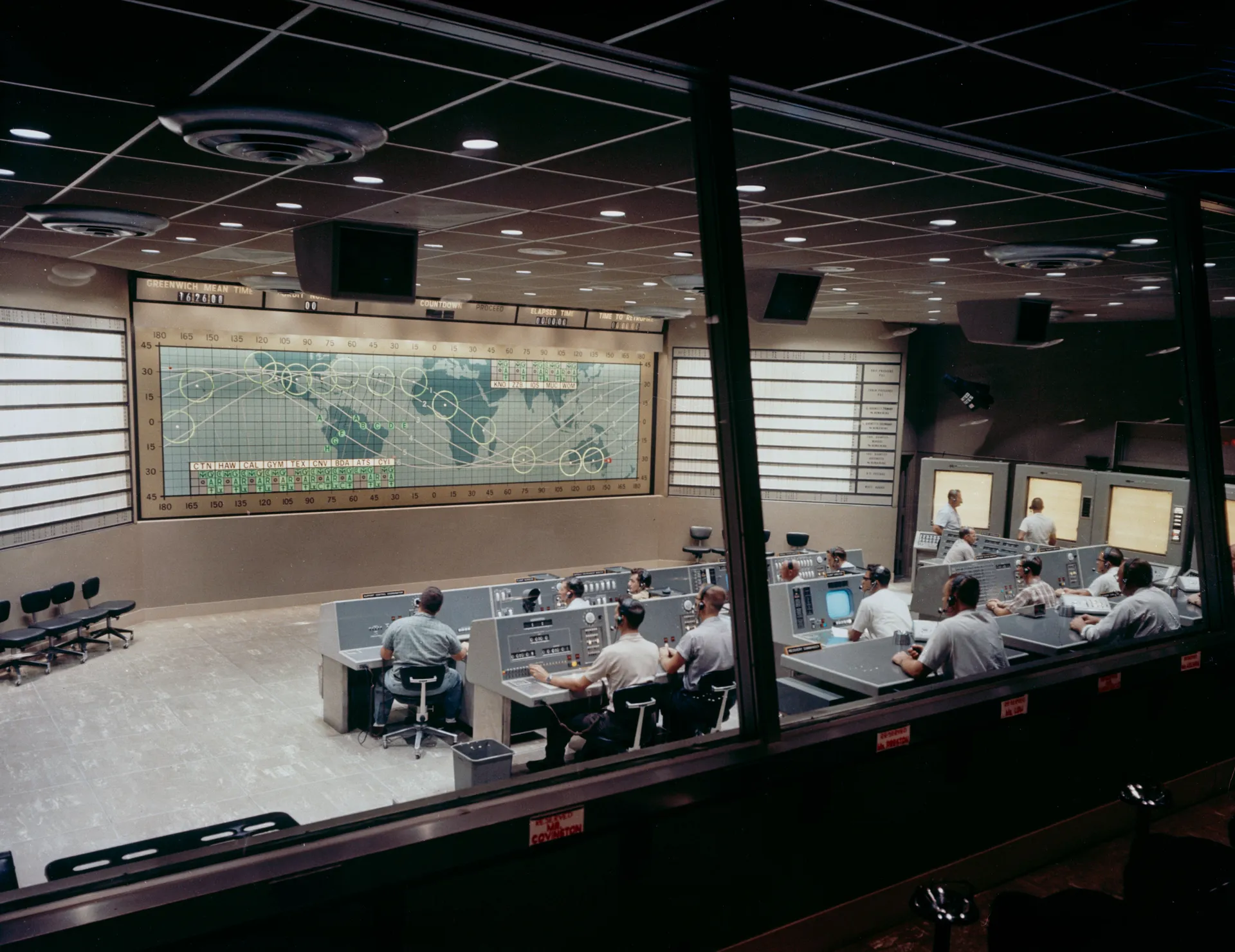
The Mercury Control Center at Cape Canaveral before Schirra’s Sigma 7 flight, 1962.
Mercury’s flights depended on the ground as much as on the capsule: eighteen stations, two of them ships, spread across three oceans and three continents, whose cost was estimated in November 1959 at $41 million.4 When the program ended, NASA’s engineers drew three main lessons from it. People can function normally in space if adequately protected. Final launch preparations took far more time than anyone had expected in 1958. And integrating the astronaut with flight controllers and directors around the world demanded the fullest use of real-time telemetry, tracking, computing and displays. The Cape control room gave way to a new Mission Control Center in Houston.4
What Mercury cost, and who did the work
Project Mercury lasted 55 months from authorization to Cooper’s flight. The earliest planned orbital mission slipped 22 months past its first scheduled launch, yet Glenn’s orbit came only 40 months after formal project approval.4 In that time, six crewed flights were made within a 25-flight program, with complete pilot safety and without change to the basic Mercury concept.13
- $384M
- cost of Mercury at the October 1963 summary conference4
- 12
- prime contractors, with 75 major subcontractors and about 7,200 vendors4
- 2million
- people who at one time or another had a hand in the project4
The “quick look” estimate at the summary conference in October 1963 put Mercury’s cost at $384,131,000: 37 percent for the spacecraft, 33 percent for the tracking network and 24 percent for launch vehicles. NASA later estimated the grand total at slightly more than $400 million. Mercury mobilized a dozen prime contractors, some 75 major subcontractors and about 7,200 smaller suppliers. NASA’s own complement on the project reached 650 people in the Space Task Group and Manned Spacecraft Center and 710 elsewhere; as many as 18,000 military and Defense Department personnel supported a single orbital mission.4
Gemini: a heavier spacecraft that could change its orbit
On May 25, 1961, twenty days after Shepard’s flight, President Kennedy committed the United States to landing a man on the Moon before the end of the decade. To bridge the gap between Mercury’s one-person flights and Apollo, NASA proposed a two-person spacecraft, first called Mercury Mark II and then Gemini, from the Latin word for twins. Gemini was designed to test equipment and mission procedures in Earth orbit and to train astronauts and ground crews for Apollo.5,6,10
Its goals were the techniques the lunar landing would require. Rendezvous and docking came first, because NASA had chosen lunar-orbit rendezvous for the Moon missions. Astronauts also had to prove they could work outside their spacecraft, and spacecraft and crews had to function for at least eight days, the minimum for a round trip to the Moon.7 A Mercury capsule weighed 3,000 pounds; Gemini weighed 8,490. Its equipment module carried propellant for the Orbital Attitude and Maneuvering System thrusters that let the crew change their orbit. The heavier spacecraft needed a larger launcher: the 109-foot Titan II, with 430,000 pounds of first-stage thrust, flying from Launch Pad 19 at Cape Kennedy.6
Ten crewed flights in twenty months
Grissom and John Young flew the first crewed Gemini, Gemini 3, on March 23, 1965. Nearing the end of their first orbit, over the tracking station at Corpus Christi, they fired their thrusters for 1 minute, 14 seconds and lowered their orbit; a second burn shifted its plane slightly. The maneuver showed that a lunar module could one day lift off the Moon and meet a command module in lunar orbit.6
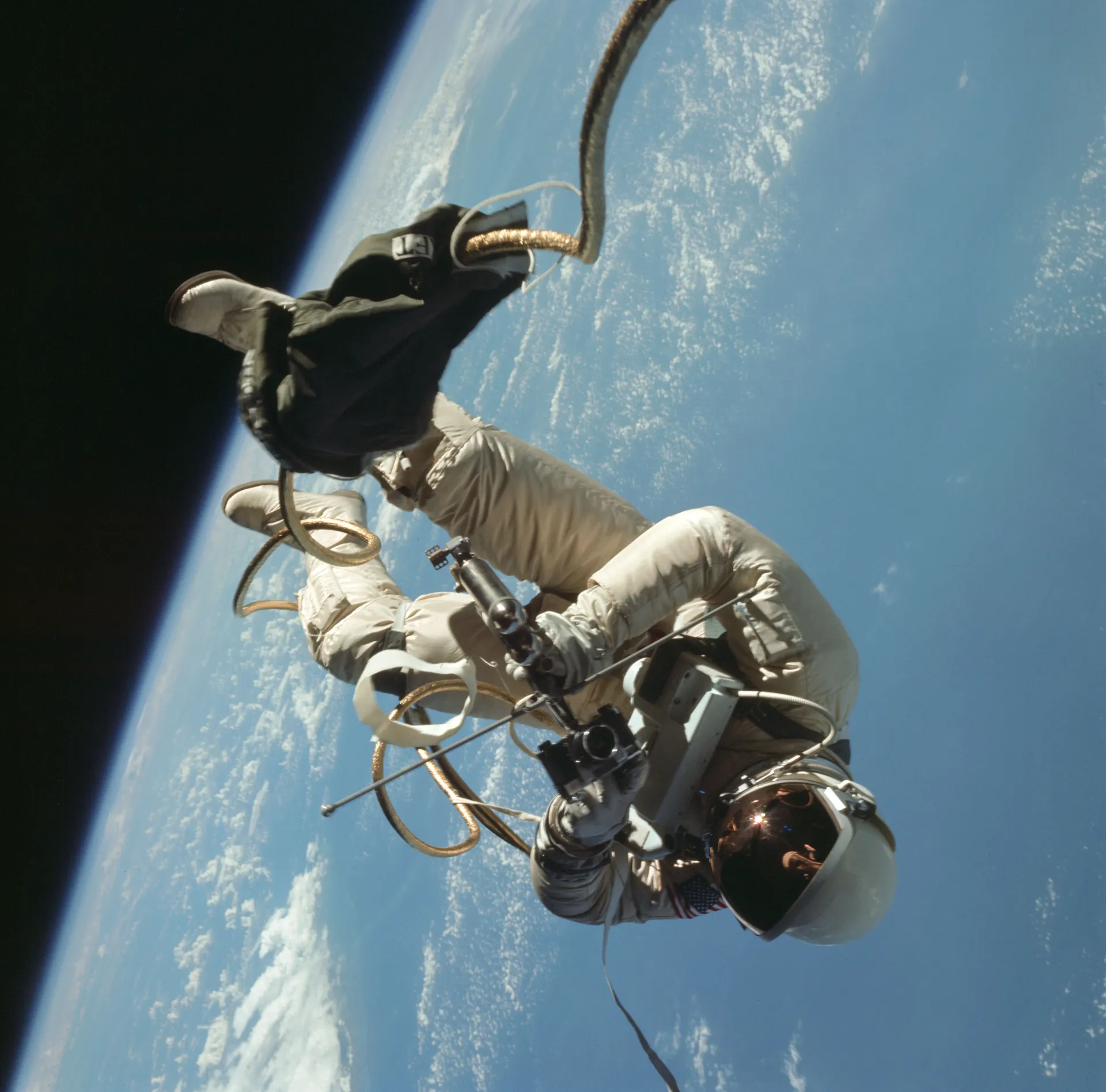
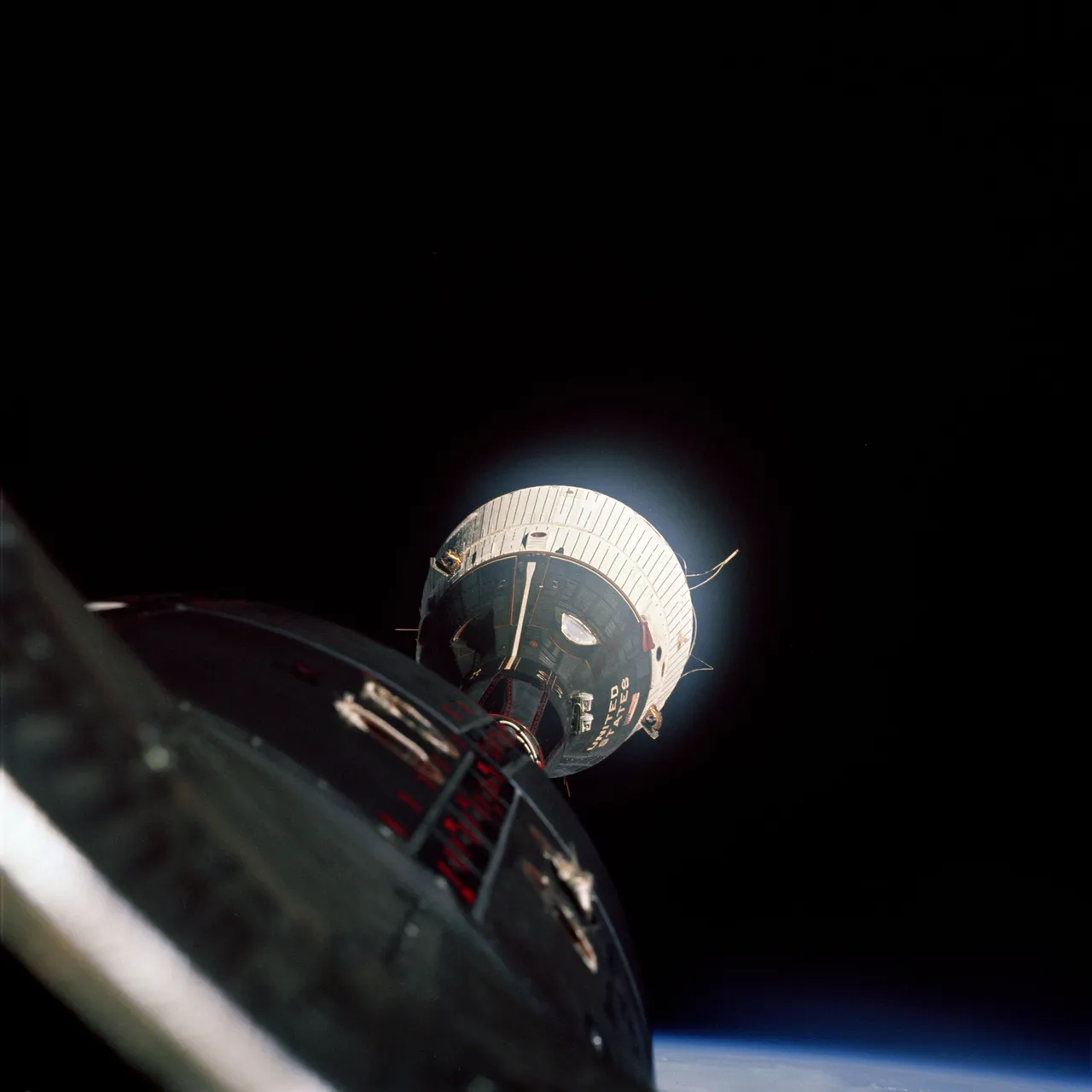
On Gemini 4, in June 1965, Ed White became the first American to leave a spacecraft and move in the vacuum of space. More than a thousand reporters came to Houston for that flight, drawn partly by the new Mission Control Center operating for the first time.5,10 Gemini 5 used fuel cells for electrical power for the first time, allowing an eight-day mission. In December, Wally Schirra and Tom Stafford in Gemini 6A met Frank Borman and Jim Lovell in Gemini 7 for the first space rendezvous; Gemini 7 stayed up a record two weeks.5
Working outside proved far harder than White’s first excursion suggested. On Gemini 9A in June 1966, Gene Cernan’s suit stiffened so much when pressurized that he could barely move; his heart rate topped 180 beats a minute and his visor fogged until he was virtually blind. He called off his planned test of a rocket backpack and worked his way back to the hatch more by feel than sight.8
The first docking came on Gemini 8. On March 16, 1966, Neil Armstrong brought his spacecraft to within two feet of an Agena target vehicle and, at one foot per second, made the world’s first docking in space. Out of contact with the ground over the Indian Ocean, the joined vehicles began an unexpected roll. The crew assumed the Agena was at fault and undocked, but the Gemini, rid of the heavier Agena, tumbled faster still, reaching one rotation per second. “We have serious problems here,” David Scott told a stunned Mission Control. The astronauts regained control only by shutting down the main thrusters and using the reentry control system, and mission rules then required them to land at the next opportunity. An electrical short had stuck a thruster open.7
Gemini 10 used its Agena’s engine to climb to a then-record 473 miles; in September 1966 Gemini 11 met its target on the first orbit and climbed to 1,374 kilometers, about 850 miles, a record that stood until Apollo 8 went to the Moon. For Gemini 12, the last flight, Buzz Aldrin trained in a swimming pool with mockups of the Gemini and Agena—the first astronaut to use neutral buoyancy—and in November 1966 he worked outside for a record total of 5 hours, 48 minutes, using handrails, tethers and foot restraints. He attributed his success to the pool training, a method still in use.9,11,12
Gemini in orbit, 1965–1966
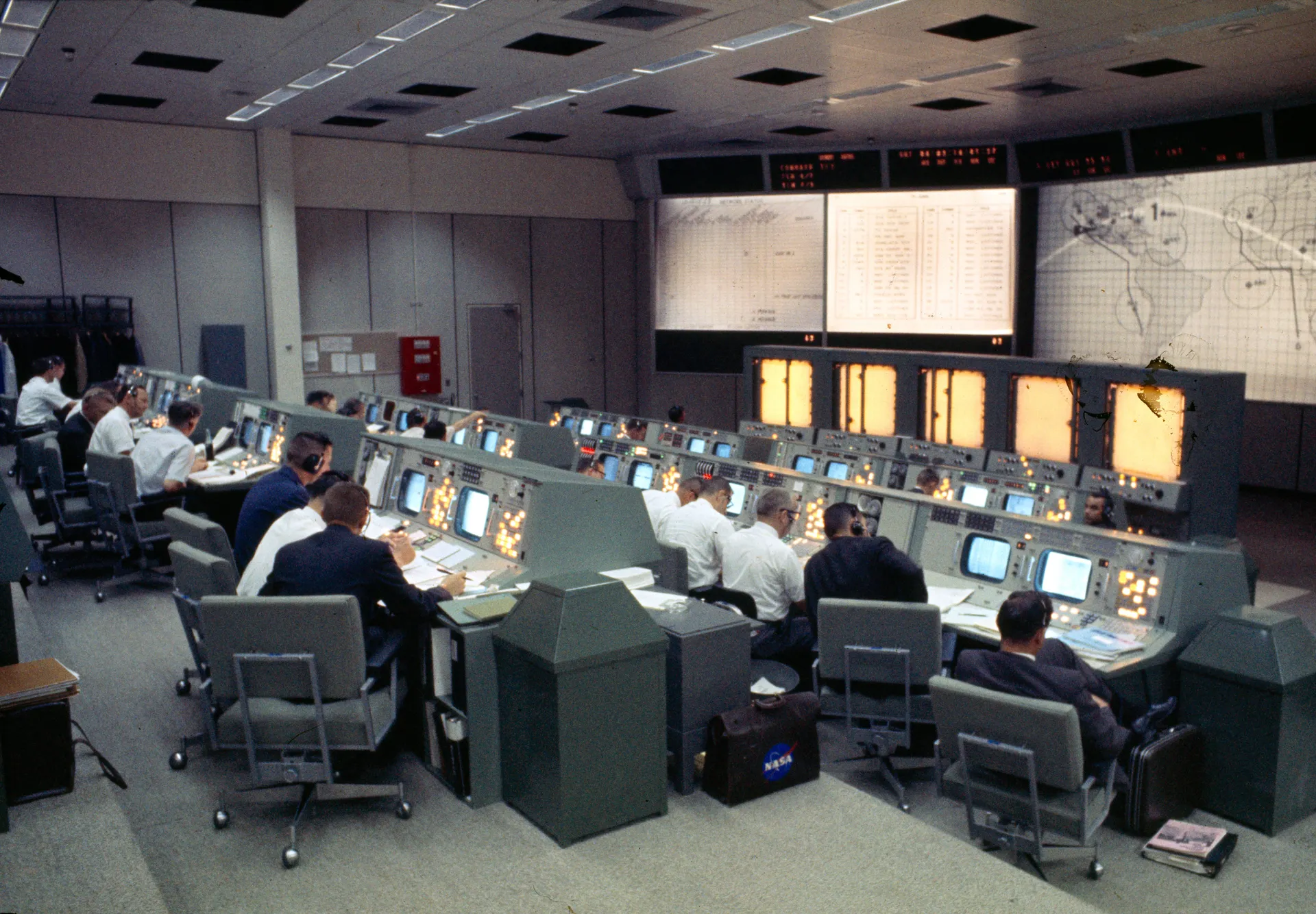
Houston’s new Mission Control Center during its first mission, Gemini 4, June 1965. NASA
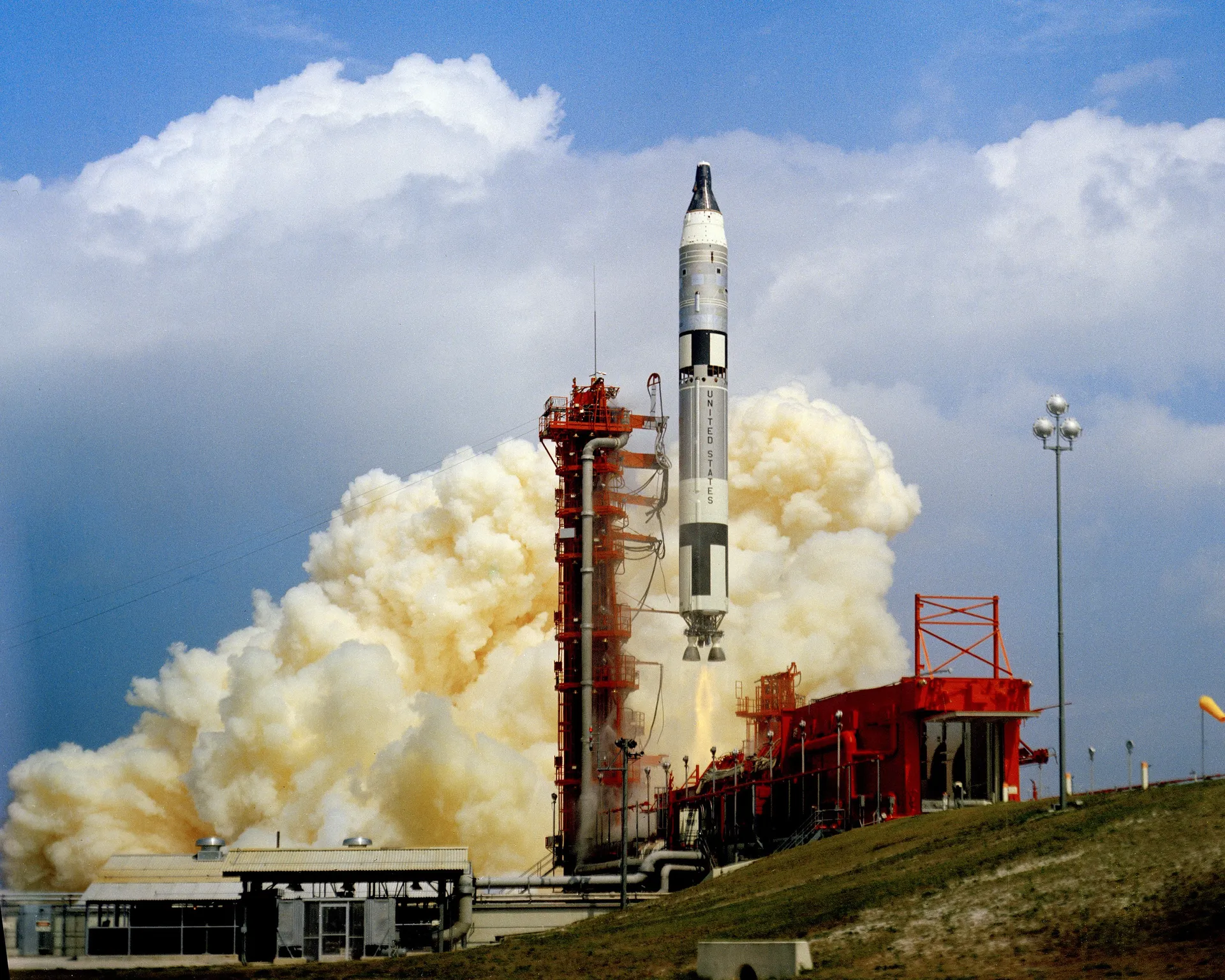
A Titan II launches Neil Armstrong and David Scott on Gemini 8, March 16, 1966. NASA
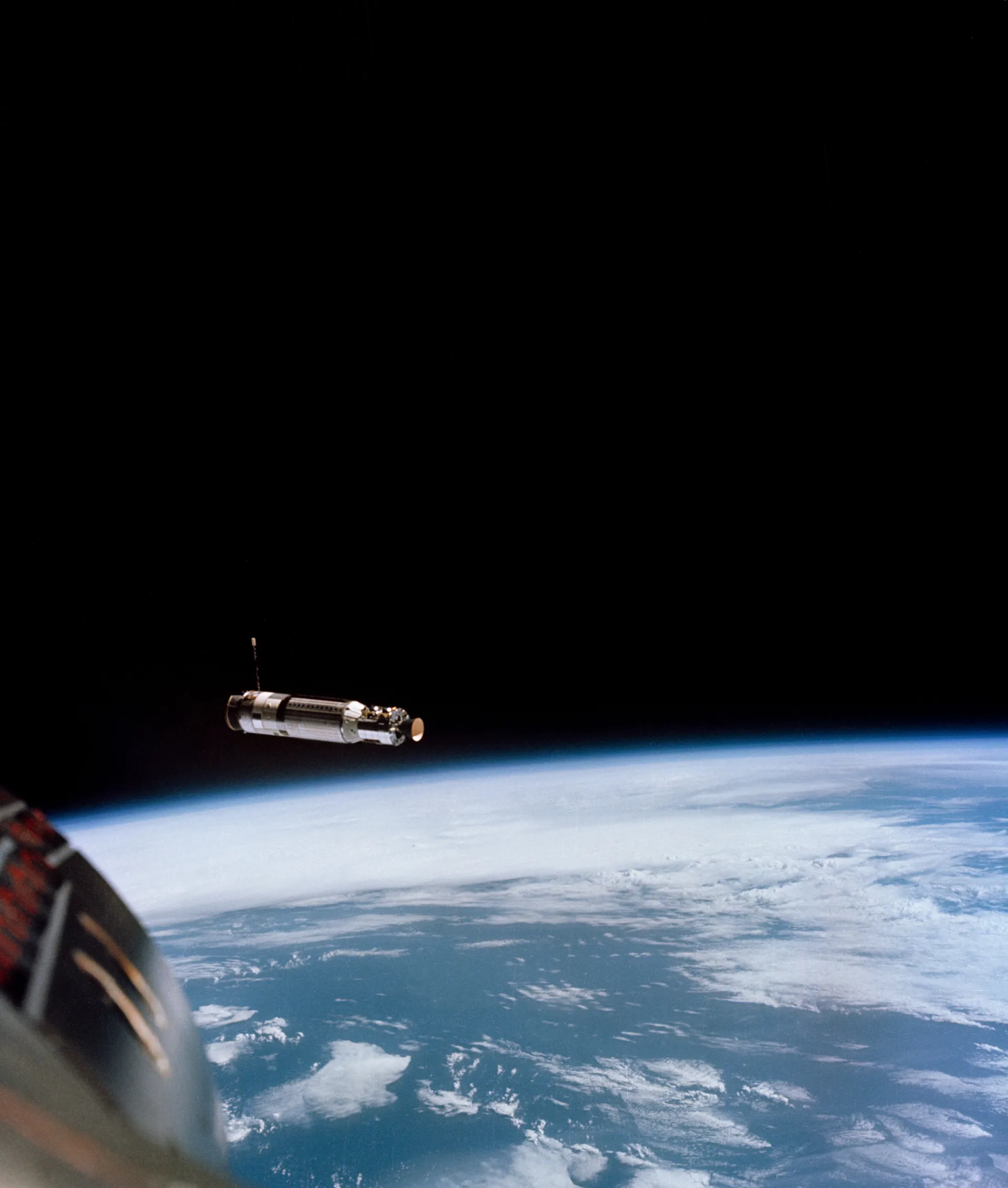
The Agena target about 210 feet from Gemini 8, shortly before the first docking in space. NASA
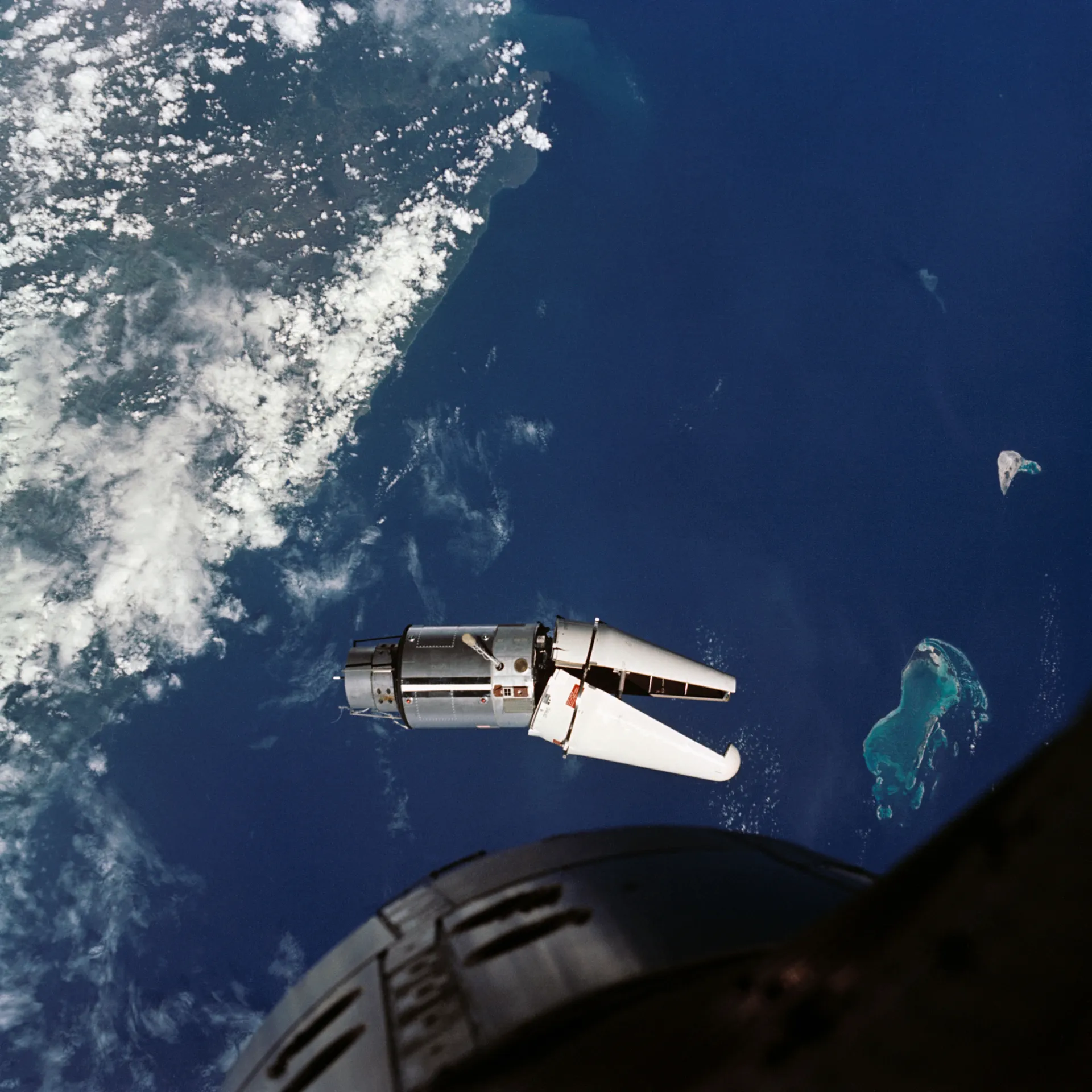
Gemini 9A’s target with its shroud jammed open. Stafford said it looked like an angry alligator. NASA
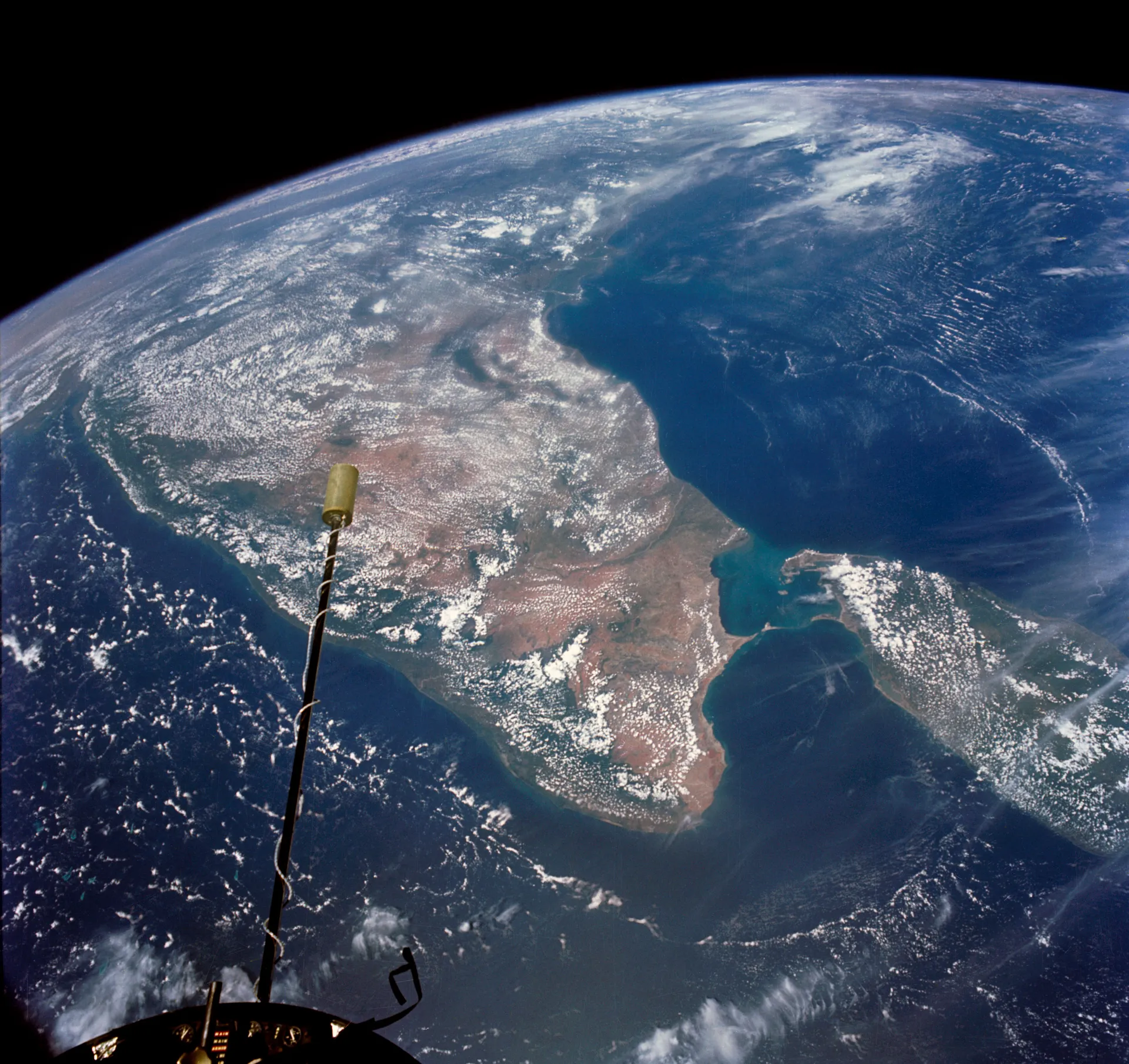
India and Sri Lanka from Gemini 11, September 1966, the highest an astronaut had flown. NASA
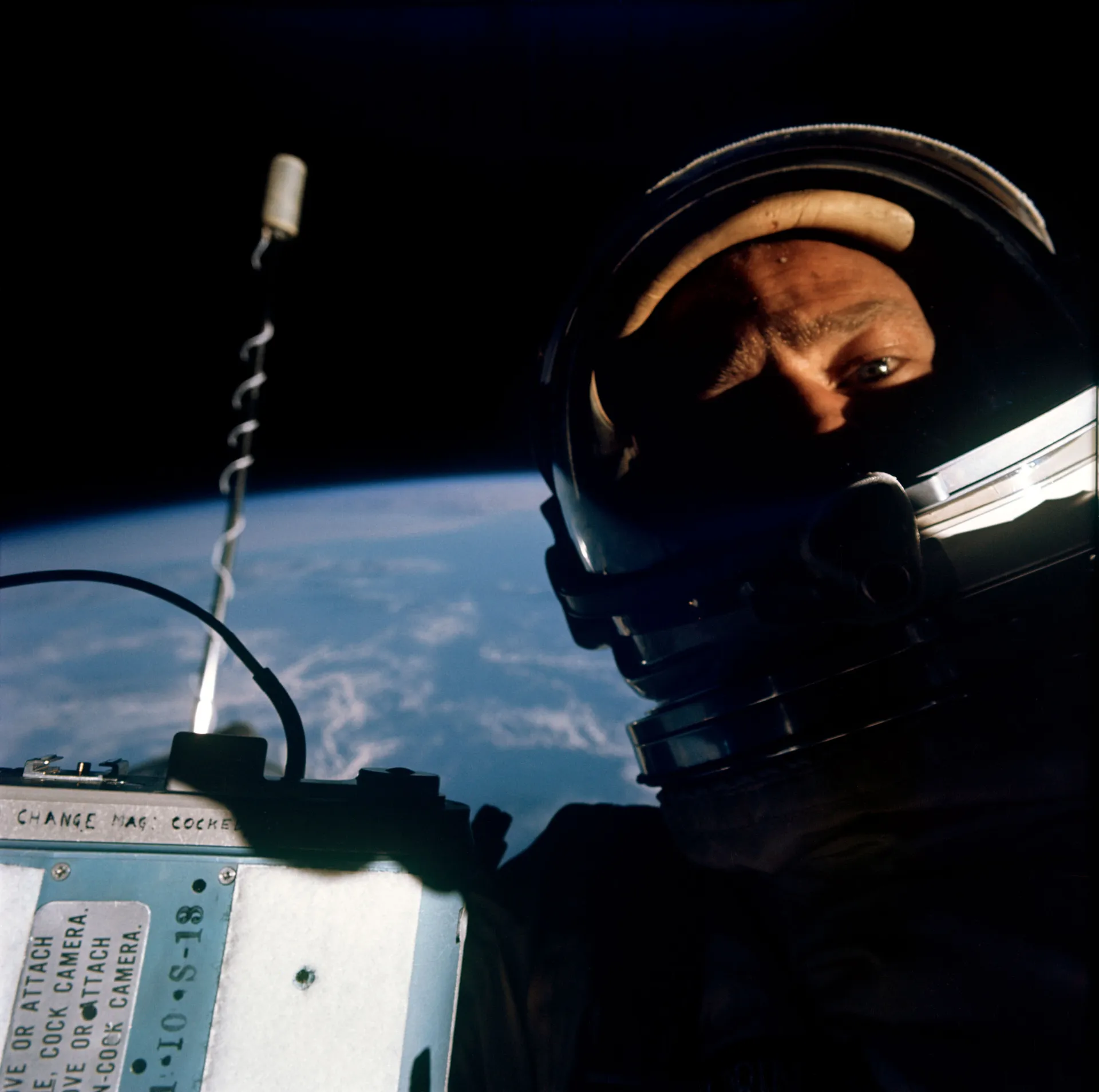
Buzz Aldrin photographs himself during a standup spacewalk on Gemini 12, November 1966. NASA
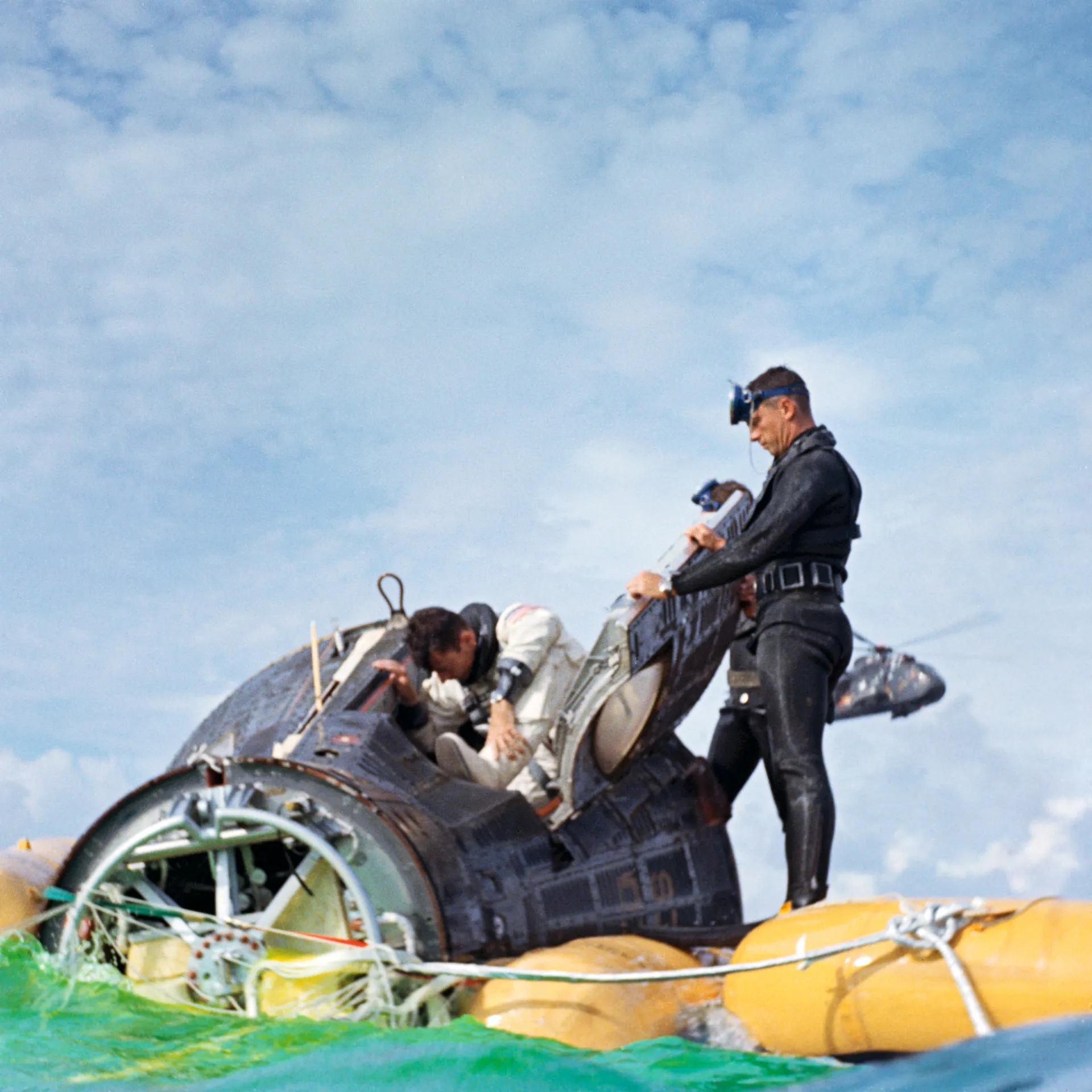
Recovery of Gemini 10, July 1966. Swimmers attached a flotation collar before the crew climbed out. NASA
Both programs cost about double the first estimate
Mercury and Gemini had one feature in common: each cost about double its original estimate. Glennan’s best educated guess for Mercury had been $200 million; it ended at more than $400 million. Gemini started at $531 million to build what was supposed to be an improved Mercury and wound up costing $1.147 billion for a program that included many new developments.10
First estimates and final costs10
Show the numbers
| program | Cost |
|---|---|
| Mercury, first estimate | $200M |
| Mercury, final cost | $401M |
| Gemini, first estimate | $531M |
| Gemini, final cost | $1,147M |
The Gemini overrun arrived as a shock. On March 8, 1963, the Manned Spacecraft Center’s revised budget showed the program’s total had passed a billion dollars—nearly twice the cost approved in December 1961 and almost $200 million above the figures NASA officials had just presented to the House. Combined with trouble on the Titan II and the paraglider landing system, the overrun ended the tenure of the Gemini project manager, James Chamberlin, eleven days later.10
The answer was a change in how NASA paid its contractors. In 1964 NASA asked McDonnell to convert its Gemini contract from a fixed fee to an incentive fee: the company could earn more by cutting costs, meeting schedules and delivering an outstanding product, and less if it failed in any of the three. The plan approved in January 1965 set a target cost of $712.3 million for the spacecraft contract, with a fee that could range from $28.1 million to $55.8 million depending on performance. The Air Force negotiated similar incentives with Martin and Aerojet for the launch vehicle and Lockheed for the Agena. The projected runout cost in fiscal 1964 had been $1.354 billion; better test and checkout procedures that year cut two months from the schedule and saved an estimated $200 million, and the program’s historians give major credit to the incentive contracts.10
Gemini also held its schedule more closely than Mercury had. In mid-1962 the project office expected the first crewed flight in November 1963; by March 1963 it was August 1964, and by December 1963 November 1964. Grissom and Young flew on March 23, 1965, about 18 months behind the plan approved in January 1962, and the last flight, nine missions later, was still 18 months behind it. Mercury’s first orbital flight had come 22 months late and its last more than 32.10
The flights themselves came fast. Mercury’s orbital operations covered 451 days, a flight every 112 days, and accumulated 55 hours of crew experience. The ten crewed Gemini flights spanned 603 days, a flight every 60 days, and accumulated 970 mission hours. Sixteen astronauts flew Gemini and four more trained for it; 15 of those 20 went on to fly in Apollo. Twenty-two months passed after Gemini 12 before Americans flew in space again, yet only nine months after that, two astronauts walked on the Moon.10
Sources
The text above is drawn from these 13 sources. Government works are adapted closely; company and press material is summarized. Numbers in the text point here. Last checked October 1, 2026.
Show all 13 sourcesShow fewer
Continue
Related stories
- The birth of NASAIn the year after Sputnik, Congress and President Eisenhower built a civilian space agency on the NACA’s laboratories, then gave it a Navy satellite, an Army rocket team and, by 1961, the Moon.
- Mission operationsEvery NASA mission depends on a control room and a chain of antennas. Built for Mercury in 1961, the networks now serve more than 100 missions, and the deep-space antennas are booked beyond their capacity.
- The buildersNASA has always spent most of its money outside its own walls. From Apollo’s 500 contractors to SpaceX and Blue Origin, the question that shapes every program is who carries the risk when costs grow.