Gemini
The two-seat capsule that taught NASA to rendezvous, dock and work outside a spacecraft before Apollo.
- Type
- Crew spacecraft
- Status
- Retired
- First flight
- April 8, 1964
- Size
- 5.8 m (19 ft)
- Built by
- NASA
- 10
- crewed missions, 1965–1966
- 1965
- first American spacewalk, Gemini IV
- 1966
- first docking of two spacecraft in orbit, Gemini VIII
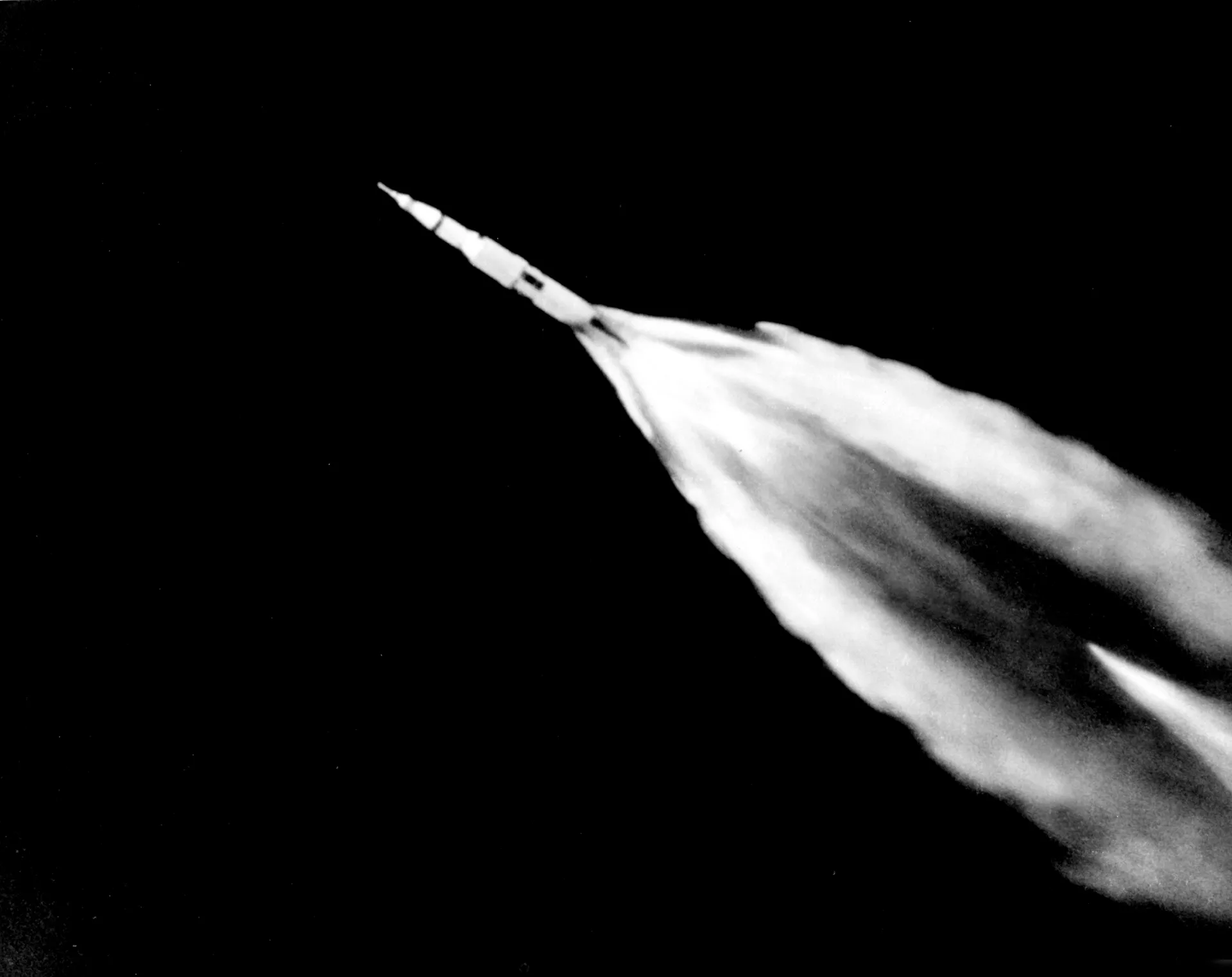
Project Gemini bridged Mercury, which proved human spaceflight possible, and Apollo. On December 7, 1961, NASA approved development of a two-seat spacecraft and gave the contract to the McDonnell Corporation of St. Louis, the company that had built Mercury. A modified U.S. Air Force Titan II missile launched it.
Gemini’s 12 missions—two uncrewed test flights and 10 crewed flights—flew between April 1964 and November 1966. They showed that astronauts could change their spacecraft’s orbit, stay in space for at least eight days, the minimum for a round trip to the Moon, and work outside the spacecraft: Ed White made the first American spacewalk on Gemini IV in June 1965.
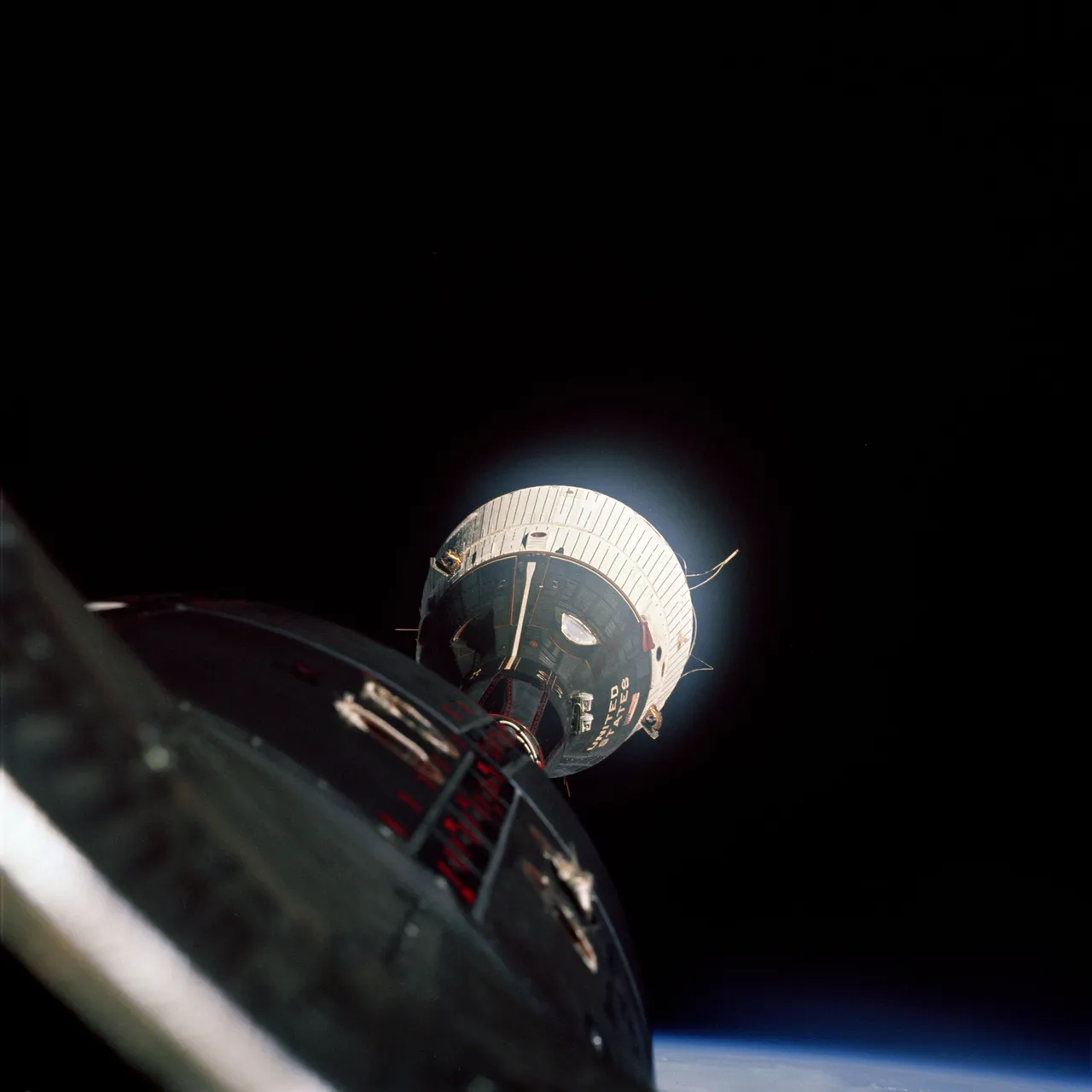
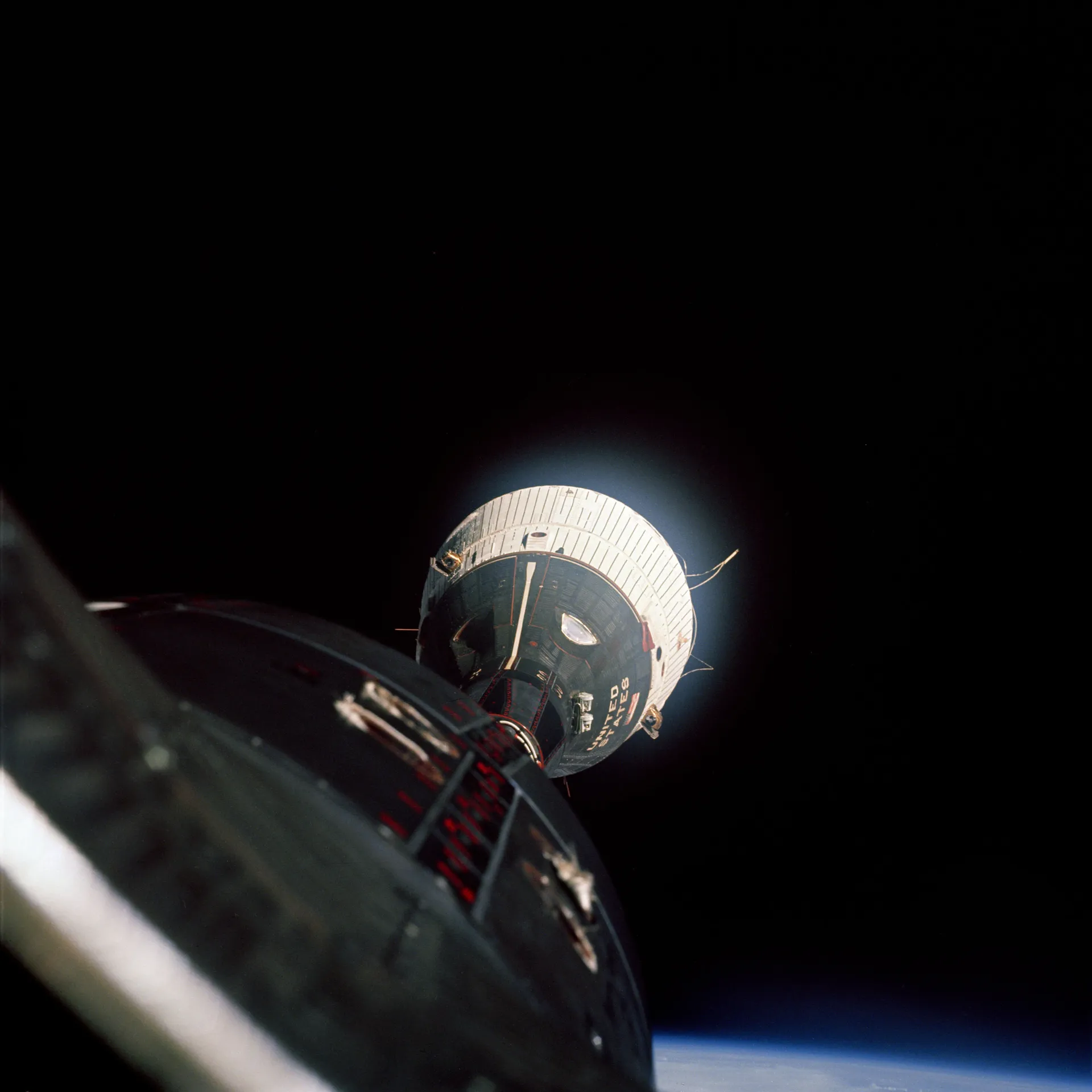
Gemini also proved the rendezvous and docking techniques that Apollo’s lunar orbit rendezvous required. Gemini VI and VII completed NASA’s first rendezvous of two spacecraft in December 1965, and Gemini VIII made the first docking, with an uncrewed Agena target vehicle, in March 1966.
Read more about Gemini
Sources
- 1
- 2
- 3
- 4
- 5
- 6