Refilling in orbit, the untested step both Moon landers depend on
Both of NASA’s crew landers reach the Moon only after tankers refill them in Earth orbit. Why that is, how the transfer is meant to work, why super-cold propellant fights back, and where the first test stands.
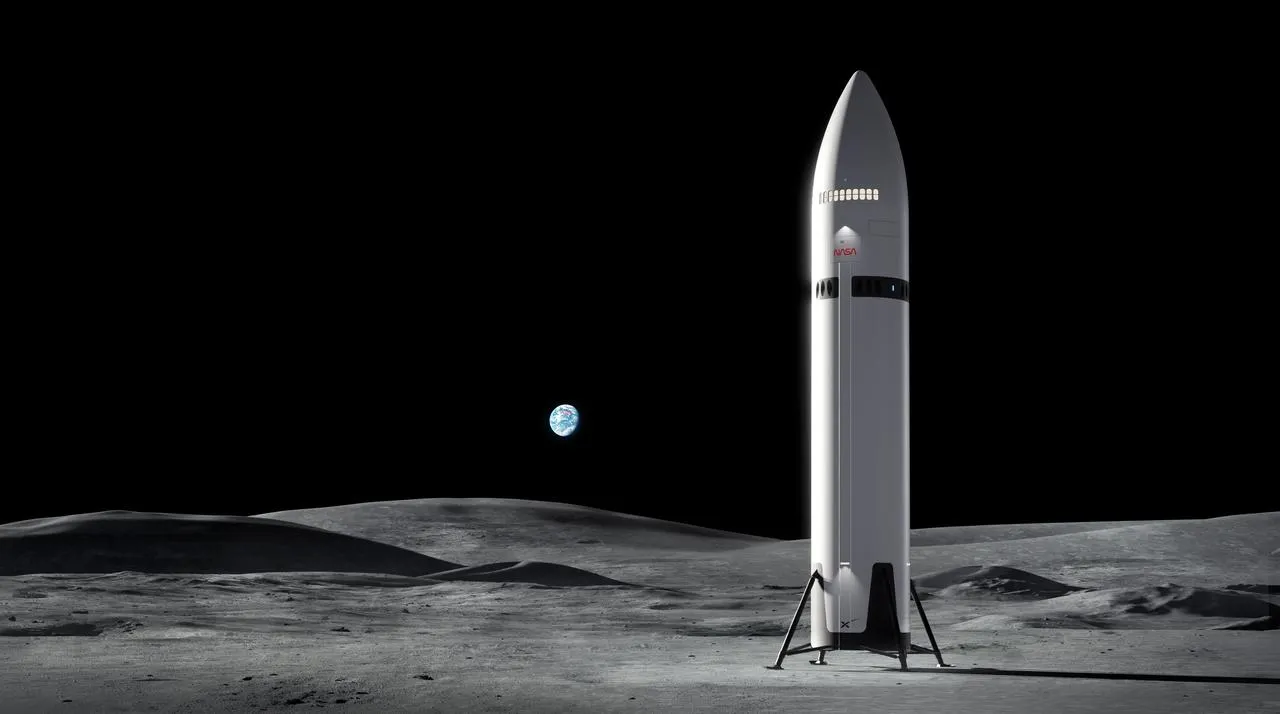
Space Atlas illustration, rendered from the atlas’s Starship model; Earth: NASA
Drawn from 16 sources: NASA Marshall Space Flight Center (5), NASA (3), NASA Goddard Space Flight Center (2), NASA Office of Inspector General and 5 others. About 6 minutes. Checked October 1, 2026.
Both of the landers NASA has bought to put astronauts on the Moon arrive in Earth orbit too short of propellant to go farther. SpaceX’s lander is the upper stage of its own rocket, launched on a Super Heavy booster, and NASA’s lander program says that refueling it in low Earth orbit is necessary for it to head to the Moon with a useful load.2,1 Blue Origin’s Blue Moon crew lander will take on propellant in low Earth orbit and again on the way.1 Either way, the first crewed landing waits on a capability no one has demonstrated: moving large amounts of super-cold propellant from one spacecraft to another in orbit.
NASA calls the problem cryogenic fluid management, a suite of technologies that store, transfer and measure ultra-cold fluids such as liquid hydrogen, liquid oxygen and liquid methane.3 NASA stated the payoff plainly in 2018, as it prepared its Robotic Refueling Mission 3 for the space station: the ability to resupply cryogenic fuel in space could minimize the amount of fuel spacecraft must carry from Earth’s surface, making it possible to travel farther into space for longer periods.4
The sequence: tankers fill a depot, the depot fills the lander
SpaceX’s plan uses three versions of Starship: a tanker that carries propellant to low Earth orbit, a storage depot that holds it there, and the lander that receives it.1 The steps below follow one campaign.
The tankers launch. Before a landing mission, SpaceX will put the depot into low Earth orbit, then launch more than ten tankers after it. The tankers will fly from Starbase in Texas and from Kennedy Space Center in Florida, at a target rate of one every six days. The campaign begins more than 200 days before the crew launches, to leave margin in the schedule.1
Each tanker docks and transfers. Each tanker rendezvouses with the depot, docks and moves its liquid oxygen and liquid methane across, a process the inspector general calls propellant aggregation. It repeats until the depot holds enough.1 The connection itself is new hardware: NASA’s cryocoupler project describes the problem as fitting a nozzle to a fuel tank, except that the coupler has to attach and detach repeatedly without a spacewalk, seal at hundreds of degrees below zero and tolerate two spacecraft that are not perfectly aligned.9
The lander fills and departs. When the depot is full, an uncrewed lander lifts off from Kennedy, docks with the depot, refuels and continues to lunar orbit, where it can wait up to 100 days for the crew.1
Loading the ships
Illustration to scale: each Starship is about 52 m long. Docking and transfer as described by NASA and SpaceX.
1 of 6
A depot in low orbit
For each Artemis landing, SpaceX plans to place a storage Starship — a depot — in low Earth orbit, about 400 kilometers up, to collect propellant.
2 of 6
A tanker arrives
A tanker Starship launches from Texas or Florida, full of liquid oxygen and liquid methane, and closes in on the depot.
3 of 6
Docked tail to tail
The two ships join at their aft ends, where the propellant connections are. The supercold liquids are pushed across from one tank to the other.
4 of 6
Again, and again
The tanker undocks, flies home and another takes its place. NASA’s Inspector General counts more than ten tanker flights per landing, beginning more than 200 days before the crew launches.
5 of 6
The lander fills
With the depot full, the lunar Starship docks and loads the propellant it needs to reach lunar orbit, land and climb back up to Orion.
6 of 6
To the Moon
Fully loaded, the lander leaves Earth orbit. None of this has flown yet: the first ship-to-ship transfer is still to be demonstrated.
Blue Origin’s version is spread over more orbits. It will first launch a transporter to low Earth orbit, essentially a depot; a fleet of refuelers launches, meets it and transfers propellant. The Blue Moon lander then launches and takes fuel from both a refueler and the transporter before flying to lunar orbit. The transporter stays behind to collect more propellant, climbs to a higher “stairstep” orbit for a final aggregation, and follows the lander to lunar orbit, where it gives the lander a last transfer before the crew arrives.1
- 10+
- Starship tankers planned for each landing, launched about six days apart1
- 200+ days
- Time the refilling campaign starts ahead of the crew’s launch1
- 12–24 days
- Turnaround SpaceX must reach on its launch pads, which it had not shown by March 20261
- 100 days
- How long a fueled Starship lander can wait in lunar orbit for the crew1
Boiloff: in space a cold tank keeps warming
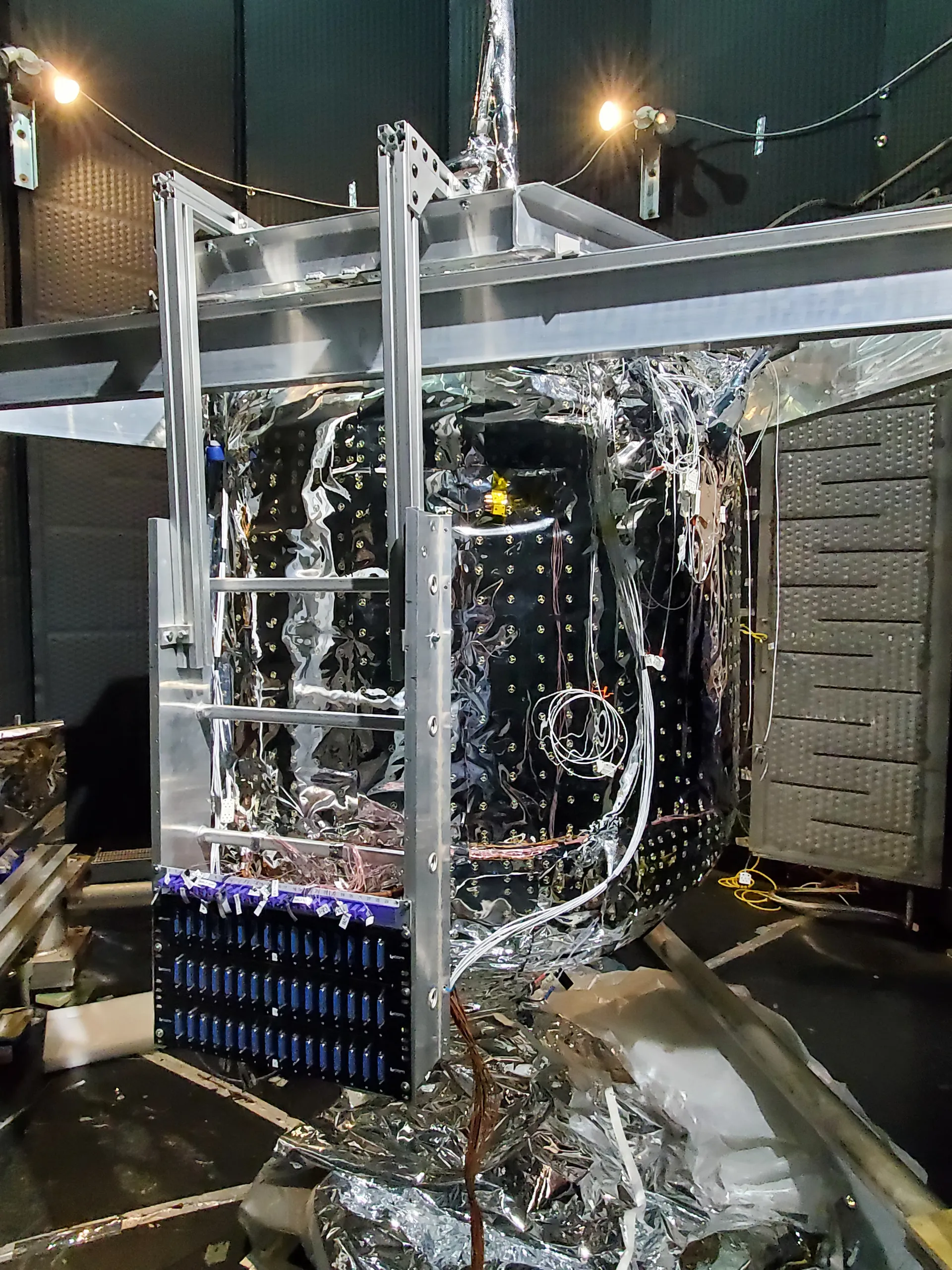
In the vacuum of space, where temperatures can plunge to minus 455 degrees Fahrenheit, it might seem that keeping things cold would be easy. It is not. Super-cold propellants easily overheat from onboard systems, solar radiation and spacecraft exhaust. Because of their low boiling points, about minus 424 degrees Fahrenheit for liquid hydrogen and about minus 298 for liquid oxygen, space has a “hot” effect on them, and they boil off.5
To prevent dangerous pressure from building up, today’s spacecraft vent the boiled-off vapor and lose propellant. Rockets cope by carrying margin, tanks larger than the mission needs; that works for short trips. So far, cryogenic propellants have been used only on missions lasting less than a week.5 A depot that must hold propellant for 200 days, while ten or more tankers come and go, is a different problem, and venting in weightlessness is likely to cause unacceptable losses.6
NASA is testing the alternative on the ground. In 2025 a team at Marshall began a 90-day test of zero-boiloff storage of liquid hydrogen with two stages of active cooling. In the method called “tube on tank,” helium chilled to about minus 424 degrees circulates through tubes on the tank wall, while a second set of tubes carries helium at about minus 298 degrees through a heat shield inside the insulation blanket, intercepting heat before it reaches the tank.5 Blue Origin’s design relies on cryocoolers to limit boiloff, and NASA lists their underperformance as a risk that could mean losing more propellant than expected.1,13
Settling and measuring: finding the liquid in a weightless tank
On Earth, liquid sits at the bottom of a tank and vapor at the top. In orbit it floats, so before propellant can be drawn out of one tank and pushed into another, it has to be settled at the outlet, and the quantity has to be measured without gravity to show where the surface is.
Starship’s third test flight, on March 14, 2024, took the first step. During its coast, the ship transferred thousands of pounds of cryogenic propellant between its own internal tanks, a demonstration funded through NASA’s 2020 Tipping Point awards; the transfer was of liquid oxygen, between a header tank and a main tank. To understand how super-cooled propellant sloshes when the engines shut down and how that movement affects the ship’s stability, engineers studied the performance of the thrusters that control its orientation, and how the fluid could be settled to make the transfer efficient and to give the Raptor engines the conditions they need to restart in orbit.7,2
Storing and transferring cryogenic propellant in orbit has never been attempted on this scale before.
Measuring is its own technology. On Intuitive Machines’ first lunar lander in February 2024, a NASA radio frequency mass gauge measured how much cryogenic propellant remained in the lander’s fuel and oxidizer tanks in low gravity, data meant to help predict fuel use on future missions.8 NASA engineers working with the lander companies have helped them develop propellant gauges for low gravity.1
Smaller demonstrations since 2018, from the space station to Starship
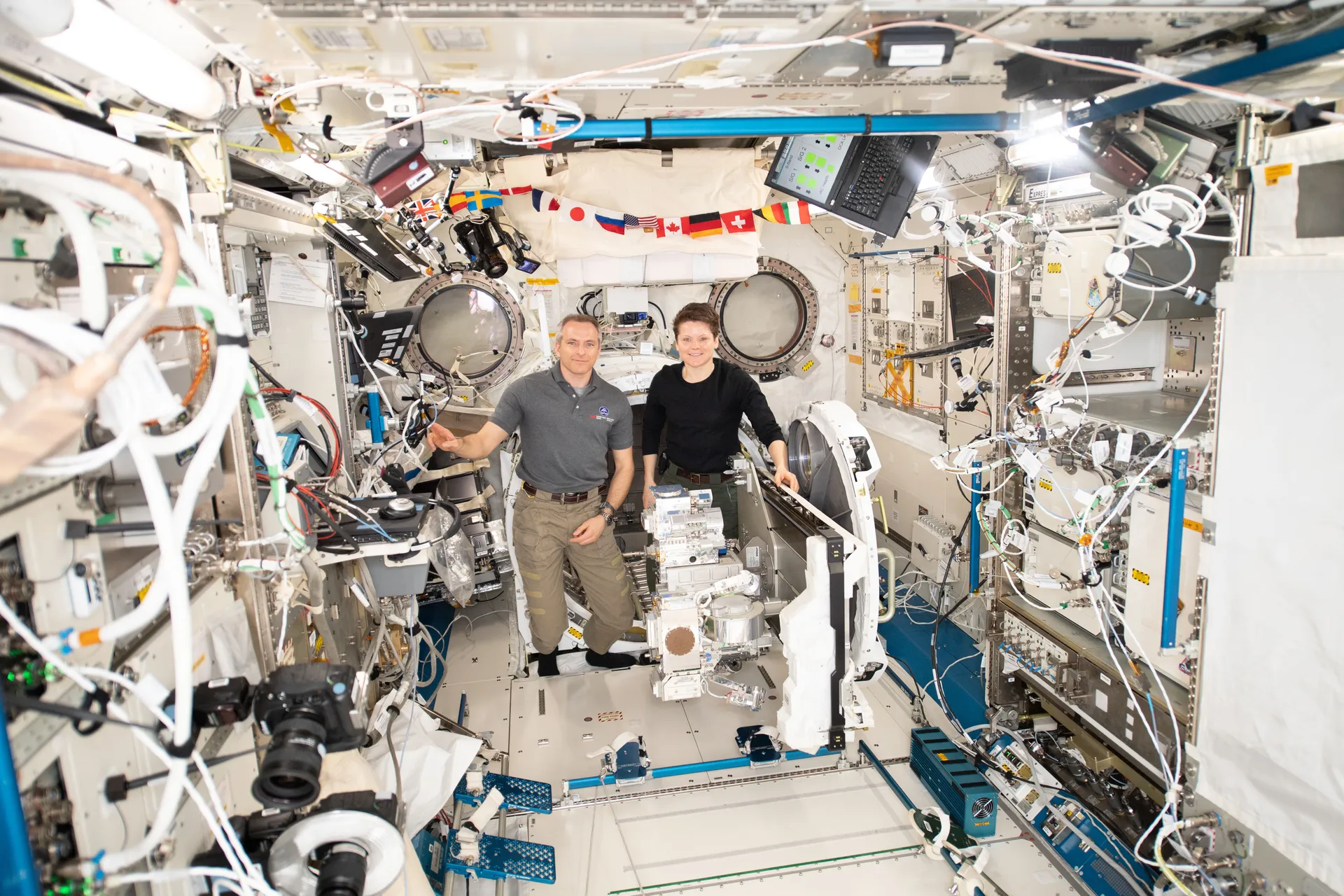
NASA’s Robotic Refueling Mission 3, an experiment in storing and transferring a cryogen with robotic tools, flew to the International Space Station in December 2018. It was built to transfer liquid methane robotically and to store 42 liters of it without loss for six months.4,11 On April 8, 2019, a problem forced the team to vent the methane; the team still planned to carry out the robotic tool operations for a transfer.11
In 2020 NASA chose four companies for larger flight demonstrations under its Tipping Point program, through milestone-based, firm-fixed-price contracts, with NASA centers collaborating on each.10,6 The SpaceX award produced the 2024 transfer between tanks inside Starship. The Eta Space award became LOXSAT, a small satellite built on a Rocket Lab spacecraft and designed to test 11 cryogenic technologies, including reducing boiloff, transferring propellant, keeping tank pressure in check and gauging the liquid, over nine months in low Earth orbit.12
NASA’s 2020 Tipping Point awards for cryogenic flight demonstrations10
Show the numbers
| Company | Award |
|---|---|
| Lockheed Martin | $89.7M |
| United Launch Alliance | $86.2M |
| SpaceX | $53.2M |
| Eta Space | $27M |
Where the ship-to-ship test stands in October 2026
The next step for SpaceX is a large-scale, long-duration transfer between two Starships in low Earth orbit. The first to launch will be the “target”; a second, the “chaser,” will dock with it and transfer cryogenic propellant into it.2 SpaceX said in October 2025 that the first ship would spend an extended time in orbit so that its performance and boiloff could be measured before the second arrives, and that the ships would find each other with the same sensors that dock Dragon capsules to the space station.14
NASA’s lander program considers this transfer one of the most significant technical challenges SpaceX faces: the technologies and processes are entirely new and have never been done between vehicles. The test was planned for March 2025 and slipped to March 2026.1 In July 2026 GAO listed a long-duration flight and the propellant transfer test as Starship’s next major milestones for the lander, both scheduled for 2026, and called SpaceX’s cryogenic technology a top program risk.13 A transfer needs two ships in orbit, and no Starship had reached orbit until September 28, 2026, when the 14th flight did.15
When the first transfer between two Starships was due1
Neither company’s plan will be fully flight-tested before astronauts depend on it. The uncrewed demonstration landers will not carry life support, airlocks or, on Starship, the elevator, so they will be lighter than the crewed landers and need fewer tanker flights; the inspector general concluded that the end-to-end propellant campaign will not be fully flight-tested before the first crewed missions.1 Blue Origin plans to show its own transfer during its uncrewed demonstration mission, expected in February 2029, after ground tests.1,13 NASA’s notional plan for its 2027 Artemis III flight lists supporting missions to demonstrate a lander’s propellant transfer and aggregation in Earth orbit.16
Sources
The text above is drawn from these 16 sources. Government works are adapted closely; company and press material is summarized. Numbers in the text point here. Last checked October 1, 2026.
Show all 16 sourcesShow fewer
Continue
Related stories
- Starship HLSIn 2021 NASA chose a version of Starship, refueled in Earth orbit by a fleet of tankers, to land its astronauts. The contract is now worth about $4.5 billion; the refueling has not yet flown.
- Blue MoonIn May 2023 NASA awarded Blue Origin a $3.4 billion contract for a second way to land astronauts. The smaller robotic Blue Moon, Mark 1, is built and tested, and is waiting for New Glenn to fly again.
- StarshipSpaceX built the largest rocket ever flown by launching prototypes and fixing what broke. NASA’s Moon landings depend on the step it has not yet taken: moving propellant between ships.