Starship
A two-stage system designed to be fully reusable: the Super Heavy booster and the Starship upper stage, built from stainless steel.
- Type
- Rocket
- Status
- In development
- First flight
- April 20, 2023
- Height
- 124 m (407 ft)
- Built by
- SpaceX
- 14
- integrated flights, April 2023–September 2026
- Sept 28, 2026
- first orbital flight (Flight 14), deploying 26 Starlink satellites
- 0
- ship-to-ship propellant transfers so far, as of October 1, 2026
Starship reached orbit on its 14th flight; refilling in orbit comes next
Drawn from 17 sources: NASA (6), Spaceflight Now (2), NASA Office of Inspector General, U.S. Government Accountability Office and 7 others. About 7 minutes. Checked October 1, 2026.
On September 28, 2026, at 7:48 a.m. local time, a Super Heavy booster lifted Ship 41 from SpaceX’s Starbase site on the Texas coast, and for the first time a Starship went into orbit. One of the booster’s 33 Raptor engines shut down early, and one of the ship’s vacuum engines quit during the climb, but the remaining engines finished the job, and a short burn of a single Raptor about 25 minutes after liftoff put the ship into orbit. It released 26 Starlink V3 satellites into a low orbit inclined 30.5 degrees to the equator. Mission managers then cut short a flight planned to last about ten hours: after roughly three hours the ship reentered belly-first, flipped upright on three relit engines and settled into the Pacific north of Hawaii, where it tipped over and exploded, as every earlier ship but Flight 13’s had done. The booster made a controlled splashdown in the Gulf.8,11,12,13 NASA Administrator Jared Isaacman called it a “gorgeous launch.”13
It was the 14th flight of the complete vehicle and the first to reach orbit. NASA has a direct stake in what comes next. Under a contract now worth up to about $4.5 billion, a version of Starship is to land astronauts on the Moon, and before it can, Starships must refill one another in Earth orbit, a large-scale transfer of cryogenic propellant between vehicles that has never been done.1
A test site at Boca Chica, and prototypes that flew and crashed
In 2014 the Federal Aviation Administration completed an environmental review for a SpaceX launch site in Cameron County, Texas, on the Gulf coast near Brownsville. It covered Falcon 9 and Falcon Heavy launches. SpaceX later decided not to launch Falcons there and turned the Boca Chica site over to Starship: static engine firings and a series of suborbital “hops,” from a few inches to as high as 18 miles off the ground, under an FAA license.7 The launch area is about two miles north of the Mexican border, beside a public beach and the Lower Rio Grande Valley National Wildlife Refuge; the only road to the beach ends at the pad.7
The prototypes flew in the open. In August and September 2020, full-size stainless-steel prototypes of the upper stage made hops of about 500 feet. From December 2020 to May 2021 five more flew to about 6 to 8 miles and tried to land. The first four were destroyed on landing or before it; the fifth, in May 2021, landed and stayed intact.8,9
NASA’s inspector general describes the method behind that record. SpaceX “maximizes its in-house capabilities to control quality, cost, and schedule,” so the ship and the booster are mostly manufactured, integrated and tested by the company itself, and components, systems and whole stages are tested at key points as they are built.1
Space Atlas illustration rendered from the atlas’s Starship model
Nearly 400 feet, two stages
The integrated vehicle has two stages: Super Heavy, the booster, and Starship, the upper stage. Stacked, they stand about 400 feet tall and 30 feet across. The name Starship is used for the upper stage and for the whole system. Both stages burn liquid oxygen and liquid methane in SpaceX’s Raptor engines.7
Hot staging
Starship separates by hot staging: the upper stage’s engines ignite before the booster’s are completely shut down, so the rocket never stops accelerating. Their exhaust pours out through vents in the interstage. It had never been done on a vehicle this size, and NASA Marshall engineers modeled the flow on a supercomputer before Flight 2 tried it.5
33 engines below, six above
Super Heavy carries 33 Raptors. The ship carries six, of two kinds: engines optimized for sea-level pressure and engines with large nozzles optimized for the vacuum of space. After separation the booster flies back to be caught by arms on the launch tower, which it first did on Flight 5.1,4,9
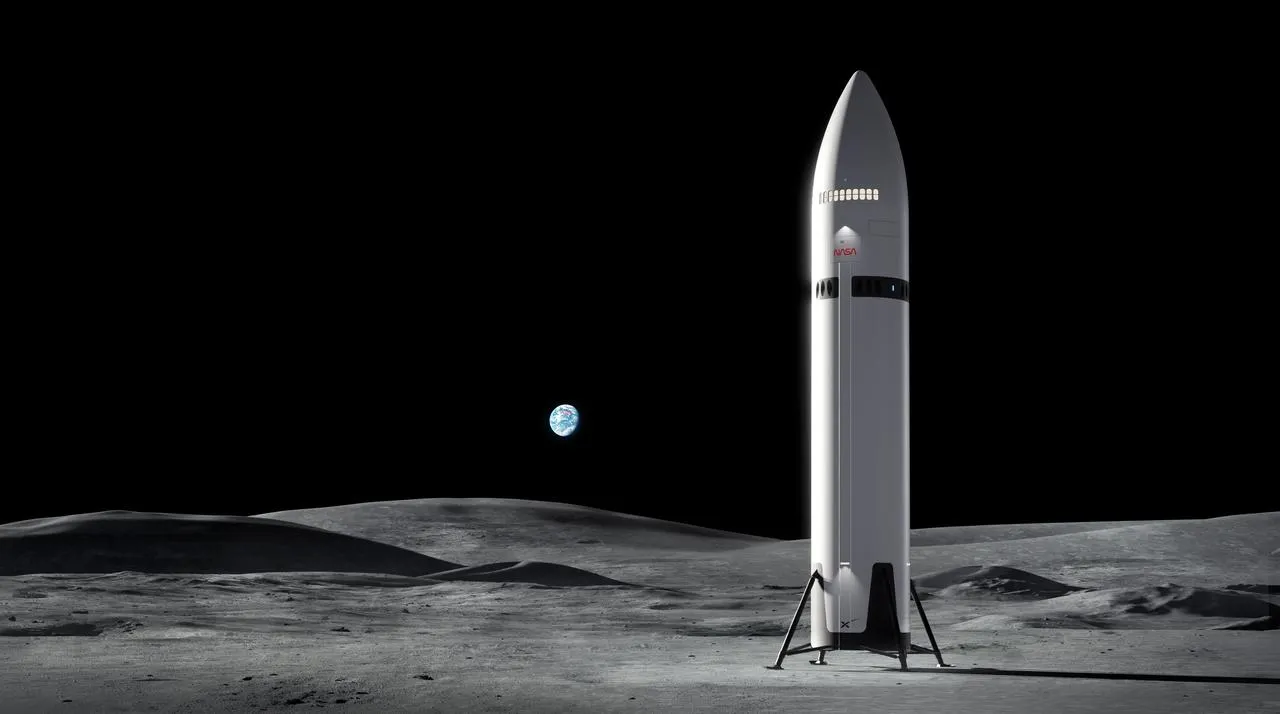
A lander 171 feet tall
The lunar version is a Starship upper stage about 171 feet tall, roughly a 14-story building. The Apollo lunar module stood 23 feet. NASA’s inspector general lists the height among the landing risks: on uneven ground at the lunar south pole, the vehicle’s momentum could carry it over after touchdown.1
Thirteen suborbital flights before an orbit
On its fourteenth flight, on September 28, 2026, a Starship upper stage reached orbit for the first time. Illustration rendered from the atlas’s model.
The complete vehicle first flew on April 20, 2023. NASA’s inspector general summarized what the first eleven flights showed. On Flight 3 SpaceX moved propellant between two tanks inside one ship. Flight 4 brought both stages down to controlled landings in the water, and on Flight 5 the launch tower’s arms caught the returning booster. Flights 1 through 6 used the first version of the ship; Flight 7 introduced a second, and Flights 7, 8 and 9 all ended with the ship lost. After each mishap the FAA reviews SpaceX’s investigation and has to accept its corrective actions before the next flight.1
GAO summarized 2025: SpaceX lost three ships in flight tests and a fourth when a nitrogen tank failed during ground testing. Design changes, and changes to ground processing, led to successful suborbital flights in August and October 2025.2
Fourteen integrated flight tests
April 20, 2023
Flight 18
Booster 7 and Ship 24. Lost before the stages separated.
November 18, 2023
Flight 28
First hot staging; the flight failed before the ship reached its planned trajectory.
March 14, 2024
Flight 31
Moved propellant between two tanks inside the ship.
June 6, 2024
Flight 41
First controlled splashdowns of both booster and ship.
October 13, 2024
Flight 51
The tower’s arms caught the returning booster.
November 19, 2024
Flight 61
Last flight of the first-version ship.
January 16, 2025
Flight 71
First second-version ship; ship lost.
March 6, 2025
Flight 82
Ship lost; NASA officials tied the loss to Raptor fuel leaks.
May 27, 2025
Flight 91
Ship lost.
August 26, 2025
Flight 101
Both stages splashed down as planned.
October 13, 2025
Flight 111
Last second-version ship; both stages splashed down as planned.
May 22, 2026
Flight 1210
First third-version vehicle and first flight of Raptor 3. Booster missed its landing target; ship shut down an engine early but splashed down.
July 24, 2026
Flight 1310
Released its satellites one at a time and relit a Raptor in space; ship splashed down intact in the Indian Ocean. Only 10 of 13 booster engines relit, and it hit the water hard.
September 28, 2026
Flight 1411
First orbit. Deployed 26 Starlink V3 satellites; flight cut to about three hours; splashdown north of Hawaii.
Raptor, the engine NASA tests for the Moon
The lander will use two variants of Raptor, one optimized for sea-level pressure and one for vacuum. One of the first milestones SpaceX completed under its Artemis III contract, in November 2021, was an engine test: a 281-second firing that showed Raptor could follow the throttle profile, and burn for the full length, of a powered descent from lunar orbit to the surface. In August 2023 a vacuum Raptor was started after being chilled to the cold its hardware would reach while a lander waits in space, sometimes for long periods, without firing.4
Raptor is a reusable staged-combustion engine burning methane and oxygen, with about twice the thrust of Falcon 9’s Merlin.9 GAO lists its development among the lander program’s top risks. According to NASA’s lander officials, the newest version, Raptor 3, uses welded fuel joints designed to prevent the leaks that destroyed a ship in March 2025; it flew for the first time on Flight 12 in May 2026.2
A $4.5 billion lander that refuels in orbit
NASA started its Human Landing System program in 2019. In May 2020 it paid three companies to begin designing landers: Blue Origin received more than $480 million, Dynetics nearly $240 million and SpaceX nearly $135 million. In April 2021 NASA chose SpaceX alone to continue, under a firm-fixed-price, milestone-based award worth $2.89 billion that included an uncrewed demonstration landing before the crewed one. NASA’s announcement noted that the lunar Starship “leans on the company’s tested Raptor engines and flight heritage of the Falcon and Dragon vehicles.” In November 2022 NASA added Option B, for a lander on a second crewed mission; counting every option, the inspector general put the potential value of SpaceX’s contract at about $4.3 billion.1,3
- $4.5B
- Potential value of SpaceX’s lander contract in December 2025, up 6% from about $4.3 billion1
- 10+
- Tanker launches planned to fill an orbiting depot before each crewed landing1
- 6 days
- SpaceX’s target interval between tanker launches1
- 115 ft
- Height of the elevator door above the lunar surface1
The plan behind that contract is a chain of launches: a Starship storage depot in low Earth orbit, more than ten Starship tankers launched about six days apart to fill it, and then the uncrewed lunar Starship, which refuels at the depot and flies to lunar orbit to wait for the crew.1
Because NASA buys the lander at a fixed price, delays have cost SpaceX time rather than costing NASA money: the contract had grown only 6 percent, about $253 million, by December 2025. The schedule has fared worse. SpaceX’s development of the Artemis III Starship has been delayed at least two years since the 2021 award, and the inspector general found that it would not be ready for a landing in June 2027. NASA’s lander program considers the propellant-transfer test “one of the most significant technical challenges facing the provider”; it was planned for March 2025 and slipped to March 2026.1 In July 2026 GAO listed it, with a long-duration flight, as Starship’s next major milestones, both scheduled for 2026.2
When the lunar Starship would be ready1
The inspector general also recorded risks that a fixed price does not settle: an elevator that is the crew’s only way back into the lander, a disagreement between NASA and SpaceX over manual control of the landing, and no capability at NASA to rescue astronauts stranded in lunar orbit or on the surface.1
What NASA engineers test and watch
NASA does not own Starship, but its engineers work inside the program. The lander office has insight into more than 1,100 focus areas across SpaceX and Blue Origin, with increased attention on engine development, cryogenic fluid management and crew training.1 At Ames Research Center, engineers tested a 1.2 percent scale model of the third-version Super Heavy in a wind tunnel in 2025, building on a 2024 test series, to understand the forces on the booster during reentry.15 At Marshall, a thermal laboratory tests prototype insulation meant to protect the lander’s propellant tanks and crew cabin.16 And on November 19, 2024, astronaut Don Pettit photographed Flight 6 climbing away from the Texas coast from the International Space Station.17
Starship as NASA has photographed it
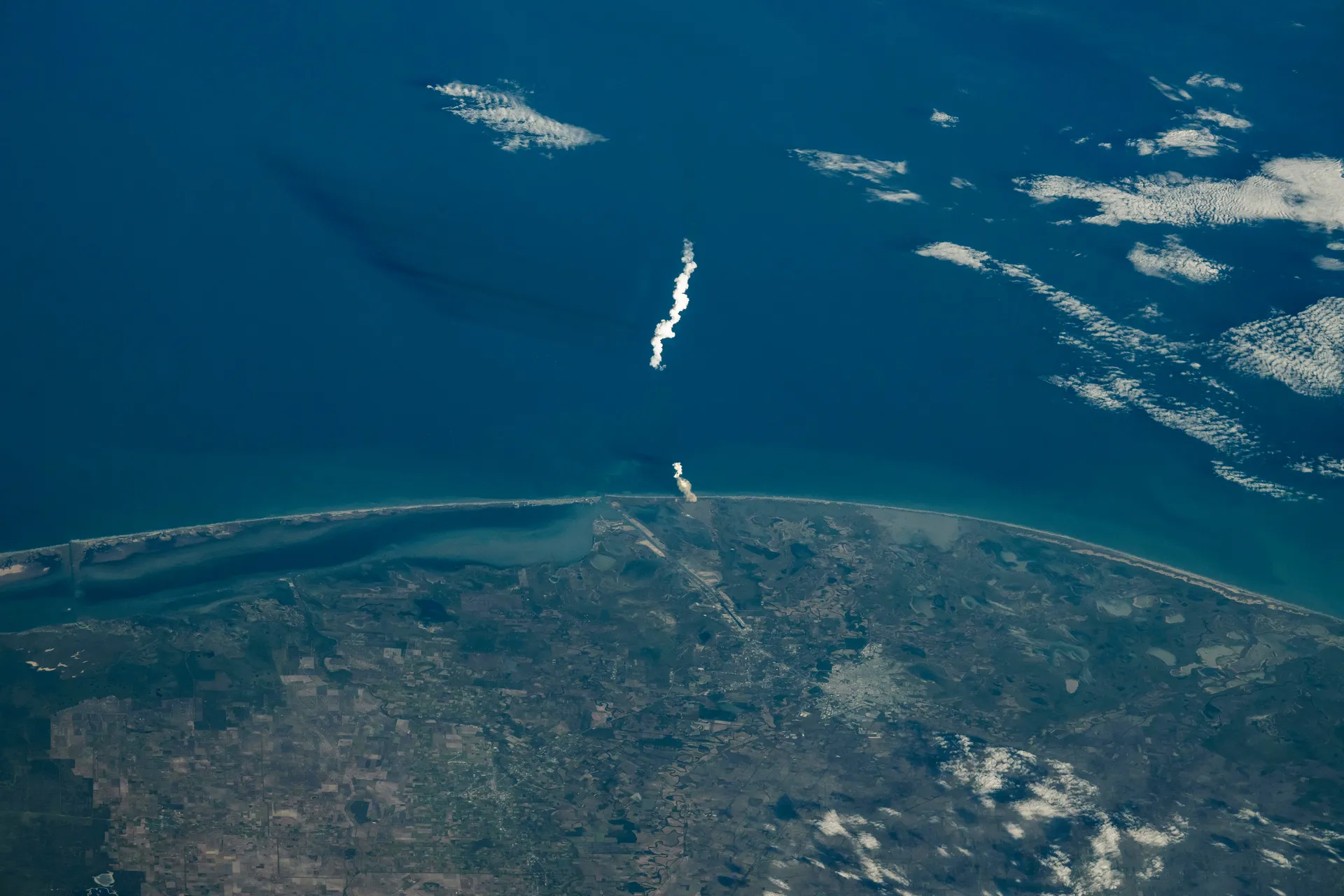
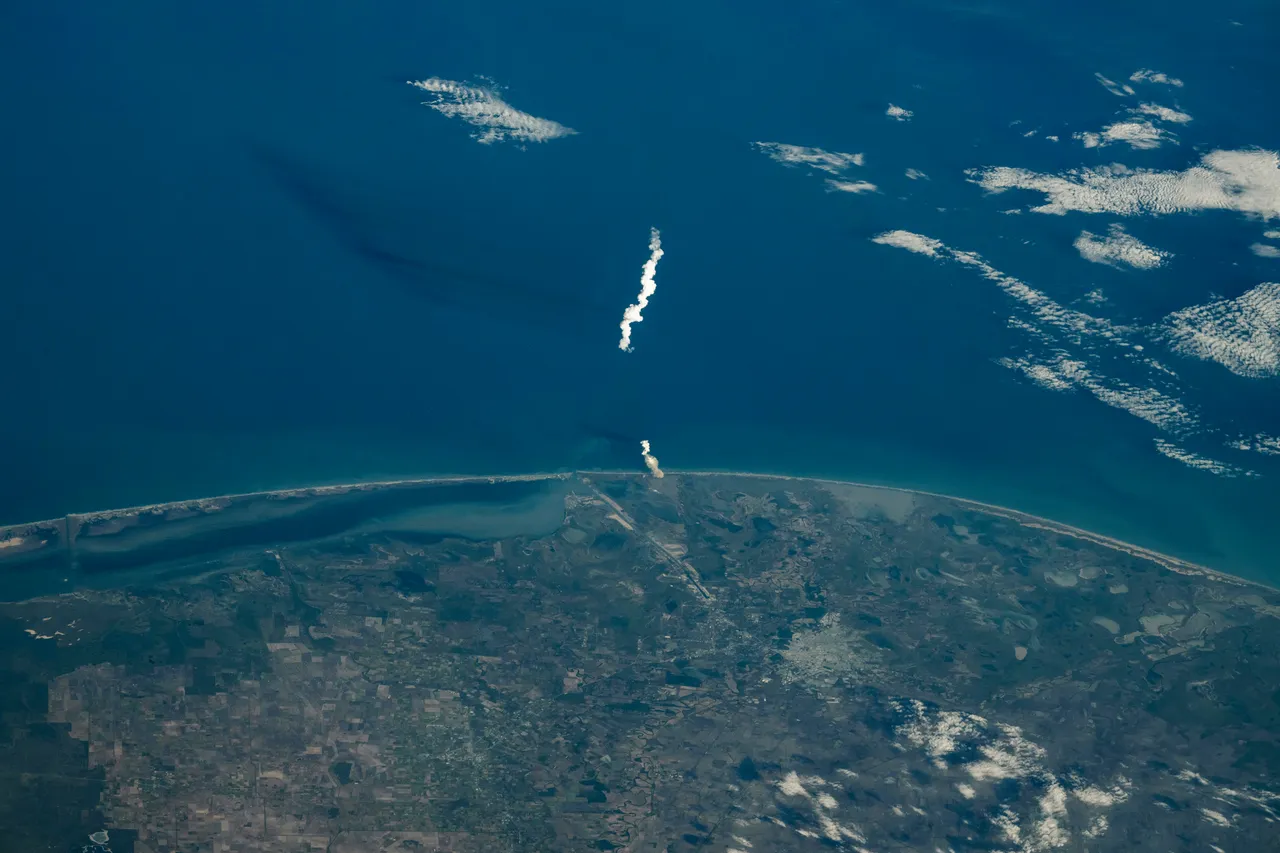
Flight 6 seen from the International Space Station, November 19, 2024. The plume rises from Starbase on the Gulf coast. NASA/Don Pettit
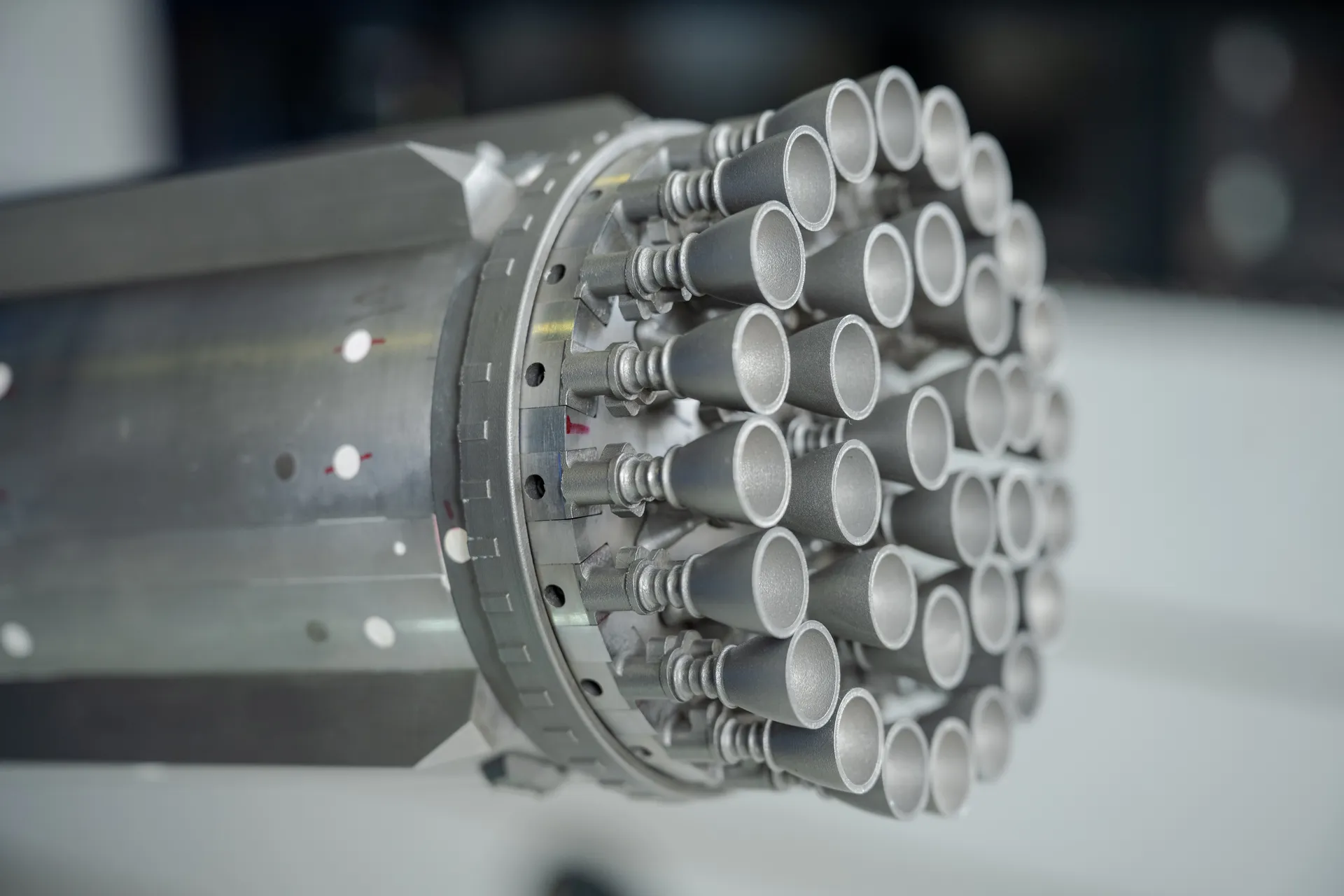
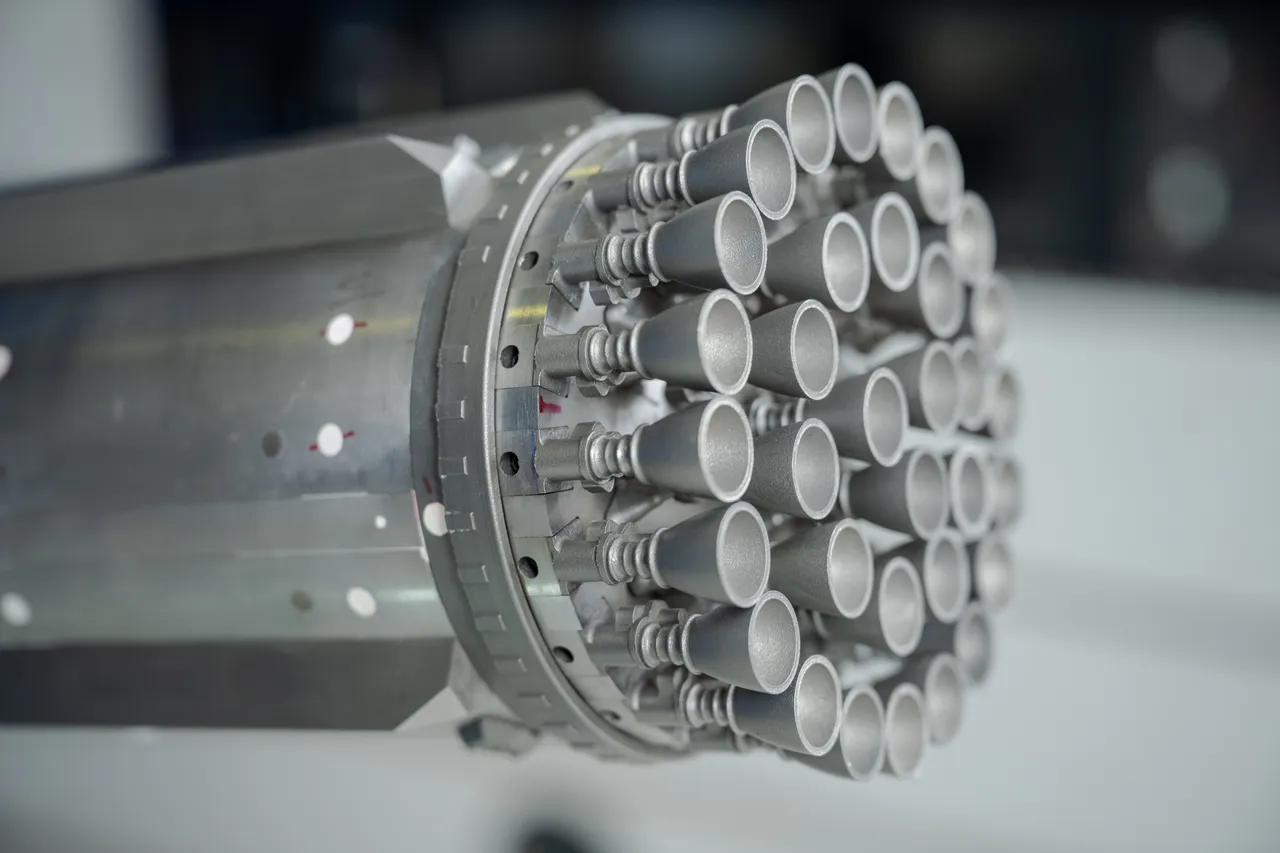
The 33 engine nozzles on a 1.2 percent scale model of the third-version Super Heavy, NASA Ames, July 2025. NASA/Brandon Torres
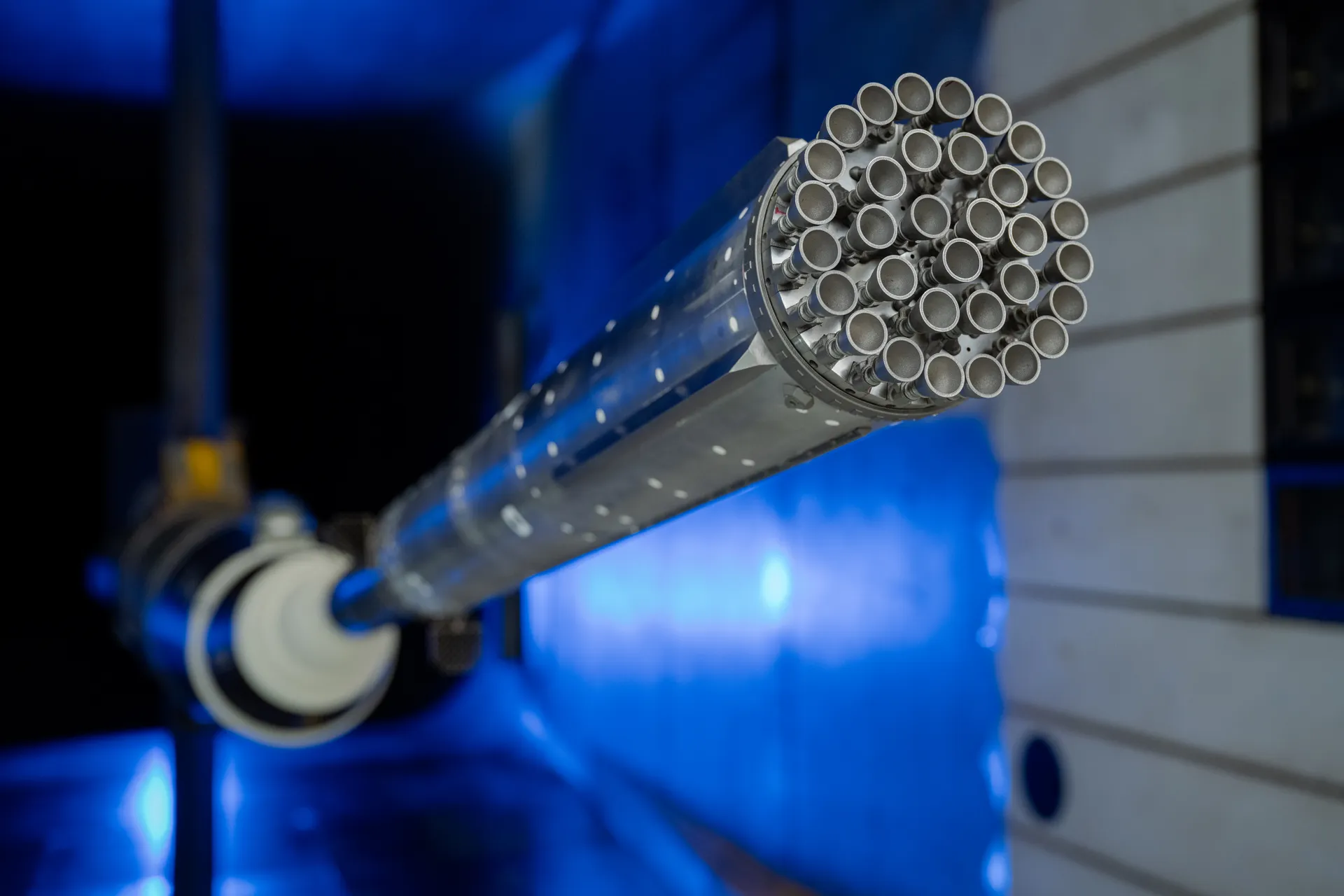
The model in the Ames Unitary Plan Wind Tunnel, where engineers measured reentry forces on the booster. NASA/Brandon Torres
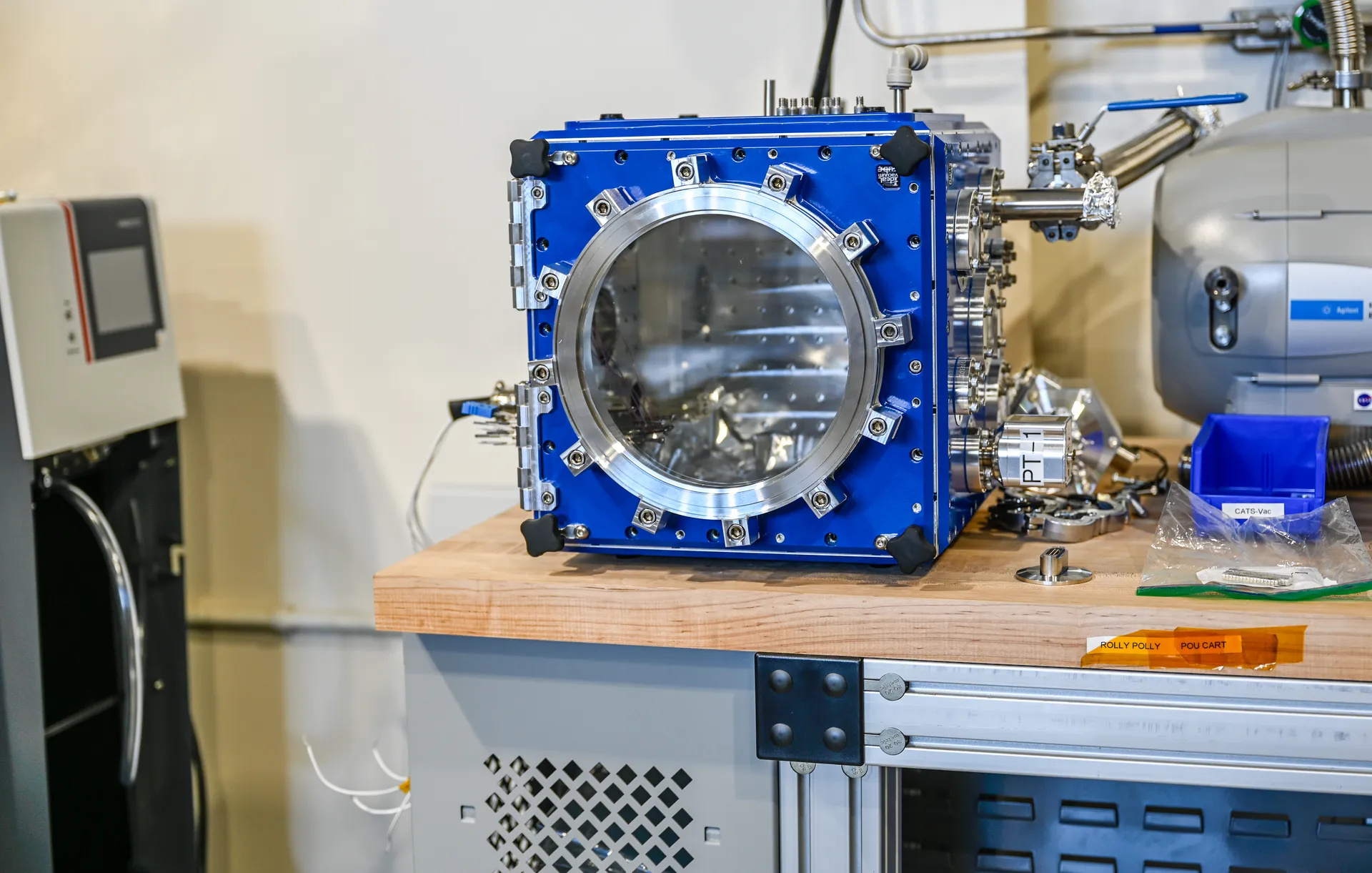
A test chamber in Marshall’s thermal engineering laboratory, where NASA tests prototype insulation for the lunar Starship’s tanks and cabin, fall 2024. NASA/Ken Hall
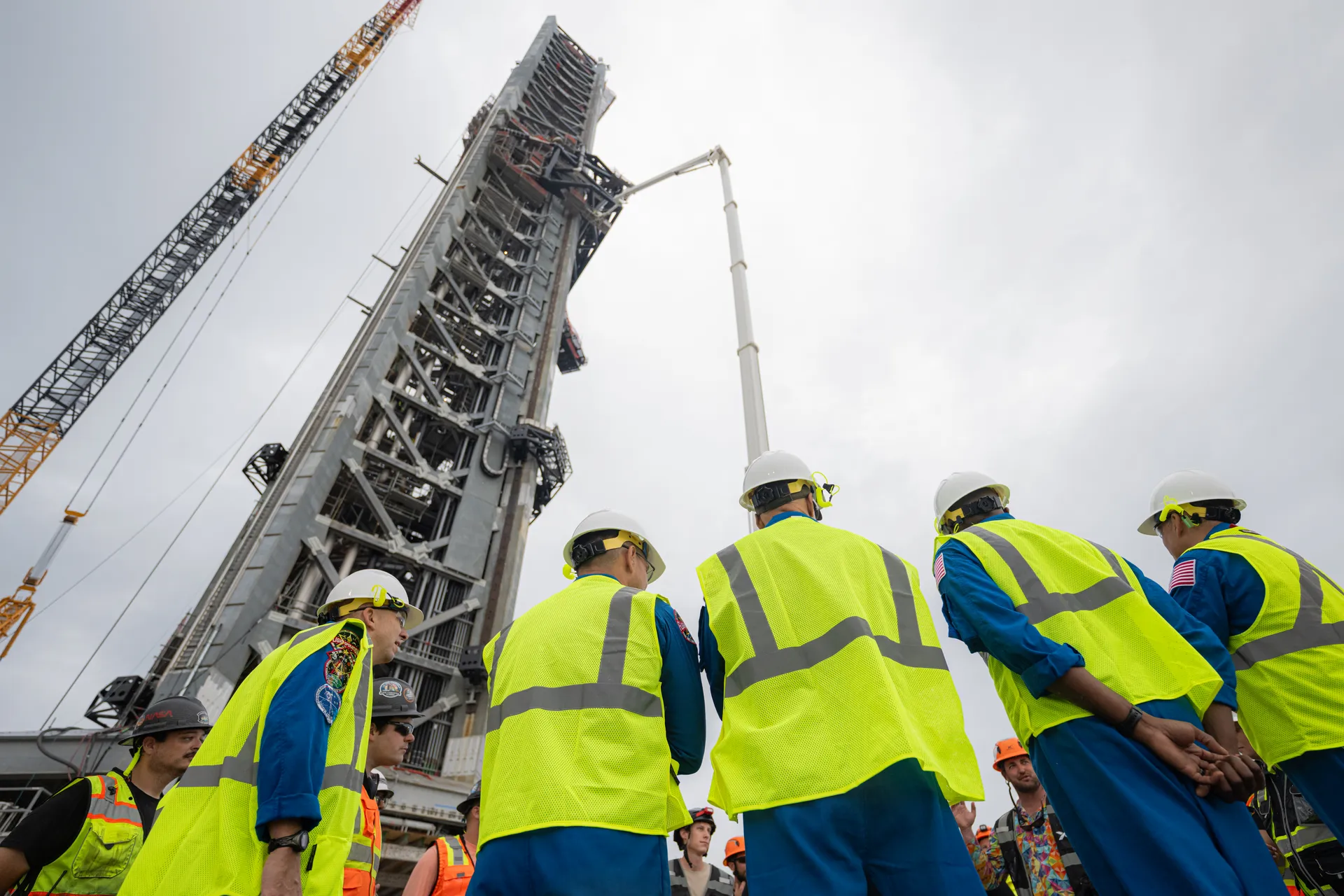
The Artemis III crew at the Starship launch tower on Kennedy’s Launch Complex 39A, September 3, 2026. NASA/John Kraus
Artemis III: a Starship that docks with Orion and carries no one
In February 2026 NASA restructured Artemis. The first landing moved to Artemis IV in 2028, and Artemis III became a crewed test in low Earth orbit in 2027.14 For that mission SpaceX will fly a Starship Version 3 with a docking system added to its nose, so that NASA and SpaceX can see how the integrated stack of Orion and the Starship test lander behaves. Astronauts will not enter it. Blue Origin’s test lander launches first; after the crew launches on SLS and finishes docking tests with it, SpaceX launches its Starship to meet Orion. NASA describes the result as three of the world’s most powerful rockets launched within a short time of one another.6
The first lunar landing still requires everything the September flight did not attempt. That flight lasted about three hours. The landing plan in NASA’s contract needs a depot that holds cryogenic propellant in orbit for months, more than ten tankers arriving about a week apart, and an uncrewed landing and ascent from the Moon before astronauts ride down in the elevator.1,11
Sources
The text above is drawn from these 17 sources. Government works are adapted closely; company and press material is summarized. Numbers in the text point here. Last checked October 1, 2026.
Show all 17 sourcesShow fewer
Continue
Related stories
- Starship HLSIn 2021 NASA chose a version of Starship, refueled in Earth orbit by a fleet of tankers, to land its astronauts. The contract is now worth about $4.5 billion; the refueling has not yet flown.
- Refilling in orbitBoth of NASA’s crew landers reach the Moon only after tankers refill them in Earth orbit. Why that is, how the transfer is meant to work, why super-cold propellant fights back, and where the first test stands.
- Falcon 9NASA paid for milestones, not a rocket of its own design. The result now flies half the world’s launches and every American crew to orbit.