Europa Clipper
NASA’s spacecraft bound for Jupiter’s ocean moon Europa, which it will pass 49 times.
- Status
- Operating
- Launched
- 2024
- October 14
- Size
- 30.5 m
- 100 ft
- Built by
- NASA
- $5.2B
- NASA’s investment over the mission’s life, 2015–2034
- 49
- planned close flybys of Europa, beginning in 2031
- Dec 3, 2026
- Earth gravity-assist flyby; Jupiter arrival April 2030
Europa Clipper is the first mission designed for a detailed study of Jupiter’s moon Europa, where strong evidence points to a saltwater ocean beneath the ice. Its goal is to determine whether there are places below the surface that could support life. JPL leads its development in partnership with the Johns Hopkins Applied Physics Laboratory.
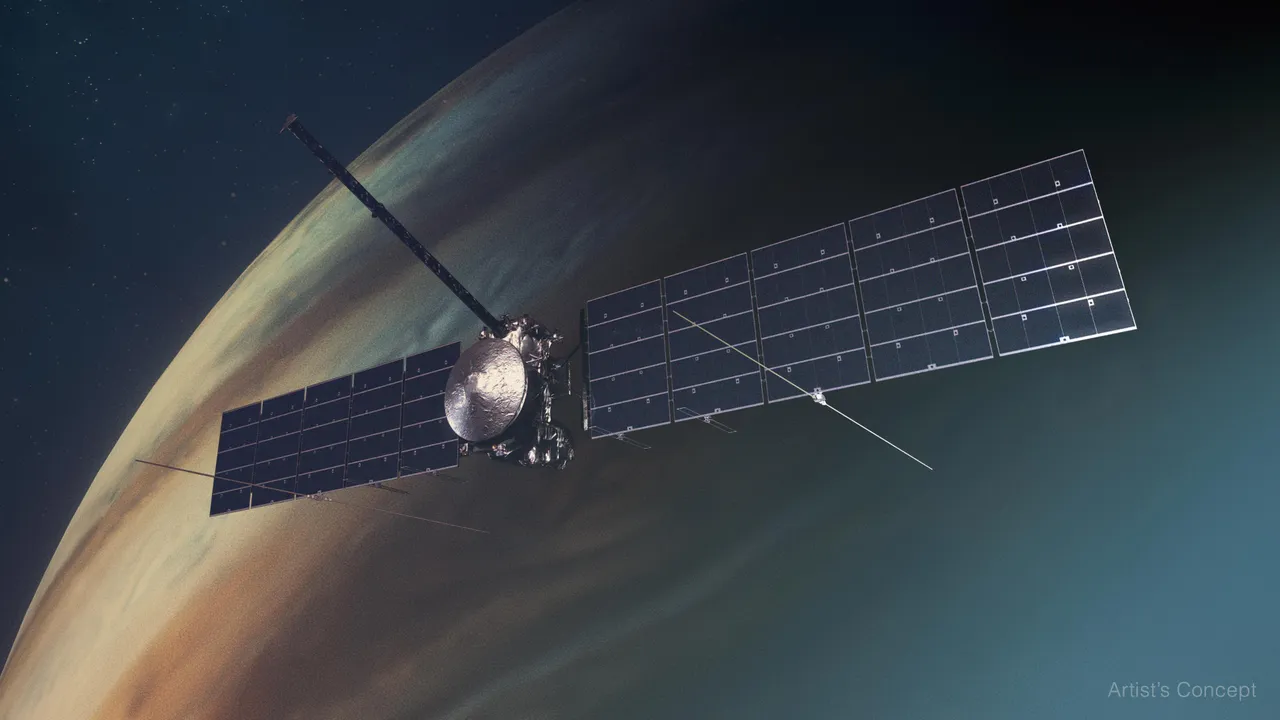
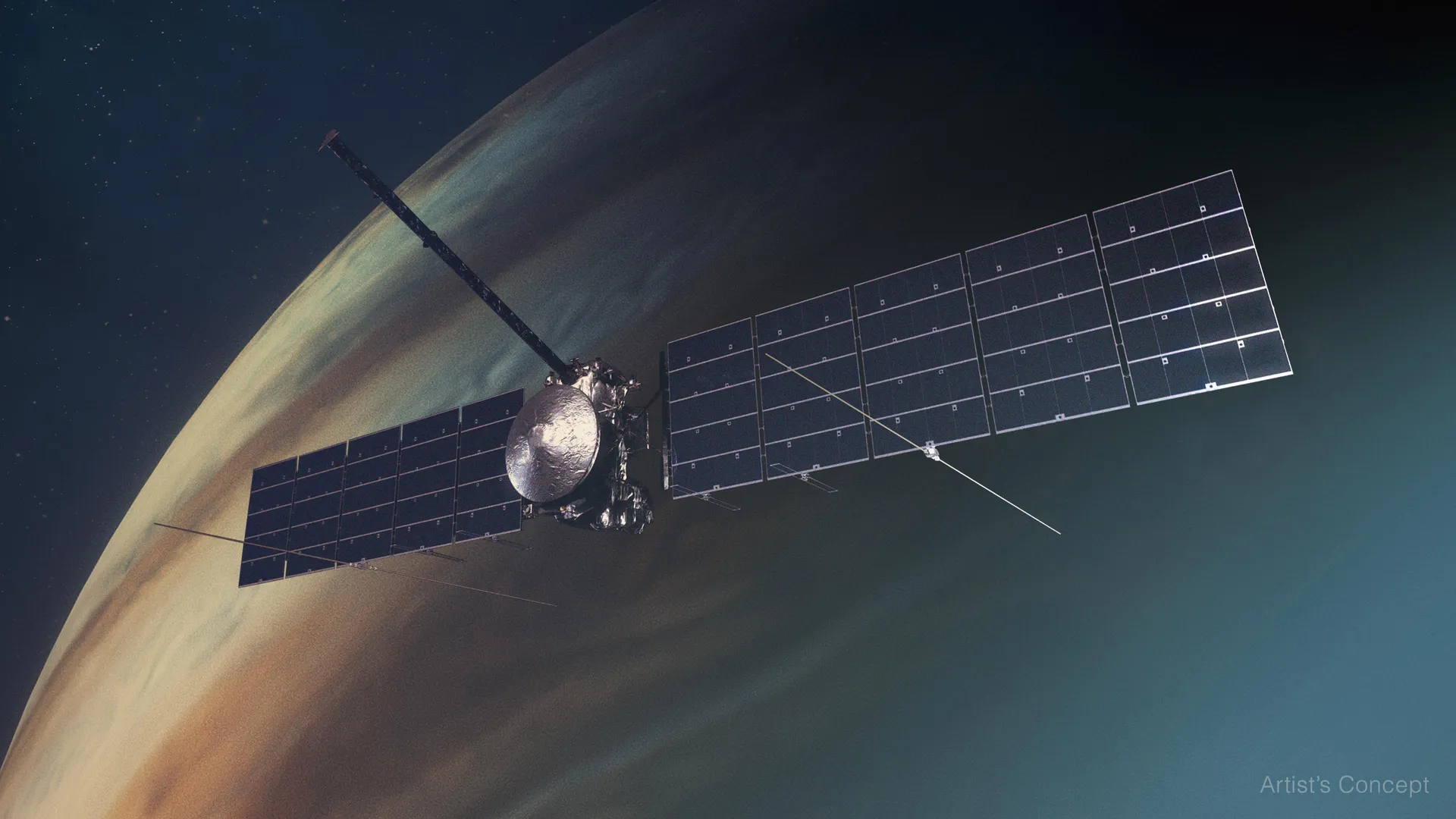
APL, working with NASA’s Goddard Space Flight Center, designed and built the spacecraft’s propulsion module; JPL fitted it with the nine science instruments, a vault that shields the electronics from Jupiter’s radiation and a 10-foot (3-meter) dish antenna, and the solar arrays were attached at Kennedy Space Center. Because sunlight at Jupiter is so weak, the arrays span more than 100 feet (30.5 meters), and Europa Clipper is the largest spacecraft NASA has built for a planetary mission; fully fueled, it weighed about 12,800 pounds (5,800 kilograms). In 2024, months before launch, engineers found that some of its transistors could fail at lower radiation doses than expected; after extensive testing, NASA said in August that its analysis suggested they could support the baseline mission.
Congress at first required the mission to launch on the Space Launch System; after NASA’s Inspector General reported in 2019 that no SLS would be available before 2025, NASA bought a Falcon Heavy launch for about $178 million in 2021. Europa Clipper launched on October 14, 2024.
On March 1, 2025, Europa Clipper passed about 550 miles (884 kilometers) above Mars and used the flyby to test its radar. On December 3, 2026, it is to swing about 2,000 miles (3,200 kilometers) past Earth for the gravity assist that sends it to Jupiter in April 2030. To limit its exposure to Jupiter’s intense radiation it will orbit the planet, not Europa, and pass close to the moon 49 times from spring 2031, some passes as low as 16 miles (25 kilometers), with all nine instruments operating on every pass. The current plan ends the mission in 2034 by steering the spacecraft into Ganymede.
Where Europa Clipper appears in the atlas
Sources
- 1
- 2
- 3
- 4
- 5
- 6
- 7
- 8
- 9
- 10