Voyager to Dragonfly: fifty years of flying to the outer solar system
Two 1977 probes beyond the Sun’s bubble, New Horizons past Pluto, Juno at Jupiter, Europa Clipper en route and a rotorcraft being built for Titan: what each found or seeks, what each cost, where each stands in October 2026.
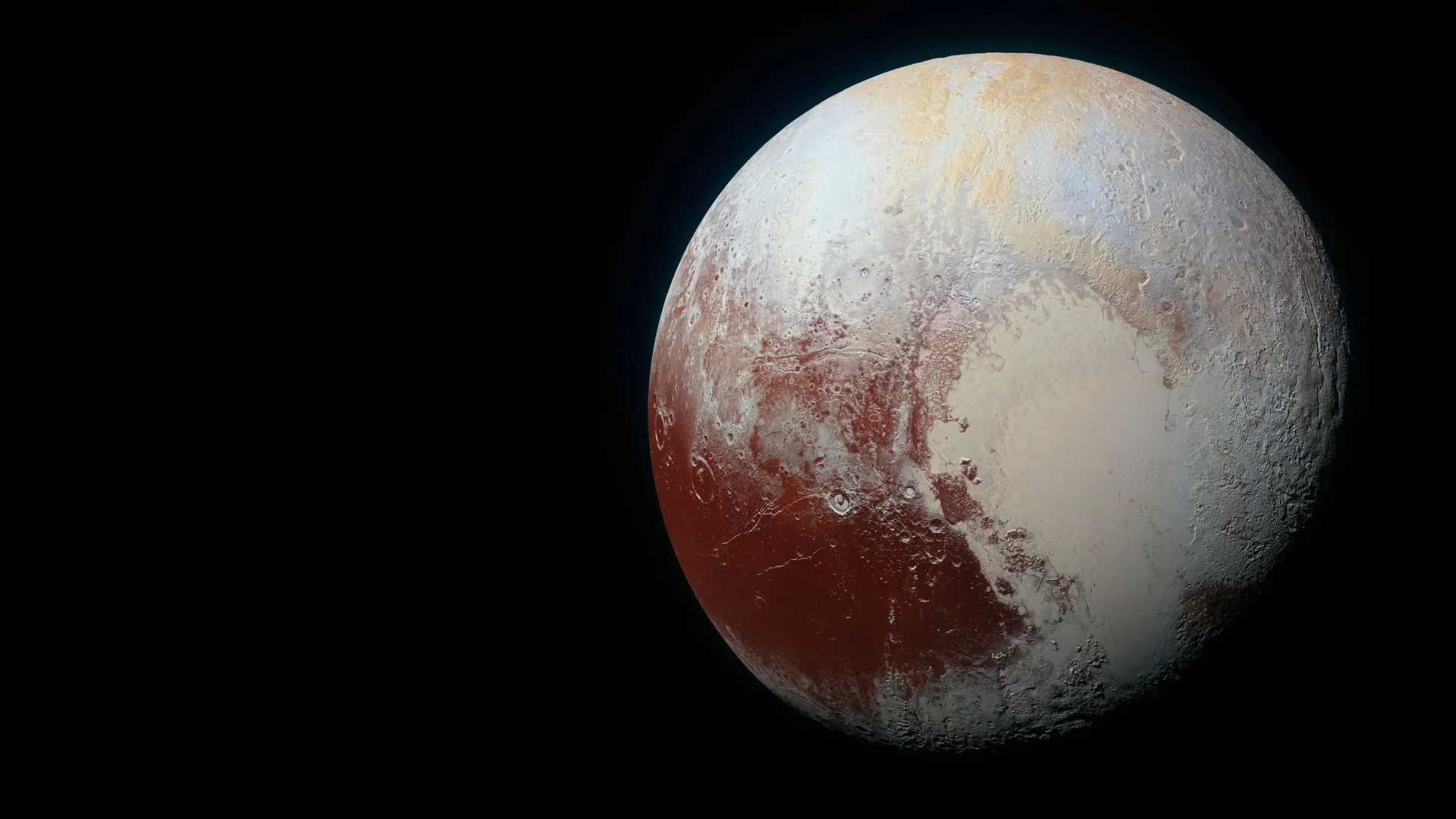
NASA/Johns Hopkins APL/Southwest Research Institute · Pluto from New Horizons, July 14, 2015
Drawn from 27 sources: NASA (20), NASA/JPL (2), The Planetary Society (2), NASA/JPL-Caltech and 2 others. About 9 minutes. Checked October 1, 2026.
Beyond Mars the Sun gives little light, distances are counted in billions of miles, and a spacecraft is designed around the decade it will spend getting there. NASA has five missions working in, or bound for, the outer solar system in October 2026. Voyager’s two spacecraft launched in 1977. New Horizons flew past Pluto in 2015. Juno has orbited Jupiter for ten years. Europa Clipper is two years into its flight to Jupiter’s moon Europa, and Dragonfly is still being wired together for Saturn’s moon Titan.
Voyager: a four-planet tour funded as a two-planet mission
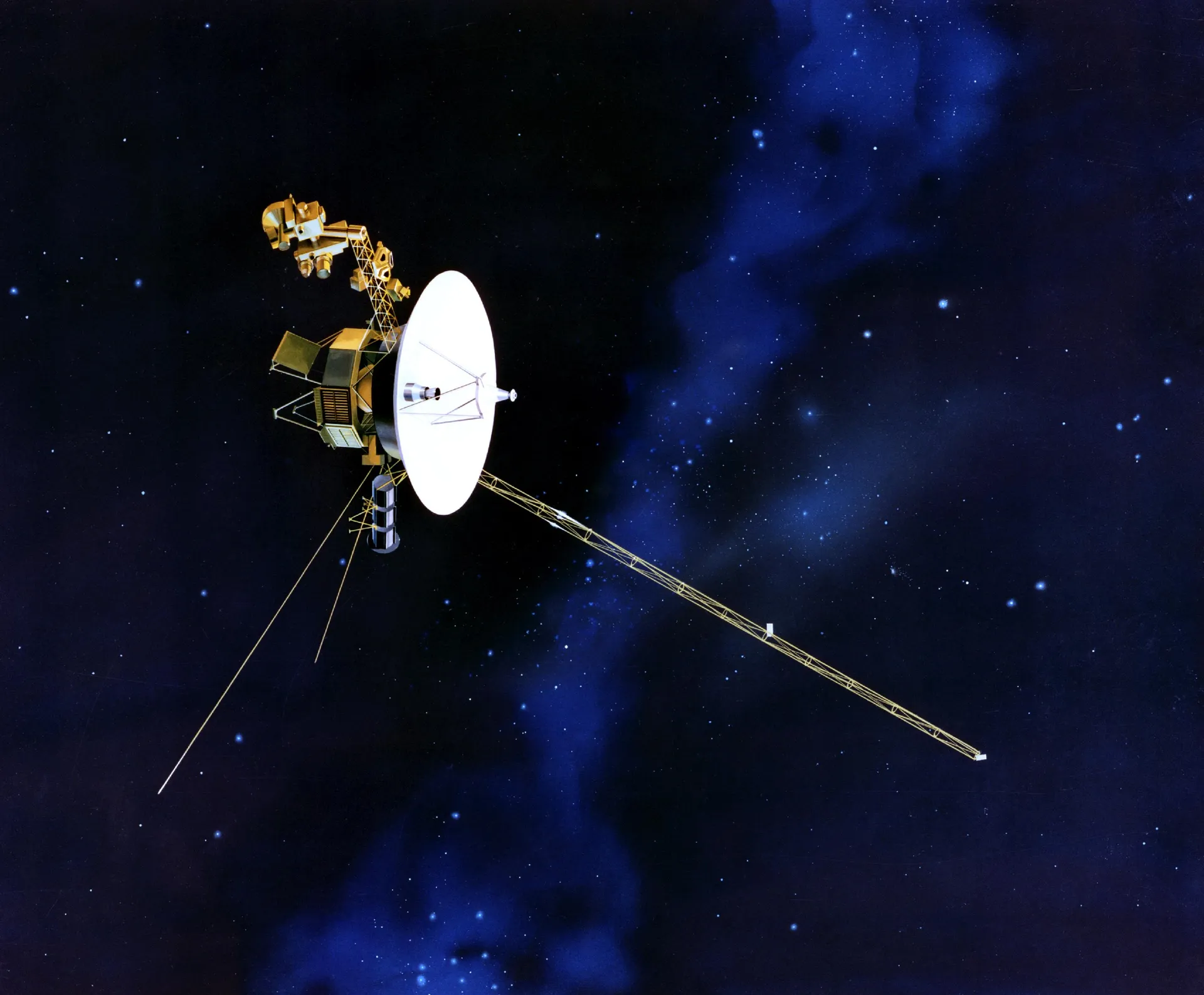
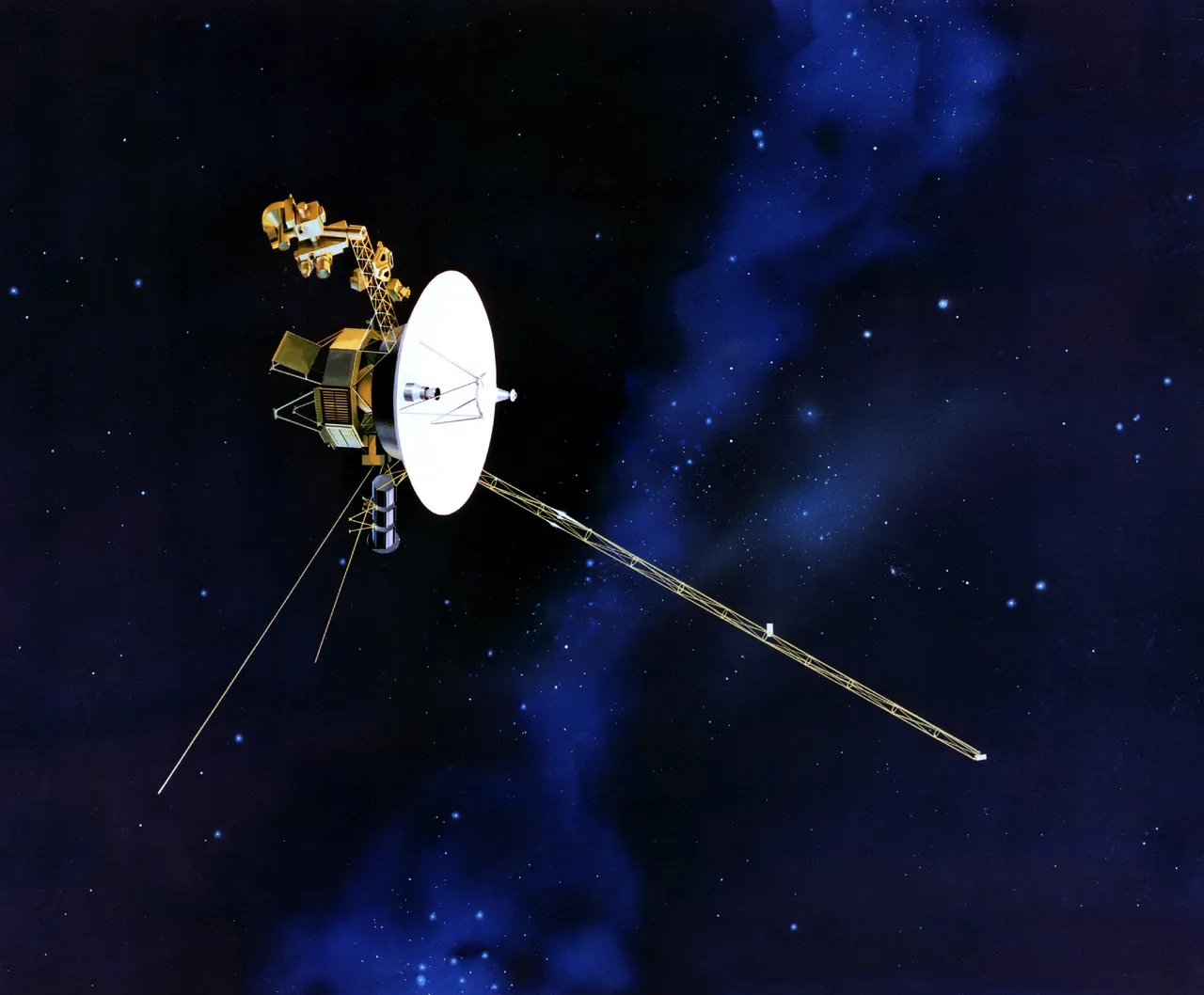
The Voyager mission was designed to take advantage of a rare arrangement of the outer planets in the late 1970s and 1980s, which occurs about every 175 years and allowed a four-planet tour with a minimum of propellant and trip time. The flyby of each planet bends the spacecraft’s path and increases its velocity enough to deliver it to the next one. This “gravity assist” cut the flight time to Neptune from 30 years to 12.1
A spacecraft that could go the whole distance was judged too expensive to build, so the Voyagers were funded to study Jupiter and Saturn only, and built to last five years. More than 10,000 trajectories were studied before choosing two; the path chosen for Voyager 2 kept the option of continuing to Uranus and Neptune.1
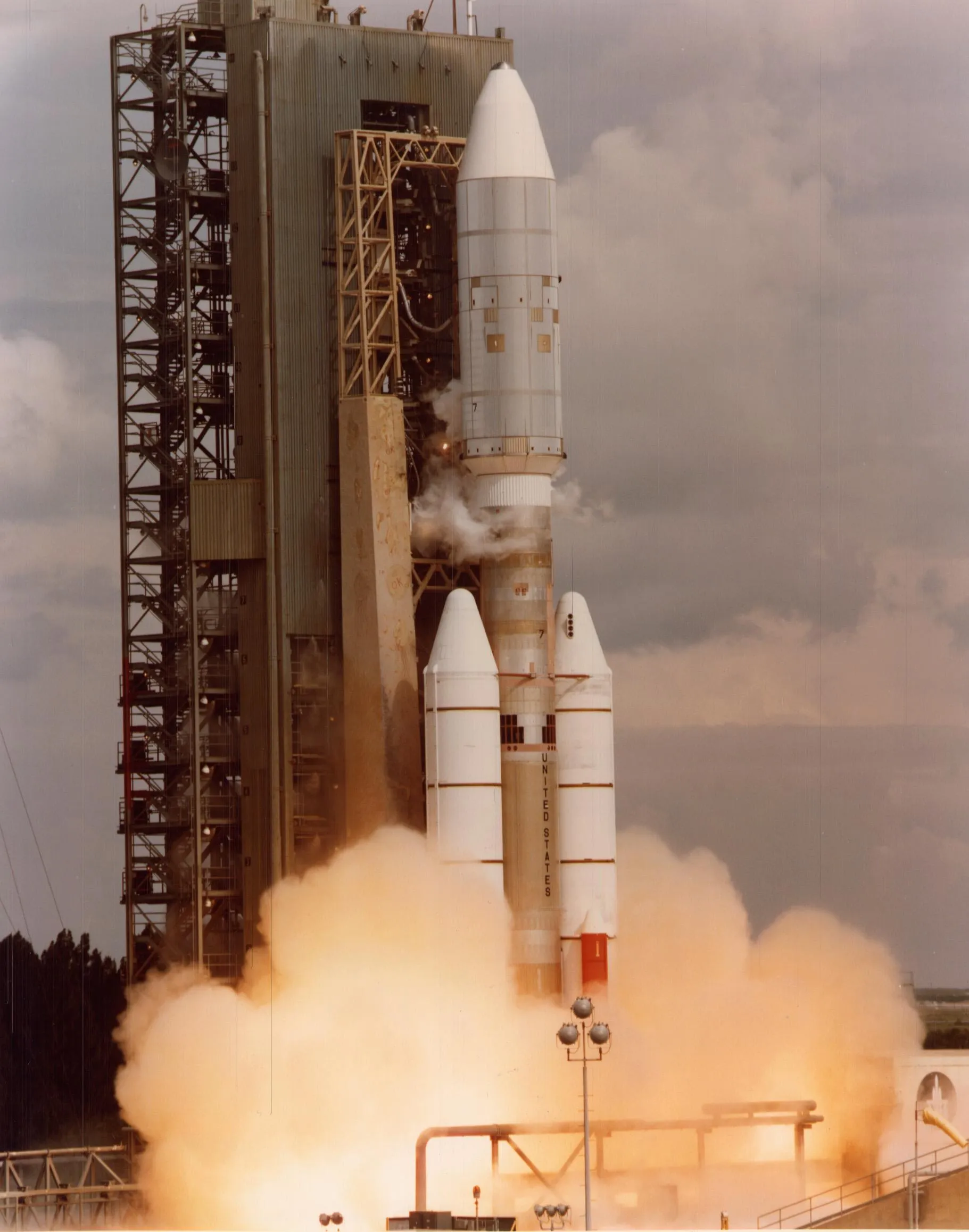
Voyager 2 launched first, on August 20, 1977; Voyager 1 followed on September 5 on a faster, shorter trajectory. Voyager 1 reached Jupiter on March 5, 1979, and Saturn on November 12, 1980; Voyager 2 reached Jupiter on July 9, 1979, and Saturn on August 25, 1981.1
At Jupiter the greatest surprise was active volcanism on the moon Io, the first active volcanoes seen on another body in the solar system. After Voyager 2’s Saturn encounter showed that it could probably reach Uranus with all instruments working, NASA added money to operate both spacecraft and authorized the Uranus flyby, on January 24, 1986, and then Neptune, on August 25, 1989. Between them the Voyagers explored all the giant outer planets and 48 of their moons.1
The cost of both missions through the Neptune encounter—including launch, operations and the nuclear power sources supplied by the Department of Energy—was $865 million. NASA then budgeted another $30 million to fund what it called the Voyager Interstellar Mission for two years.1

After 49 years, the Voyagers’ power is running down
Earth, a speck in a sunbeam, photographed by Voyager 1 from about 3.8 billion miles away in 1990; NASA reprocessed the image in 2020.
The two Voyagers are the only spacecraft ever to operate outside the heliosphere, the protective bubble of particles and magnetic fields generated by the Sun. Voyager 1 crossed into interstellar space on August 25, 2012, about 11 billion miles from the Sun; Voyager 2, traveling slower and in a different direction, crossed in 2018.2,3
Voyager 1’s cameras were the first to go. On February 14, 1990, it took the images that became the Pale Blue Dot, and 34 minutes later it powered off its cameras for good, to conserve power and because neither probe would fly close enough to anything else to take pictures.7
Both Voyagers run on radioisotope thermoelectric generators, which turn heat from decaying plutonium into electricity, and each loses about 4 watts a year. After almost half a century, the margins are razor thin. Of the 10 instruments each spacecraft carried, seven have been shut off. On April 17, 2026, engineers turned off Voyager 1’s Low-energy Charged Particles experiment, which had run almost without interruption since 1977, after the spacecraft’s power fell unexpectedly during a routine maneuver in February. Commands to Voyager 1, more than 15 billion miles away, take about 23 hours to arrive.4
In the summer the team tried a more ambitious fix it called “the Big Bang”: turning off a group of powered devices all at once and replacing them with lower-power alternatives, while keeping the spacecraft warm enough to work. It succeeded on Voyager 2, which would otherwise have had to lose another instrument before the end of 2026; it should keep Voyager 2’s three remaining instruments going for at least another year. The same swap is planned for Voyager 1.4,5
On November 18, 2026, at 2:16 a.m. Pacific time, Voyager 1 will be one light-day from Earth—16,094,799,096 miles, the distance light travels in 24 hours. No other human-made object has been that far.6
New Horizons: Pluto in 2015, the Kuiper Belt since
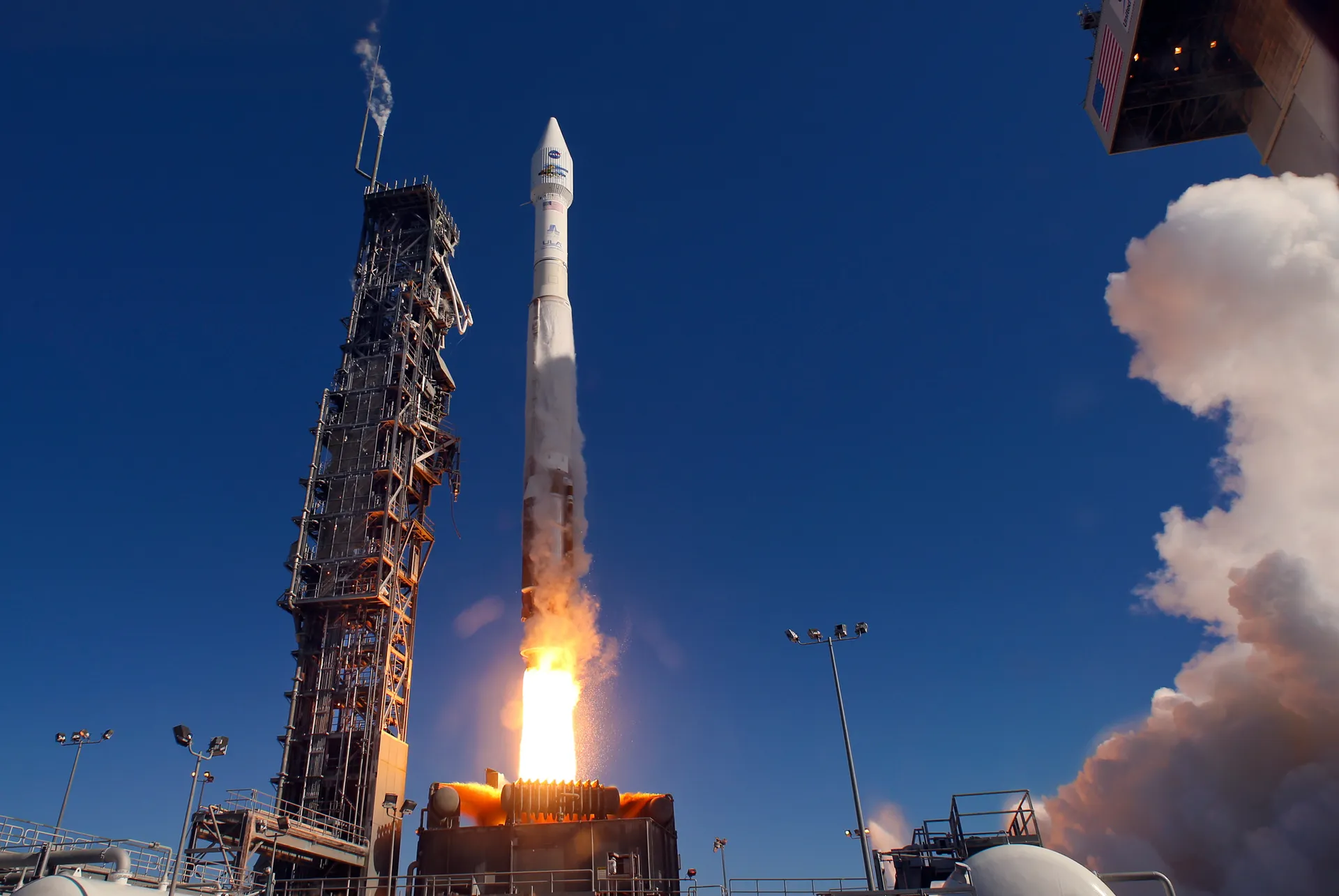
New Horizons launched on January 19, 2006, on an Atlas V. A final burn of its solid-rocket stage sent it away from Earth at about 36,400 miles per hour, the highest launch speed ever attained by a human-made object relative to Earth, and a Jupiter flyby in February 2007 cut three years off the trip. The spacecraft slept through most of the cruise, woken about two months each year.8
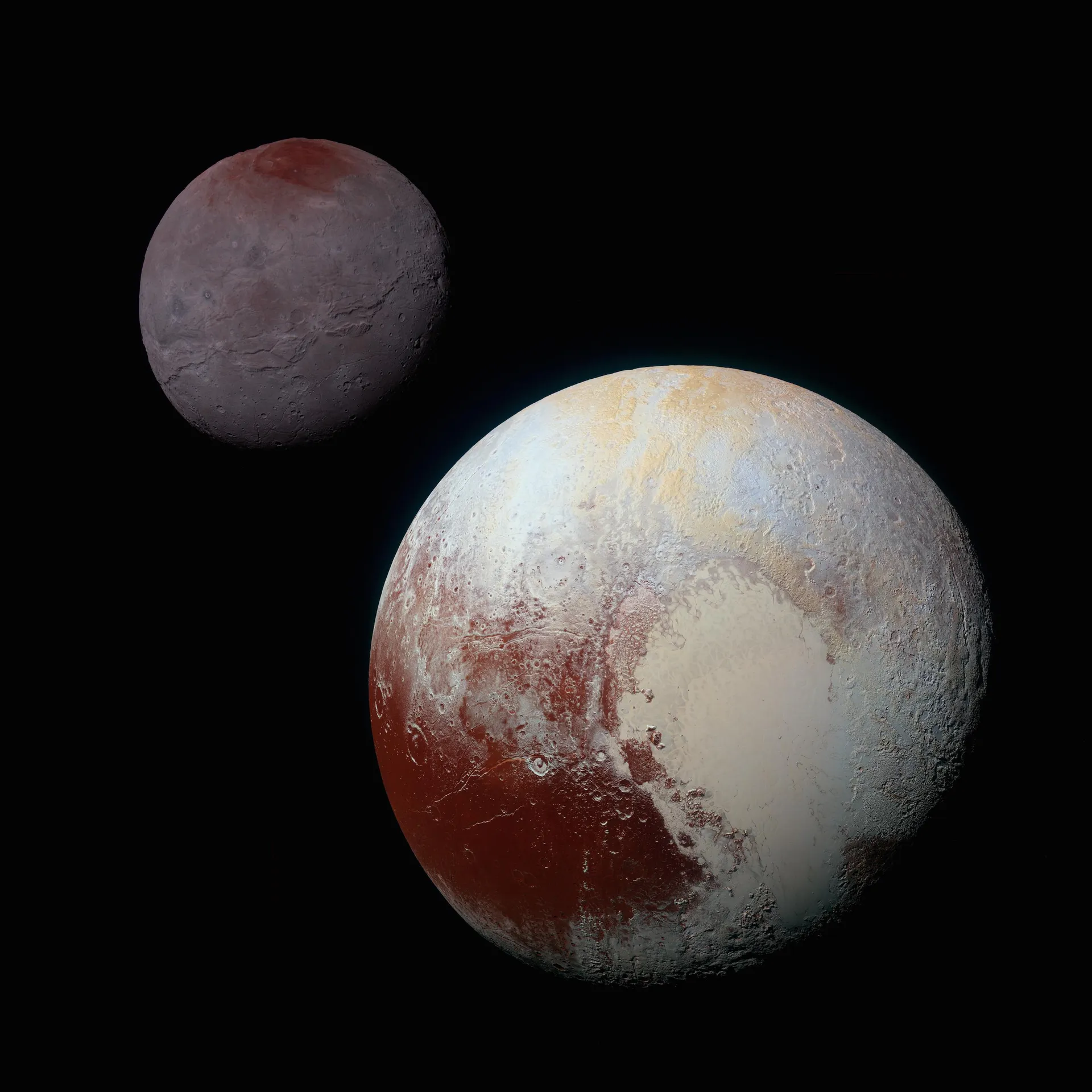
On July 14, 2015, after more than nine years in flight, New Horizons passed about 7,800 miles above Pluto. Sending home the 6.25 gigabytes it collected took more than 15 months, because the spacecraft was about 4.5 light-hours away and could transmit only 1 to 2 kilobits per second. Pluto turned out to be far more active than imagined, with a heart-shaped glacier of nitrogen ice about 600 miles wide, now named Sputnik Planitia.8
On January 1, 2019, New Horizons flew past Arrokoth, a 22-mile-long Kuiper Belt object 4 billion miles from Earth and the most distant object ever explored up close.8 In June 2026 it woke in good health from a 321-day hibernation, about 5.9 billion miles from Earth, ready to send back data on the charged particles and dust of the distant Kuiper Belt.9 Its old images are still producing results: in August 2026 the team reported dark features along the northern edge of Sputnik Planitia that may be wetted from time to time by liquid nitrogen rising from beneath the glacier—the first evidence of recently flowing liquid on Pluto.10
Juno: ten years at Jupiter, past its planned end
Juno arrived at Jupiter in 2016 after a five-year, 1.7-billion-mile trip, the first orbiter to look so closely beneath the planet’s clouds. From its first 53-day orbit it found unseen networks of storms around the poles, active volcanoes and lakes of lava on Io, and answers to a decades-old question about how deep Jupiter’s winds extend.11
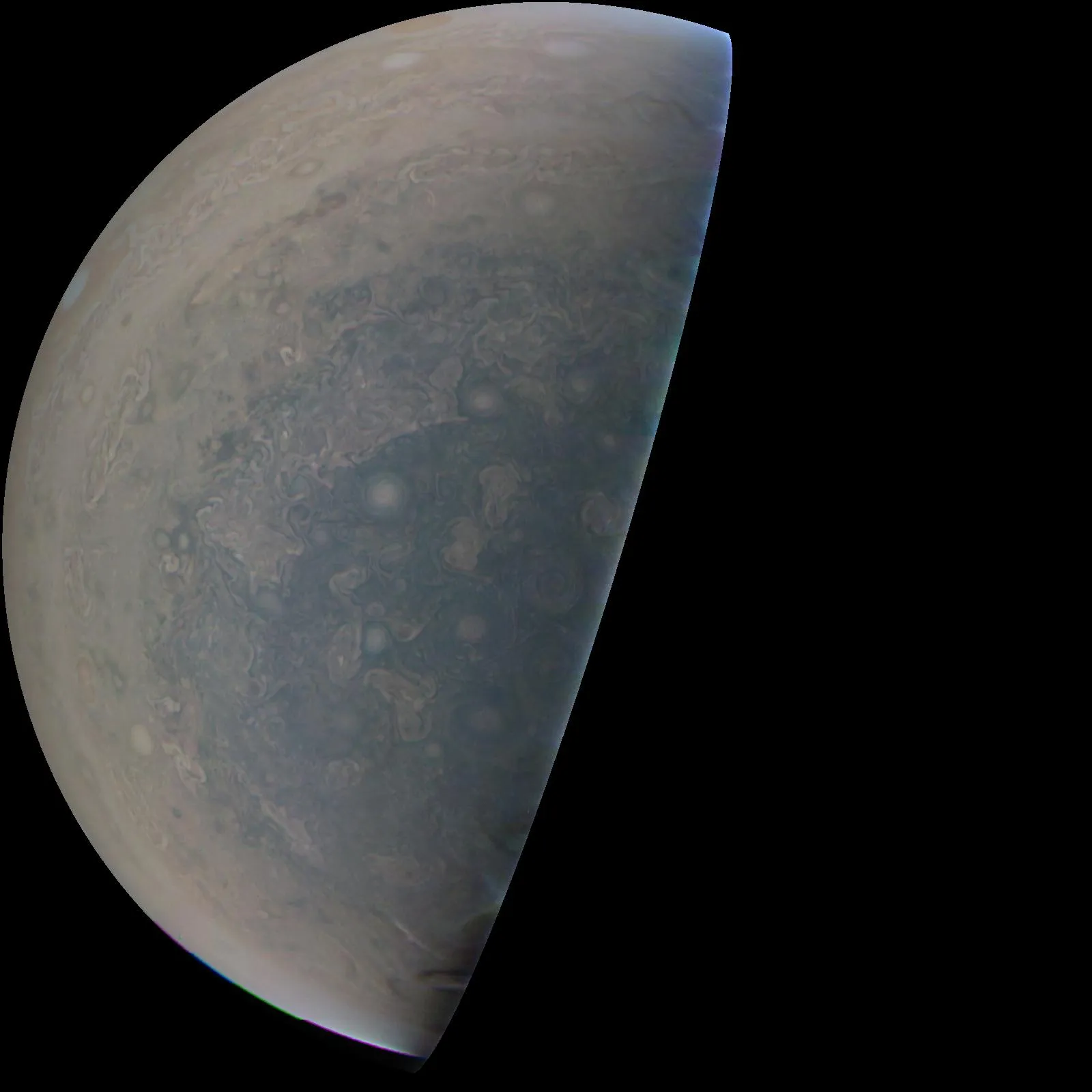
The mission was first meant to end in 2017. NASA extended it to 2021 to allow for longer orbits, and then to September 2025. As its orbit evolved, Ganymede’s gravity shortened its period from 53 to 43 days and set up a Europa flyby in September 2022 and passes of Io in December 2023 and February 2024. Because the orbit had moved out of reach of Jupiter’s ocean moons, Juno no longer needed a deliberate plunge into the planet to avoid contaminating them; its orbit will decay naturally until Jupiter pulls it in.11
Juno outlasted that last extension. In February 2026 its team used radio occultations from 13 flybys to show that Jupiter is about 5 miles narrower at the equator and 15 miles flatter at the poles than previously thought, and on May 1, 2026, Juno photographed the small inner moon Thebe from 3,100 miles away.12,13 Congress gave it $27.2 million for 2026 after the administration proposed ending it.24
Europa Clipper: 49 passes over an ocean moon
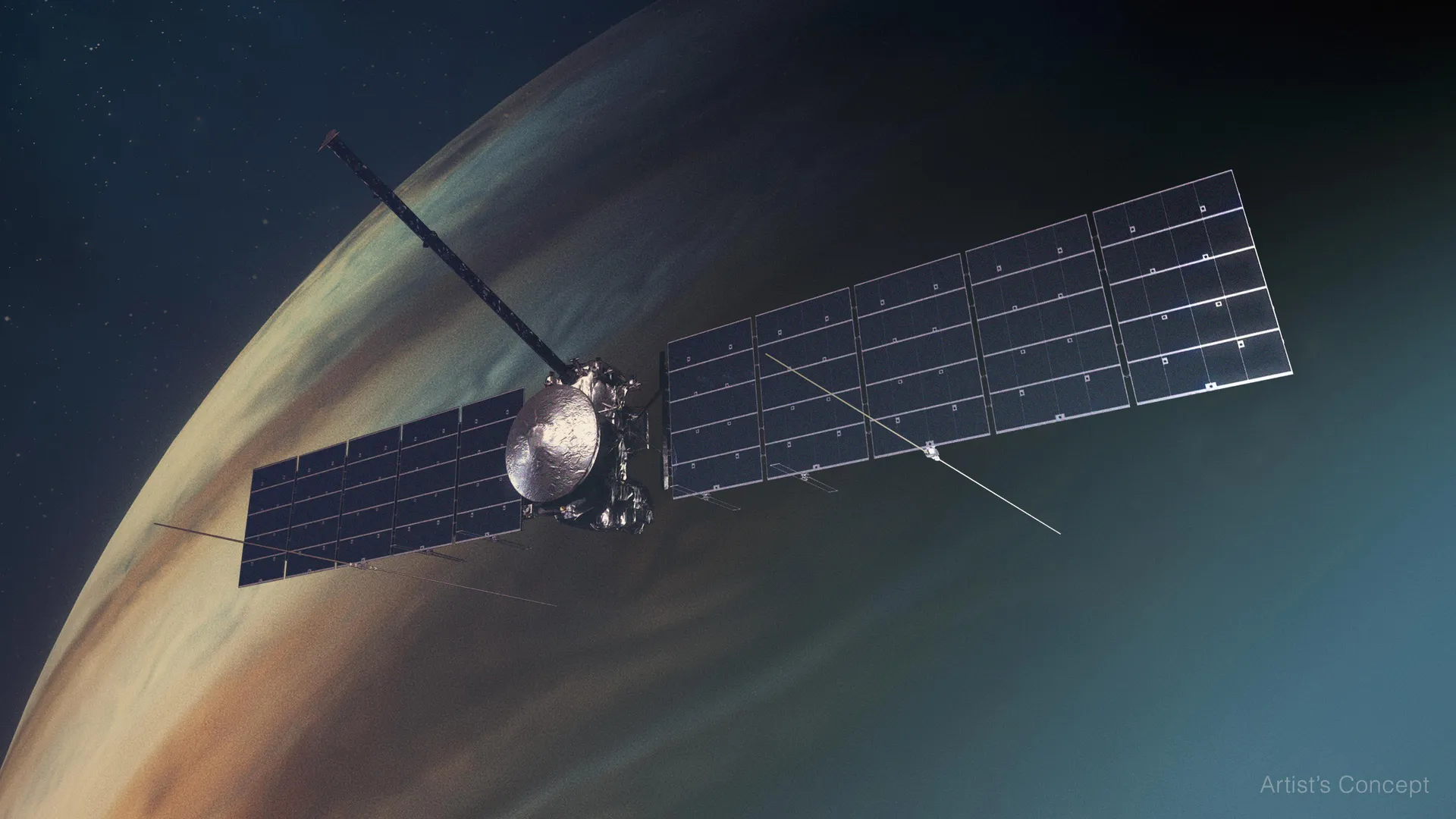
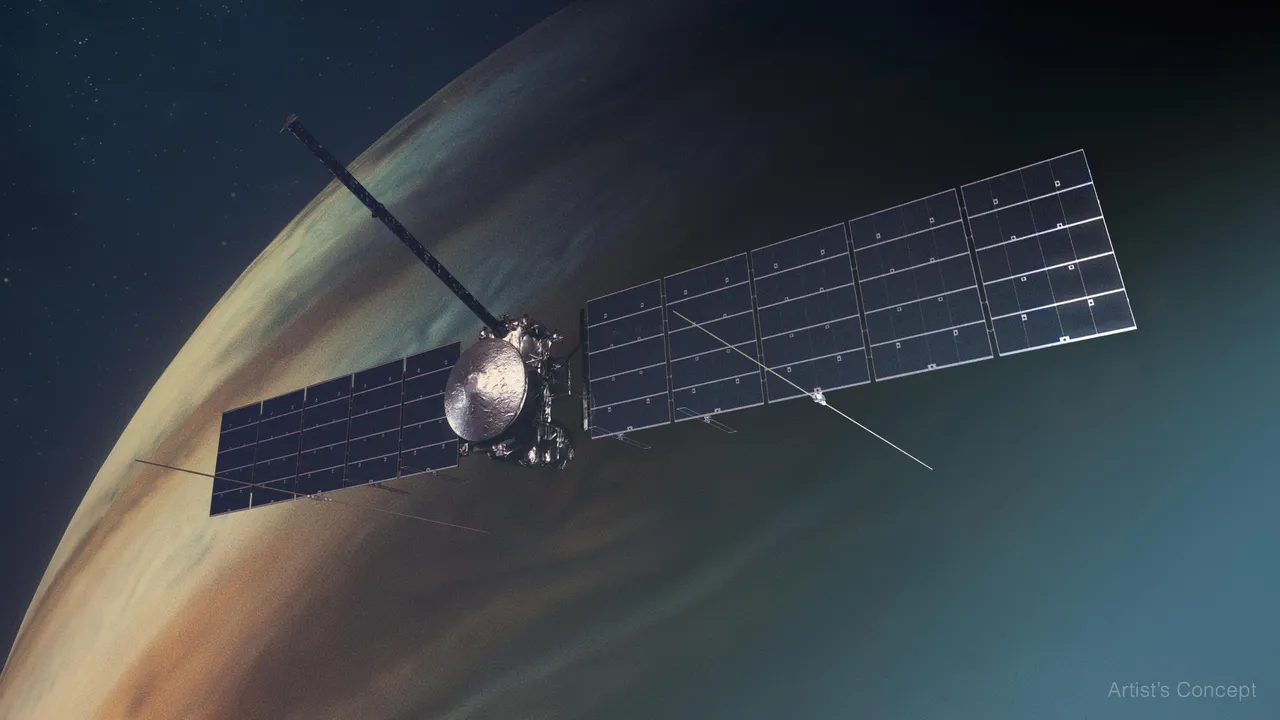
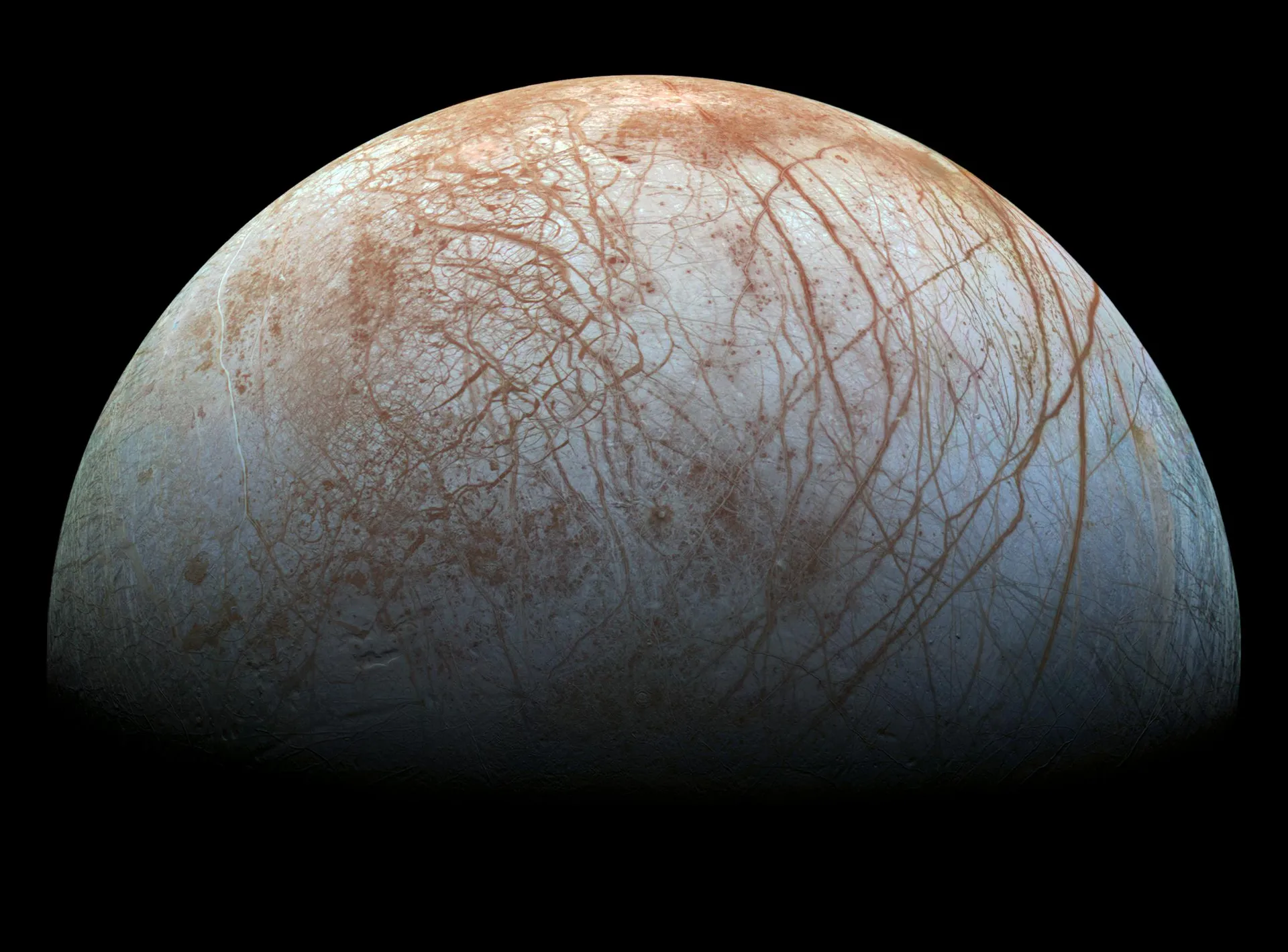
Europa Clipper is the first mission designed for a detailed study of Jupiter’s moon Europa, where there is strong evidence of a saltwater ocean beneath the ice—possibly 40 to 100 miles deep and holding more than twice the water in all Earth’s oceans. Its main goal is to determine whether there are places below the surface that could support life.14,15
It will not orbit Europa. Jupiter’s radiation is the most intense of any planet, and Europa lies in one of its most powerful zones, so Clipper will orbit Jupiter and dip past Europa 49 times, spending only limited periods in the worst radiation. Its electronics sit in a vault walled with aluminum-zinc plates up to 0.36 inches thick. All nine science instruments operate together on every pass.14,15,16 NASA will invest about $5.2 billion in the mission from 2015 to the end of its prime mission in 2034.15
The rocket Congress chose, and the one it flew on
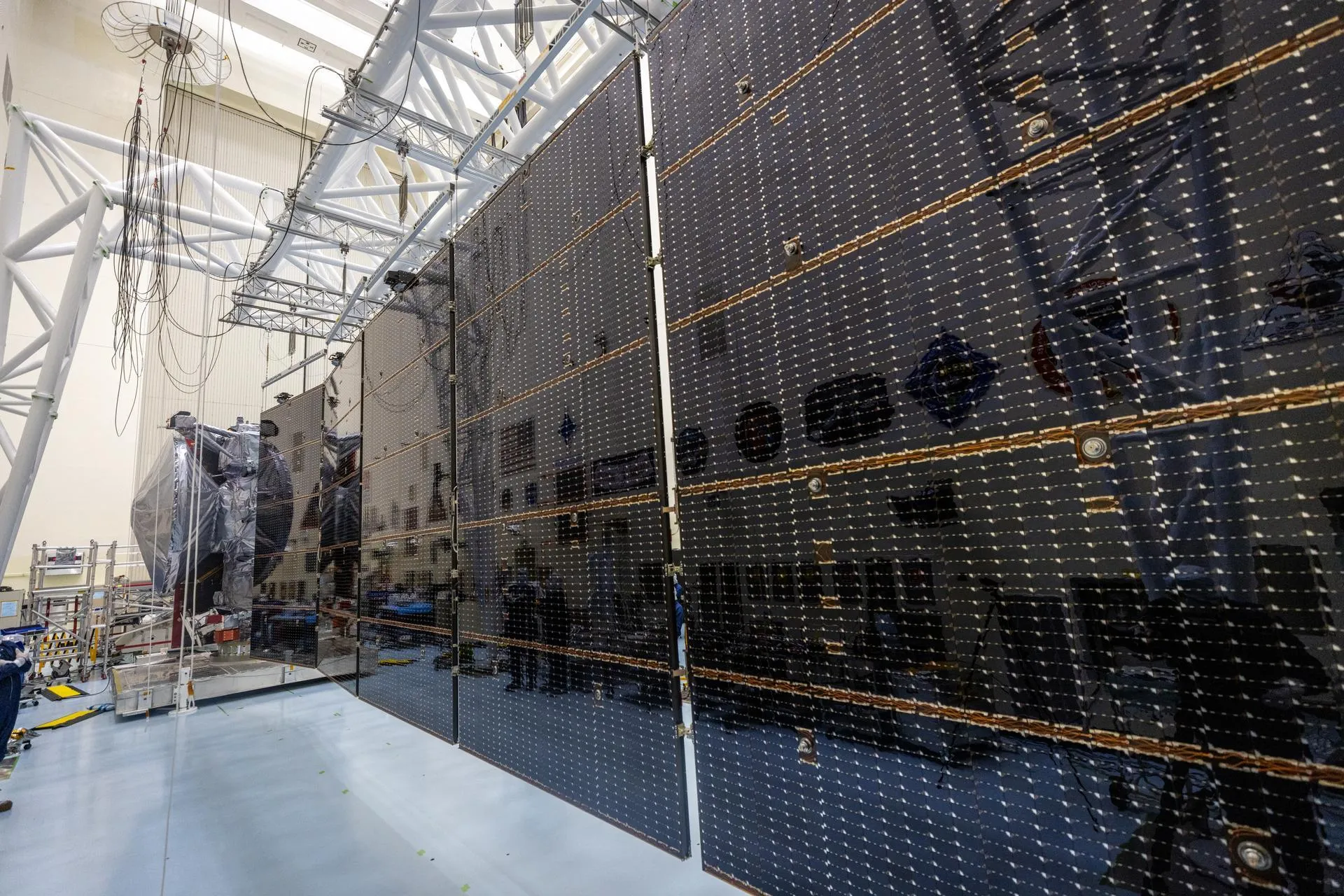
For years the launch vehicle was set by law. NASA’s appropriations required Europa Clipper to launch in 2023 on the Space Launch System, still unfinished. In August 2019 NASA’s Inspector General wrote to the Senate Appropriations Committee that, because of development delays and NASA’s plan to use the first three SLS rockets for Artemis, none would be available for Clipper until 2025 at the earliest; the spacecraft, about $3 billion of hardware, would have to be stored for at least two years at $3 million to $5 million a month. An SLS launch would also cost about $700 million more than a commercial rocket. The Inspector General asked Congress to let NASA choose, which it estimated could save up to $1 billion. NASA set a 2025 launch commitment in the meantime.17
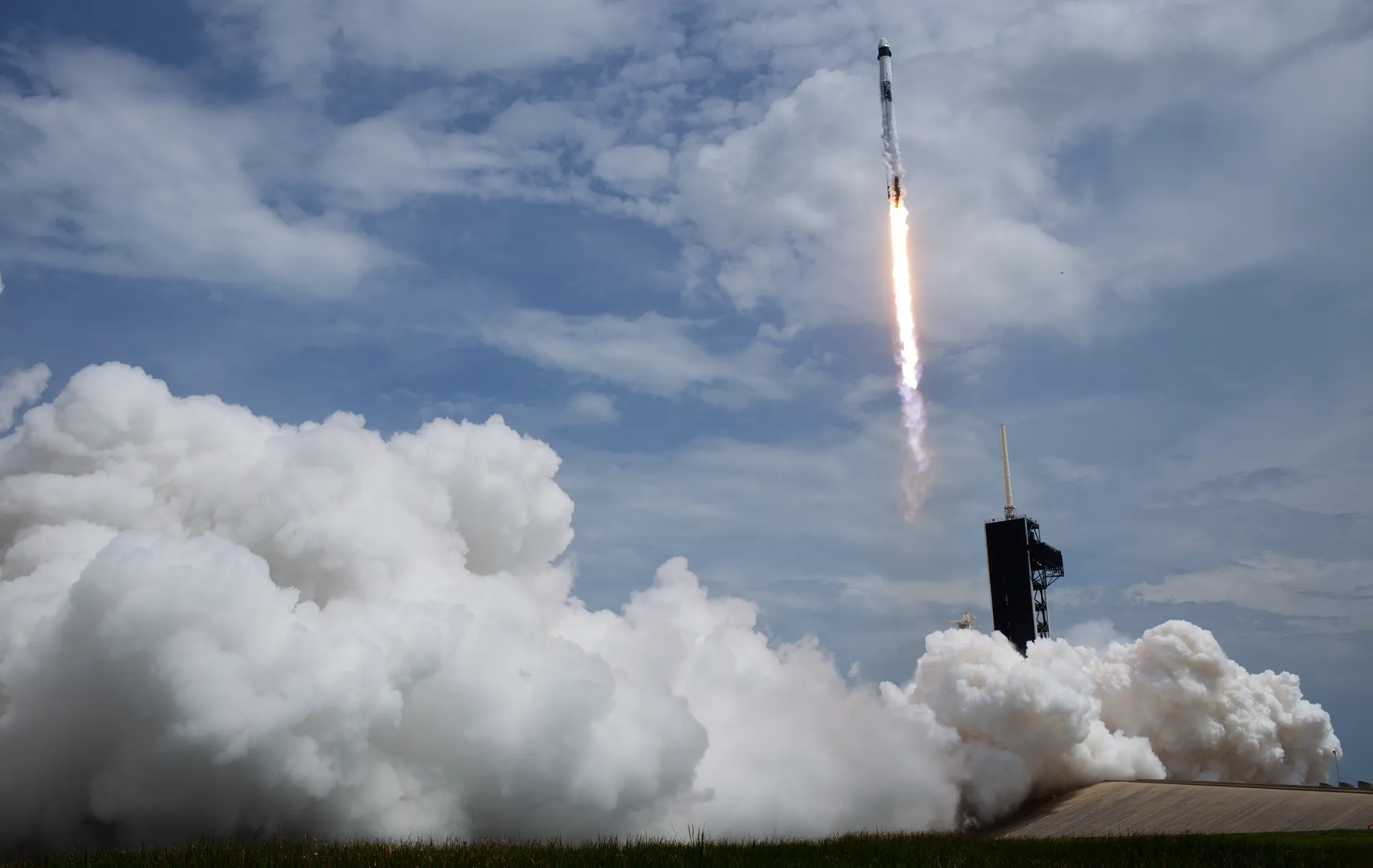
The requirement was eventually dropped, and in July 2021 NASA bought a launch on a SpaceX Falcon Heavy for about $178 million.18 Europa Clipper lifted off from Kennedy Space Center at 12:06 p.m. EDT on October 14, 2024. It flew past Mars in early 2025 and will swing past Earth on December 3, 2026, for the gravity assist that sends it to Jupiter in April 2030; Europa flybys begin in early 2031, and the plan ends with an impact on the moon Ganymede in 2034.14,15,16
Dragonfly: a nuclear-powered rotorcraft for Titan
Titan, Saturn’s largest moon, has a nitrogen atmosphere four times denser than Earth’s and a surface coated in organic material. Dragonfly will use that atmosphere to fly. It has eight rotors and flies like a large drone; it will carry its full science payload to dozens of sites, collect surface material for analysis inside the vehicle, and look at how far the chemistry that preceded life on Earth has progressed on Titan. “Dragonfly isn’t a mission to detect life,” says principal investigator Zibi Turtle of the Johns Hopkins Applied Physics Laboratory, which is building it.19,20
When NASA selected it in June 2019, Dragonfly was to launch in 2026 and arrive in 2034.20 Then NASA had to direct the project to replan several times because of funding limits from 2020 to 2022, and the pandemic, supply-chain costs and a deeper design iteration added more. When NASA confirmed the mission in April 2024, its life-cycle cost was $3.35 billion—about twice the proposed cost—and launch was set for July 2028, more than two years late. To keep the 2034 arrival, NASA added money for a heavy-lift rocket to shorten the cruise.21
Launch dates that moved
The vehicle is now taking shape at APL. On June 29, 2026, the team delivered the nearly 13-foot-long flight fuselage, ahead of schedule, after a month of structural tests; integration of its mechanical, thermal and electrical systems began on July 1. By September the electrical harness—an estimated 17,315 feet of wire and 374 connectors—was being connected to instruments as they arrived. Because the rotorcraft is insulated like a thermos bottle to hold the heat of its nuclear power source in Titan’s cold, the harness had to be routed under a thick layer of foam.22,23
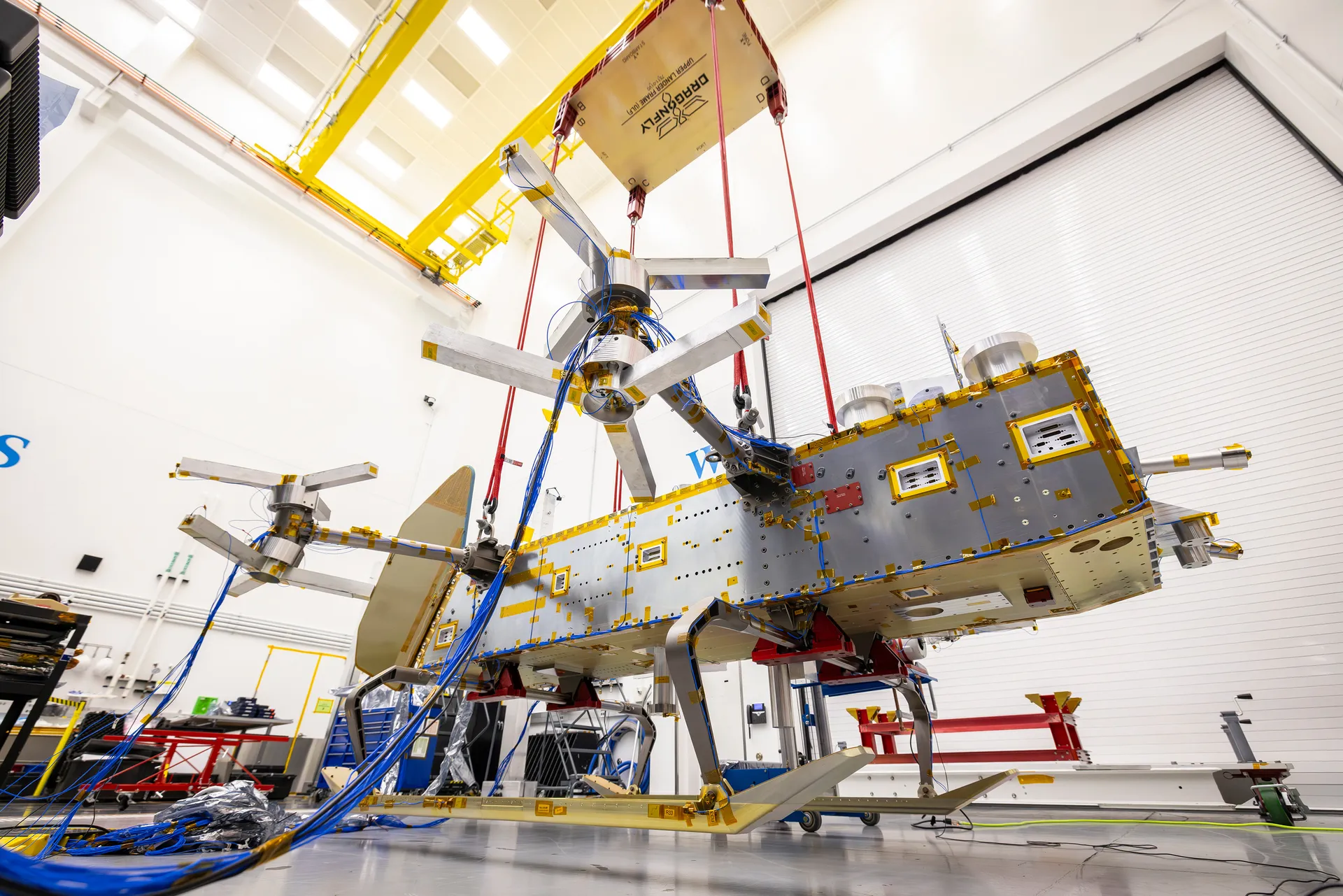
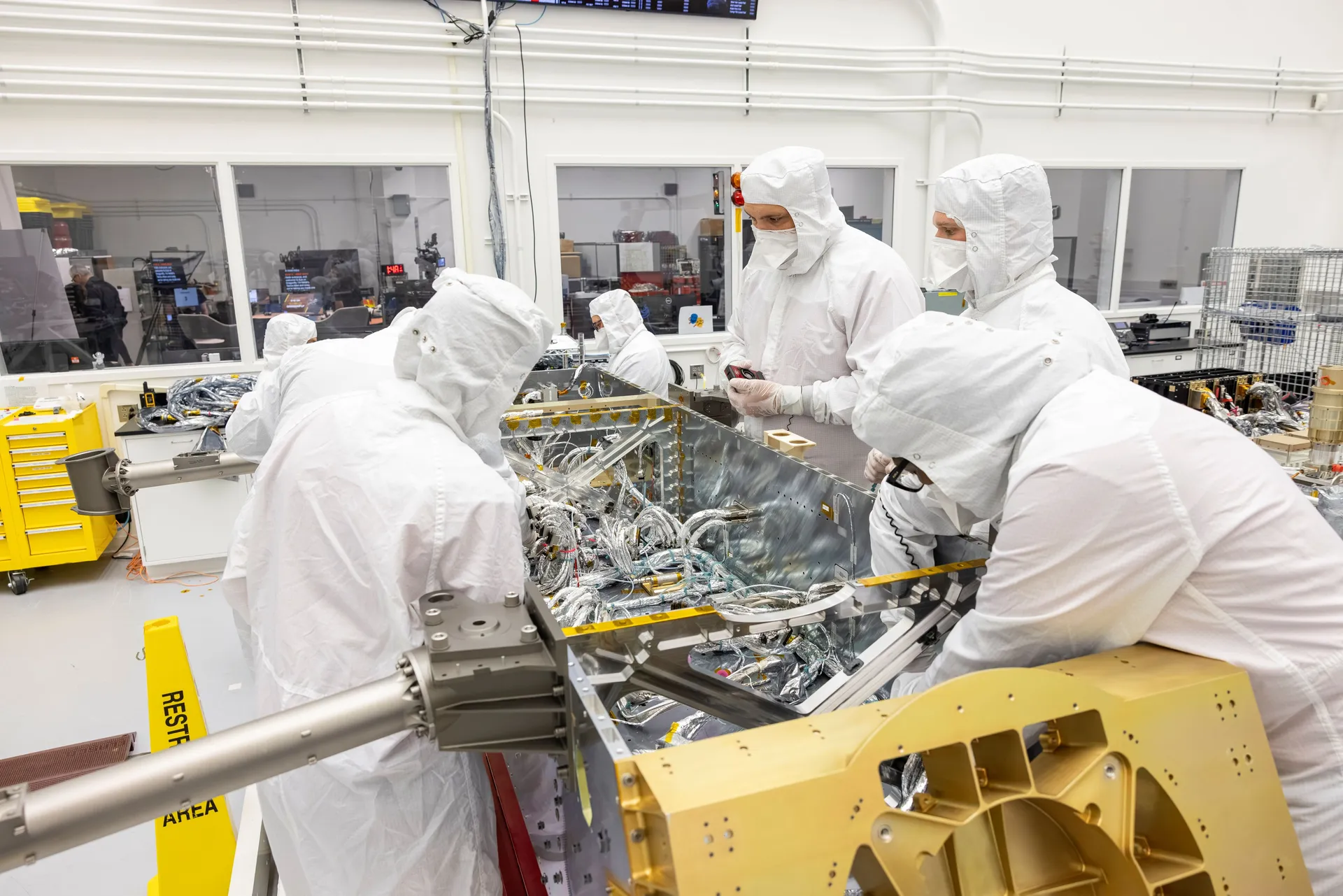
The International Astronomical Union has approved a name for the dune field where Dragonfly will land: Ahmakiq Undae, about 500 miles across and bordering Selk Crater, an impact site where liquid water and complex organic material once existed together. The rotorcraft is scheduled to launch in summer 2028, reach Titan in late 2034, and work there for 3.3 years, flying every one or two Titan days—about 16 Earth days each.19,23
What the 2027 budget request keeps
Congress protected the outer-planet missions in the 2026 budget: it gave Dragonfly $500 million, New Horizons $10 million and Juno $27.2 million after the administration had proposed ending both of the older missions.24 The 2027 request again keeps the missions still in development or on their way—$424 million for Dragonfly and $160 million to operate Europa Clipper, Psyche and Lucy—but its summary does not mention New Horizons or Juno. The Planetary Society, which found that most missions marked for termination can be identified only by their absence from the request, warned that if New Horizons is switched off in the Kuiper Belt, no later saving can restore it.25,26 Congress has not passed the 2027 bill; a continuing resolution keeps NASA at its 2026 level through December 11.27
On November 18, Voyager 1 passes one light-day from Earth. Fifteen days later, on December 3, Europa Clipper swings back past Earth for the gravity assist that sends it on to Jupiter.6,14
Sources
The text above is drawn from these 27 sources. Government works are adapted closely; company and press material is summarized. Numbers in the text point here. Last checked October 1, 2026.
Show all 27 sourcesShow fewer
- 1Back to the text
- 2Back to the text
- 3Back to the text
- 4Back to the text
- 5Back to the text
- 6Back to the text
- 7Back to the text
- 8Back to the text
- 9Back to the text
- 10Back to the text
- 11Back to the text
- 12Back to the text
- 13Back to the text
- 14Back to the text
- 15Back to the text
- 16Back to the text
- 17Back to the text
- 18Back to the text
- 19Back to the text
- 20Back to the text
- 21Back to the text
- 22Back to the text
- 23Back to the text
- 24Back to the text
- 25Back to the text
- 26Back to the text
- 27Back to the text
Continue
Related stories
- MarsCuriosity has climbed a kilometer up Mount Sharp; Perseverance has used 33 of its 43 sample tubes, one holding a potential biosignature. The $8–11 billion mission to bring them home was shut down in January 2026.
- Mission operationsEvery NASA mission depends on a control room and a chain of antennas. Built for Mercury in 1961, the networks now serve more than 100 missions, and the deep-space antennas are booked beyond their capacity.