Orion
NASA’s deep-space capsule: a Lockheed Martin crew module on a European service module.
- Type
- Crew spacecraft
- Status
- Flying
- First flight
- December 5, 2014
- Size
- 7.9 m (26 ft)
- Built by
- Lockheed Martin, ESA, Airbus, NASA
- 3
- flights: 2014, 2022 and 2026
- 252,756 mi
- from Earth on Artemis II, April 2026, a human distance record
- Nearly 75%
- of cumulative cost overruns in NASA’s major projects, GAO (July 2026)
Orion: the capsule built to bring a crew home from the Moon
Drawn from 21 sources: NASA (19), NASA Office of Inspector General and U.S. Government Accountability Office. About 9 minutes. Checked October 1, 2026.
Orion is the spacecraft that carries and sustains the crew on Artemis missions to the Moon and returns them safely to Earth. It never lands on the Moon; a separate lander does that.1
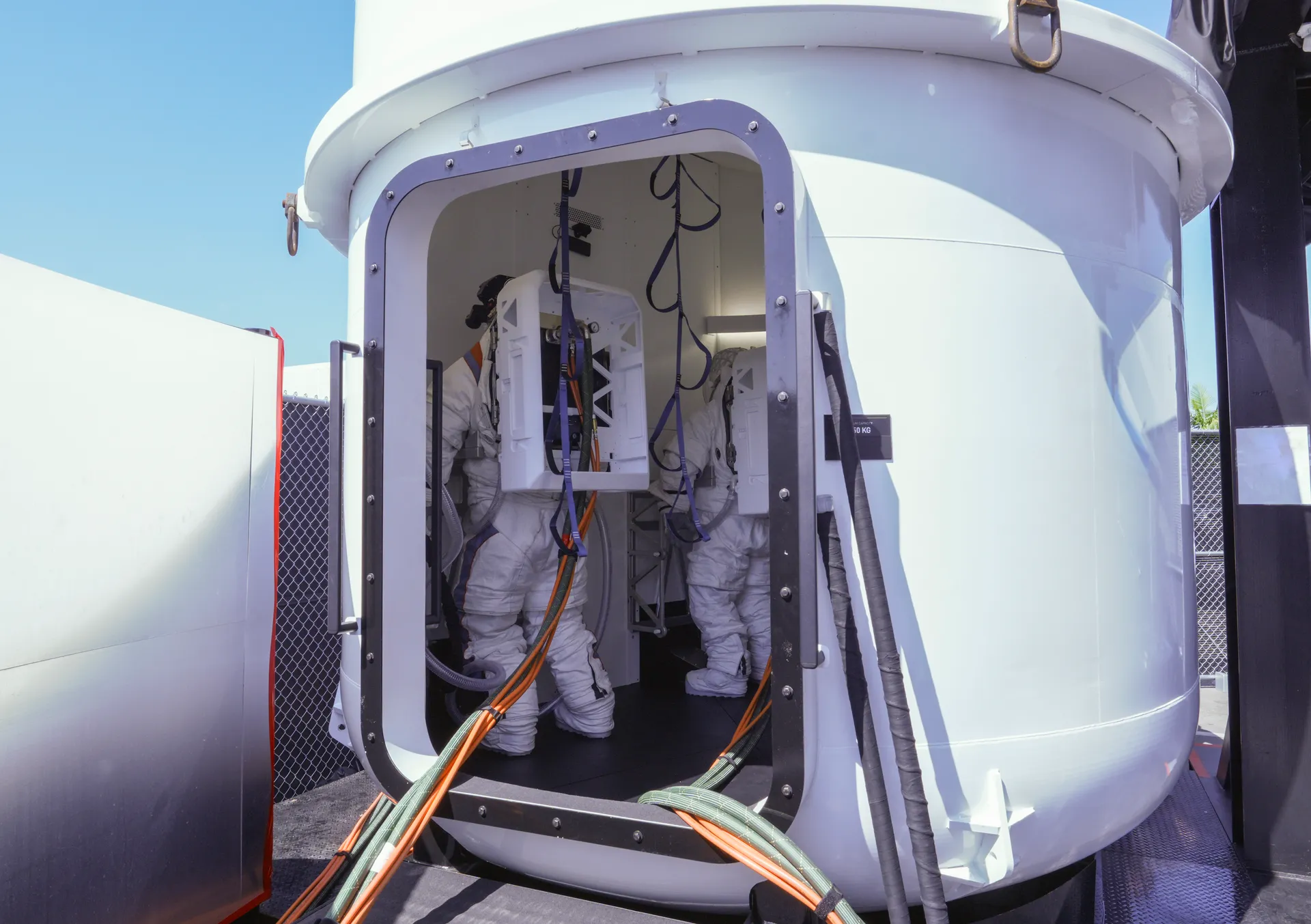
Distance and duration both dictate the capabilities a deep space spacecraft needs, and they shaped Orion’s design. Astronauts at the Moon will not have the benefit of frequent resupply shipments bringing spare parts from Earth, as crews on the International Space Station do. So Orion carries highly reliable systems that take up little mass and volume, leaving room for the food, water and other consumables of a mission lasting days or weeks: life support, navigation, communications, radiation protection, a compact toilet, exercise equipment, spacesuits that can keep the crew alive for six days if the cabin loses pressure, and the world’s largest heat shield.1
Three parts, each for a different phase of flight
One spacecraft, three main elements
Orion has three main elements: the crew module, where astronauts live and work; the service module, which provides power, propulsion and critical supplies; and the launch abort system, which can pull the spacecraft and crew to safety if something goes wrong during launch or the climb to orbit. In space its four solar array wings give it a span of about 63 feet.1,17
A capsule that comes home
The crew module is the only part of Orion that returns to Earth. Its pressure vessel, the airtight structure astronauts live in, is made of seven large aluminum alloy pieces joined at NASA’s Michoud Assembly Facility in New Orleans by friction-stir welding. Orion’s original design required 33 welds; engineers reduced that to seven, saving 700 pounds. Twelve small thrusters steer the capsule after it separates from the service module for reentry.3
The service module and the escape tower
The European Service Module beneath the capsule holds water, oxygen and nitrogen, keeps the spacecraft at the right temperature and drives it with 33 engines: a main engine that once flew on the space shuttle, eight auxiliary engines and 24 small thrusters. On top, the launch abort system’s motor can produce 400,000 pounds of thrust to pull the crew away from a failing rocket. Once SLS clears most of the atmosphere, the whole tower is jettisoned.4,5
330 cubic feet for four
Orion’s cabin has a habitable volume of 330 cubic feet, about as much living space as two minivans and nearly 60% more than the Apollo command module’s 210 cubic feet. For launch and reentry the astronauts lie on their backs with knees bent at 90 degrees: the commander and pilot face three display units an arm’s length away, and the two mission specialists sit on the other side of the cabin. The crew module can support four people for up to 21 days without docking to another spacecraft.3,6,7
The largest ablative heat shield
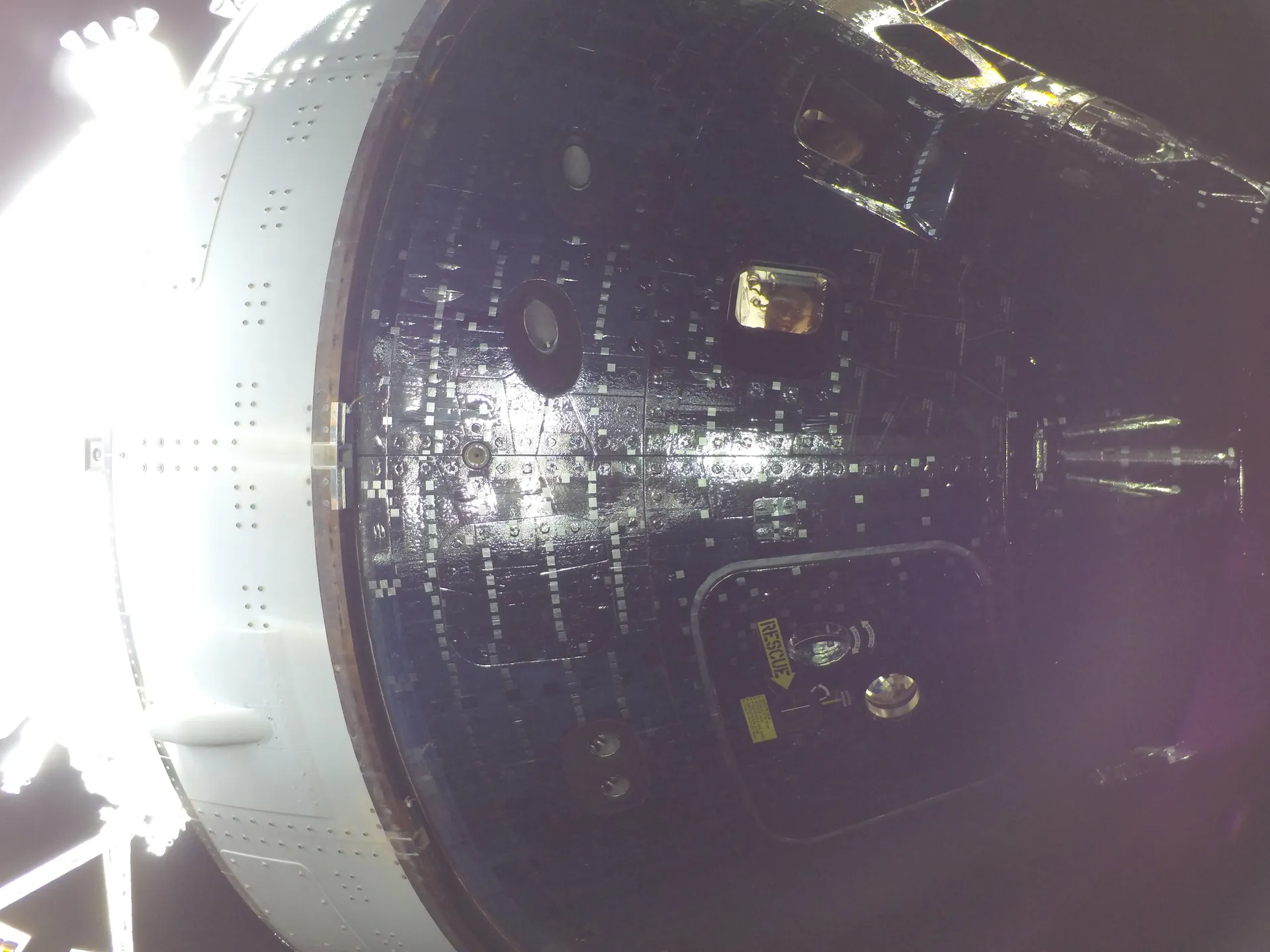
The bottom of the capsule is covered by a heat shield 16.5 feet across, the world’s largest of its kind. Its surface is 186 blocks of Avcoat, a reformulated version of the Apollo material, bonded to a titanium skeleton and composite skin. On a return from the Moon at about 25,000 mph the Avcoat burns away in a controlled fashion at temperatures near 5,000°F, carrying heat away from the cabin. The sides are covered with 1,300 tiles similar to the space shuttle’s.3
Built on two continents
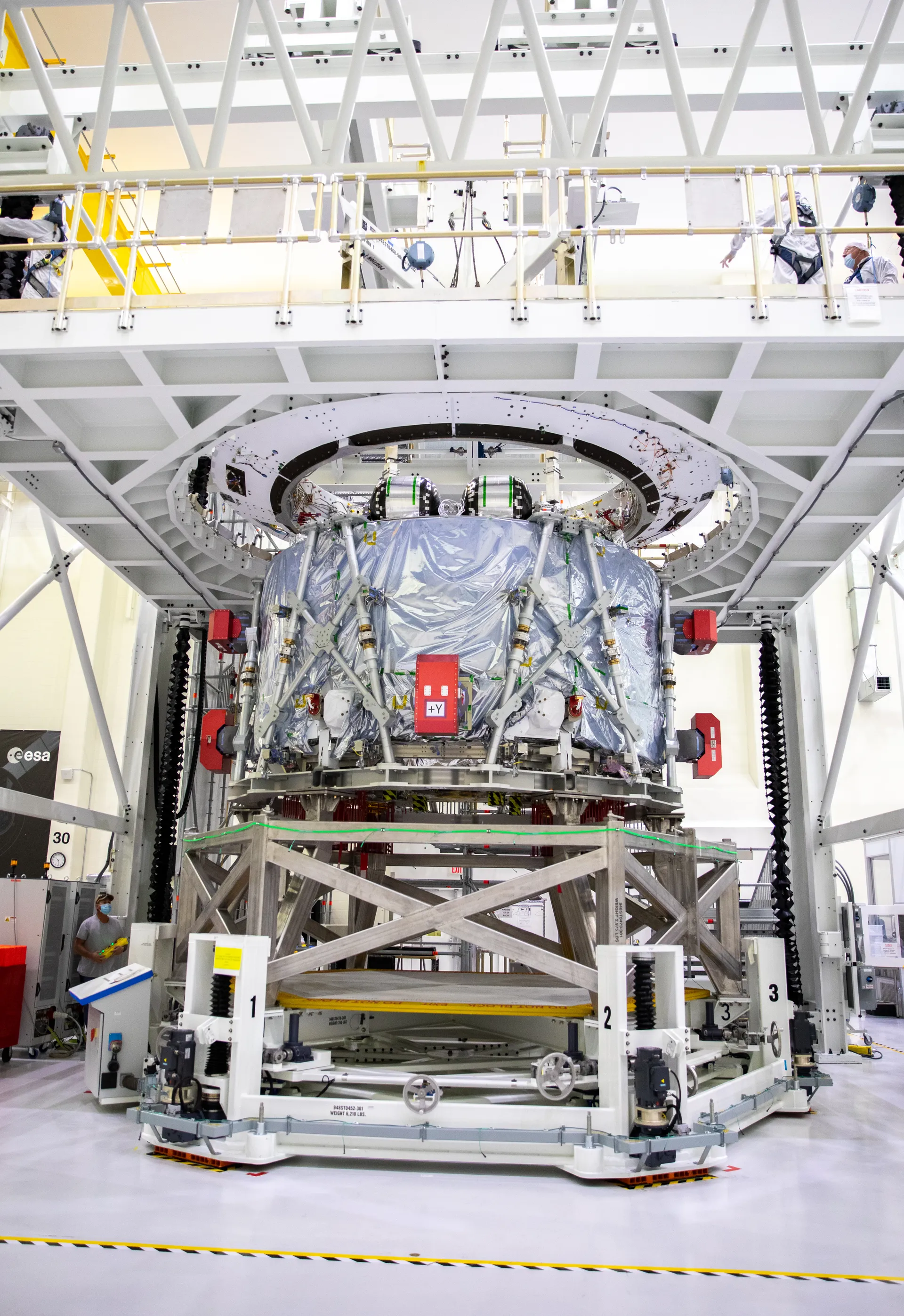
Lockheed Martin is the lead contractor for the design, development, testing and production of Orion. Crew modules are welded at Michoud, then outfitted and tested at Kennedy Space Center, where hundreds of suppliers across the country deliver parts.21,3
The service module is Europe’s contribution. ESA provides it, and Airbus builds it with components from companies in ten European countries and the United States: Germany, Italy, Switzerland, France, Belgium, Sweden, Denmark, Norway, Spain and the Netherlands. Thales Alenia Space in Italy builds the structure, the module is assembled in Bremen, Germany, and then shipped to Kennedy to be joined to its crew module.21,4 ESA supplies the modules through a barter agreement, in exchange for its share of the costs of operating the space station; the Inspector General valued each at about $300 million.10
Shortly before reentry, the service module separates and burns up in the atmosphere. Only the capsule comes home.4
Sixteen years from the first test flight to the first crew
The spacecraft was first designed as the Orion Crew Exploration Vehicle. In May 2011, following the direction Congress set in the NASA Authorization Act, NASA announced that its next deep space vehicle, the Multi-Purpose Crew Vehicle, would be based on those designs, and Lockheed Martin continued under its existing contract. The spacecraft was to carry four astronauts on 21-day missions and land in the Pacific off California.8 It flew in stages:
May 6, 2010
Pad Abort-12
At White Sands Missile Range in New Mexico, the launch abort system pulls a test capsule away from the pad in a 135-second flight.
May 24, 2011
A new name for the design8
NASA bases its Multi-Purpose Crew Vehicle on the Orion design; Lockheed Martin keeps the work.
December 5, 2014
Exploration Flight Test-12
An uncrewed Orion launched on a Delta IV Heavy climbs to about 3,600 miles above Earth and returns at 20,000 mph, testing its heat shield.
July 2, 2019
Ascent Abort-22
The abort motor fires 400,000 pounds of thrust to pull a test capsule from a climbing booster at more than 1,000 mph, certifying the system for crews.
Nov.–Dec. 2022
Artemis I3
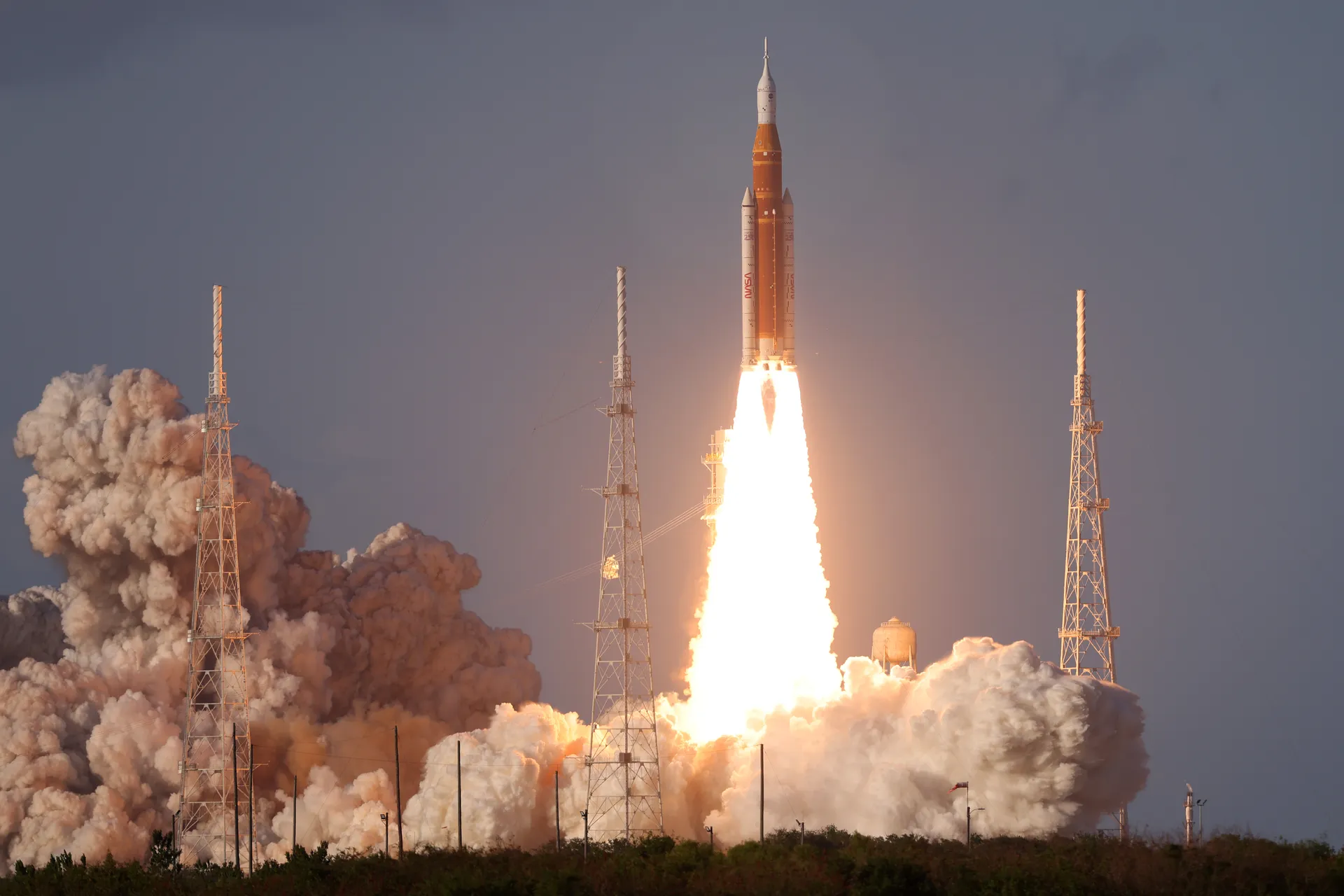
Orion flies without a crew on the first SLS, past the Moon and back, a 25.5-day mission.
April 1–10, 2026
Artemis II16
Four astronauts fly Orion around the Moon, 252,756 miles from Earth at the farthest.
The path was expensive. In 2021 NASA put Orion’s development cost from fiscal year 2012 through its first crewed flight at $9.3 billion.9 The program had been rebaselined that year after adding a docking system, absorbing cost growth and the effects of COVID-19, and working through schedule and technical problems with the service module.11 By GAO’s 2026 count, measured against the original 2023 launch target, Orion finished development three years late, with $6.8 billion in baselined development costs and about $3.5 billion in overruns, nearly three-quarters of all the development overruns in NASA’s portfolio of major projects. Its last overrun, $261 million, came from the seven-month delay of Artemis II from September 2025 to April 2026.11
- $9.3B
- Orion development, fiscal 2012 to the first crewed flight, as NASA estimated in 20219
- $3.5B
- development cost overruns by GAO’s 2026 count11
- $2.7B
- production order for the Artemis III–V spacecraft, 201912
- $1.99B
- production order for Artemis VI–VIII, 202212
Life in 330 cubic feet
The seats are built to fit anyone from a 4-foot-10-inch, 94-pound woman to a 6-foot-5-inch, 243-pound man, and their pans, foot plates, head and arm rests and hand-controller mounts all adjust so a suited astronaut can reach every control. Each seat can slide six inches on rails to absorb the shock of splashdown. Once Orion is in space, the commander’s and pilot’s foot pans are removed and stowed to free room in the cabin.6
Air comes first on a deep space mission. Orion removes carbon dioxide and humidity with a regenerable system: exposed to cabin air, it absorbs them; exposed to the vacuum of space, it vents them overboard and returns to a clean state. The shuttle used expendable chemicals that took up the volume of nearly 143 basketballs; Orion’s system takes the space of 16 and saves more than 100 pounds. Oxygen and nitrogen come from high-pressure tanks, and water from four tanks of about 125 pounds each in the service module.6
The toilet, the Universal Waste Management System, is about 5 cubic feet, roughly 60% smaller and lighter than the space shuttle’s. Urine is pre-treated, stored and vented overboard each day; solid waste goes into canisters the crew replaces every few days. The exercise device is a flywheel about the size of an extra-large shoe box: a crew member pulls a strap for rowing, squats or deadlifts, and the device returns as much load as is put in, like a yo-yo, up to 400 to 500 pounds. It sits below the side hatch and doubles as a step.6,7 The crew sleep in bags attached to the walls. If a solar storm threatens, they pull the stowage bags out of two large bays under the seats, pack them around themselves as shielding, and can shelter there for up to 24 hours.6
A heat shield that did not behave as expected
NASA · February 2023
NASA Ames · 2023
NASA/Cory Huston · June 22, 2023
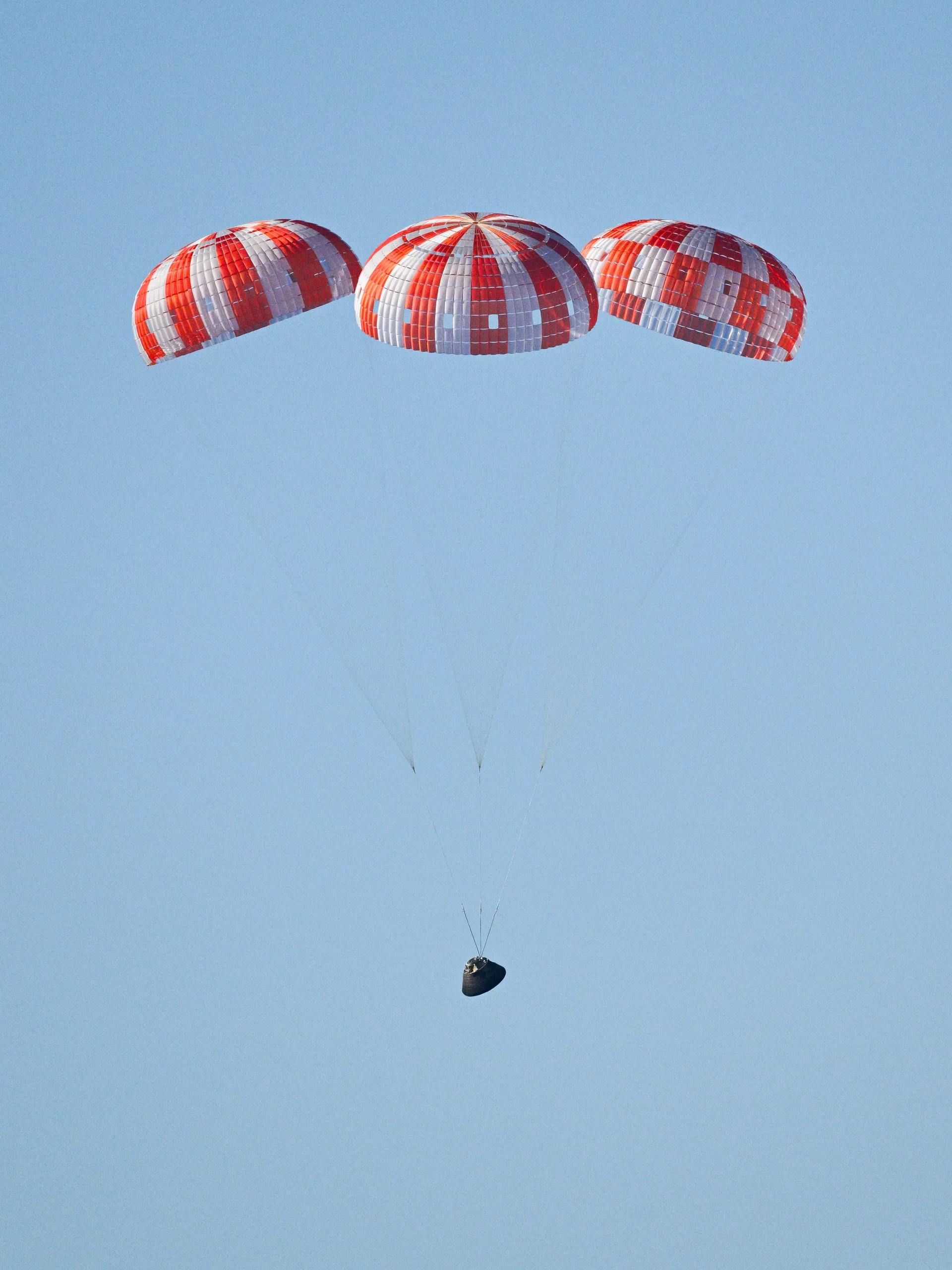
NASA/Josh Valcarcel · April 10, 2026
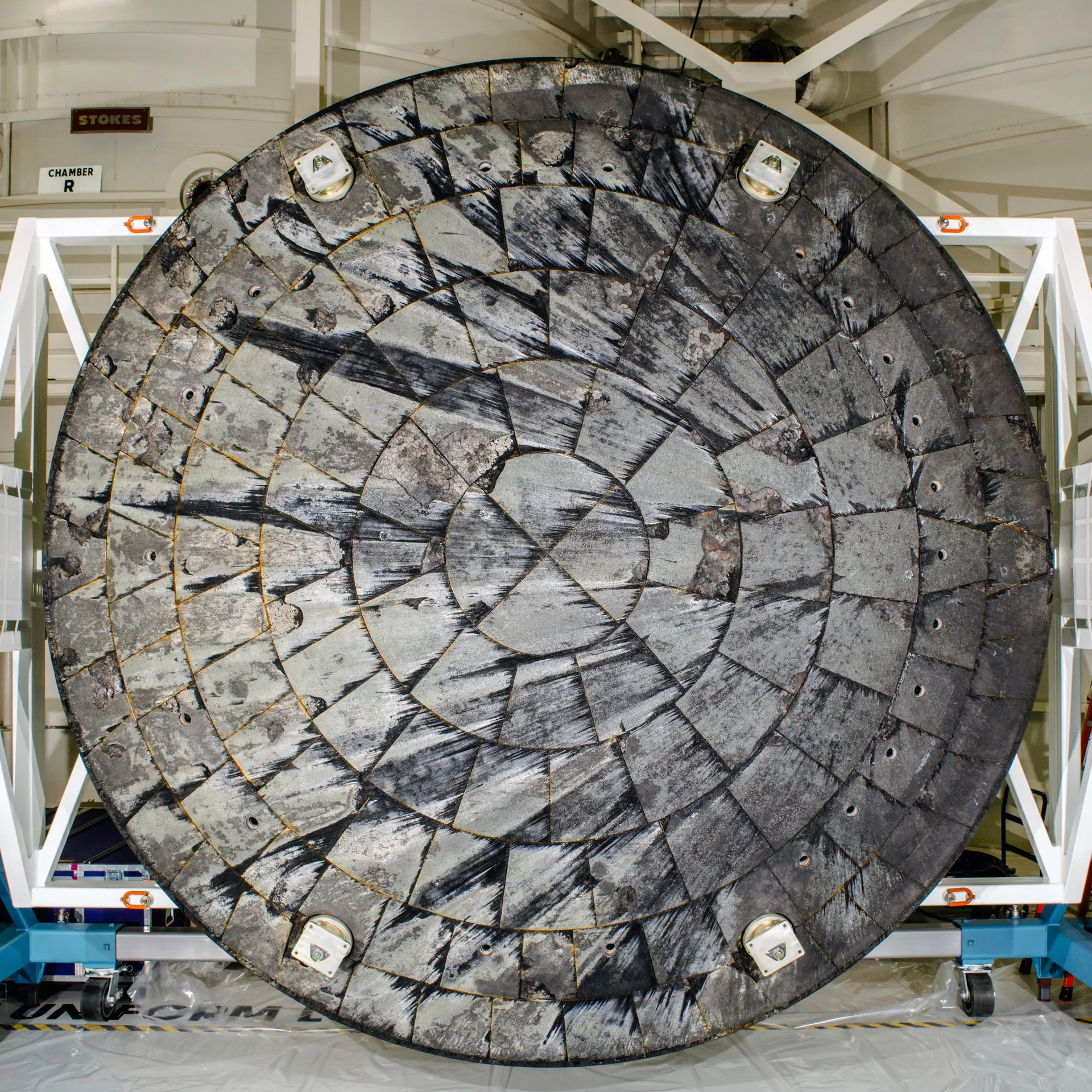
December 2022: charred material missing
The uncrewed Artemis I mission returned in December 2022. The heat shield protected the spacecraft, and temperatures inside the cabin held steady in the mid-70s Fahrenheit, but charred Avcoat had broken off the shield in several locations, differently from what engineers expected.13
Two years of sampling and tests
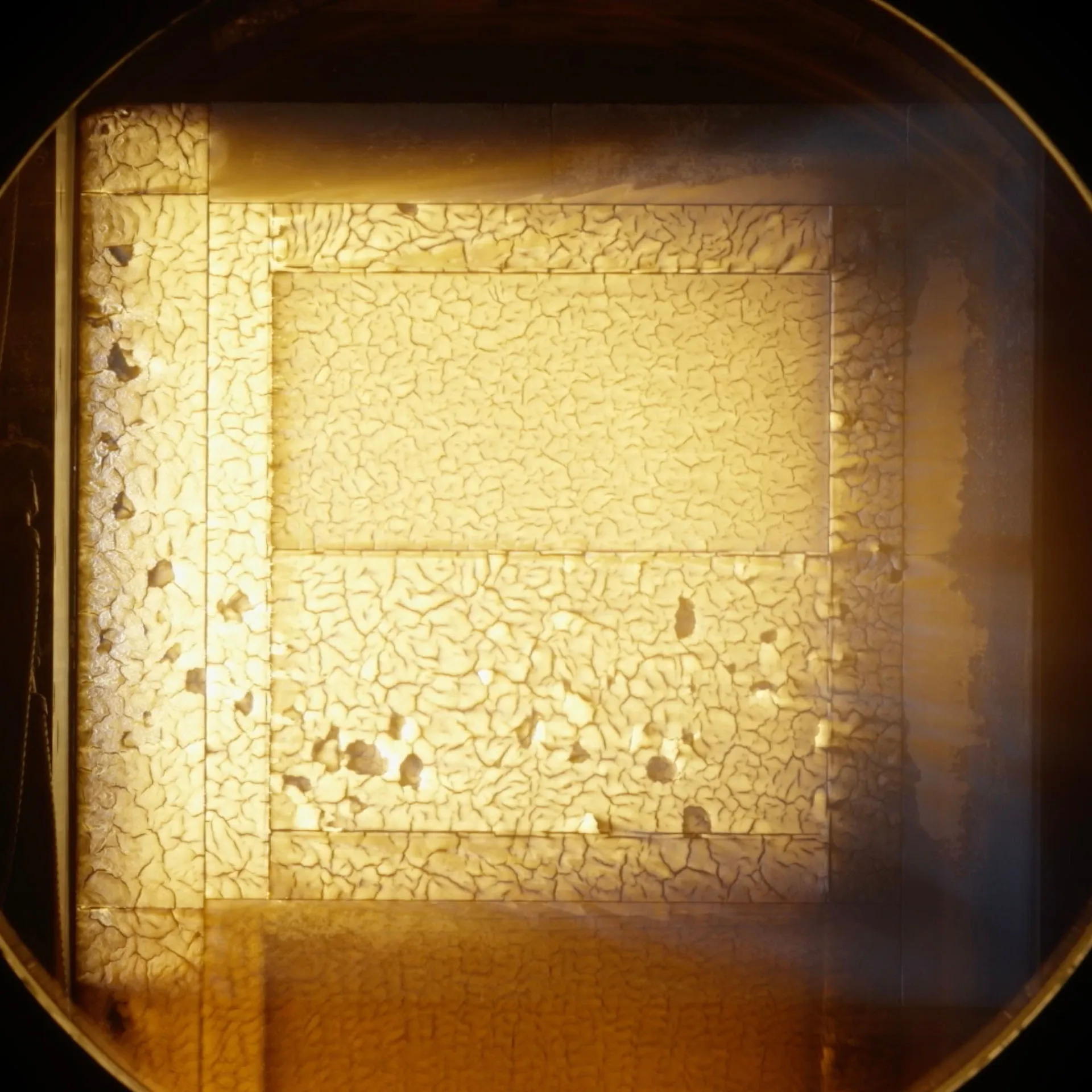
Engineers removed about 200 Avcoat samples from the shield at NASA’s Marshall Space Flight Center and ran 121 tests in eight thermal campaigns at facilities across the country. In the spring of 2024 an independent team led by Paul Hill, the lead shuttle flight director for return to flight after the Columbia accident, reviewed the work and agreed with its findings.13
Gas with nowhere to go
Artemis I had flown a skip entry: Orion dipped into the upper atmosphere, used its lift to skip back out, and reentered for the final descent. Between the dips, heating rates fell and heat built up inside the Avcoat. The gases that ablation normally releases could not escape, because the material lacked permeability; pressure built, and the outer layer cracked and shed. Ground tests before the flight had used much higher heating rates, at which a permeable char forms and vents.13
Fly the shield, change the path
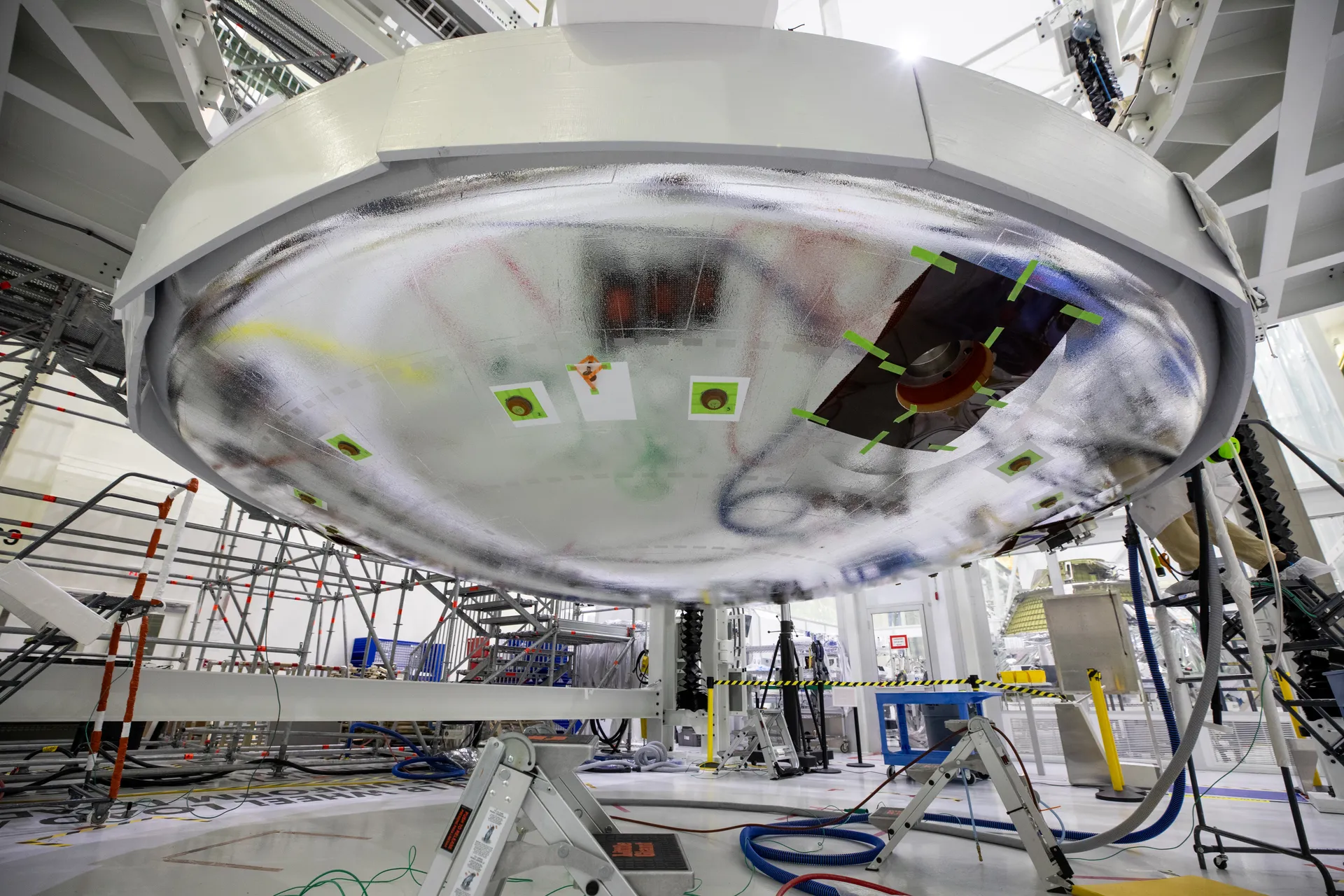
The Artemis II shield had been bolted on in June 2023. In December 2024 NASA decided to fly it, shortening how far Orion could travel between entering the atmosphere and splashing down so it would spend less time in the temperature range where the problem occurred. Shields for later missions are made for uniform, consistent permeability; all 186 upgraded blocks for Artemis III were installed by April 2026.14,13,19
April 2026: much less char loss
After Artemis II, divers’ imagery and inspections on the recovery ship found that the char loss seen on Artemis I was significantly reduced, both in quantity and in size, and consistent with the arc jet tests run after Artemis I. The shield went to Marshall for sample extraction and x-ray scans.15
What the first crewed flight showed
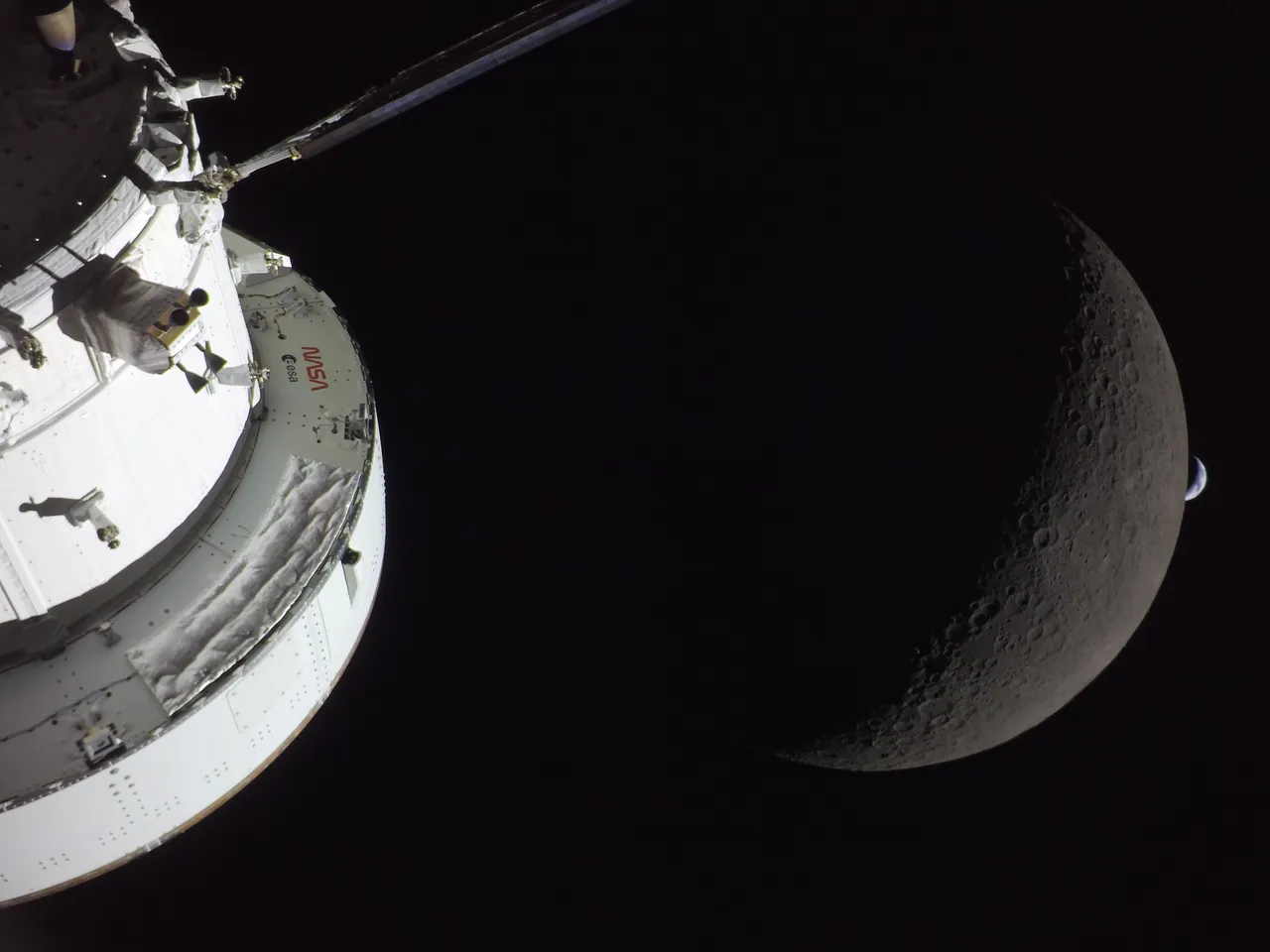
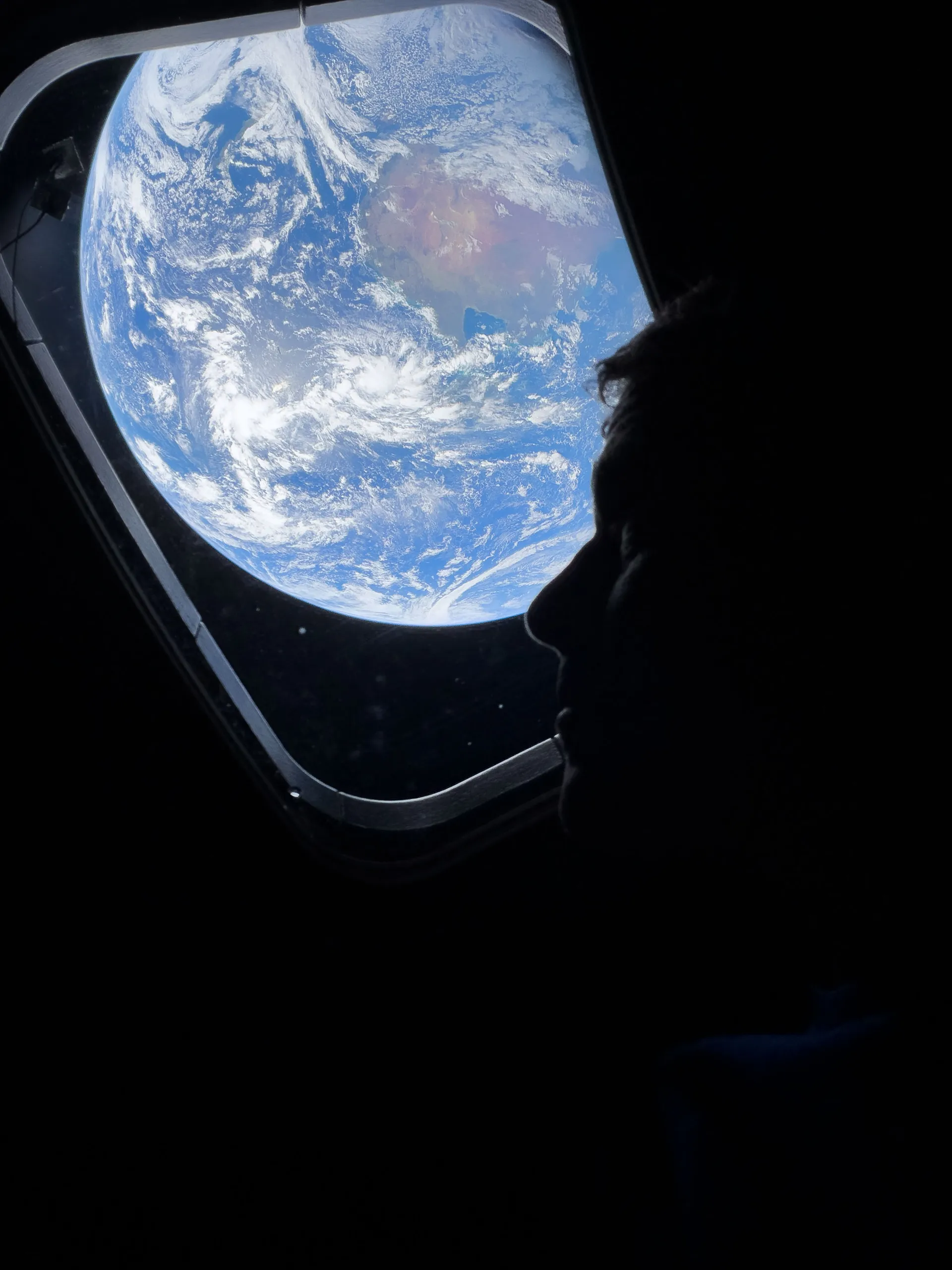
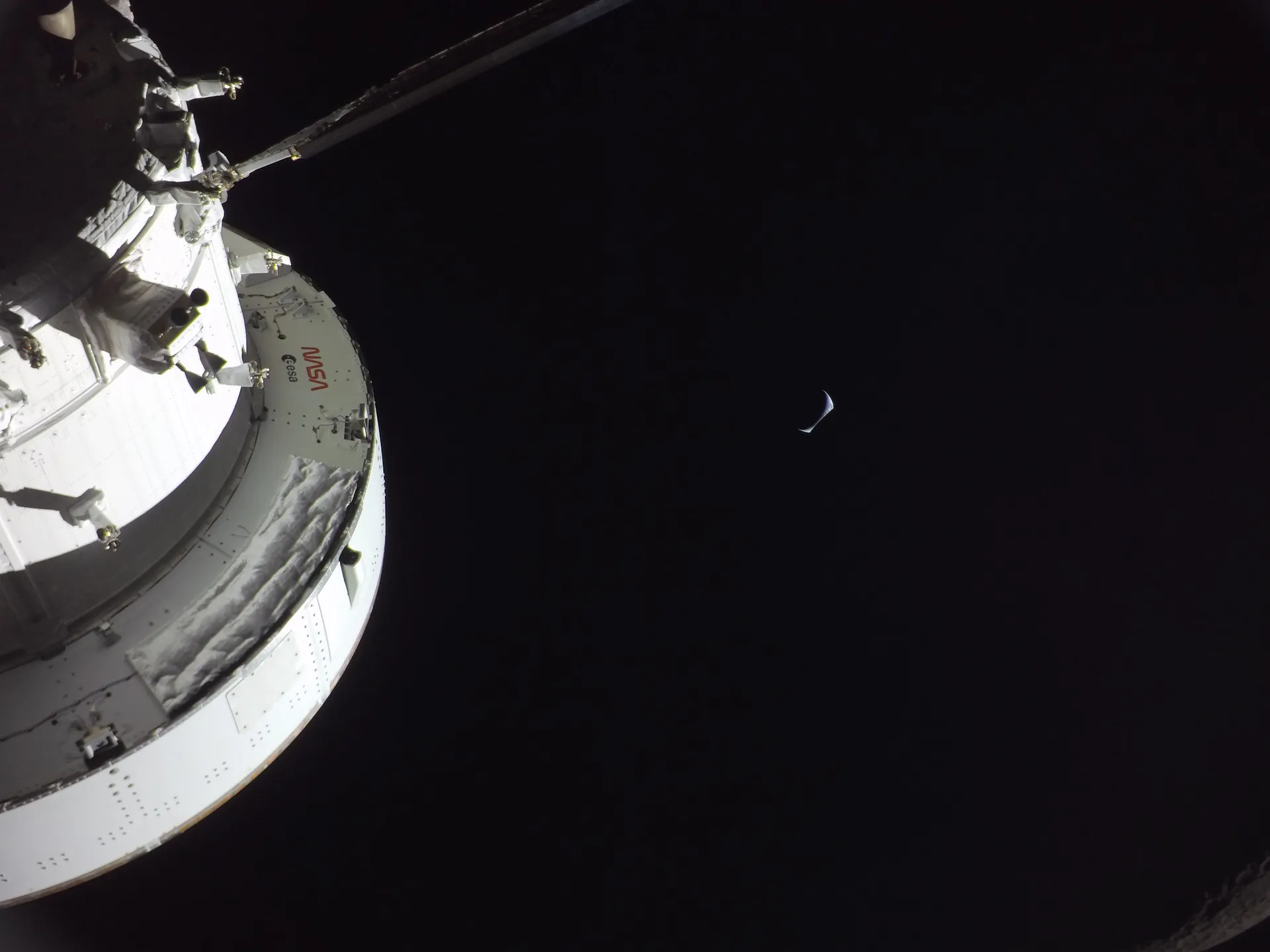
Earthrise on April 6, 2026, from a camera on one of Orion’s solar array wings as the crew came out from behind the Moon.
Artemis II carried NASA astronauts Reid Wiseman, Victor Glover and Christina Koch and Canadian Space Agency astronaut Jeremy Hansen around the Moon from April 1 to 10, 2026. With people aboard for the first time, engineers put Orion through a full in-flight evaluation. The crew tested its life support systems, confirming that Orion can sustain humans in deep space, and tested the spacecraft during exercise, its emergency equipment and procedures, and the orange Orion Crew Survival System suits.16
Several tests looked ahead to docking. In high Earth orbit on the first day the crew flew Orion by hand for about 70 minutes around the spent upper stage, using its navigation sensors and thrusters for a series of approaches and retreats. Later piloting demonstrations, with the crew in manual control, collected data on Orion’s handling for the rendezvous and docking with landers planned from Artemis III onward.18,16
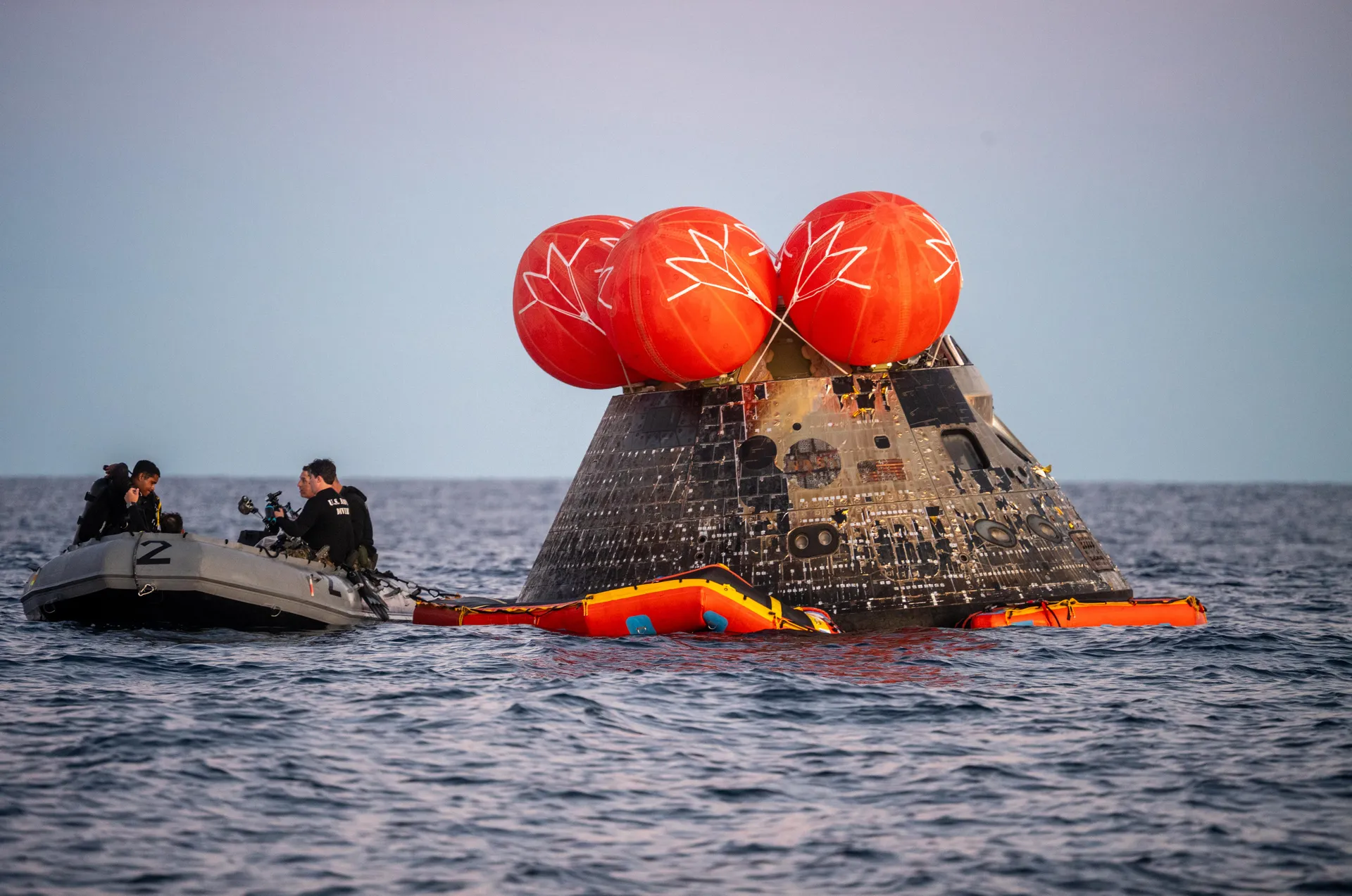
Entry went as planned. Orion splashed down 2.9 miles from its target off San Diego, and its speed at entry interface was within one mile per hour of predictions. The ceramic tiles on the backshell performed as expected.15 After splashdown, five orange helium-filled bags on top of the capsule inflate to turn it right side up if it settles upside down; Orion must be upright for its communications to work.3
Not everything worked. Engineers opened an investigation into a problem during the flight with the line that vents urine overboard, to find its root cause and correct it for Artemis III.15
From one capsule to a production line
A program that flies repeatedly needs spacecraft in production while earlier ones are still being tested. NASA ordered the Orion spacecraft for Artemis III through V in 2019 for $2.7 billion under its Orion Production and Operations Contract with Lockheed Martin, and the spacecraft for Artemis VI through VIII in 2022 for $1.99 billion. Ordering in groups of three was meant to use efficiencies in the supply chain and allow reuse: the Artemis III pressure vessel was to be refurbished for Artemis VI, along with flight computers, crew seats, switch panels and other avionics.12
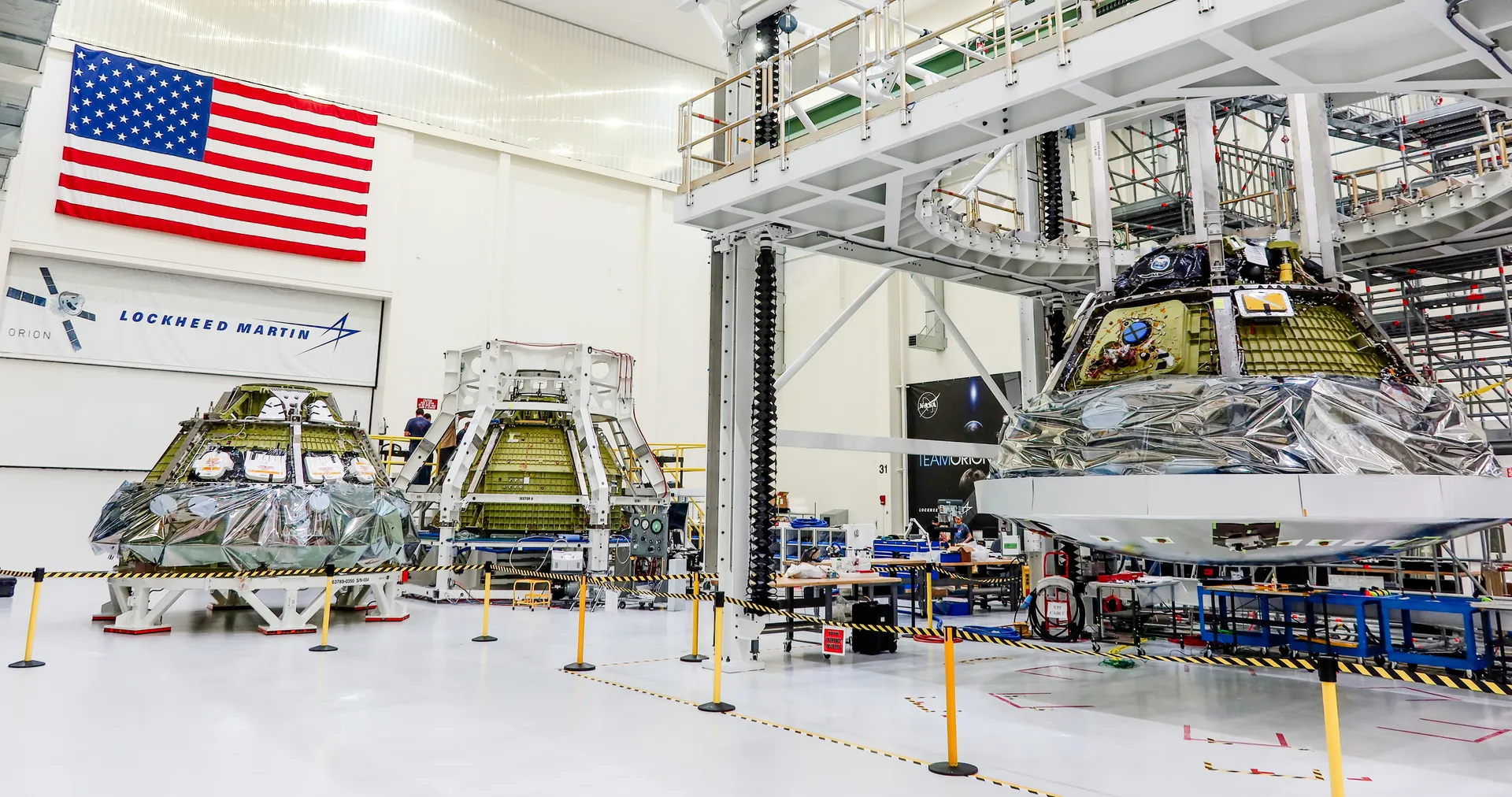
Reuse began with the first crewed capsule. Seats, video processors and camera controllers were removed from it in San Diego, and more than 250 of its components are to fly again on Artemis IV and V; using Artemis II parts on Artemis III freed hardware built for Artemis III to go to Artemis IV more than six months early.15,20
The Artemis III Orion, its crew and service modules joined on July 30, 2026, will be the first to carry a docking system. It will not go to the Moon: under the 2026 plan it will dock with commercial lander test articles in Earth orbit.1,20 The changes ripple through the production line. NASA now needs an Orion ready for Artemis V two years earlier than planned, which means asking ESA to deliver a service module sooner, and Orion will dock directly with the landers in a different lunar orbit instead of at the Gateway station.11
In March 2026 NASA also asked industry how astronauts might be carried from launch to a docking with either lander and back to Earth, and invited new entrants as well as current providers.11 Orion is, for now, the only spacecraft built to bring a crew home from lunar distance, and NASA has ordered it through Artemis VIII.1,12
Sources
The text above is drawn from these 21 sources. Government works are adapted closely; company and press material is summarized. Numbers in the text point here. Last checked October 1, 2026.
Show all 21 sourcesShow fewer
- 1Back to the text
- 2Back to the text
- 3Back to the text
- 4Back to the text
- 5Back to the text
- 6Back to the text
- 7Back to the text
- 8Back to the text
- 9Back to the text
- 10Back to the text
- 11Back to the text
- 12Back to the text
- 13Back to the text
- 14Back to the text
- 15Back to the text
- 16Back to the text
- 17Back to the text
- 18Back to the text
- 19Back to the text
- 20Back to the text
- 21Back to the text
Continue
Related stories
- Artemis IIFrom April 1 to 10, 2026, four astronauts flew Orion around the far side of the Moon and farther from Earth than anyone before them. What the flight tested, day by day, and what NASA found afterward.
- The Artemis planA rocket, a capsule, two commercial landers, new suits and propellant refilled in orbit: who builds each piece, what it costs, and how a 2024 landing became Artemis IV in 2028.
- Space Launch SystemCongress wrote SLS into law in 2010, with Shuttle engines and boosters and a 2016 goal. It first flew in 2022, at an estimated $4.1 billion a launch with Orion, and in 2026 NASA stopped upgrading it.