Artemis: how NASA’s plan to land on the Moon was built and rebuilt
A rocket, a capsule, two commercial landers, new suits and propellant refilled in orbit: who builds each piece, what it costs, and how a 2024 landing became Artemis IV in 2028.
NASA/Ben Smegelsky
Drawn from 29 sources: NASA (22), NASA Office of Inspector General (3), Spaceflight Now, U.S. Government Accountability Office and 2 others. About 11 minutes. Checked October 1, 2026.
Artemis is NASA’s program to return American astronauts to the Moon and, this time, to stay. Its first crewed flight, Artemis II, carried four astronauts around the Moon in April 2026, farther from Earth than any humans had traveled before, and brought them home to a splashdown off San Diego.27 A landing asks for much more than that flight showed. It needs the SLS rocket and the Orion spacecraft, a commercial lander already waiting in lunar orbit, the propellant that lander must collect in Earth orbit first, a spacesuit for the surface, and the launch and flight teams to bring all of them to the same place at the same time.9,17
As of October 1, 2026, the plan is the one NASA laid out in February and March 2026. Artemis III, in 2027, will test systems and operational capabilities in low Earth orbit, docking Orion with one or both commercial landers. The first landing moves to Artemis IV in 2028, and Artemis V is to follow by late 2028.10,11 On September 20, Administrator Jared Isaacman told NASA employees the agency was “~90 days broken against the Artemis III schedule,” with a best case of launching it in the summer of 2027 and preserving “as many as two opportunities for lunar landings in 2028.”25
A south pole landing ordered for 2024
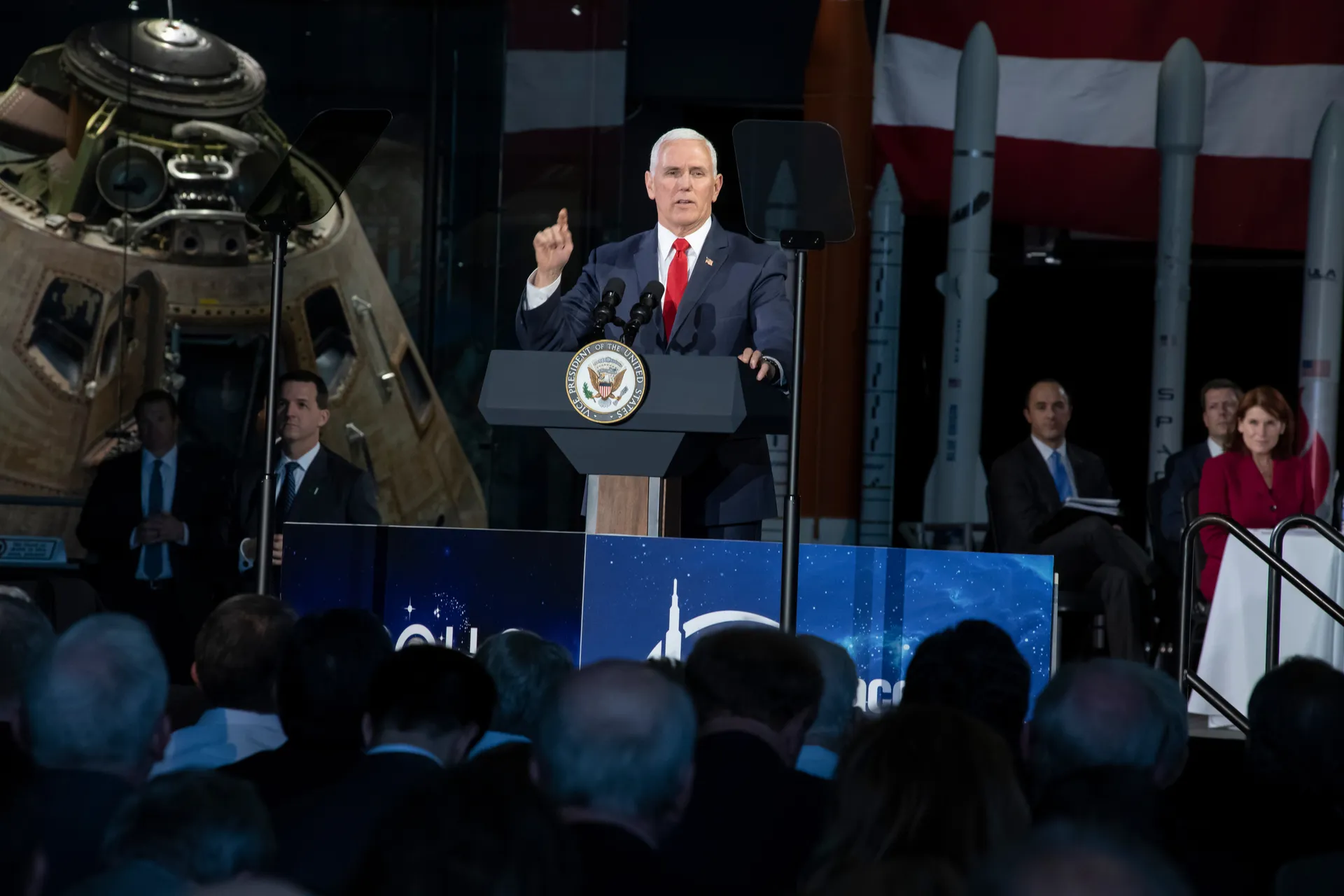
On March 26, 2019, at the fifth meeting of the National Space Council in Huntsville, Alabama, Vice President Mike Pence said NASA should put American astronauts back on the Moon within five years. NASA Administrator Jim Bridenstine listed what that meant: land on the Moon’s South Pole by 2024, stay on schedule for flying the first SLS and Orion the next year, and send the first crewed mission to the lunar vicinity by 2022.1 NASA’s own schedule had aimed at 2028.2
NASA named the program Artemis, after the twin sister of Apollo, and in September 2020 published its plan. It had two parts: a near-term focus on achieving the initial human landing by 2024 as efficiently as possible with acceptable technical risk, and the build-up of sustainable systems that would keep a human presence on the Moon into the next decade. The landing would cost nearly $28 billion between fiscal years 2021 and 2025, NASA estimated.2
NASA’s Inspector General found in November 2021 that the $28 billion left out everything not directly needed for the first three missions, including the more powerful SLS Block 1B, the Mobile Launcher 2 that would launch it, future Orion capsules and the Gateway. Counted in full, the agency was projected to spend $93 billion on Artemis from fiscal year 2012 through 2025. The Inspector General also put the cost to build and fly a single SLS and Orion at $4.1 billion per launch for Artemis I through IV, not counting the money already spent developing them.3
The machines a landing needs, and who builds them
On a landing mission, a crew of four launches in Orion on SLS from Kennedy Space Center. In lunar orbit, Orion docks with a lander that arrived separately; two crew members board it, descend near the South Pole and spend approximately a week there conducting science before returning to lunar orbit to join their crewmates for the journey home. For early Artemis missions, the lander is also where the two astronauts live on the surface.17,9

NASA · September 24, 2025
SLS: the rocket NASA owns
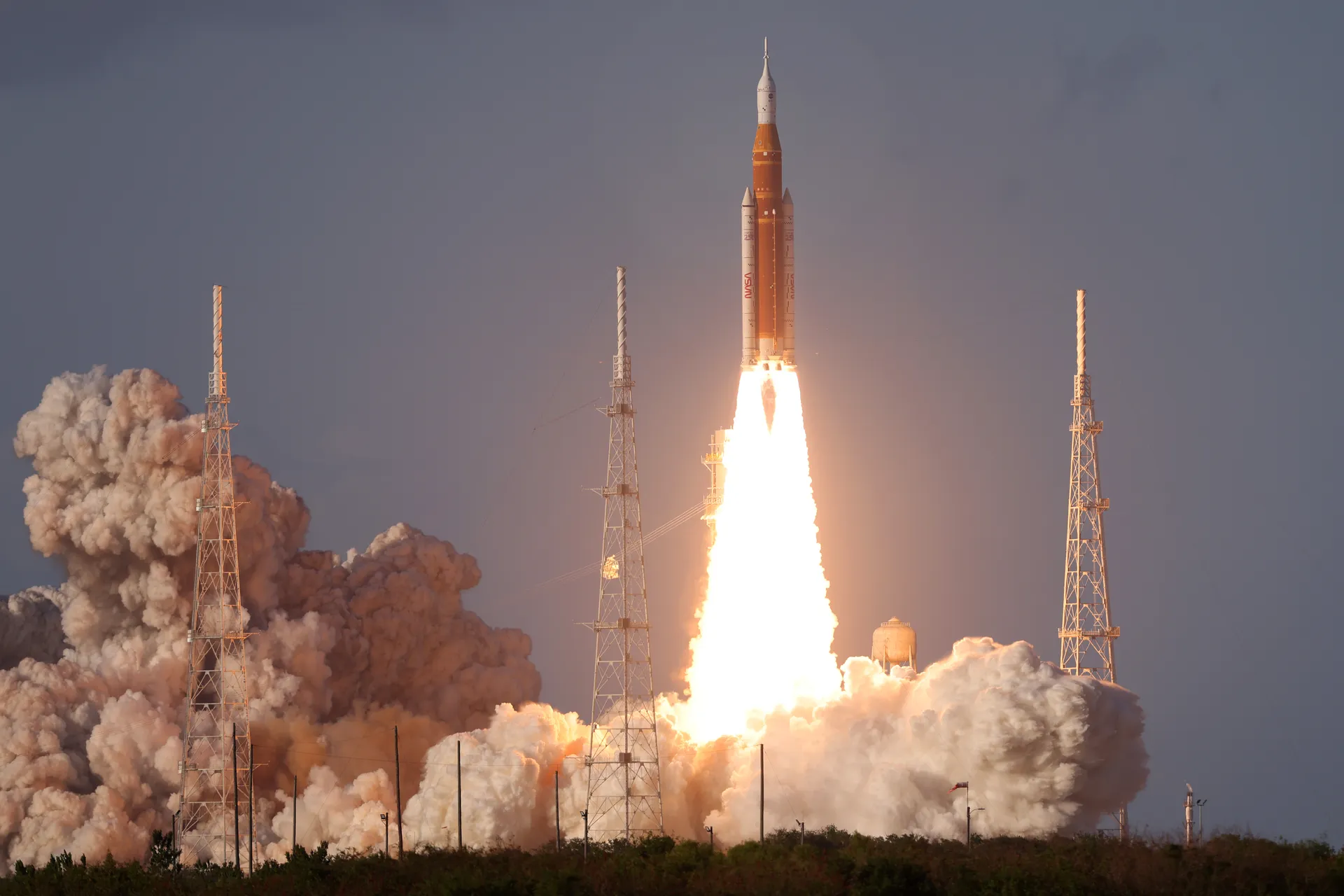
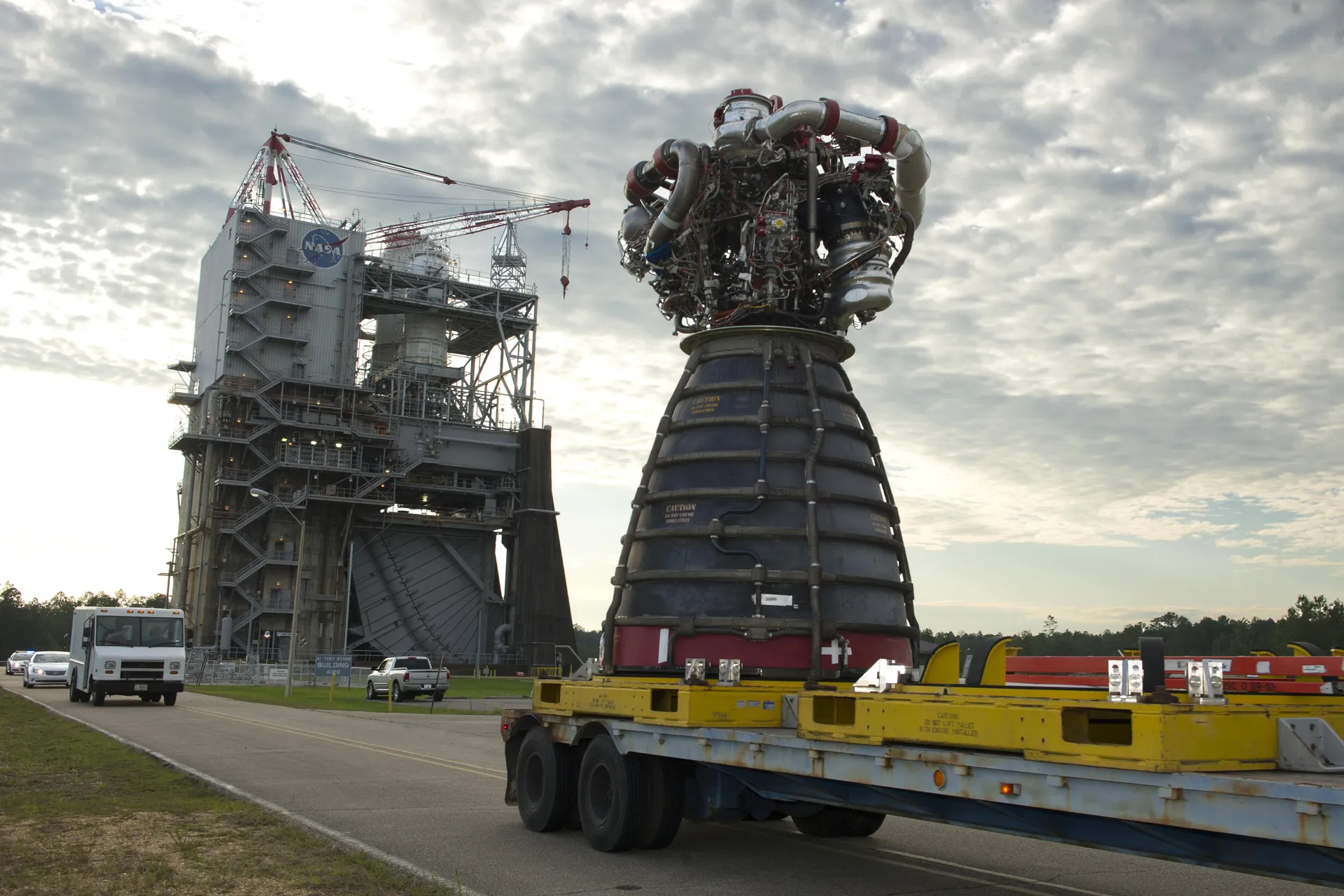
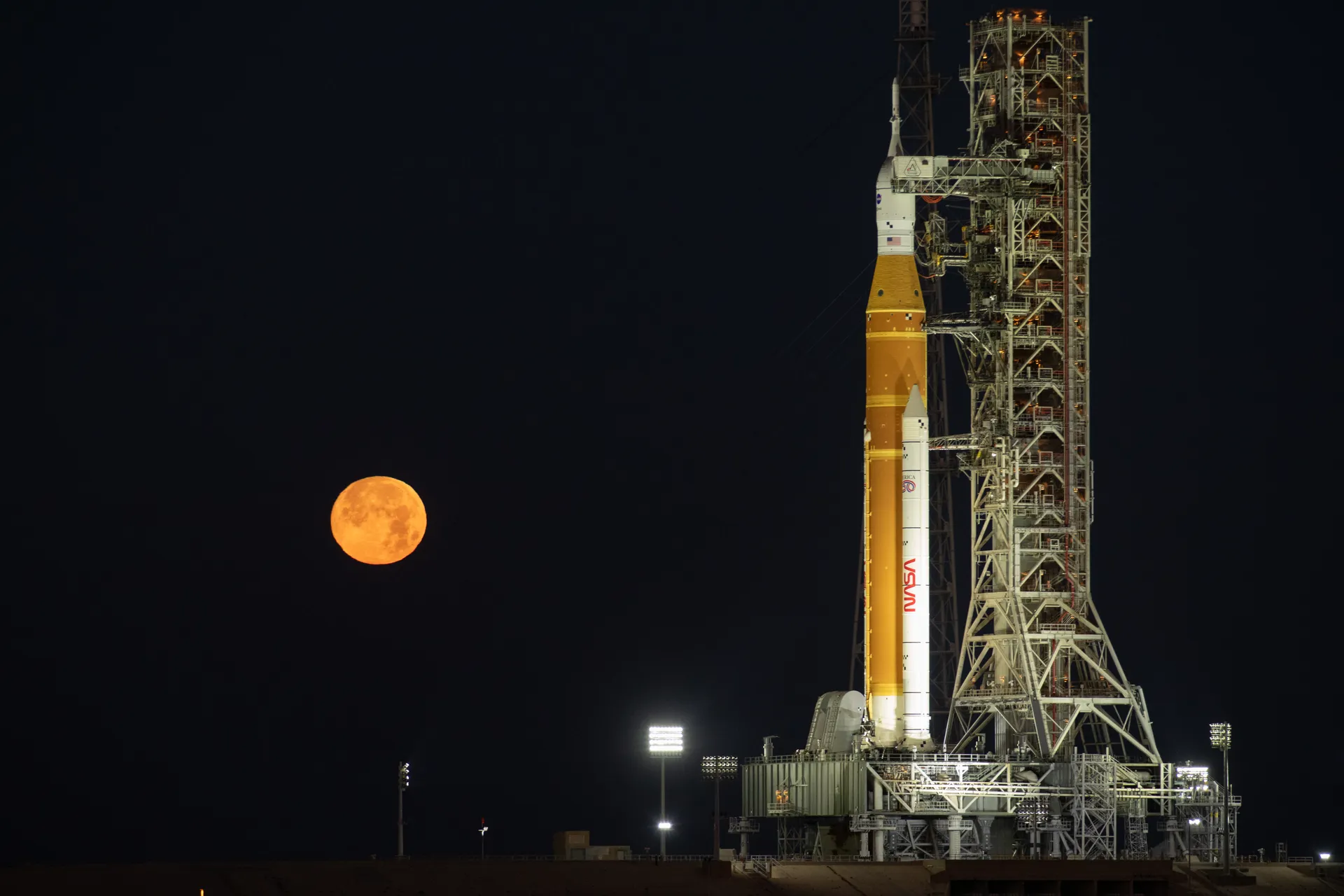
SLS is a super heavy-lift rocket producing 8.8 million pounds of thrust at liftoff. Boeing builds its core stage at NASA’s Michoud Assembly Facility in New Orleans. L3Harris supplies the four RS-25 engines; all four on Artemis III flew on space shuttle missions. Northrop Grumman builds the twin solid rocket boosters, and United Launch Alliance provided the upper stage, the interim cryogenic propulsion stage, under contract with Boeing.18,23
An upper stage replaced in 2026
In February 2026 NASA froze SLS close to its first configuration. It stopped work on the Exploration Upper Stage and Mobile Launcher 2, which had both faced delays. Artemis III, which stays in Earth orbit, will fly a non-propulsive spacer in the upper stage’s place; the last interim stage goes to Artemis IV; and NASA plans to buy United Launch Alliance’s Centaur V upper stage for later flights; in September the Administrator described it as a Centaur V with an expanded tank, with the interim stage kept as an option.11,21,25
Orion: the only ride home
Lockheed Martin builds Orion’s crew module, where four astronauts live and work. ESA, the European Space Agency, provides the service module that powers and propels it, built by Airbus with suppliers in ten European countries and the United States. Orion is the only spacecraft able to return a crew to Earth at lunar reentry speeds. Its docking system, for meeting a lander, flies for the first time on Artemis III.18,17,19
Starship HLS: a lander filled in orbit
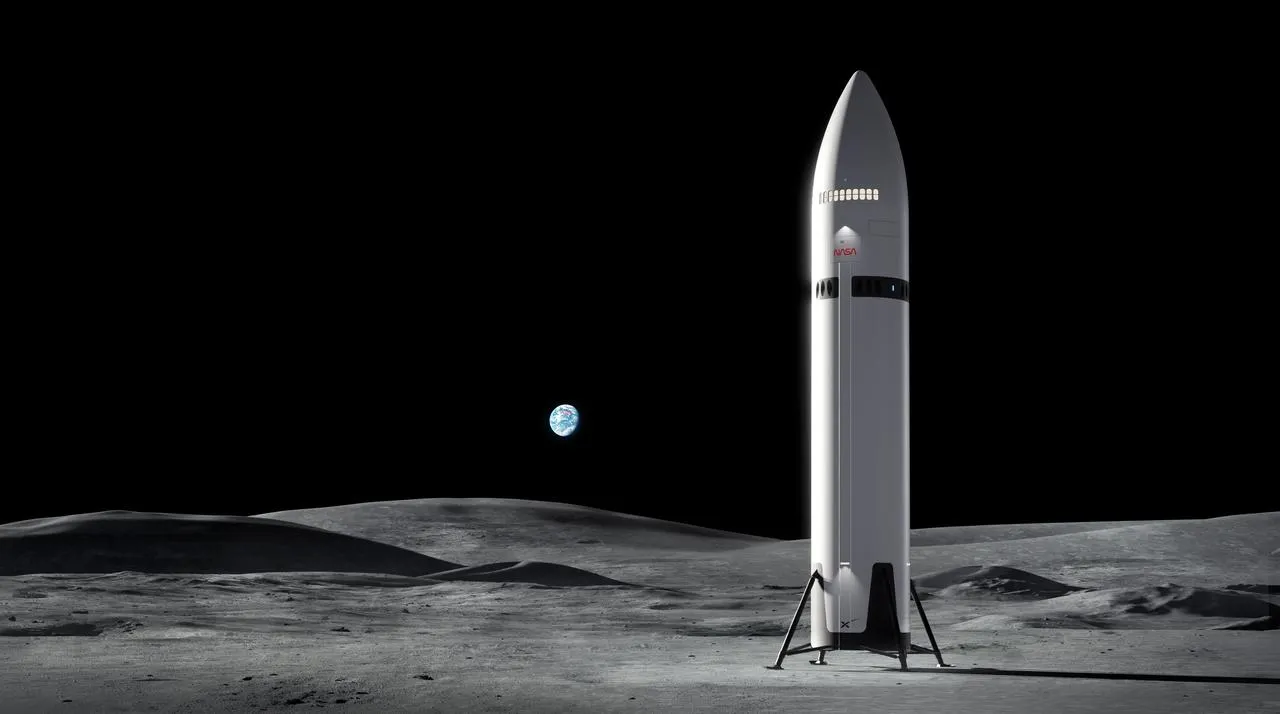
In April 2021 NASA chose SpaceX’s Starship, about 171 feet tall, as the first lander, under a $2.89 billion fixed-price contract; a 2022 option for a more capable version raised the potential value to about $4.3 billion. Before a landing, SpaceX plans to launch a storage depot to low Earth orbit, then more than 10 tanker flights, one every six days, beginning more than 200 days before the crew launches. The filled lander then flies to lunar orbit to wait for Orion.5,9
Blue Moon: a second lander
In May 2023 NASA selected Blue Origin as a second lander provider, at $3.4 billion. Blue Moon stands 52 feet tall, launches on Blue Origin’s New Glenn and burns liquid hydrogen and oxygen in its BE-7 engines. A transporter stays in low Earth orbit as a depot while refuelers launch to fill it. Blue Origin plans two flights of the smaller Mark 1 cargo lander first.6,9
Spacesuits, rented rather than owned
NASA will buy spacewalks as a service, renting suits from their makers. Its 2022 contracts with Axiom Space and Collins Aerospace are worth up to $3.1 billion, but in 2024 Collins and NASA agreed to descope Collins’ work, leaving Axiom to provide both the lunar suit and a new space station suit. Axiom plans demonstration readiness in late 2027; the Inspector General warned that at historical testing rates, demonstrations would not come until 2031.16
Who pays, and how: rockets NASA owns, landers it rents
NASA buys these machines in two different ways. SLS and Orion follow the agency’s traditional model: NASA owns the hardware it pays contractors to build. The landers are services. SpaceX and Blue Origin design, build and own them, and NASA purchases transportation under firm-fixed-price contracts with milestone payments, so a provider is paid only after NASA determines it has achieved a milestone defined in the contract. Under cost-plus contracts, the Inspector General notes, schedule delays typically raise costs because NASA keeps paying the provider’s labor.9
The difference shows in the overruns. Since the lander program began in 2019, NASA has obligated $6.9 billion for it and expects to spend $18.3 billion through fiscal year 2030. As of December 2025, SpaceX’s potential contract value had grown by 6%, about $253 million, from $4.3 billion, and Blue Origin’s by less than 1%, or $13 million, from $3.1 billion (the Inspector General leaves out the cargo-lander work that NASA’s $3.4 billion announcement included). When SpaceX asked for more time in 2023, NASA agreed in exchange for an added test: lifting off from the lunar surface on the uncrewed demonstration flight.9
Orion, built on the older model, accounts for most of the overruns among NASA’s major projects. In its July 2026 review of the agency’s major projects, GAO found that Orion accounted for more than half of the year’s cost overruns and almost 75% of the cumulative overruns. When Orion leaves GAO’s list after flying crew in April 2026, it takes with it three years of delays, $6.8 billion in baselined development costs and about $3.5 billion in development cost overruns. GAO also noted that NASA has still not produced a life-cycle cost estimate for the first Artemis landing mission, which GAO recommended in December 2019.21
- $100B+
- invested by NASA and its partners over nearly 20 years in crew-rated lunar transportation, by NASA’s 2026 count12
- $4.1B
- to build and fly one SLS and Orion, Artemis I–IV, by the Inspector General’s 2021 estimate3
- $18.3B
- NASA expects to spend on the two landers through fiscal year 20309
- $20B
- Isaacman’s figure for building a Moon Base over seven years, announced in March 202615
How the landing date moved
The 2024 date lasted until the new administration’s first Artemis update. On November 9, 2021, Administrator Bill Nelson said that “with the recent lawsuit and other factors, the first human landing under Artemis is likely no earlier than 2025.” He listed first-time development challenges, an almost seven-month delay caused by Blue Origin’s lawsuit over the lander award, Congress not appropriating enough money for a lander competition, the COVID-19 pandemic, and a 2024 goal that was not technically feasible.4,9
On January 9, 2024, NASA moved Artemis II to September 2025 and the Artemis III landing to September 2026. Testing of Orion’s life support had uncovered a battery issue and a faulty circuitry component for air ventilation and temperature control; the investigation of the Artemis I heat shield was still open; and SpaceX and Axiom needed more time for the lander and the suits.7 On December 5, 2024, after the heat shield investigation closed, NASA set Artemis II for April 2026 and Artemis III for mid-2027.8
By then the lander set the pace. Under its contract, SpaceX’s delivery for Artemis III had already moved from June 2025 to September 2026, and in the fall of 2025 SpaceX told NASA it would potentially not be able to meet a June 2027 launch date. In October 2025 NASA asked both SpaceX and Blue Origin for proposals to accelerate their landers for a landing in 2028.9 NASA says early 2028 had been its target landing date since mid-2025.11
The first crewed landing, and Artemis II, as each new plan dated them
February 2026: a rehearsal in Earth orbit before the first landing
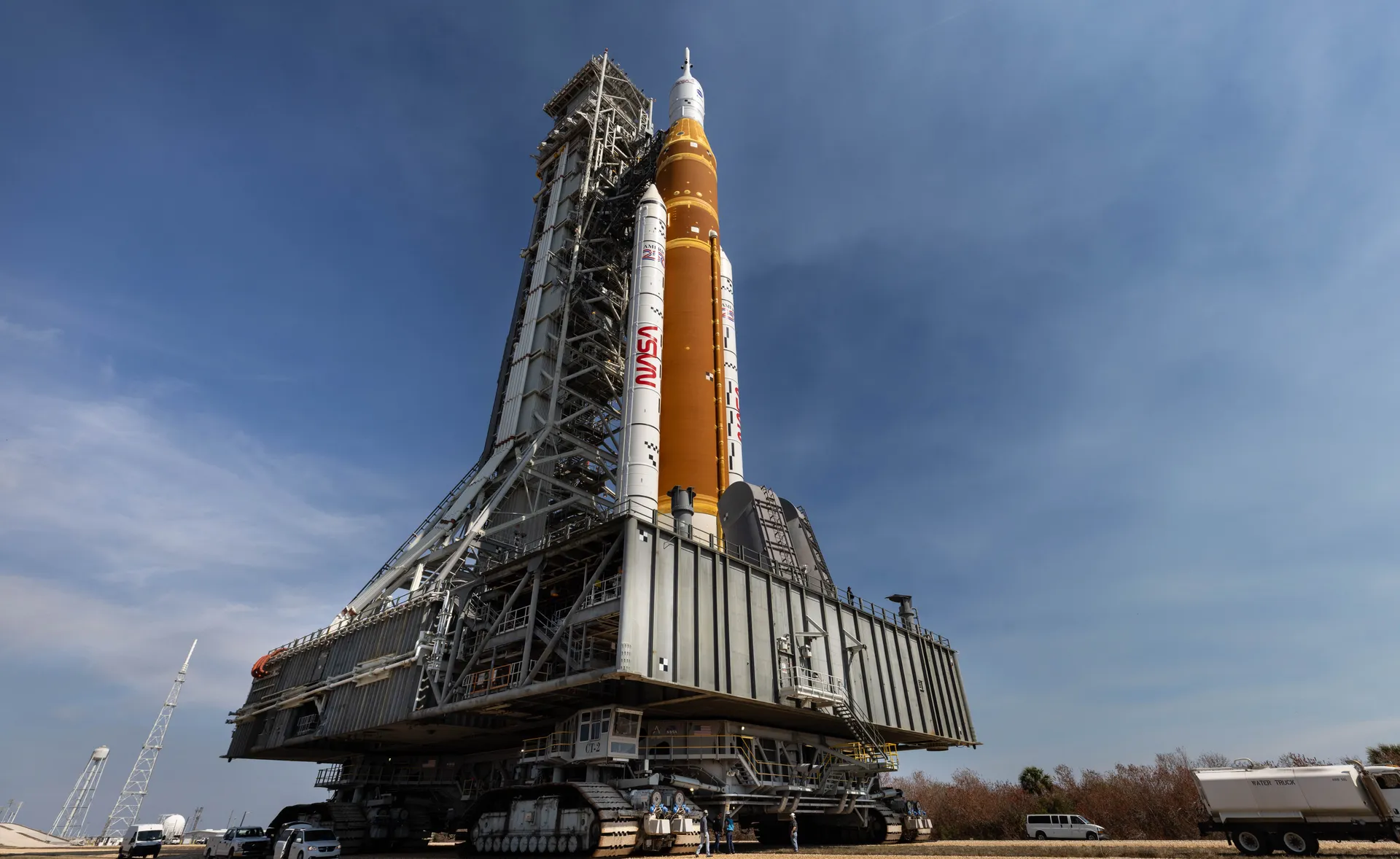
On February 27, 2026, at a news conference at Kennedy Space Center, NASA announced it would standardize the configuration of its vehicles, add a mission in 2027, and undertake at least one surface landing every year thereafter. Artemis III, now in 2027, would test systems and operational capabilities in low Earth orbit to prepare for an Artemis IV landing in 2028: rendezvous and docking with one or both commercial landers, in-space tests of the docked vehicles, integrated checkout of life support, communications and propulsion, and tests of the new spacesuits.10
NASA described the change as an Apollo 9-style “test before you land” step. The old sequence had jumped directly from a lunar flyby to a lunar landing without testing Orion and a lander together in between, and launches had been trending toward one mission every three years.12,28
The entire sequence of Artemis flights needs to represent a step-by-step build-up of capability, with each step bringing us closer to our ability to perform the landing missions. Each step needs to be big enough to make progress, but not so big that we take unnecessary risk given previous learnings.
On June 9 NASA named the Artemis III crew: commander Randy Bresnik, pilot Luca Parmitano of ESA, the first European assigned to an Artemis mission, and mission specialists Andre Douglas and Frank Rubio.19 The mission will launch three of the world’s most powerful rockets in short succession. Blue Origin’s test lander, built on the design of its Mark 2 crew lander, launches first and can wait in orbit for up to 30 days. Orion then launches on SLS, docks along the side of the Blue Moon test article next to its crew cabin, and stays about two days; up to two astronauts will open the hatch and go inside. After Orion undocks, SpaceX launches a Starship Version 3 with a docking system on its nose, and the two spacecraft stay joined for about a day. Astronauts will not enter the Starship test article. The crew is expected to spend about two weeks in space before splashing down in the Pacific.19,20

March 2026: a base on the surface instead of a station in orbit
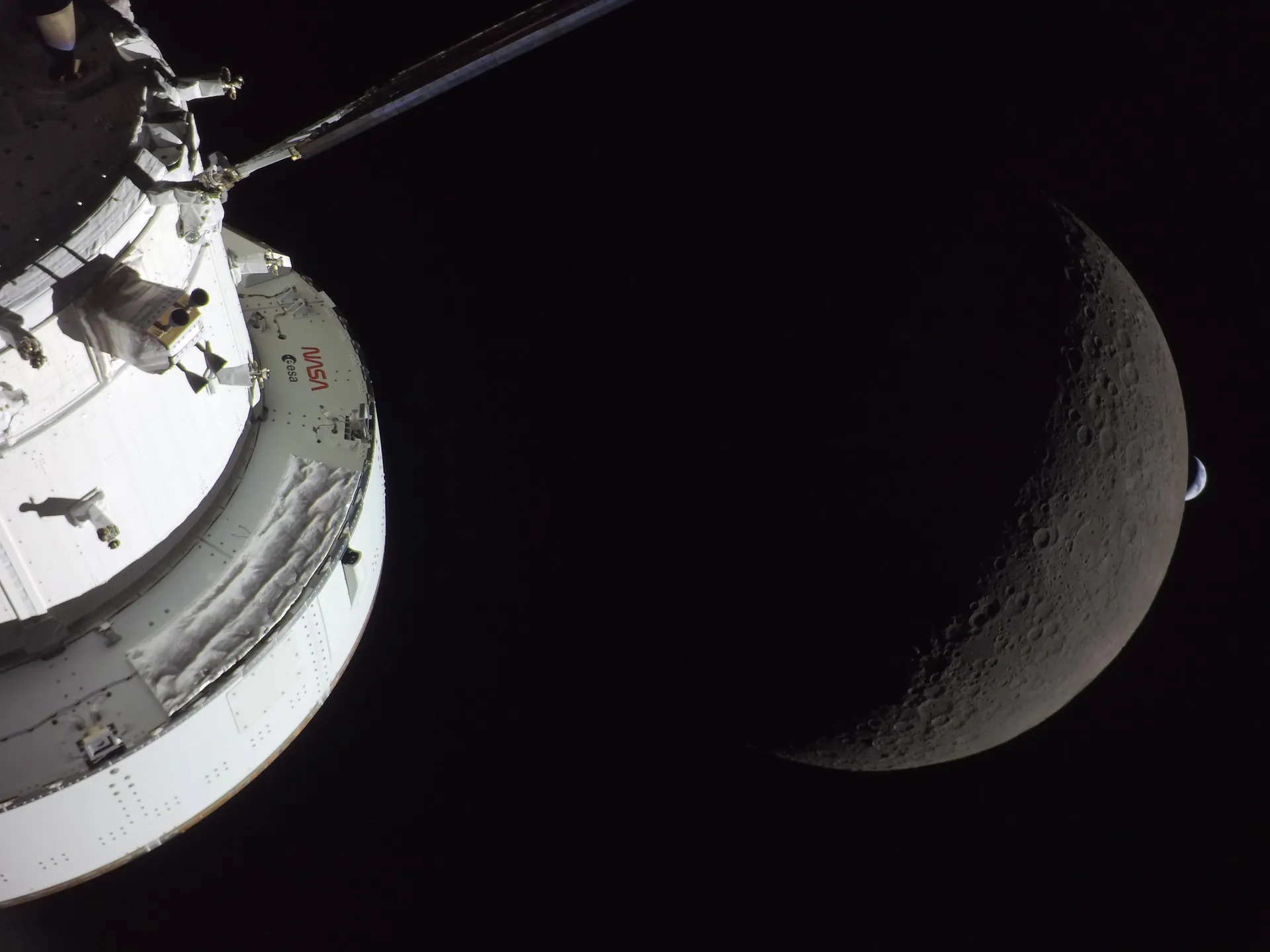
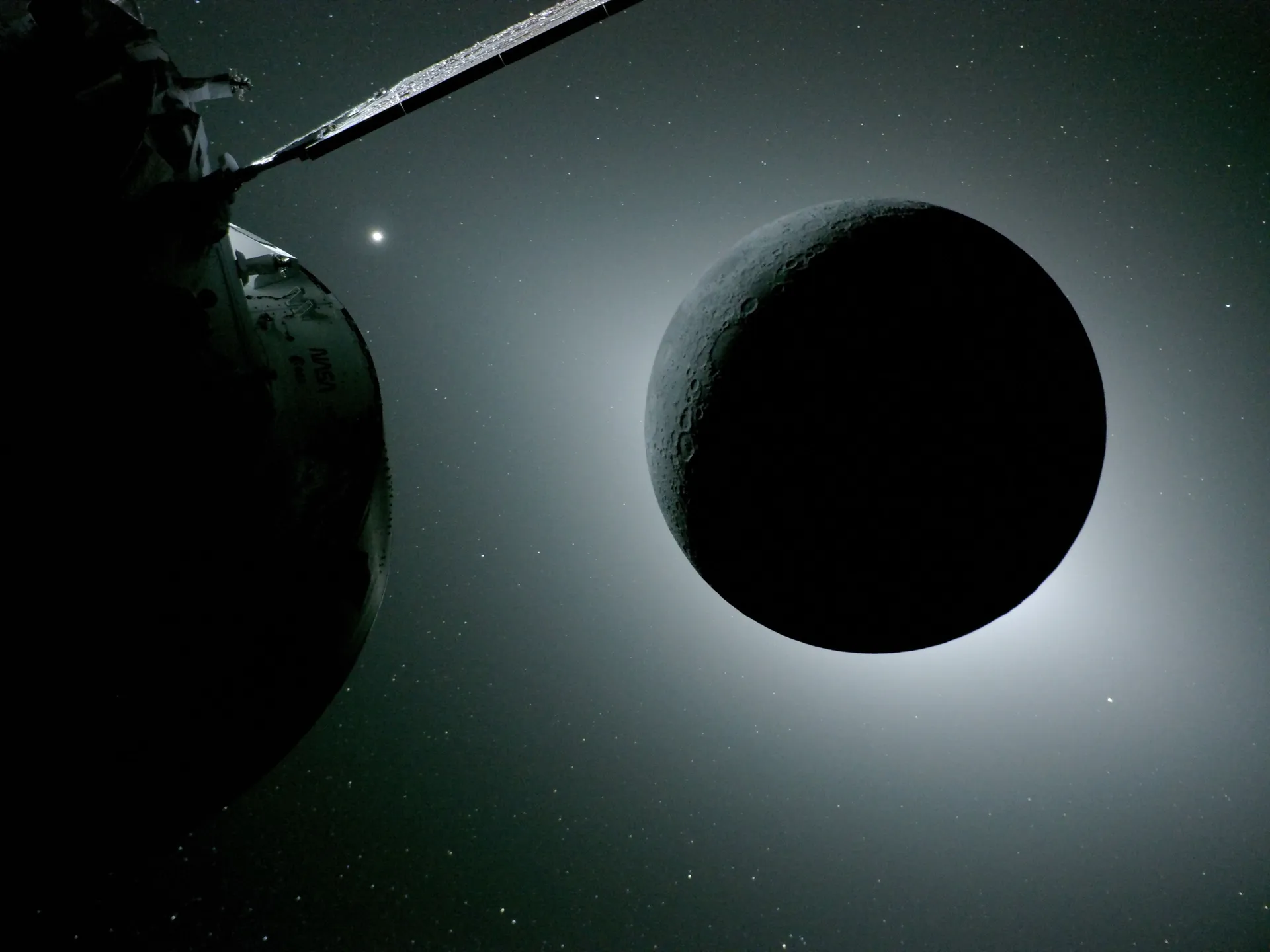
The Moon seen by the Artemis II crew on April 4, 2026, turned with the South Pole at the top: the region where NASA plans its first landings and its base.
On March 24, 2026, at an event NASA called Ignition, the agency described what would follow the landings. After Artemis V it will incorporate more commercially procured and reusable hardware, initially targeting crewed landings every six months. To achieve an enduring presence it will build a lunar base in phases, and it intends to pause Gateway, the small station that was to orbit the Moon, in its current form, shifting focus to infrastructure that enables sustained surface operations. Applicable Gateway equipment will be repurposed and international partner commitments used toward the base.13
The first phase is meant to replace bespoke, infrequent missions with a repeatable, modular approach. In March NASA counted 25 launches and 21 landings in it, “now through 2028,” delivering rovers, hopper drones called MoonFall, power and communications demonstrations and science instruments; by August it described the phase as running through 2029.13,29,24 A second phase, starting in 2029, would add early infrastructure, solar power stations, nuclear power demonstrations, Japan’s pressurized rover and about 60 metric tons of cargo; a third, starting in the early 2030s, would aim at a semi-permanent crew presence, with fission surface power and habitats.13,14,29 NASA also opened a successor to its commercial lunar delivery program, CLPS 2.0, with a 10-year ordering period and a cap of $6 billion.14 Isaacman put the base at about $20 billion over seven years.15
What has to be demonstrated before 2028
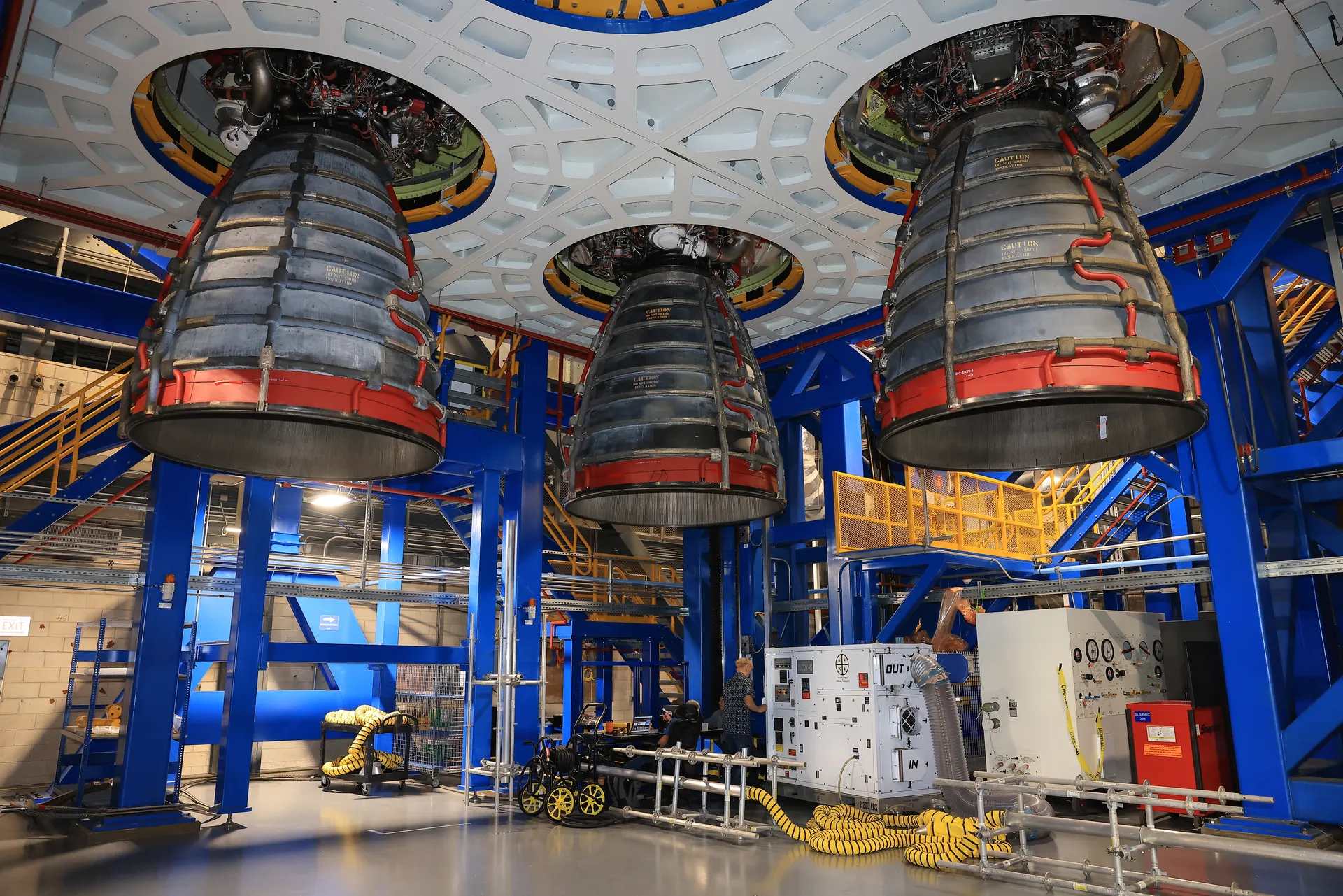
By the end of September 2026 the hardware for Artemis III was coming together at Kennedy. Orion’s crew and service modules were joined on July 30, technicians began installing the four RS-25 engines in the core stage on August 24, and the booster segments were more than halfway stacked. More than 250 components from the Orion that flew Artemis II will be reused on Artemis IV and V.22,23 The landers are further behind. Before any crewed landing, each provider must fly an uncrewed lunar landing test.21
SpaceX’s plan depends on moving cryogenic propellant from one Starship to another in orbit, which GAO and NASA’s lander program call a top risk; as of May 2026 it had not been demonstrated.21 On September 28, 2026, on its 14th flight, Starship reached orbit for the first time, deployed 26 Starlink satellites and returned after about two orbits. No transfer between ships was attempted.26 Blue Origin’s New Glenn, which must launch Blue Moon and its refuelers, exploded during a test at its launch pad in May 2026, and the company is rebuilding the pad with NASA’s help.21,25
The Inspector General added a limit that no schedule fixes. NASA is preventing hazards where it can, but should astronauts meet a life-threatening emergency in space or on the lunar surface, the agency does not have the capability to rescue a stranded crew.9 The 2028 landing now waits on a rehearsal in Earth orbit, an uncrewed landing by each lander that will carry a crew, a suit ready in time and, before any landing, a transfer of propellant between two ships in orbit. NASA’s lander program scheduled that transfer for 2026.21 With three months of the year left, it had not flown.26
Sources
The text above is drawn from these 29 sources. Government works are adapted closely; company and press material is summarized. Numbers in the text point here. Last checked October 1, 2026.
Show all 29 sourcesShow fewer
- 1Back to the text
- 2Back to the text
- 3Back to the text
- 4Back to the text
- 5Back to the text
- 6Back to the text
- 7Back to the text
- 8Back to the text
- 9Back to the text
- 10Back to the text
- 11Back to the text
- 12Back to the text
- 13Back to the text
- 14Back to the text
- 15Back to the text
- 16Back to the text
- 17Back to the text
- 18Back to the text
- 19Back to the text
- 20Back to the text
- 21Back to the text
- 22Back to the text
- 23Back to the text
- 24Back to the text
- 25Back to the text
- 26Back to the text
- 27Back to the text
- 28Back to the text
- 29Back to the text
Continue
Related stories
- OrionLockheed Martin builds the capsule, Europe builds the module that keeps it alive, and its heat shield must survive a return at nearly 25,000 mph. How Orion was developed, how it works, and what its first crewed flight showed.
- GatewayA small international station that was to circle the Moon once a week. Its power module was nearly built when NASA paused it in March 2026; the hardware is being turned to a nuclear Mars spacecraft and Moon Base tests.
- Starship HLSIn 2021 NASA chose a version of Starship, refueled in Earth orbit by a fleet of tankers, to land its astronauts. The contract is now worth about $4.5 billion; the refueling has not yet flown.