Space Launch System
NASA’s Moon rocket: a core stage and four RS-25 engines from the Shuttle era, two solid boosters and Orion on top.
- Type
- Rocket
- Status
- Flying
- First flight
- November 16, 2022
- Height
- 98 m (322 ft)
- Built by
- Boeing, Northrop Grumman, L3Harris, ULA, NASA
- 2
- flights: Artemis I (November 2022) and Artemis II (April 2026)
- $4.1B
- per SLS/Orion launch for Artemis I–IV, NASA Inspector General estimate (2021)
- 2027
- next flight: Artemis III, a crewed test in Earth orbit
The Moon rocket Congress ordered from Shuttle parts in 2010
Drawn from 10 sources: NASA Office of Inspector General (4), NASA (4), U.S. Congress and U.S. Government Accountability Office. About 8 minutes. Checked October 1, 2026.
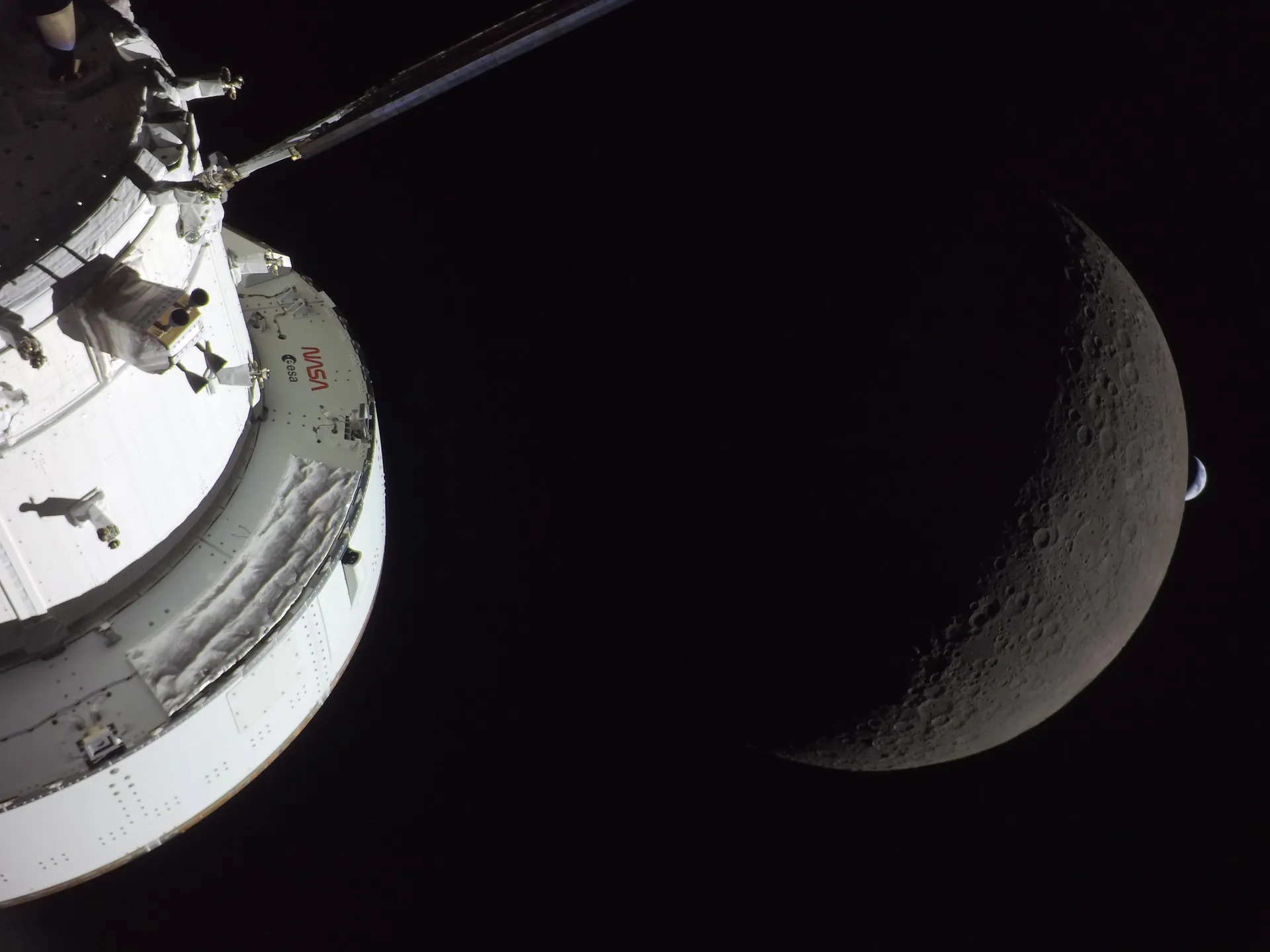
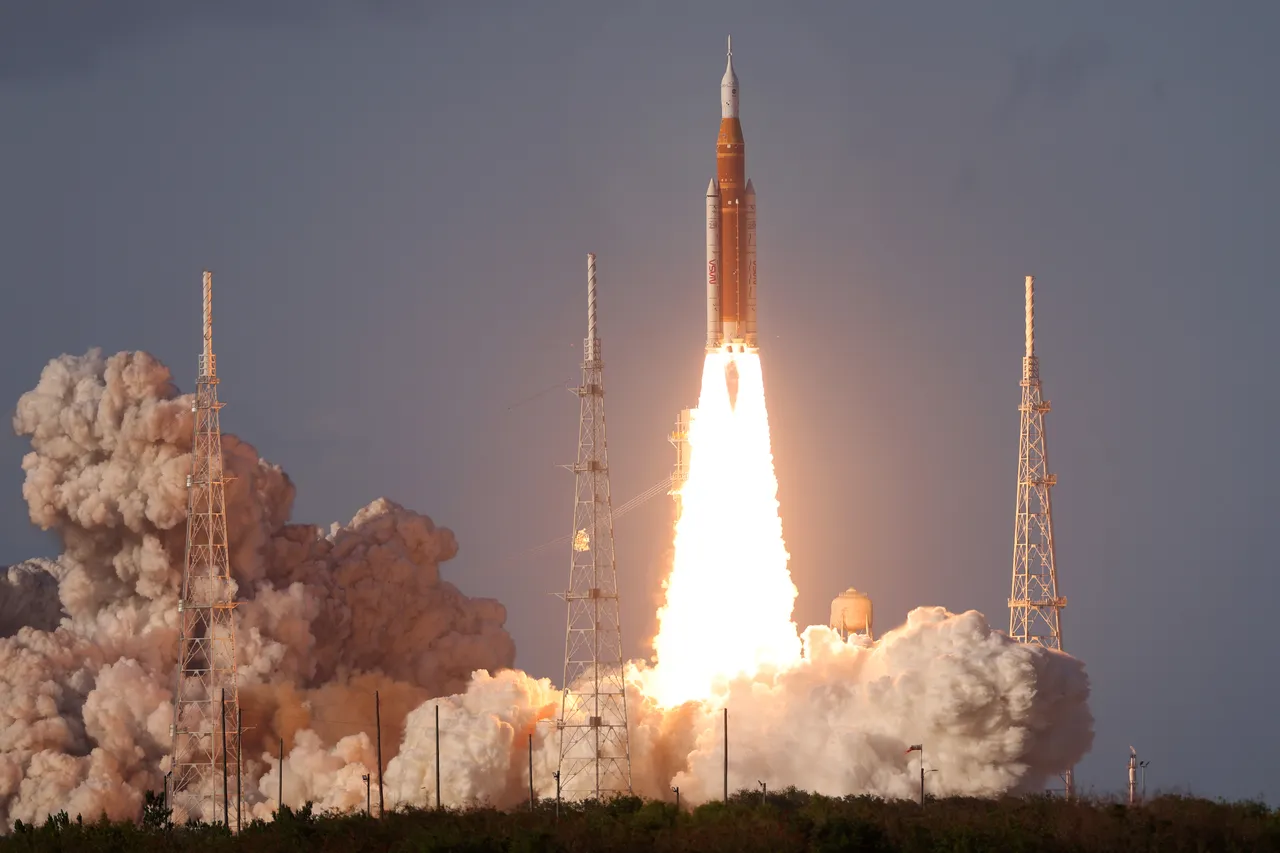
At 6:35 p.m. on April 1, 2026, the Space Launch System lifted four astronauts off Launch Pad 39B at Kennedy Space Center with 8.8 million pounds of thrust and put their Orion spacecraft into orbit. Nine days later Reid Wiseman, Victor Glover, Christina Koch and Jeremy Hansen splashed down off San Diego after reaching 252,756 miles from Earth, farther than anyone had gone before. They were the first people to ride SLS.9
The rocket that launched them was specified by Congress sixteen years earlier, built largely from Space Shuttle hardware, and given a goal in law of being ready to operate by the end of 2016. Its history, as NASA’s inspector general and the Government Accountability Office have documented it year by year, is a record of what reusing that hardware cost and how long it took.1,2
Congress wrote the rocket into law in 2010
The Obama administration ended the Constellation program in 2010, and Congress answered with the NASA Authorization Act of 2010. Section 302 made it “the policy of the United States that NASA develop a Space Launch System as a follow-on to the Space Shuttle that can access cis-lunar space and the regions of space beyond low-Earth orbit.” The administrator was to begin “as soon as practicable,” and, to limit the cost of terminating Constellation’s contracts, was to “extend or modify existing vehicle development and associated contracts” wherever possible.1,2,4
The law also set the rocket’s size and its deadline. At a minimum, the core of the rocket without an upper stage was to lift 70 to 100 tons to low Earth orbit; with an upper stage the system was to reach 130 tons or more; it was to be able to launch the multipurpose crew vehicle, which became Orion. Work on the core elements had priority, “with the goal for operational capability for the core elements not later than December 31, 2016.” NASA was to keep the skills it already had in solid and liquid rocket engines and large-diameter fuel tanks.1
In 2011 and 2012 NASA signed the contracts that followed from that direction: Boeing for the core stage and the interim upper stage, Aerojet Rocketdyne (now part of L3Harris) for the RS-25 engines, and Northrop Grumman for the solid rocket boosters.2
322 feet, four kinds of hardware
The first version, Block 1, stands 322 feet tall and weighs 5.75 million pounds fueled. It is four kinds of hardware stacked together: an orange core stage, two white solid rocket boosters strapped to its sides, an upper stage, and Orion on top.7
The core stage
The core stage, built by Boeing at NASA’s Michoud Assembly Facility in New Orleans, is more than 212 feet long and 27.6 feet across. Its two tanks hold 733,000 gallons of liquid hydrogen and liquid oxygen. NASA calls it the newest part of the rocket.7
Four Shuttle engines
At its base are four RS-25 engines, the Space Shuttle’s main engines, burning that hydrogen and oxygen. Together they give about 2 million pounds of thrust for the roughly eight-minute climb toward orbit.7
Boosters, then an upper stage
The two five-segment boosters, lengthened from the Shuttle’s four segments, provide more than 75 percent of the thrust in the first two minutes and then fall away; unlike the Shuttle’s, they carry no parachutes and are not recovered. When the core stage is spent, the interim cryogenic propulsion stage takes Orion on toward the Moon.7
Shuttle engines that are thrown away after one flight
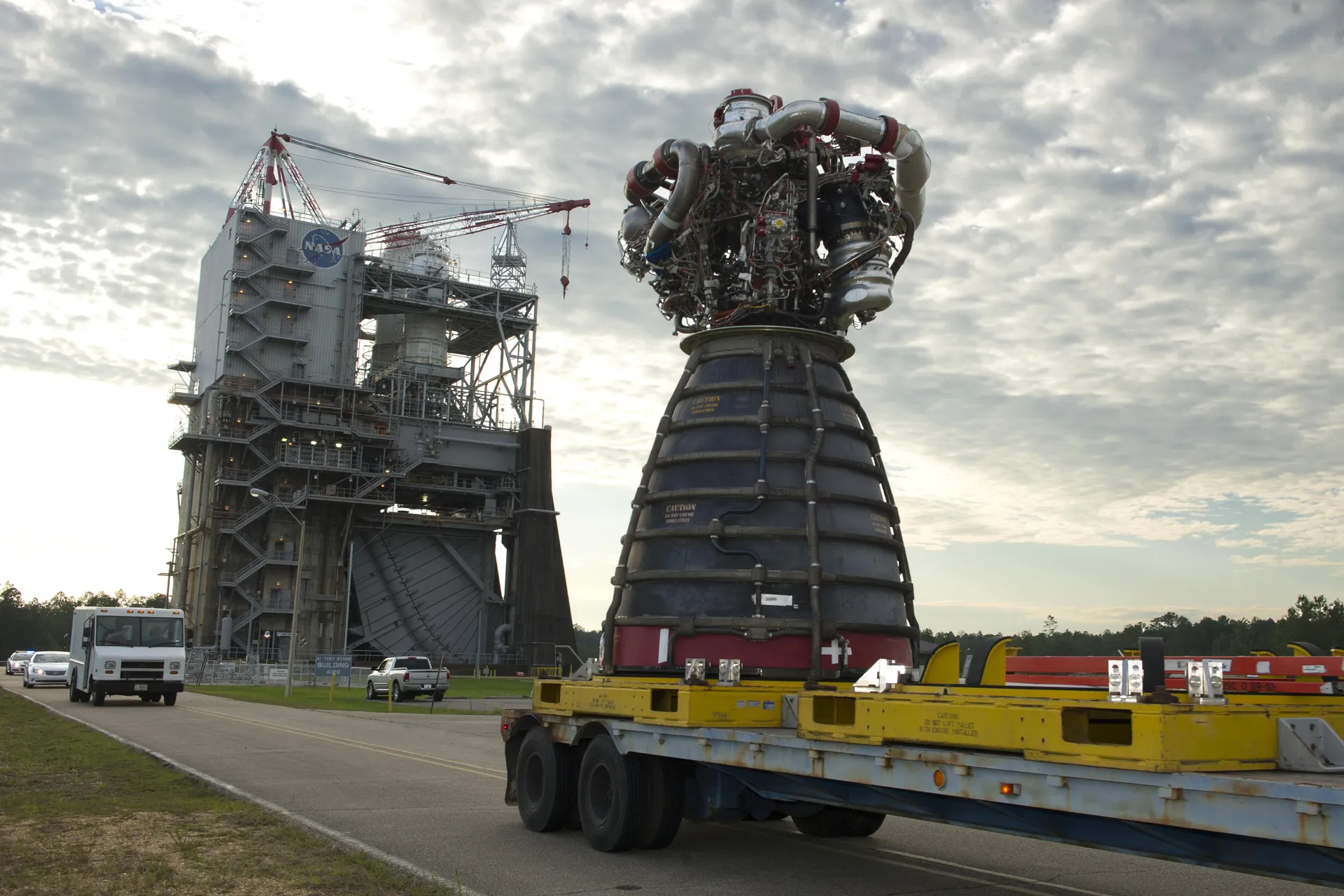
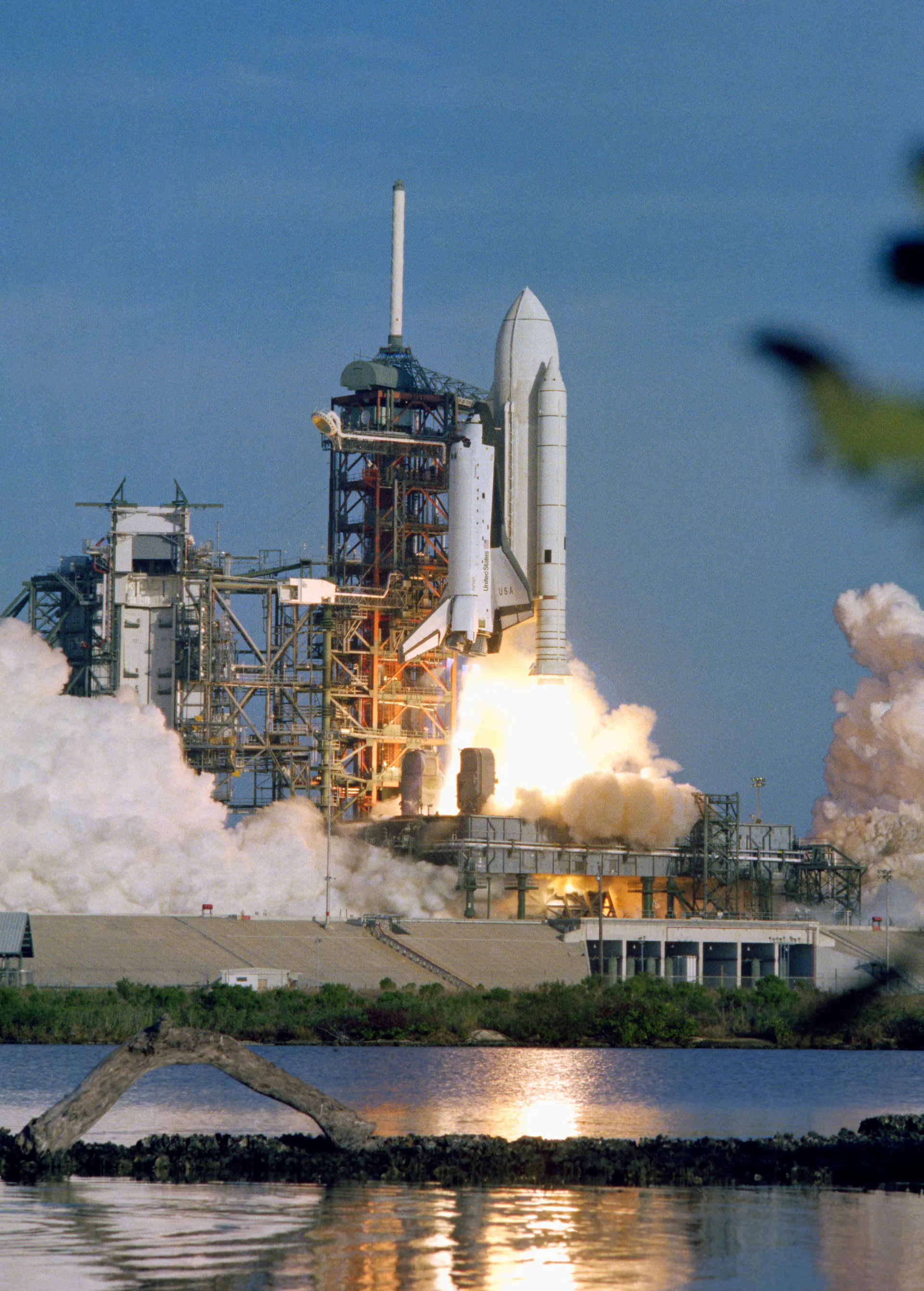
The Shuttle program ended in 2011 with 16 RS-25 engines left over. Aerojet began retrofitting them for SLS in 2011 under a contract first awarded in 2006 for Constellation. That Adaptation contract ended in September 2020 at a total of $2.1 billion, $581 million of it for recertifying and delivering the 16 engines; only 5 of the 16 were finished under it, and the rest moved to a follow-on contract.4
On the Shuttle the engines were mounted on the reusable orbiter and came home with it. On SLS four sit at the base of the expendable core stage and are lost with it after each launch. Once the 16 heritage engines are used up, NASA needs new ones: in November 2015 it signed an RS-25 Restart and Production contract, worth $3.6 billion through September 2029 as of 2023, for 24 new engines beginning with Artemis V. NASA and Aerojet projected manufacturing savings of 30 percent per engine from the seventh new engine on, but the inspector general estimated $2.3 billion in overhead and other costs that those savings do not capture.4,7
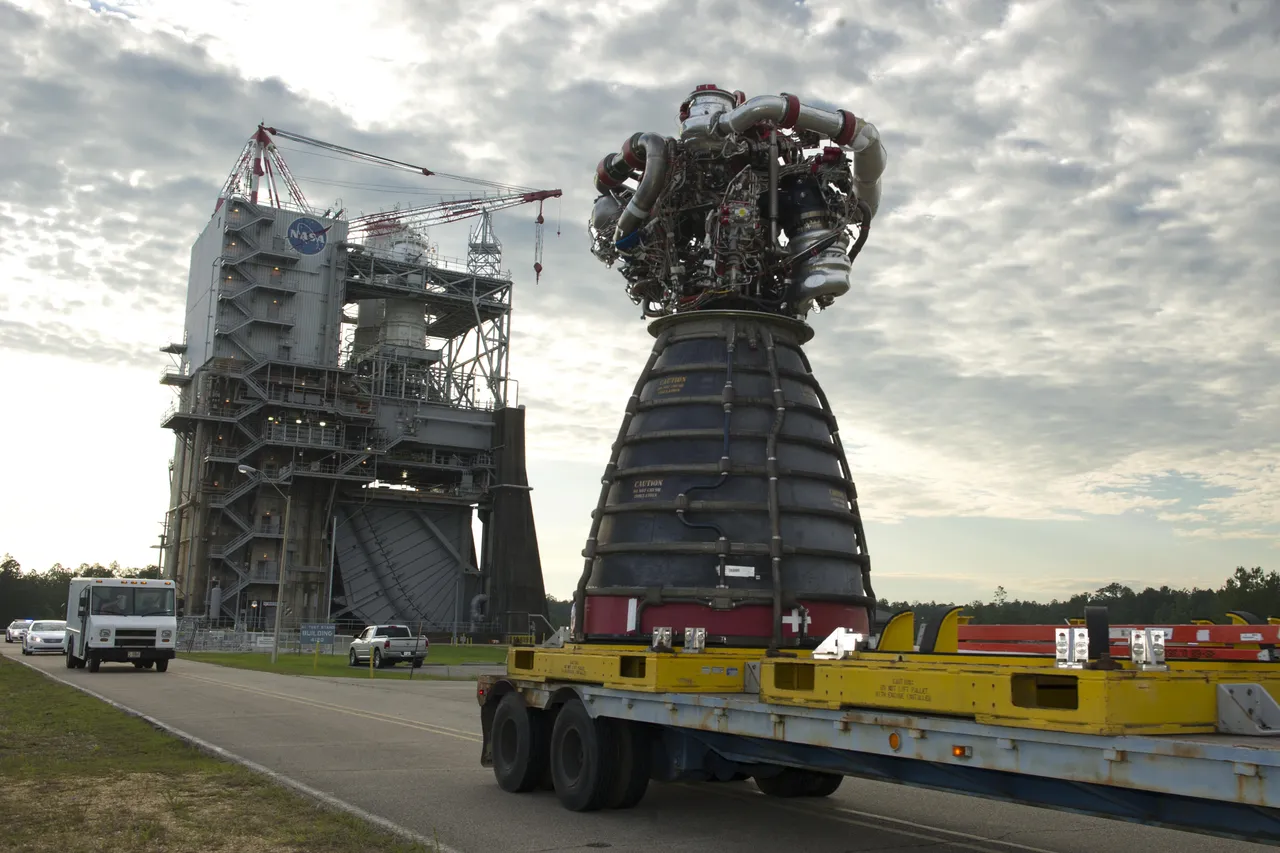
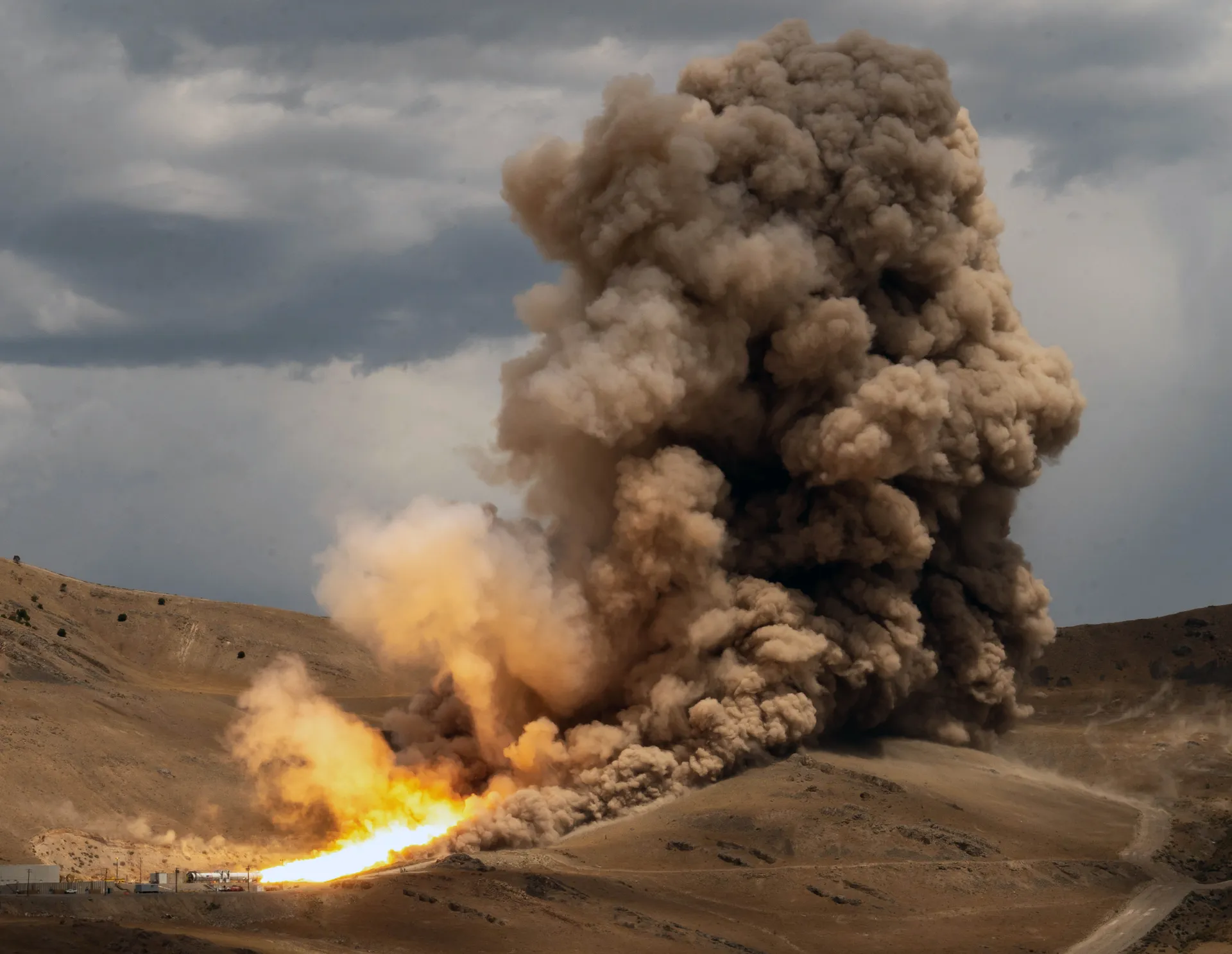
The boosters have the same ancestry. All six boosters for the first three Artemis missions use steel motor cases left from the Shuttle program, and NASA has eight flight sets of Shuttle-era booster hardware for Artemis I through VIII. The boosters contract began in April 2006 as the Ares first-stage contract, at about $1.8 billion; it was changed in 2011 to add SLS requirements and was worth about $2.8 billion when its terms were settled in 2013, and $4.4 billion by 2023. A new composite booster, under a program called Booster Obsolescence and Life Extension, is to replace the steel cases later.4
The inspector general’s judgment on the strategy was blunt. Across the booster and engine contracts NASA had incurred about $6 billion in cost increases and more than six years of schedule delays beyond its original projections. The cause, in its words, was the assumption “that the use of heritage technologies from the Space Shuttle and Constellation Programs were expected to result in significant cost and schedule savings compared to developing new systems for the SLS. However, the complexity of developing, updating, and integrating new systems along with heritage components proved to be much greater than anticipated.”4
A 2016 goal, met in November 2022
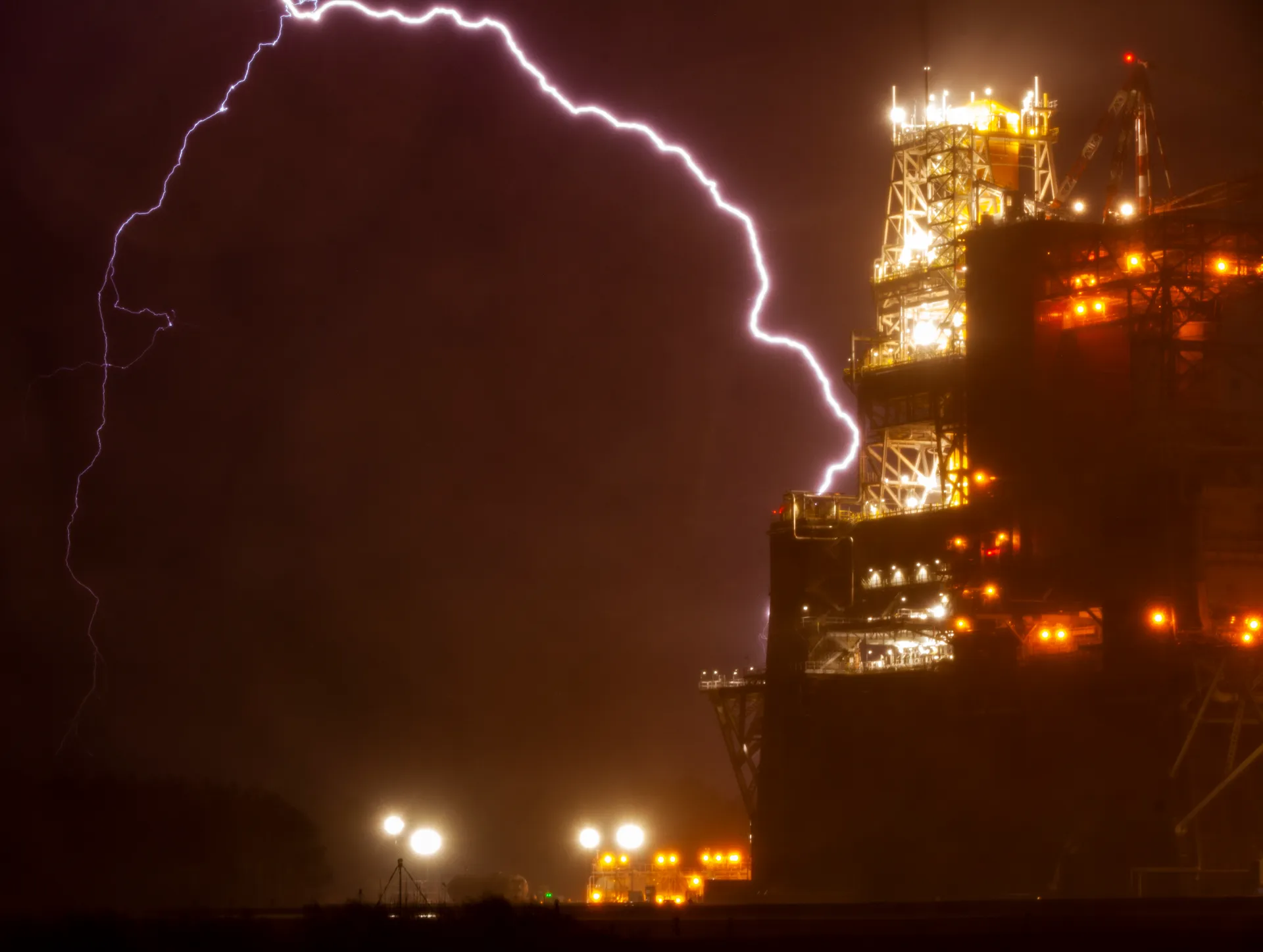
Lightning near the B-2 test stand at Stennis Space Center the night before the second hot-fire test of the first SLS core stage, March 17, 2021.
The 2016 date in the law was never NASA’s plan. The agency’s original development plan set launch readiness for December 2017. In 2014, after preliminary design, NASA committed to Congress to be ready by November 2018, at a cost of nearly $9.7 billion. A December 2017 replan moved the target to June 2020 and removed almost $1 billion of costs from the baseline without lowering it, which, the inspector general wrote, masked the effect of the delay. By the end of fiscal 2019 the program had exceeded its committed cost by at least 33 percent. Core stage production at Michoud was the main cause of the launch delays, driven, the inspector general had found in 2018, “mostly by Boeing’s poor performance.”2
When the first SLS would launch2
The core stage for Artemis I was fired for the full duration of a launch on its test stand at Stennis on March 18, 2021, for more than eight minutes, after a first attempt in January had stopped early. It reached Kennedy on April 27, 2021, about three months late. In October 2021 NASA said Artemis I would launch no earlier than February 2022.3 It launched on November 16, 2022, and sent an uncrewed Orion to an orbit 38,000 miles beyond the Moon. NASA’s post-flight reviews found that SLS met or exceeded its performance expectations.7
An estimated $4.1 billion for each launch with Orion
In November 2021 the inspector general projected the cost of producing and operating one SLS and Orion at $4.1 billion per launch, through at least Artemis IV, at about one launch a year. The rocket itself, two stages, two boosters, four RS-25s and two adapters, would cost $2.2 billion; Orion about $1 billion, plus $300 million for the European Service Module that ESA supplies through a barter agreement; and the ground systems at Kennedy, the Vehicle Assembly Building, crawler-transporter, mobile launcher, pad and launch control center, about $568 million a year. None of that included the money already spent developing the system. Across all of Artemis, the inspector general projected that NASA would spend $93 billion from fiscal 2012 through 2025.3
- $4.1B
- Cost to produce and launch one SLS and Orion, 2021 estimate3
- $2.2B
- Of that, the SLS rocket alone3
- $23.8B
- Spent on the SLS program through 20224
- ≈$6B
- Cost increases on the booster and engine contracts4
The inspector general gave reasons: sole-source, cost-plus contracts; contract terms left undefined for long periods; and the fact that, apart from Orion and the launch facilities, “all components are expendable and ‘single use’ unlike emerging commercial space flight systems.”3
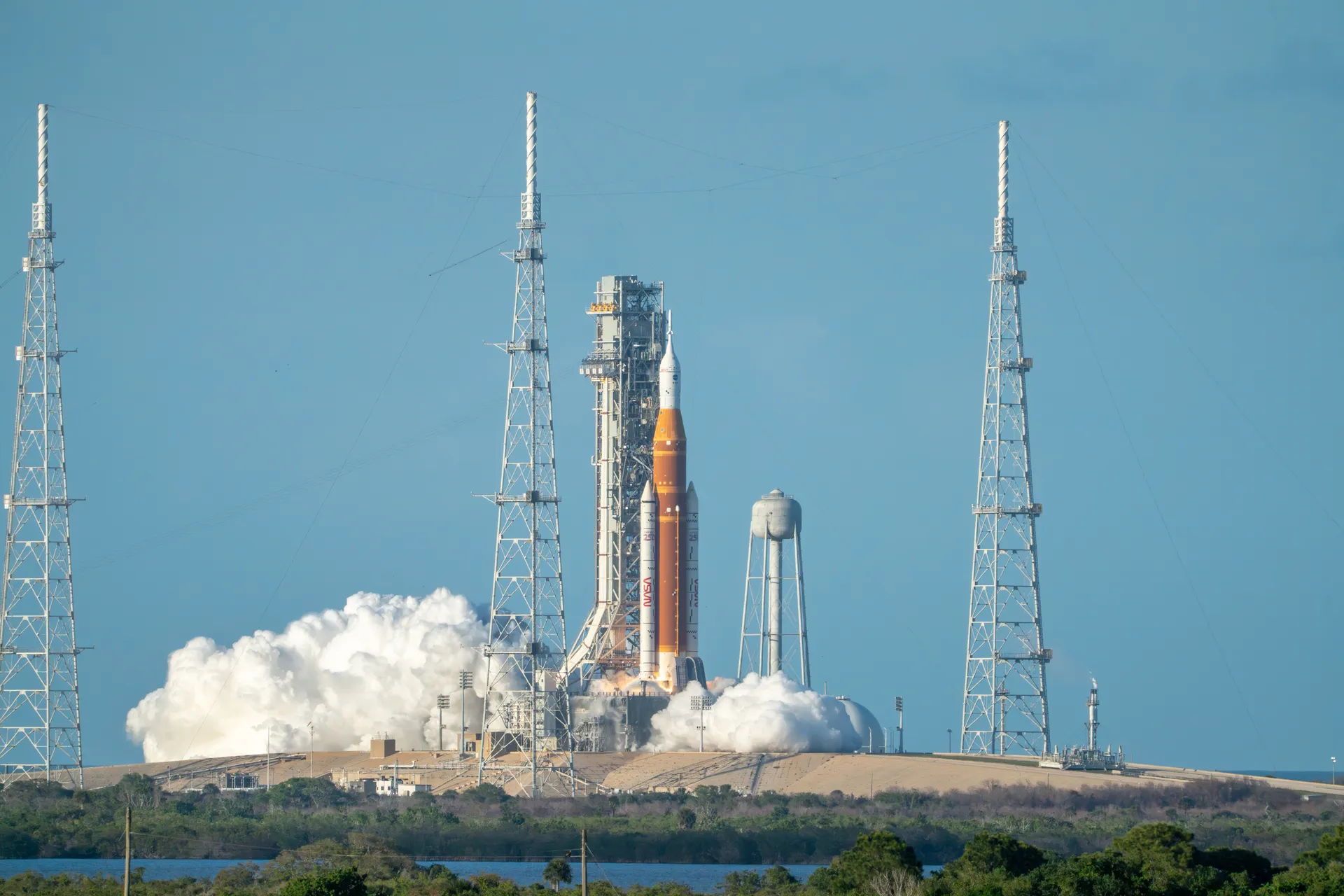
The second SLS had its own delays. In February 2026 NASA rolled the Artemis II rocket back from the pad to the Vehicle Assembly Building to troubleshoot the flow of helium to its upper stage, then launched it on April 1.8,9 GAO counted the cost of the seven-month slip from September 2025 to April 2026 in the Orion program alone at $261 million.6
February 2026: no Exploration Upper Stage, no Block 1B
SLS was meant to grow. The Block 1B version would replace the interim upper stage with Boeing’s more powerful Exploration Upper Stage, raising the mass SLS could send toward the Moon from 27 metric tons to 38; a Block 2 would add new boosters. Block 1B had been in development since 2014. It was first meant for Artemis II, then moved to Artemis IV. In 2024 the inspector general reported that Boeing’s upper stage contract had grown from $962 million to more than $2 billion, and that the Defense Contract Management Agency had issued Boeing 71 corrective action requests over quality at Michoud in two years, a number it called high for a spaceflight system at that stage.5
On February 27, 2026, NASA announced it would standardize the rocket instead. “After successful completion of the Artemis I flight test, the upcoming Artemis II flight test, and the new, more robust test approach to Artemis III, it is needlessly complicated to alter the configuration of the SLS and Orion stack to undertake subsequent Artemis missions,” said Associate Administrator Amit Kshatriya.8 NASA issued stop-work orders to Boeing and Leidos Dynetics that month, and in May 2026 it canceled the Block 1B project and terminated the Boeing contract work on the Exploration Upper Stage. No complete flight upper stage had been built. The project’s baselined life-cycle cost had been about $4.9 billion, and it was already projecting a $229.4 million overrun. Mobile Launcher 2, the taller launch tower built for Block 1B, was paused.6
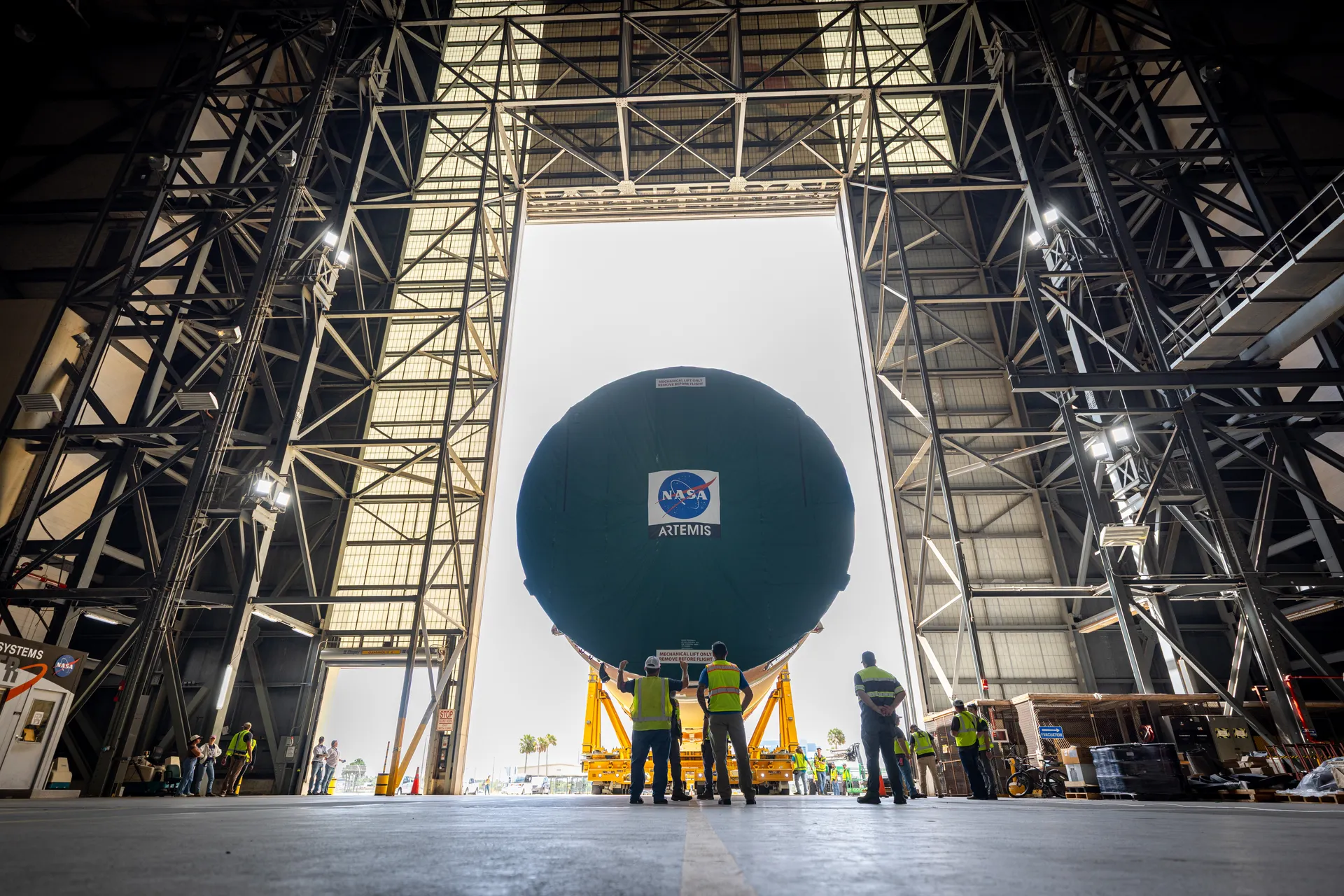
GAO set out what replaces it. Artemis III, now a test of Orion docking with commercial landers in Earth orbit in 2027, will fly with a dummy upper stage; most of its core stage reached the Vehicle Assembly Building in April 2026.6,10 Artemis IV, the first landing, will use the last remaining interim upper stage; United Launch Alliance has retired that production line. From Artemis V, planned for 2028, SLS will carry a Centaur V upper stage, bought from ULA under a sole-source contract approach NASA approved in March 2026. Kennedy’s ground systems team must modify the first mobile launcher for the Centaur, and Orion its interfaces to sit on it.6
NASA needed almost three and a half years between Artemis I and Artemis II. It now wants to launch SLS about once a year.6
The 2010 law asked for a rocket that could grow to lift 130 tons or more. NASA has now decided to keep flying the first version it built, Block 1, with the upper stage of a commercial rocket on top.1,6
Sources
The text above is drawn from these 10 sources. Government works are adapted closely; company and press material is summarized. Numbers in the text point here. Last checked October 1, 2026.
Show all 10 sourcesShow fewer
Continue
Related stories
- OrionLockheed Martin builds the capsule, Europe builds the module that keeps it alive, and its heat shield must survive a return at nearly 25,000 mph. How Orion was developed, how it works, and what its first crewed flight showed.
- The Artemis planA rocket, a capsule, two commercial landers, new suits and propellant refilled in orbit: who builds each piece, what it costs, and how a 2024 landing became Artemis IV in 2028.
- Artemis IIFrom April 1 to 10, 2026, four astronauts flew Orion around the far side of the Moon and farther from Earth than anyone before them. What the flight tested, day by day, and what NASA found afterward.