The Space Race: how two missile programs became a contest for the Moon
From the V-2 engineers both powers took home in 1945 to the Apollo–Soyuz handshake in 1975: the ICBMs behind the first satellites, the decisions in Moscow and Washington, what American intelligence saw, and how the race wound down.
Drawn from 33 sources: NASA (18), NASA History Office (7), U.S. Department of State, Office of the Historian (2), Central Intelligence Agency, CIA Museum and 5 others. About 12 minutes. Checked November 9, 2026.
The Space Race is usually told from one side at a time. Seen from Washington, it began with a shock in October 1957 and ended in triumph in July 1969. Seen from Moscow, it began with a missile, produced a decade of first achievements, and ended with a lunar program that the Soviet government did not publicly acknowledge for twenty years. Both versions are true, and neither makes full sense without the other. The two programs grew from the same captured German rockets, were paced by the same weapon—the intercontinental ballistic missile—and were watched, each by the other, through announcements, newspapers and, on the American side, reconnaissance satellites.1,5,19
This story follows the contest itself, from 1945 to the joint Apollo–Soyuz flight of 1975: what each side did in answer to the other, and what each could see. The Soviet program from the inside is told in The Soviet space program; the American programs in How Sputnik turned an aeronautics committee into NASA, Mercury and Gemini and Apollo.
Both powers took home Germany’s rocket program, 1945–1946
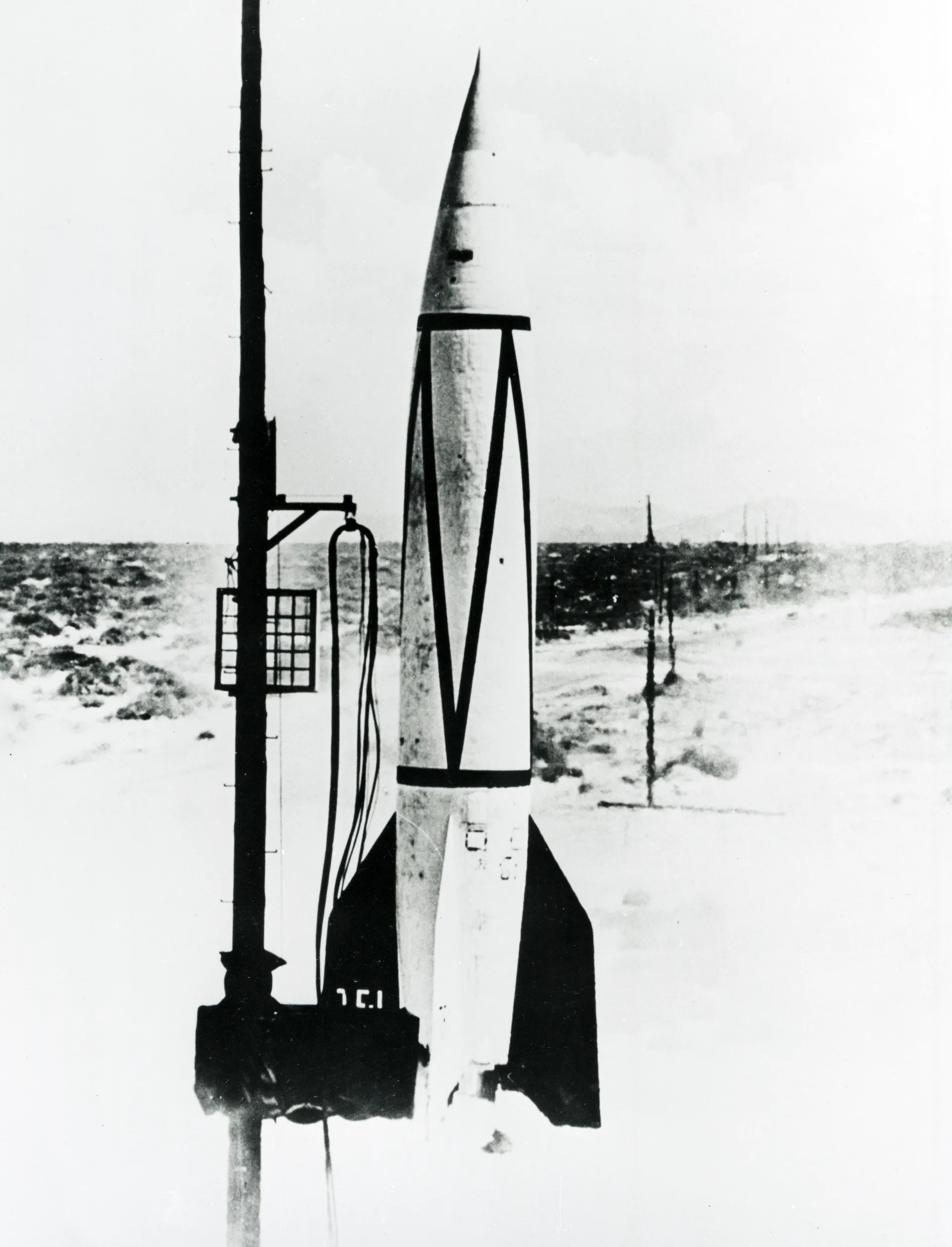
Nazi Germany had come close to developing the first intercontinental ballistic missile by the end of the Second World War, and German scientists afterward aided rocket research in both the United States and the Soviet Union.5 The V-2, built by Wernher von Braun’s team at a secret laboratory at Peenemünde on the Baltic coast, was 46 feet long, weighed 29,000 pounds and could deliver a 2,200-pound warhead about 200 miles. It was first launched successfully in October 1942 and was fired against London and other Western European targets from September 1944.6
Von Braun surrendered to the Americans in the Austrian Alps with other leaders of his team. Under Project Paperclip, he and an initial group of about 125 were installed at Fort Bliss, Texas, where they worked on Army rockets and helped launch V-2s at nearby White Sands Proving Ground in New Mexico.6 From April 1946 to October 1951, 66 V-2s were fired there.7
The Soviet Union organized its own effort around the same rocket. In 1945 Soviet teams searched Germany for the remains of the missile, which the Germans called the A-4.4 A decree of the USSR Council of Ministers on May 13, 1946, made reproducing the V-2 a top priority and called for German design bureaus and specialists to be transferred to the Soviet Union by the end of the year. Three days later a new institute, NII-88, was organized near Podlipki station outside Moscow, and on August 9, 1946, Sergei Korolev was named chief designer of its long-range ballistic missile.8
The ICBM, not the satellite, set the pace
Both governments wanted rockets that could carry a nuclear warhead across an ocean, and both satellite programs rode on that ambition. On May 20, 1954, the Soviet government assigned Korolev’s bureau the development of the R-7 intercontinental ballistic missile. Six days later Korolev forwarded to the government a report by his longtime colleague Mikhail Tikhonravov on an artificial Earth satellite, closing his cover letter with the words “We await your decision.” The government approved only preliminary research. The satellite itself was approved in 1955 and 1956, and as an Academy of Sciences project it was not a top priority beside the missile.4
In the United States, the Strategic Missiles Evaluation Committee, chaired by the mathematician John von Neumann and known as the Teapot Committee, urged in February 1954 that the Air Force give its highest priority to long-range ballistic missiles. The Air Force set up a Western Development Division to build one, with Brigadier General Bernard A. Schriever as its first commander. Convair designed and built the Atlas, a liquid-fueled missile in a stage-and-a-half configuration.7
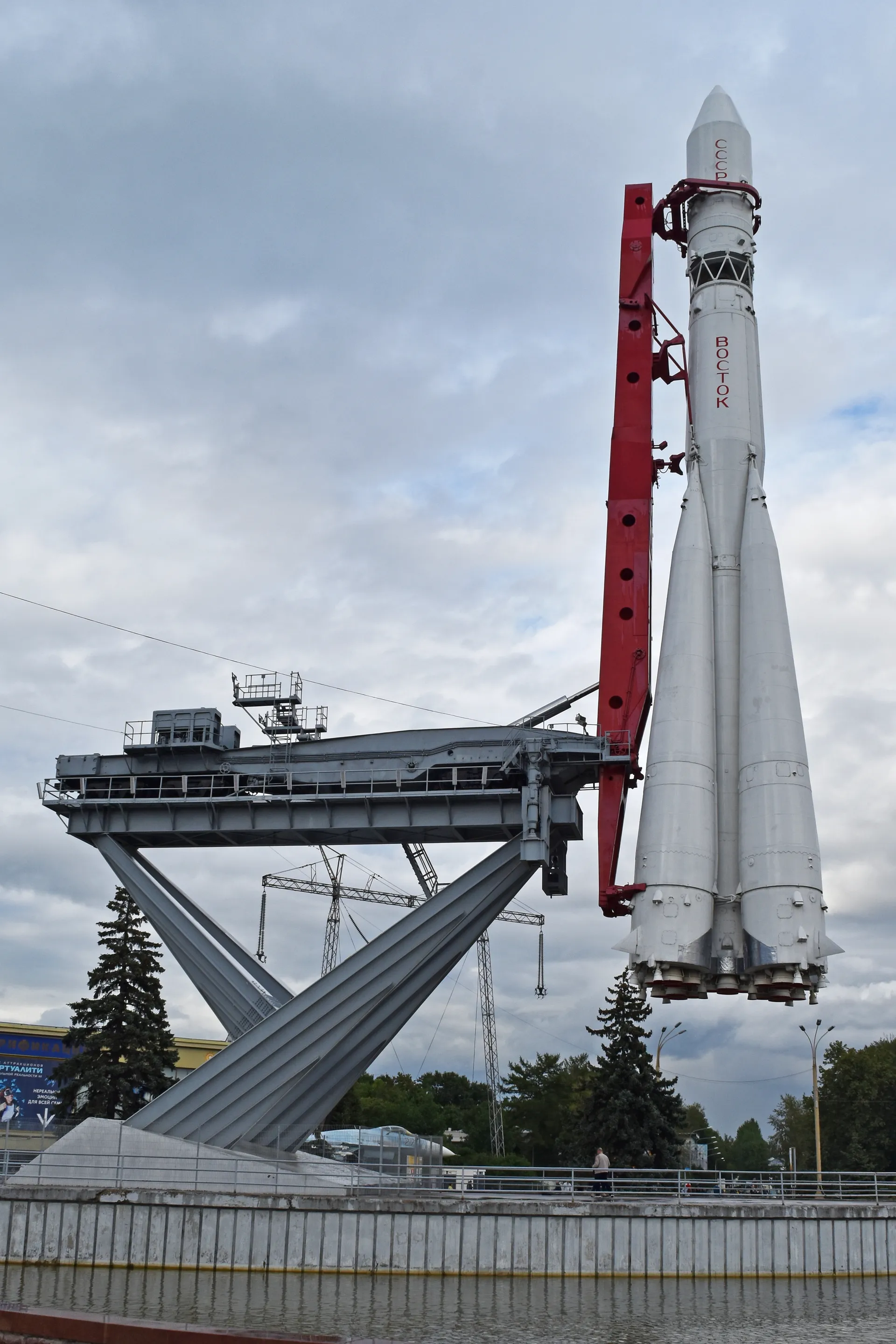
The Soviet missile flew first. Of the first three R-7 attempts, in May, June and July 1957, two failed in flight and one was aborted on the pad,8 and in July Korolev wrote that “things are very, very bad.” The fourth, on August 21, 1957, succeeded, flying about 6,500 kilometers to Kamchatka. Six days later the Soviet news agency TASS announced a successful intercontinental multistage ballistic missile; little attention was paid to it in the United States.4 The first successful Atlas, on December 17, 1957, was a short-range test flight of 500 miles.7
Two satellite announcements in the summer of 1955
The occasion for a satellite was scientific. The International Geophysical Year, a multinational study of Earth and its environment, was set to run from July 1957 to December 1958, and in October 1954 its organizing committee called for satellite launches.1,4 The Eisenhower administration had another reason as well. On February 14, 1955, the Technological Capabilities Panel proposed launching a science satellite to establish the principle of “freedom of space”—the right of a satellite to pass over any country—on which future reconnaissance satellites would depend. Eisenhower approved a U.S. satellite plan for the Geophysical Year on May 27, 1955.2
On July 29, 1955, White House press secretary James Hagerty announced that the United States would launch “small Earth-circling satellites” during the Geophysical Year. Four days later, at an astronautical congress in Copenhagen, the Soviet academician Leonid Sedov held a press conference for about 50 journalists at the Soviet embassy and made his own announcement.4
In my opinion, it will be possible to launch an artificial Earth satellite within the next two years.
The two countries then approached their pledges very differently. The United States chose Project Vanguard, a Naval Research Laboratory program presented as a scientific contribution to the Geophysical Year and run in public.1 The Soviet Union worked in secret. When its large scientific satellite, “Object D,” fell behind, Korolev asked in January 1957 for two small, simple satellites instead, citing American progress. The first of them was designated PS-1.4
Sputnik: a modest Soviet communiqué and a large American reaction
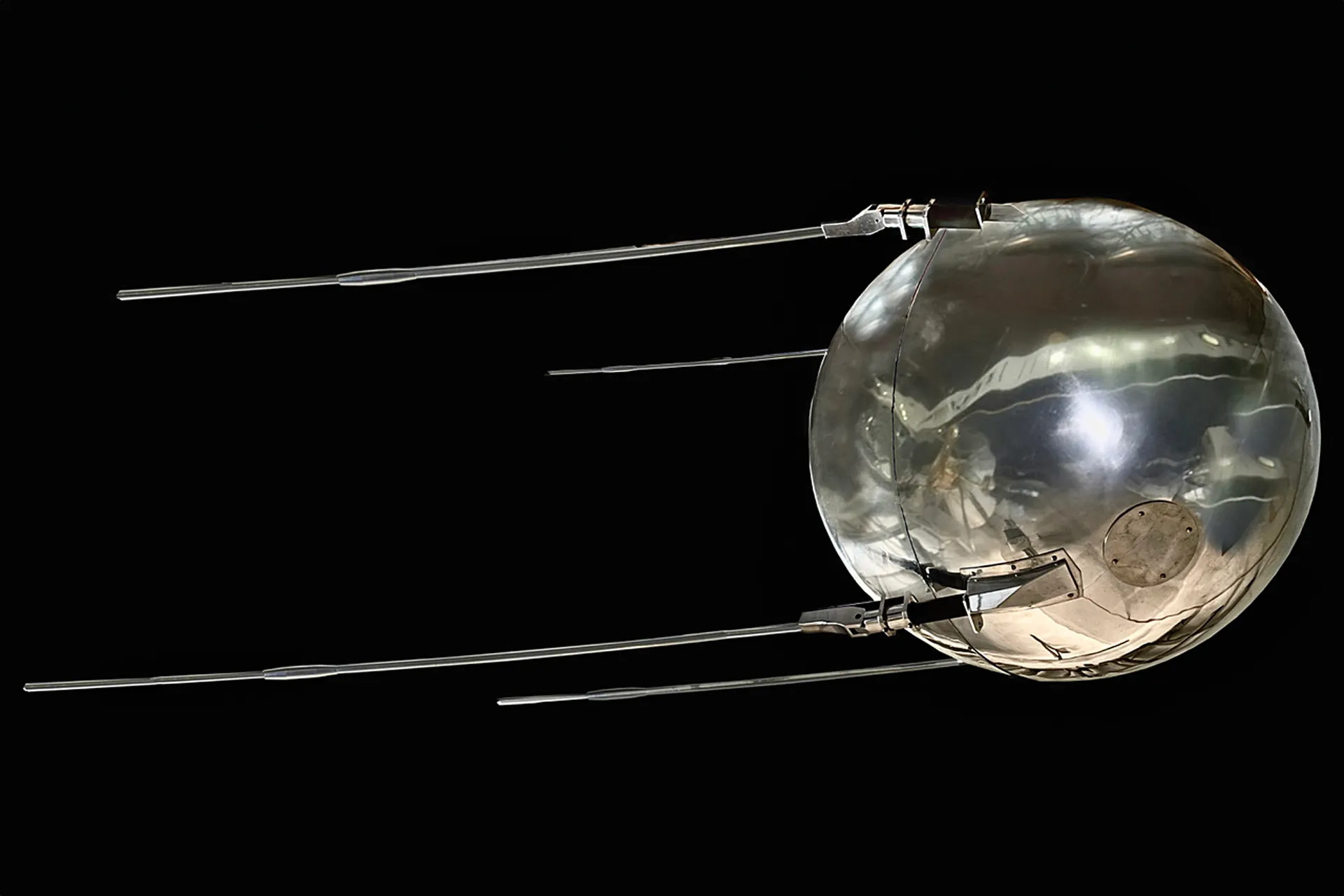
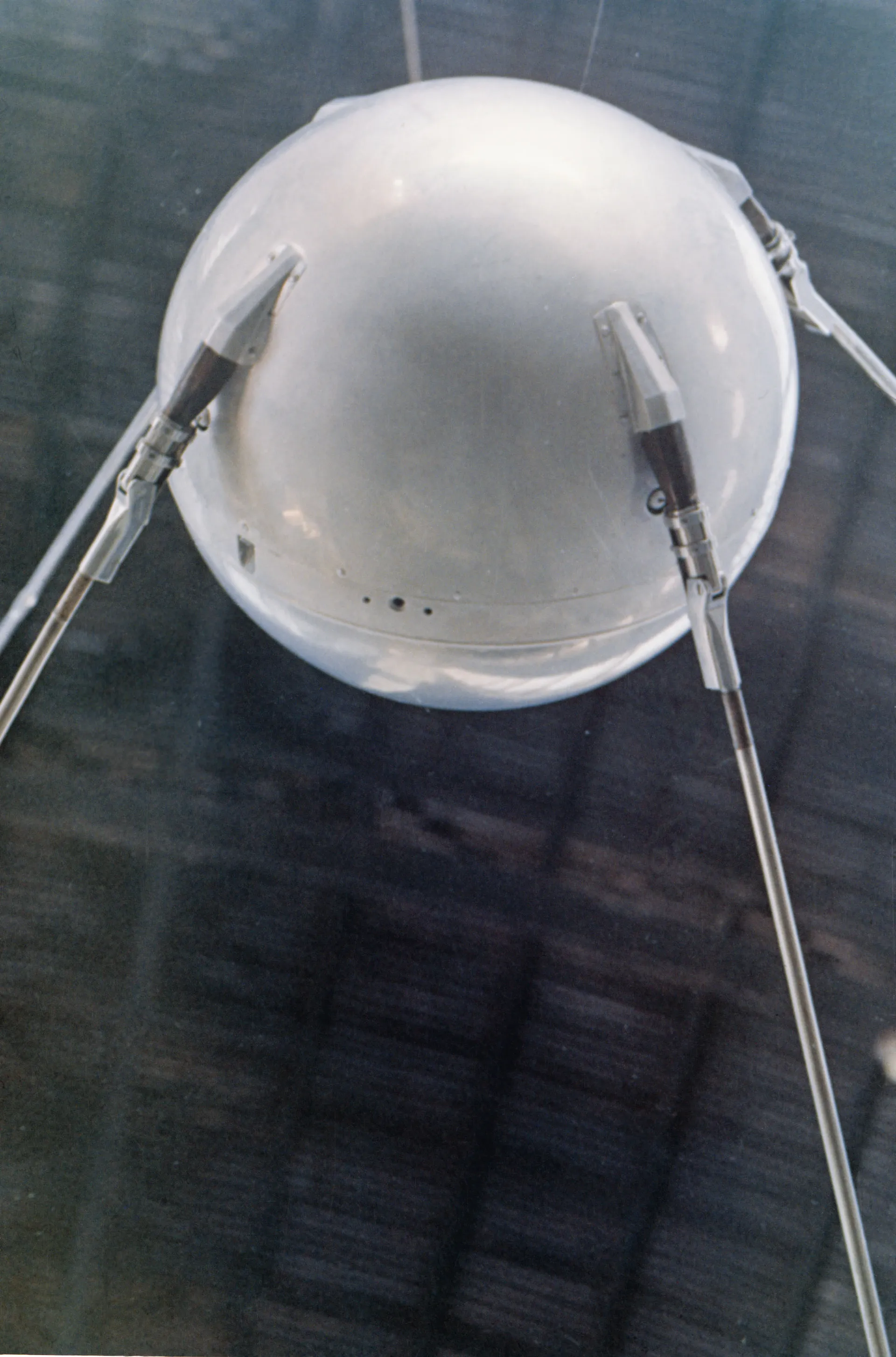
PS-1 was a pressurized aluminum-alloy sphere 58 centimeters across, carrying two radio transmitters that produced its “beep-beep” signal. Korolev moved the launch forward two days, to October 4, 1957, out of concern about a possible American launch tied to a conference in Washington, and the R-7 lifted it from Tyura-Tam into orbit that night.4
In Moscow the launch was at first treated quietly, as The Soviet space program describes. In the United States it had a “Pearl Harbor” effect on public opinion.1 The Eisenhower administration saw Sputnik less as a military threat than as support for the principle of freedom of space; the President publicly played it down, remarking that the Soviets had “put one small ball in the air,” and was widely seen as out of touch.3 How that reaction produced a civilian space agency within a year is the subject of How Sputnik turned an aeronautics committee into NASA.
The fear behind the reaction was about missiles. The U.S. learned that the Soviets had tested their first ICBM in 1957, and Khrushchev claimed Soviet superiority and growing missile stockpiles. In the 1960 election, campaigners used fears of a “missile gap” between the two arsenals, which helped bring John F. Kennedy to power.5
Intelligence soon answered the question that Sputnik had raised. Eisenhower formally endorsed Corona, America’s first imaging reconnaissance satellite program, in February 1958.10 The first 13 missions failed to return usable pictures; the first successful one, launched on August 18, 1960, returned more photographic coverage of the Soviet Union than all previous U-2 missions combined. Within a few months, CIA photo interpreters had dispelled both the missile gap and the bomber gap.9 Sputnik had also set the precedent Eisenhower wanted: in the words of his deputy secretary of defense, Donald Quarles, the Russians had “done us a good turn, unintentionally, in establishing the concept of freedom of international space.”3
A race of firsts, 1961–1966
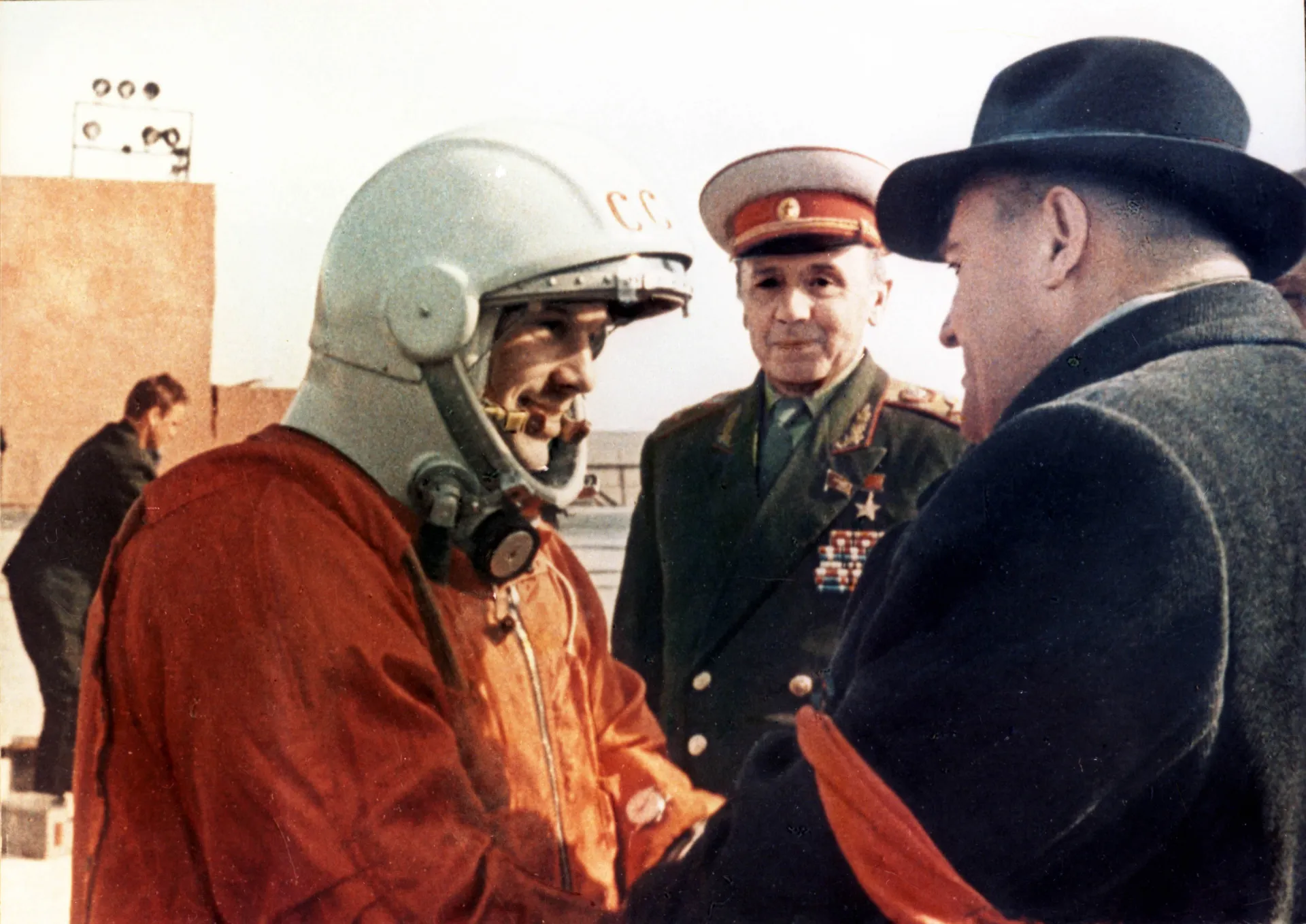
Yuri Gagarin became the first human in space on April 12, 1961, with a single orbit of Earth, and the Soviet Union treated him as a national hero.11,12,32 Alan Shepard’s suborbital flight followed on May 5.15 By then Kennedy had already asked what the United States could do in answer.
On April 20, 1961, eight days after Gagarin’s flight, Kennedy put the question to Vice President Lyndon Johnson in a one-page memorandum. Its first question read, “Do we have a chance of beating the Soviets by putting a laboratory in space, or by a trip around the moon, or by a rocket to land on the moon, or by a rocket to go to the moon and back with a man. Is there any other space program which promises dramatic results in which we could win?”16
Johnson replied on April 28. The Soviets, he wrote, “are ahead of the United States in world prestige,” and “dramatic accomplishments in space are being increasingly identified as a major indicator of world leadership.” Neither country could yet send a crew around the Moon or land one there. The Soviets “might be conceded a time advantage in circumnavigation of the moon and also in a manned trip to the moon. However, with a strong effort, the United States could conceivably be first in those two accomplishments by 1966 or 1967.”16
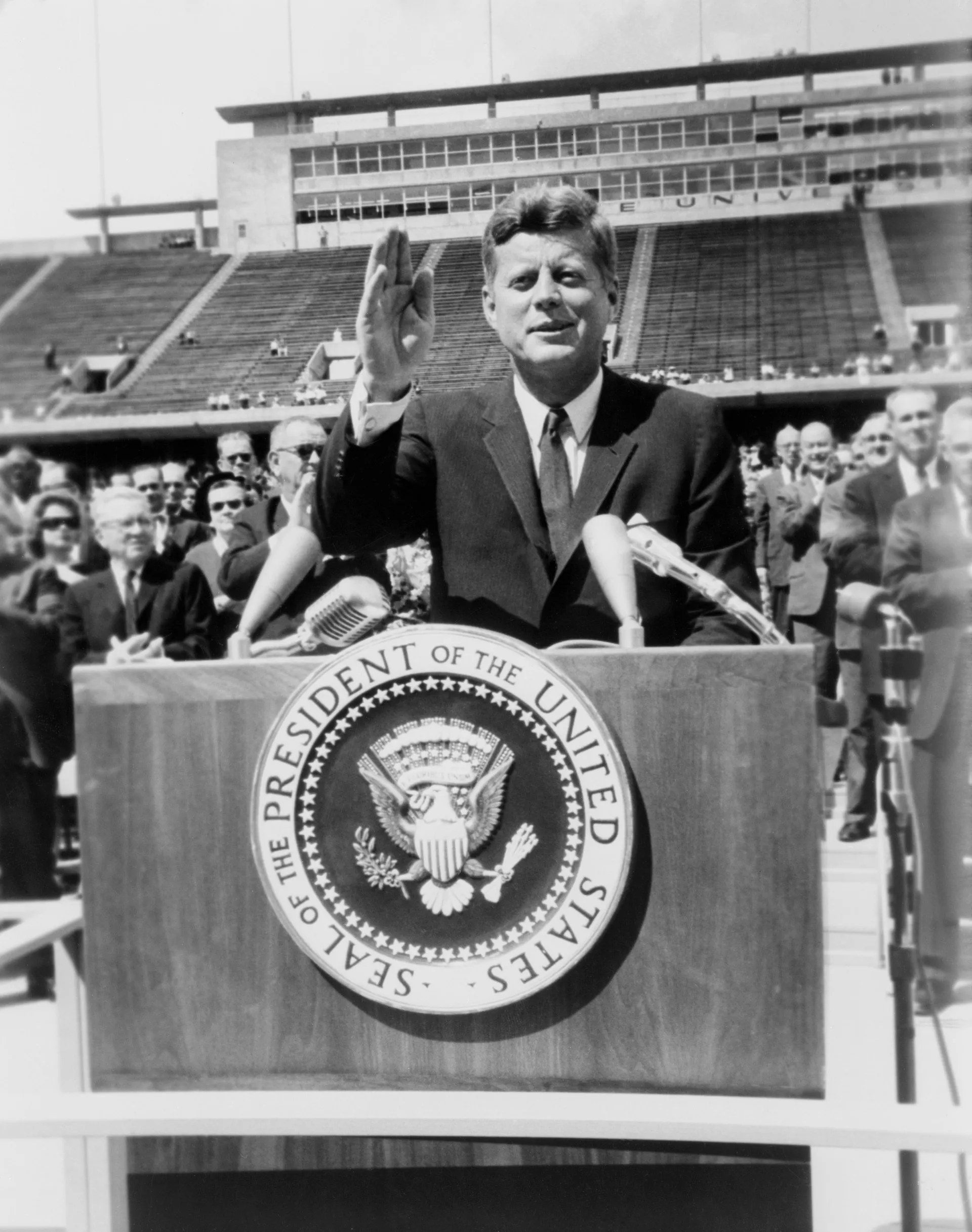
Kennedy gave his answer to Congress on May 25, 1961: a Moon landing before the end of the decade. Many historians now read that speech with the Cold War as its main context.15
The Soviet Union kept its lead in firsts for several more years. Valentina Tereshkova became the first woman in space in June 1963,31 and after Alexei Leonov made the first spacewalk in March 1965, NASA’s own history of Gemini IV says, “the Russians passed the Americans again.”13 Gemini changed the balance. Its ten two-person flights in 1965 and 1966 demonstrated rendezvous and docking in space—the techniques Apollo would need at the Moon.14 Counted by flights, the two sides ran close across the whole race: from 1961 to 1975 the Soviet Union launched 26 crewed orbital flights and the United States 29.33
What American intelligence could and could not see
From 1961 the question in Washington was whether the Soviet Union was actually racing to the Moon, and the answer kept changing. A CIA memorandum to Director John McCone on September 25, 1963, recalled that a December 1962 estimate had given a “better than even chance that the Soviets had a competitive manned lunar landing” program. Now, the memorandum said, “we still can find no firm evidence of the existence of such a program,” and the chances that it existed were “something less than even.” It described the Soviet crewed program as “a conservative, well planned effort,” whose emphasis on long flights suggested a space station more than a crash lunar landing.17
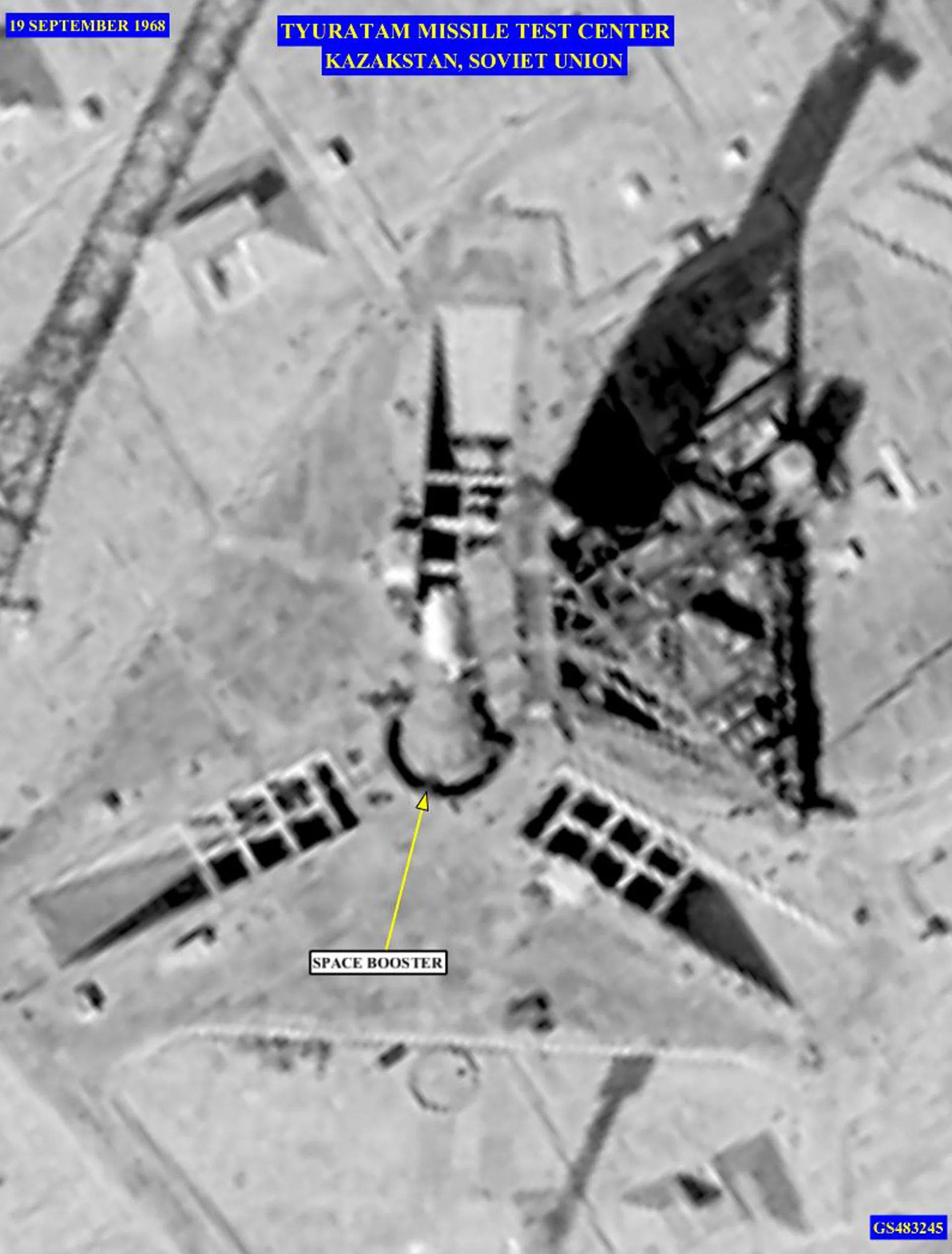
The estimate was overtaken by events in Moscow. The Soviet program to land a human on the Moon received formal government approval in 1964, built around the N1, a rocket comparable in size to the Saturn V.19 Korolev, its chief designer, died on January 14, 1966.26 On November 25, 1967, less than three weeks after the first Saturn V flew, the Soviets rolled a mockup N1 out to a new launch pad at Baikonur. An American reconnaissance satellite photographed it on the pad. NASA Administrator James Webb had access to this and similar intelligence showing that the Soviets were seriously planning crewed lunar missions, and it influenced several American decisions in the following months. What the photographs could not show was that this rocket was a mockup, or that the Soviets were many months behind.19
By June 19, 1969, a month before Apollo 11, the National Intelligence Estimate on the Soviet space program stated: “We continue to believe that the Soviets will undertake a manned lunar landing.” It judged that a landing was “not likely to occur before 1972 although late 1971 cannot be ruled out.” The estimate said the giant rocket, seen erected on its pad several times since December 1967, “has not been flown,” although the first N1 had in fact been launched, and had failed, on February 21, 1969.18,26 The Soviets had also had chronic trouble with the Proton launcher, which the estimate called the SL-12: three of six circumlunar launch attempts had ended in second-stage failures.18
- $4.5B
- U.S. intelligence estimate of Soviet space spending in 1965, in equivalent U.S. program costs18
- $6.4B
- the same estimate for 1968, the year before Apollo 1118
The same estimate weighed motives. The Soviets, it said, “undoubtedly wished to maximize their image as a leader in space and their prestige as a world power,” and “the prestige of being the first nation to accomplish various space missions continues to be important to the USSR.”18
Apollo won a race Moscow kept secret
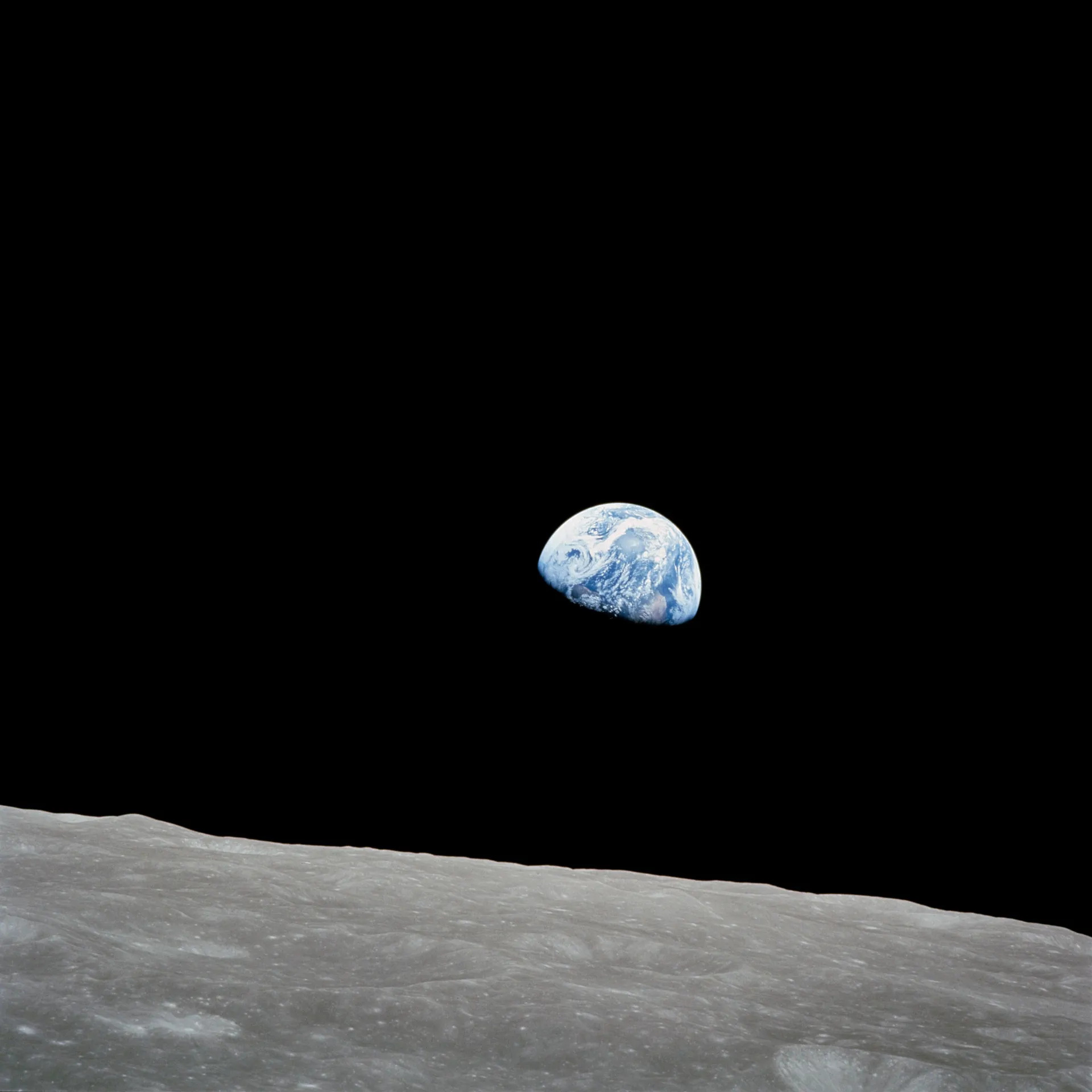
Earth rising above the lunar horizon, photographed from Apollo 8 on December 24, 1968.
In August 1968, with the lunar module running late, NASA began planning to send the second crewed Apollo flight around the Moon instead of keeping it in Earth orbit; the decision is told in Apollo.20 The Soviet circumlunar spacecraft, Zond, kept the pressure on, and on November 12 NASA announced that Apollo 8 would be prepared for a flight into lunar orbit.21
On Christmas Eve 1968, Frank Borman, Jim Lovell and Bill Anders of Apollo 8 became the first humans to orbit the Moon.22 The N1’s second launch, on July 3, 1969, fell back onto its pad, and the damage was readily apparent on American surveillance satellite imagery; the Soviet side of the Zond and N1 flights is told in The Soviet space program.23 On July 13, the Soviets launched Luna 15, a robotic spacecraft; NASA’s concern that it might interfere with Apollo 11 eased after Frank Borman contacted the Soviet academician Mstislav Keldysh, who provided its planned trajectory.23
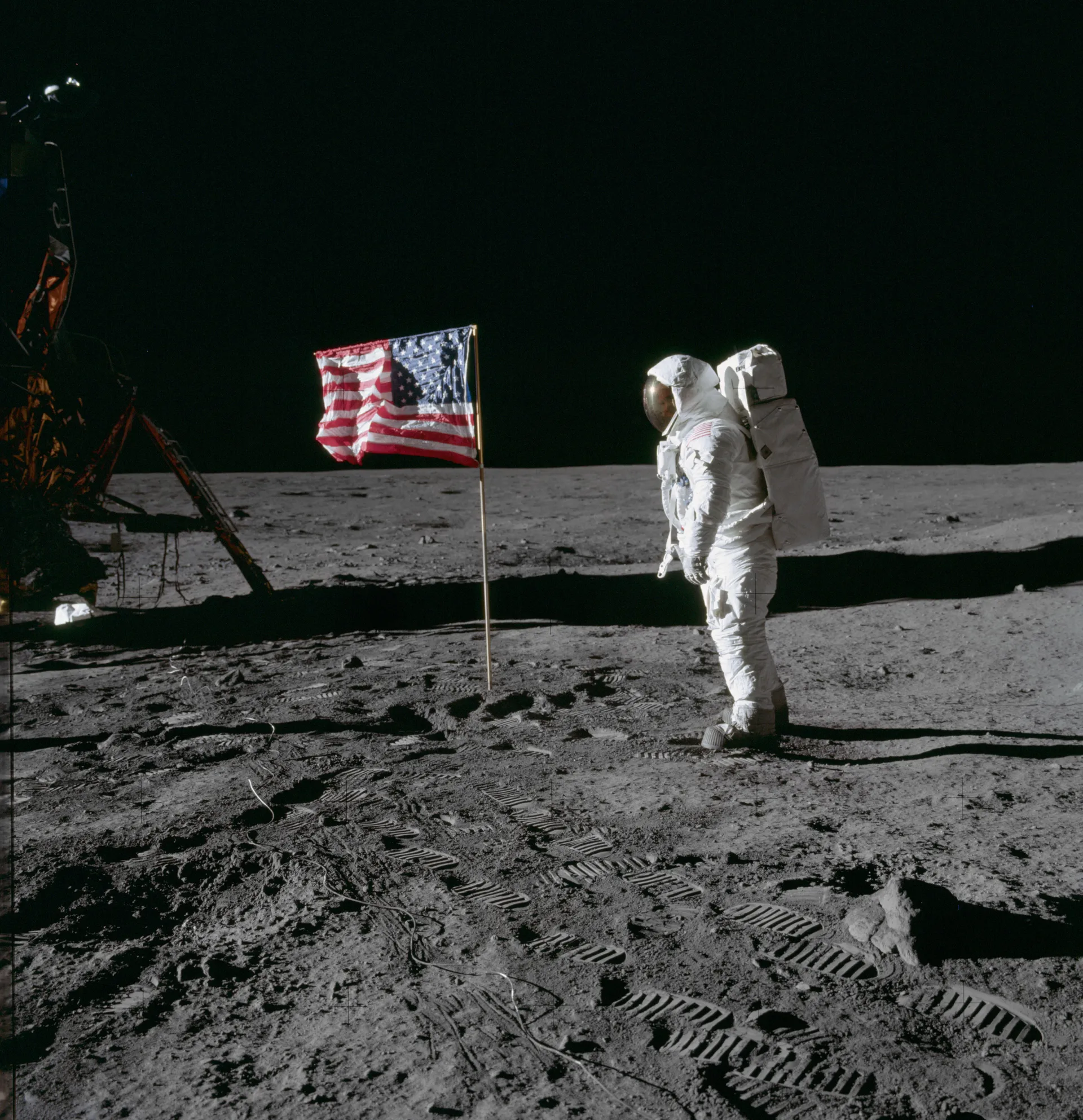
Neil Armstrong and Buzz Aldrin landed on the Moon on July 20, 1969.24 On July 21, after 52 lunar orbits, Luna 15 began its own descent; its transmissions stopped early, and it is estimated to have crashed.23
The N1 failed twice more, in 1971 and 1972, and the lunar landing program was suspended in 1974.25,26 The Soviet public learned of it only under glasnost: the first admissions appeared in July 1989, and on August 18, 1989, the government newspaper Izvestia published a major article on the N1 program.25,26
From a rejected joint Moon flight to Apollo–Soyuz
Cooperation had been proposed throughout the race and had always lost to competition. After John Glenn’s orbital flight in February 1962, Kennedy and Khrushchev exchanged letters about working together, and in March 1962 NASA Deputy Administrator Hugh Dryden and the Soviet academician Anatoli Blagonravov opened a series of talks.27,28 That June they agreed on three joint projects: weather satellites, mapping Earth’s magnetic field and communications experiments with an Echo satellite.27 On September 20, 1963, Kennedy went further before the United Nations General Assembly.
Why, therefore, should man’s first flight to the moon be a matter of national competition?
Moscow’s press largely ignored the proposal, and the Soviet government made no official comment. In Washington, NASA officials’ reactions were mixed, most Americans wanted the United States to reach the Moon first, and in December 1963 Congress barred NASA from spending money on a joint lunar landing without its consent.27 Competition to land on the Moon prevailed for the rest of the 1960s.28
The opening came after Apollo 11. In October 1970 Robert Gilruth led the first official NASA delegation to tour the Gagarin Cosmonaut Training Center in Star City. In January 1971 Acting NASA Administrator George Low met Keldysh in Moscow and proposed a common docking system and a joint mission within five years. On May 24, 1972, at their summit in Moscow, President Richard Nixon and Premier Aleksei Kosygin signed the Agreement Concerning Cooperation in the Exploration and Use of Outer Space for Peaceful Purposes, which called for a joint system to let American and Soviet spacecraft dock with each other in orbit.28
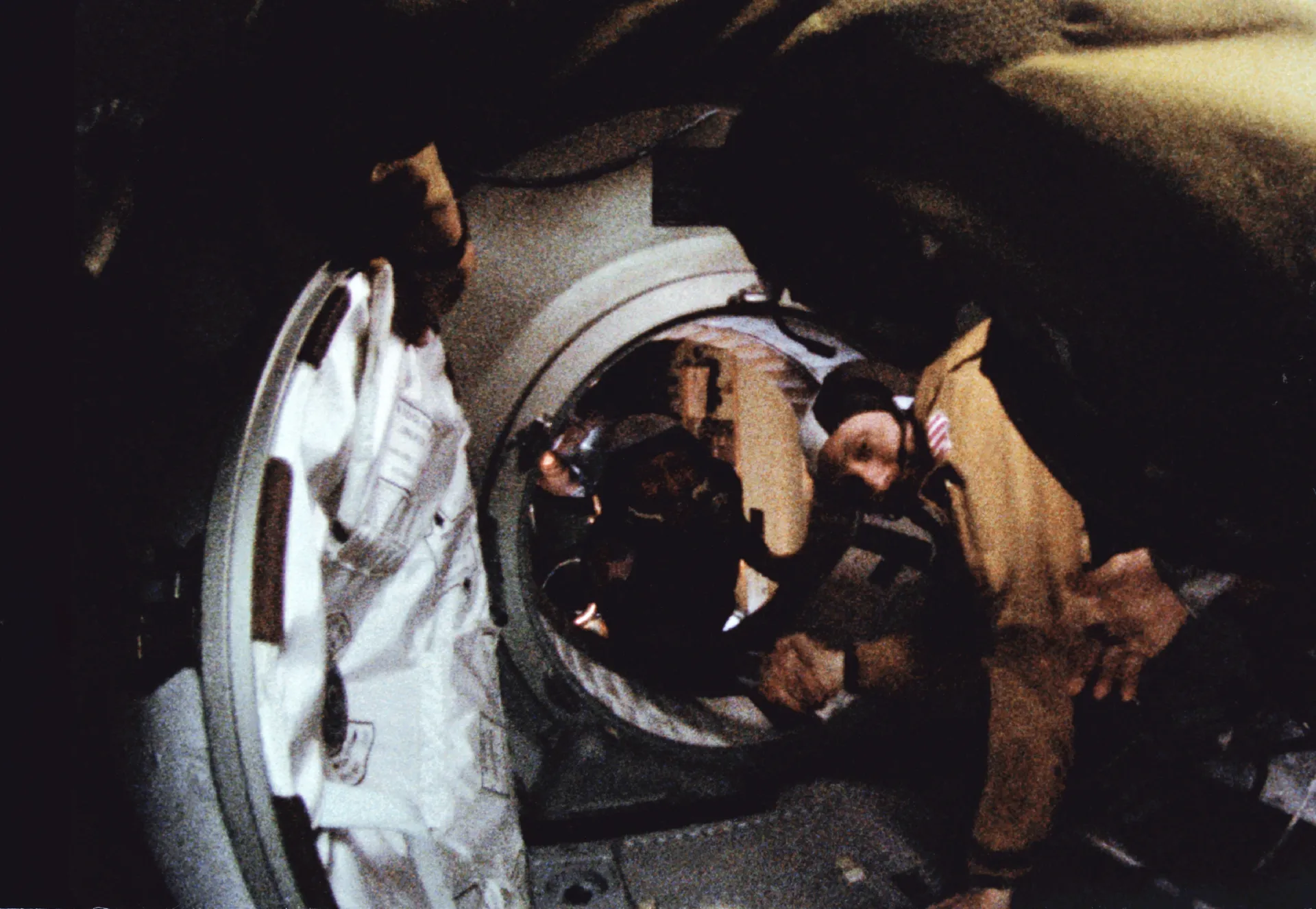
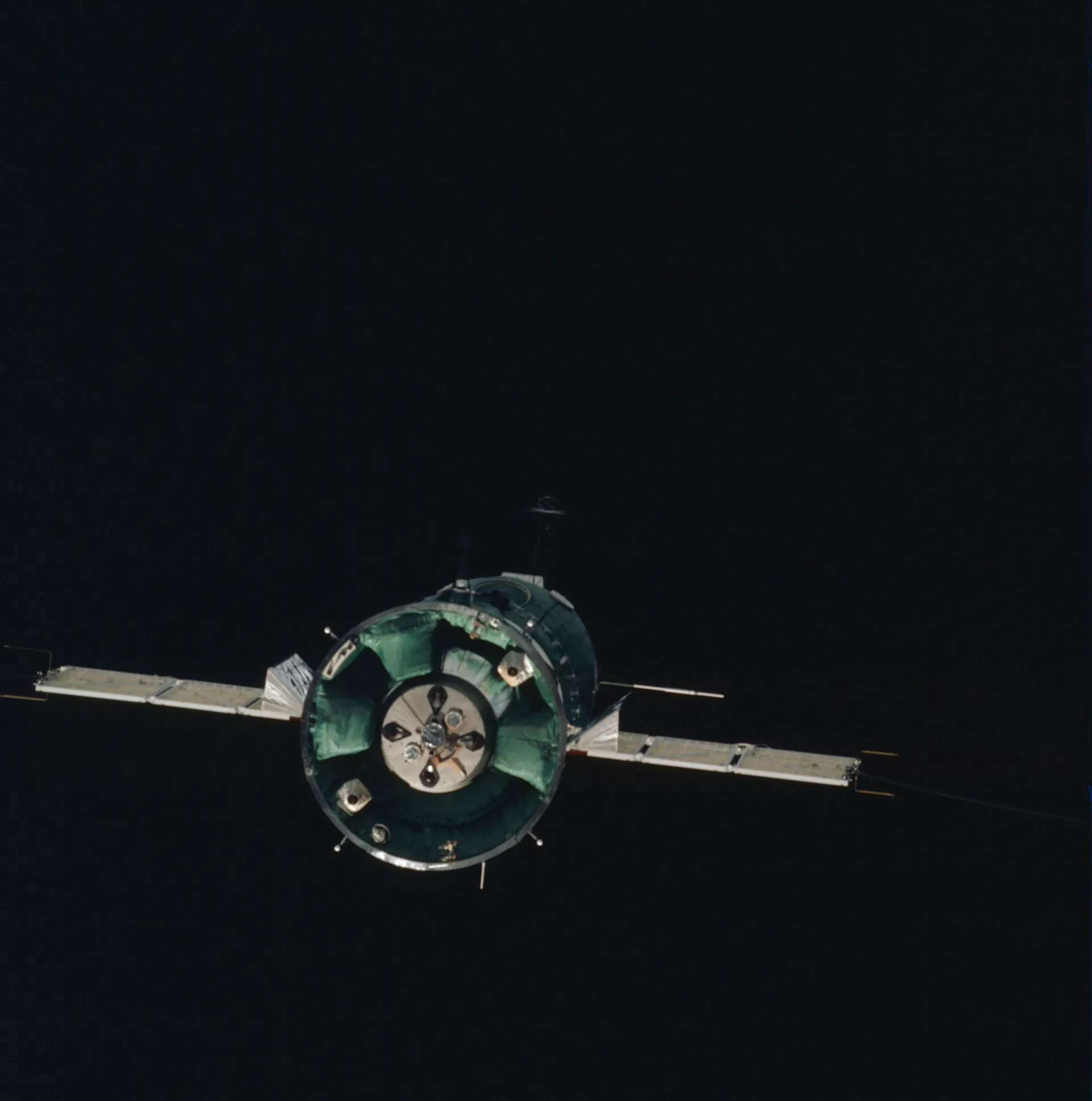
The Soyuz carrying Alexei Leonov and Valeri Kubasov lifted off from Baikonur on July 15, 1975, and the Apollo carrying Thomas Stafford, Vance Brand and Donald “Deke” Slayton followed on a Saturn IB the same day. NASA built a docking module that served as an airlock and transfer corridor between the two craft.29,30 They docked on July 17. Stafford and Leonov met at the hatch and shook hands, and for nearly two days the crews visited each other’s spacecraft, shared meals, held press conferences and ran joint experiments, including an artificial solar eclipse made by Apollo so that the cosmonauts could photograph the Sun’s corona. Leonov controlled the final undocking on July 19.29,30
The mission tested the compatibility of the two countries’ rendezvous and docking systems and the possibility of an international rescue in space.30 It was the first international human spaceflight,14 and the technology, procedures and working relationships it produced carried over two decades later into Shuttle–Mir and the International Space Station.29
Sources
The text above is drawn from these 33 sources. Government works are adapted closely; company and press material is summarized. Numbers in the text point here. Last checked November 9, 2026.
Show all 33 sourcesShow fewer
- 1Back to the text
- 2Back to the text
- 3Back to the text
- 4Back to the text
- 5Back to the text
- 6Back to the text
- 7Back to the text
- 8Back to the text
- 9Back to the text
- 10Back to the text
- 11Back to the text
- 12Back to the text
- 13Back to the text
- 14Back to the text
- 15Back to the text
- 16Back to the text
- 17Back to the text
- 18Back to the text
- 19Back to the text
- 20Back to the text
- 21Back to the text
- 22Back to the text
- 23Back to the text
- 24Back to the text
- 25Back to the text
- 26Back to the text
- 27Back to the text
- 28Back to the text
- 29Back to the text
- 30Back to the text
- 31Back to the text
- 32Back to the text
- 33Back to the text
Continue
Related stories
- The birth of NASAIn the year after Sputnik, Congress and President Eisenhower built a civilian space agency on the NACA’s laboratories, then gave it a Navy satellite, an Army rocket team and, by 1961, the Moon.
- Mercury & GeminiMercury’s six flights showed a person could ride to orbit and come home.
- ApolloKennedy’s 1961 goal became a program of 400,000 people and more than 500 contractors.