Two new heavy rockets share one engine, and both were grounded in 2026
Blue Origin’s BE-4 powers its own New Glenn and United Launch Alliance’s Vulcan. Both entered service in 2024–2025; by mid-2026 neither could fly, for different reasons.
NASA/Isaac Watson
Drawn from 20 sources: NASA (6), Spaceflight Now (6), SpaceNews (2), United Launch Alliance and 5 others. About 6 minutes. Checked October 1, 2026.
On October 1, 2026, the two newest heavy rockets in the United States had not flown for months. United Launch Alliance’s Vulcan last launched on February 12. Blue Origin’s New Glenn last launched on April 19, and on the evening of May 28 a New Glenn exploded on its pad during an engine test.3,11 The two rockets belong to competing companies, but they share a supplier: the first stage of each is powered by Blue Origin’s BE-4 engine, two on Vulcan and seven on New Glenn.1,12
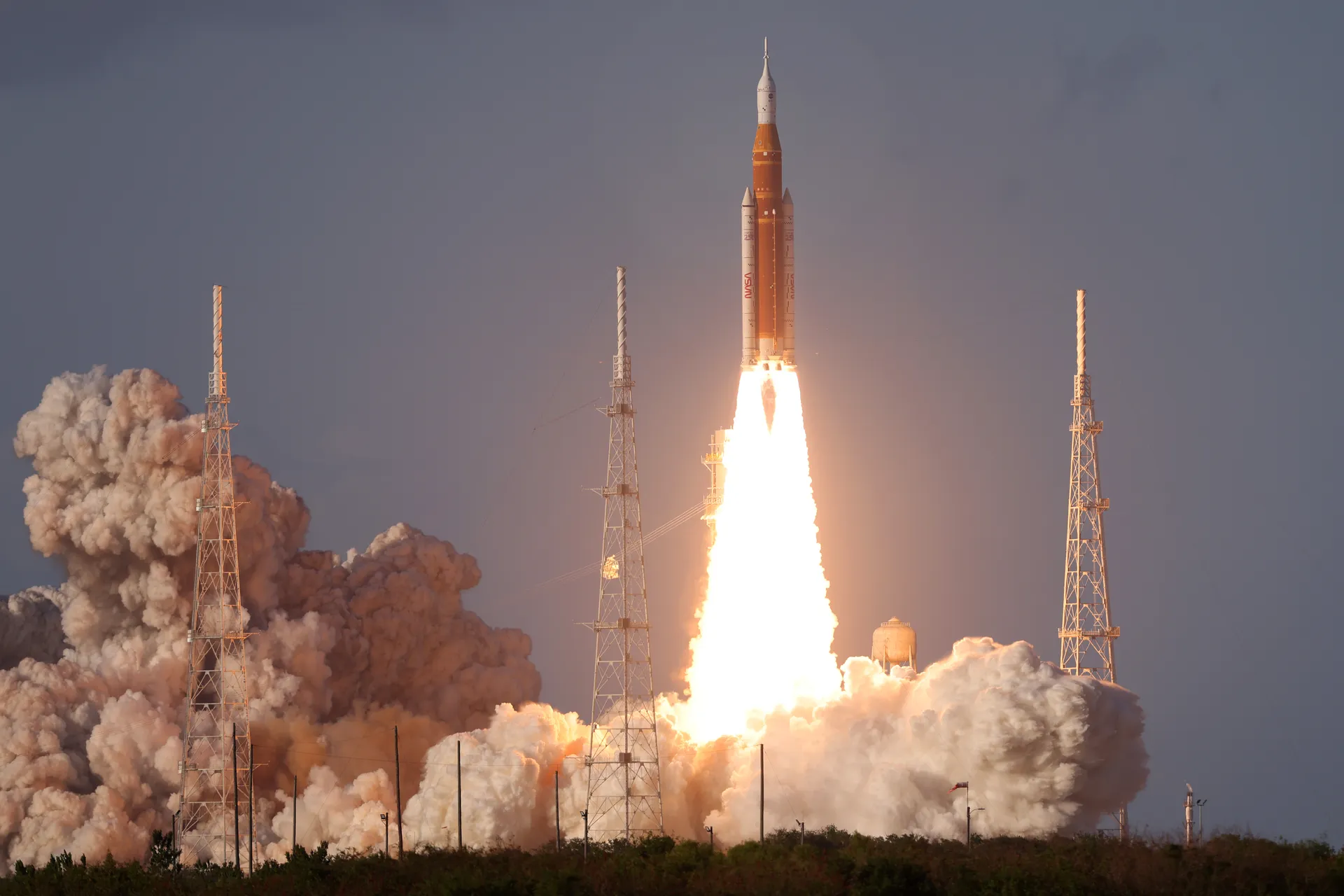
Three national programs depend on these rockets. Vulcan and New Glenn are two of the three rockets the Space Force has chosen for its most demanding national-security launches through 2032. New Glenn is to carry Blue Origin’s Blue Moon landers for NASA. And from Artemis V, planned for 2028, NASA’s Space Launch System is to fly with Vulcan’s upper stage, the Centaur V, on top.15,16
An American engine for both rockets
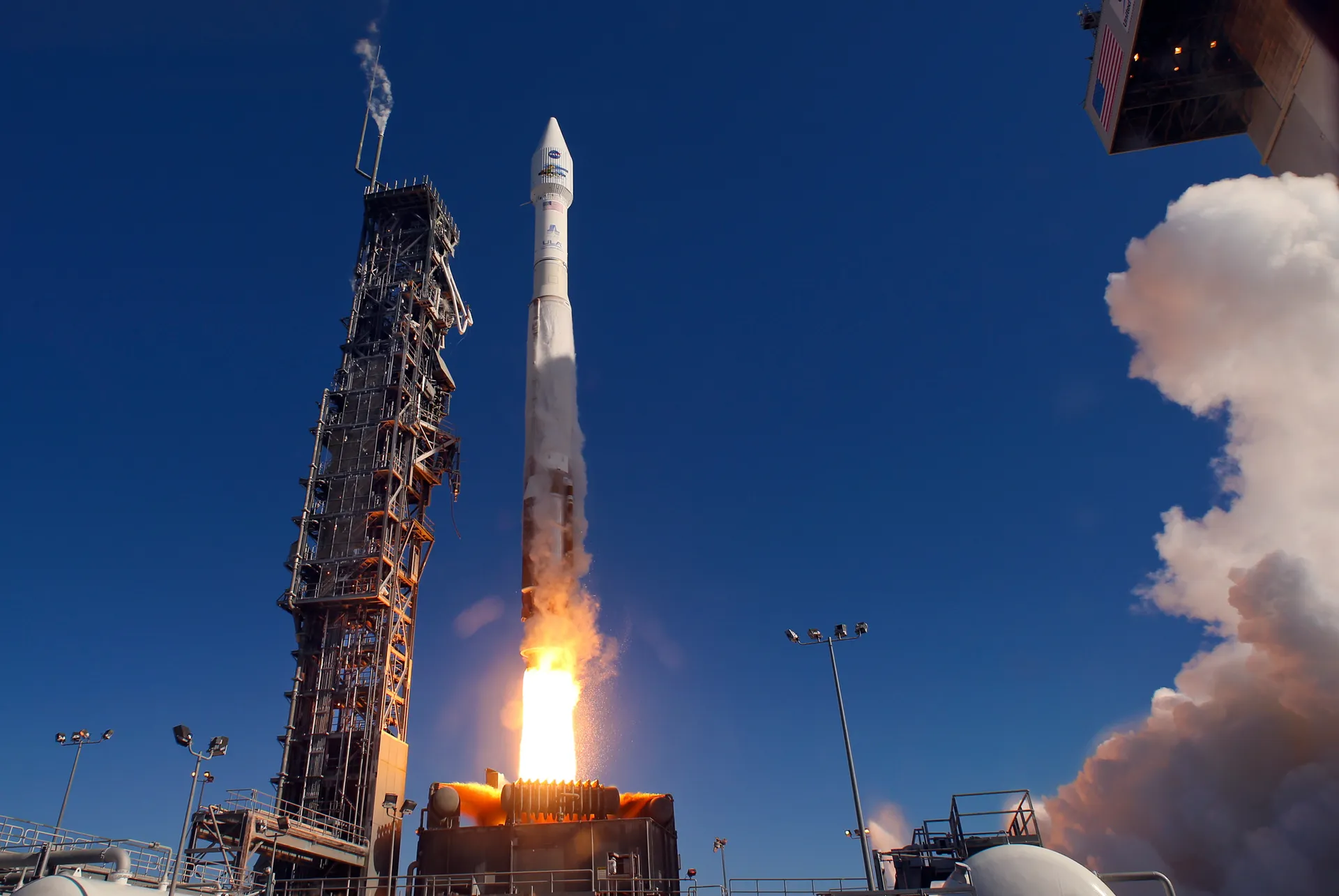
Vulcan replaced ULA’s Atlas V, whose first stage was powered by a Russian-made engine, the RD-180.2 Vulcan’s core stage instead uses a pair of BE-4 engines, which burn liquid methane and liquid oxygen and are manufactured by Blue Origin. Its Centaur V upper stage uses two RL10C engines, built by L3Harris, burning liquid hydrogen. Vulcan flies with zero, two, four or six strap-on solid rocket boosters, depending on how heavy the payload is and where it is going.1
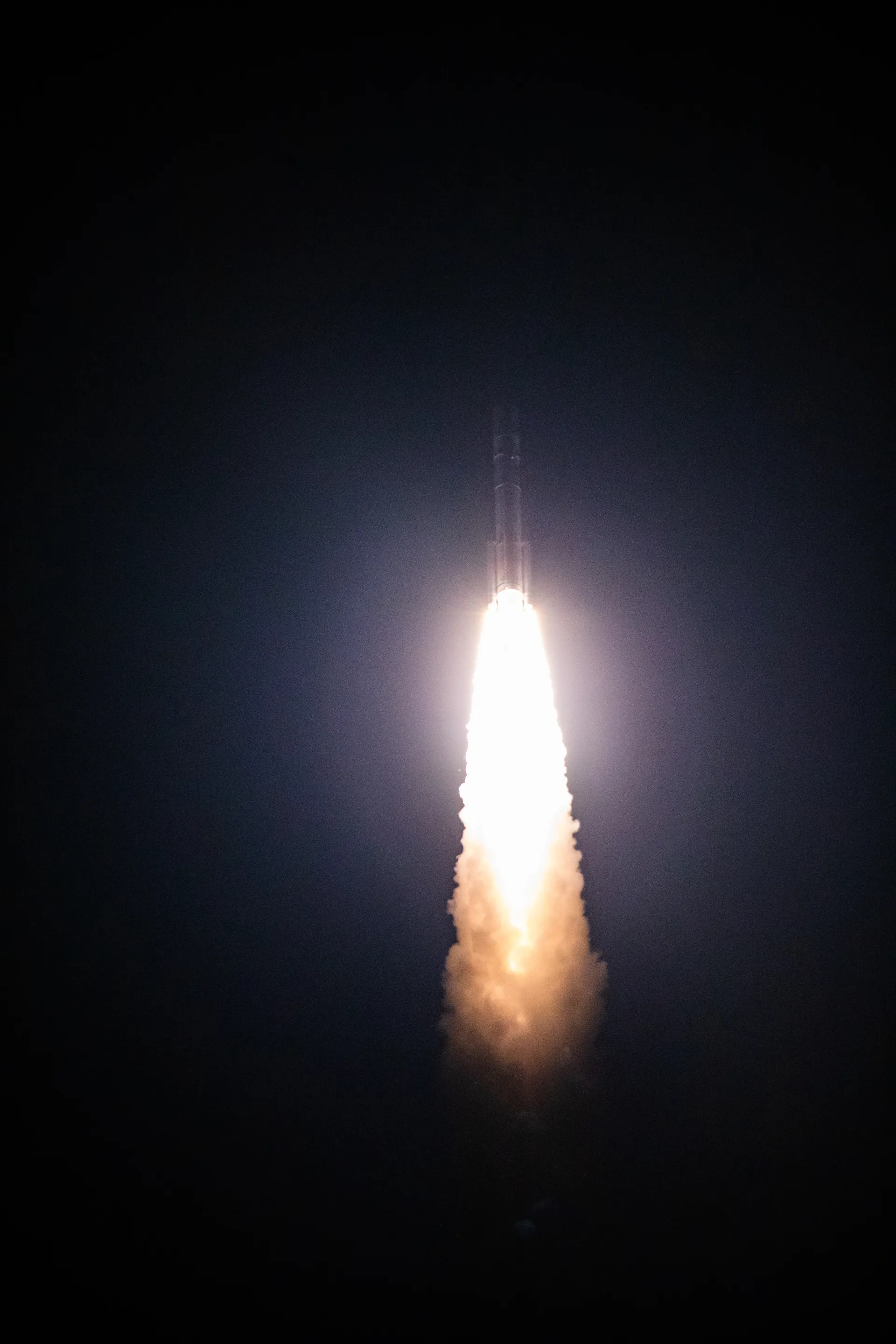
New Glenn is Blue Origin’s own heavy rocket, launched from Launch Complex 36 at Cape Canaveral. Seven BE-4s power its first stage, which is designed to land on a ship and fly again; its upper stage burns hydrogen in BE-3U engines.10,12
Every flight of Vulcan and New Glenn
January 8, 2024
Vulcan, Cert-14
First Vulcan launches Astrobotic’s Peregrine lander for NASA’s Commercial Lunar Payload Services.
October 4, 2024
Vulcan, Cert-25
Completes its mission, but a nozzle fails on one solid rocket booster.
January 16, 2025
New Glenn, NG-13
First New Glenn reaches orbit.
August 12, 2025
Vulcan, USSF-1063
First national-security mission, after the Space Force certified Vulcan in March 2025.
November 13, 2025
New Glenn, NG-29
Launches NASA’s twin ESCAPADE spacecraft toward Mars.
February 12, 2026
Vulcan, USSF-878
Payload delivered, but a second booster nozzle failure.
April 19, 2026
New Glenn, NG-310
First reflown booster lands again; upper stage leaves the satellite in the wrong orbit.
May 28, 2026
New Glenn, ground test11
Explodes during a static fire on Launch Complex 36.
Vulcan: certified in March 2025, paused in March 2026
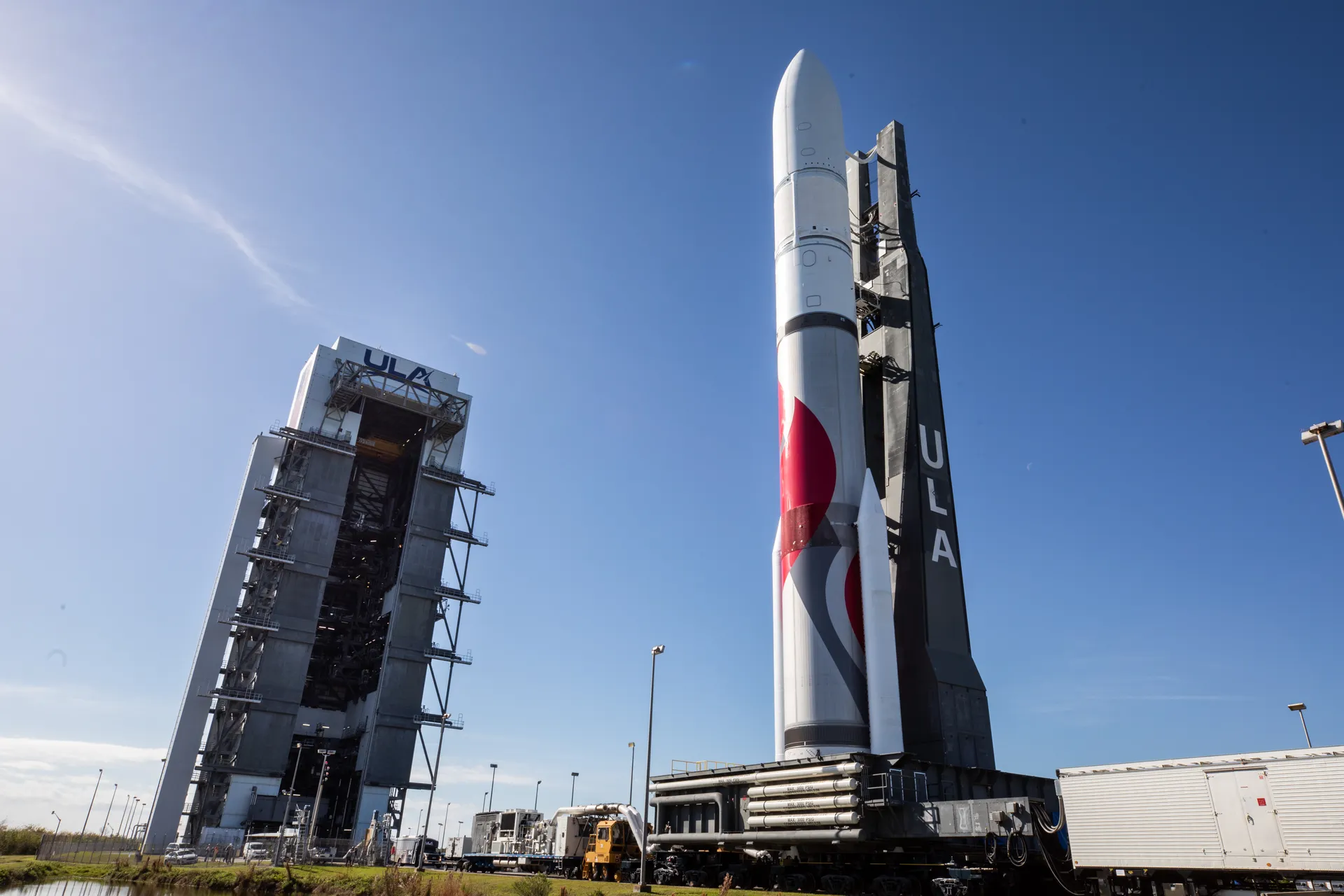
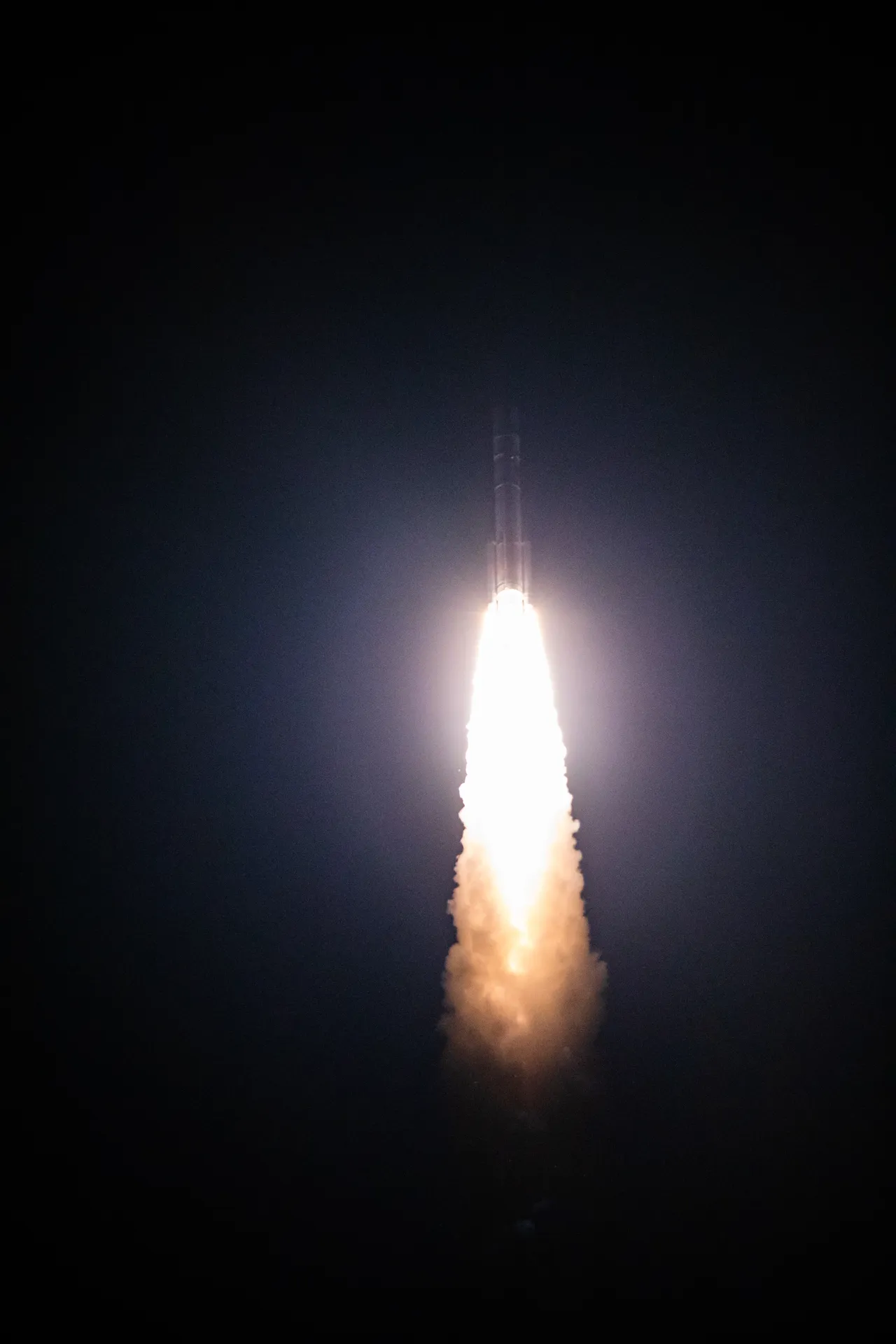
Vulcan’s first launch, at 2:18 a.m. on January 8, 2024, carried Astrobotic’s Peregrine lander, the first flight of NASA’s Commercial Lunar Payload Services initiative.4 Its second, in October 2024, reached orbit, but one of the Northrop Grumman GEM 63XL solid rocket boosters lost material from its nozzle. After analysis and hot-fire testing, the Space Force certified Vulcan for national-security launches in March 2025, and Vulcan flew its first such mission that August.3,5
On February 12, 2026, less than 30 seconds after Vulcan lifted off with the USSF-87 mission, one of its four boosters suffered what Spaceflight Now described as a possible burn-through of a nozzle. The rocket rolled noticeably as it pitched over, but the boosters separated normally and the Centaur delivered the payload. It was the second such booster problem in four Vulcan flights.5,8
By early March the Space Force had said it would stop flying national-security missions on Vulcan. “Until the anomaly is resolved, the U.S. Space Force will not launch national security space missions aboard the Vulcan launch vehicle,” said Col. Eric Zarybnisky. ULA had a backlog of about 25 Defense Department missions assigned to Vulcan, some already years late, and the Space Force could shift some of them to SpaceX, as it already had for some GPS launches.6 In April it was weighing whether Vulcan could fly lower-energy missions with no solid boosters at all while the investigation continued.7 Northrop Grumman test-fired a GEM 63XL on April 15, demonstrating nozzle design changes that were already in work, and ULA has said it aims to return Vulcan to flight by the end of the year.8,12 Through the end of September it had not flown again.3
NASA has its own reason to watch. ULA built the interim upper stage that sends Orion toward the Moon on SLS, then retired that production line to build Vulcan. With the more powerful Exploration Upper Stage canceled, NASA approved a sole-source approach in March 2026 to buy Vulcan’s Centaur V instead, for SLS missions after Artemis IV. The Centaur V is comparable in size to the old stage and shares its avionics and software; according to NASA officials, fitting it will take relatively minor changes, such as moving a propellant umbilical line a few feet down the launch tower.16
New Glenn: a reflown booster in April, an explosion in May
New Glenn reached orbit on its first flight, in January 2025. Its second, on November 13, 2025, launched NASA’s ESCAPADE mission: two small spacecraft built by Rocket Lab that are to orbit Mars and study how the solar wind strips away its atmosphere. NASA’s Launch Services Program bought that launch under its Venture-class Acquisition of Dedicated and Rideshare contract. The acting NASA administrator, Sean Duffy, tied the flight to the Moon program: “Every launch of New Glenn provides data that will be essential when we launch MK-1 through Artemis.”9
On April 19, 2026, New Glenn flew a first stage for the second time; it had flown on the ESCAPADE launch, and Blue Origin had replaced all seven of its engines. The booster landed on its ship again. But the upper stage suffered a thrust problem, which the FAA later traced to a cryogenic leak that froze a hydraulic line, and Blue Origin said the AST SpaceMobile satellite it carried had been placed “into an off-nominal orbit.”10,11
An explosion on Launch Complex 36
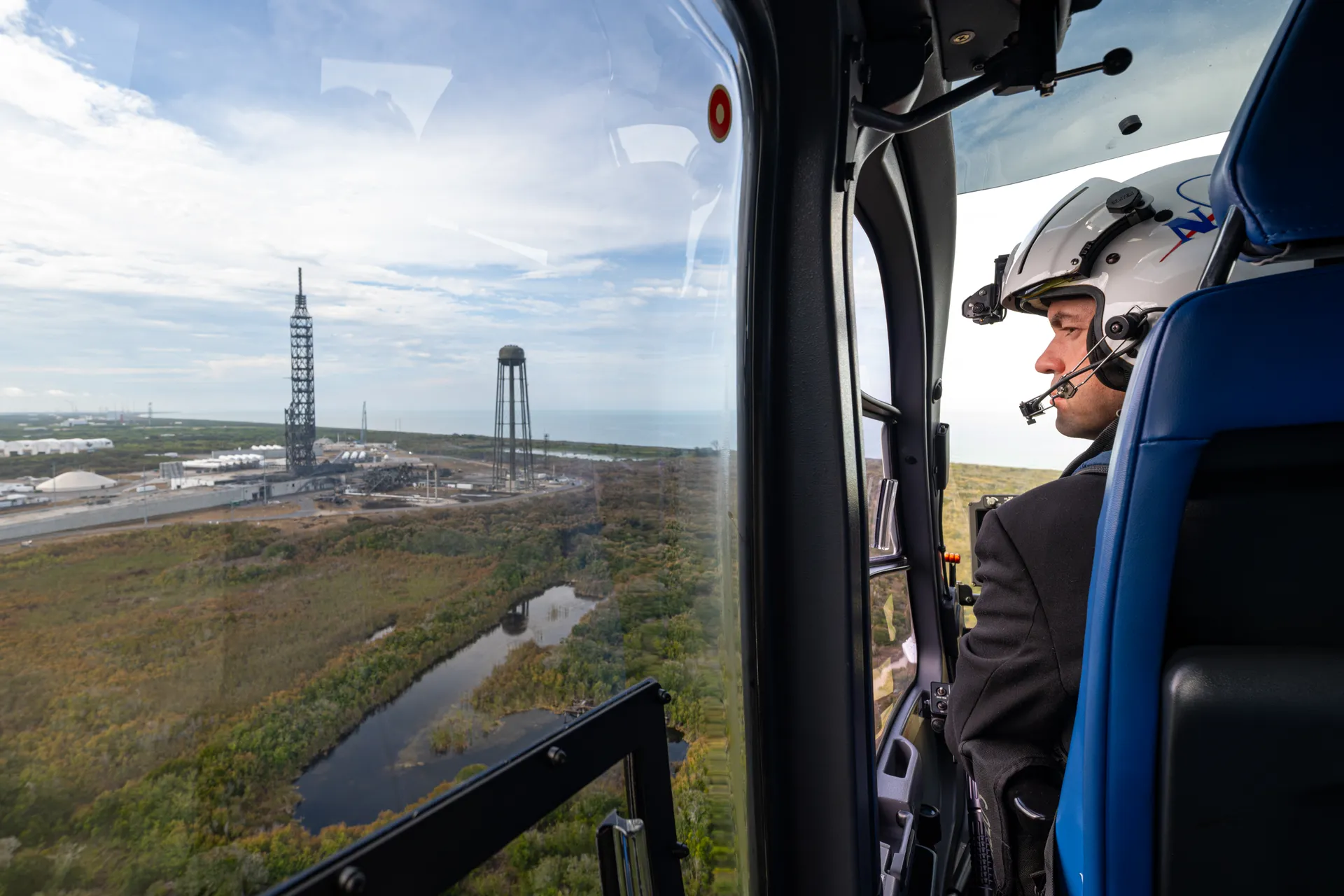
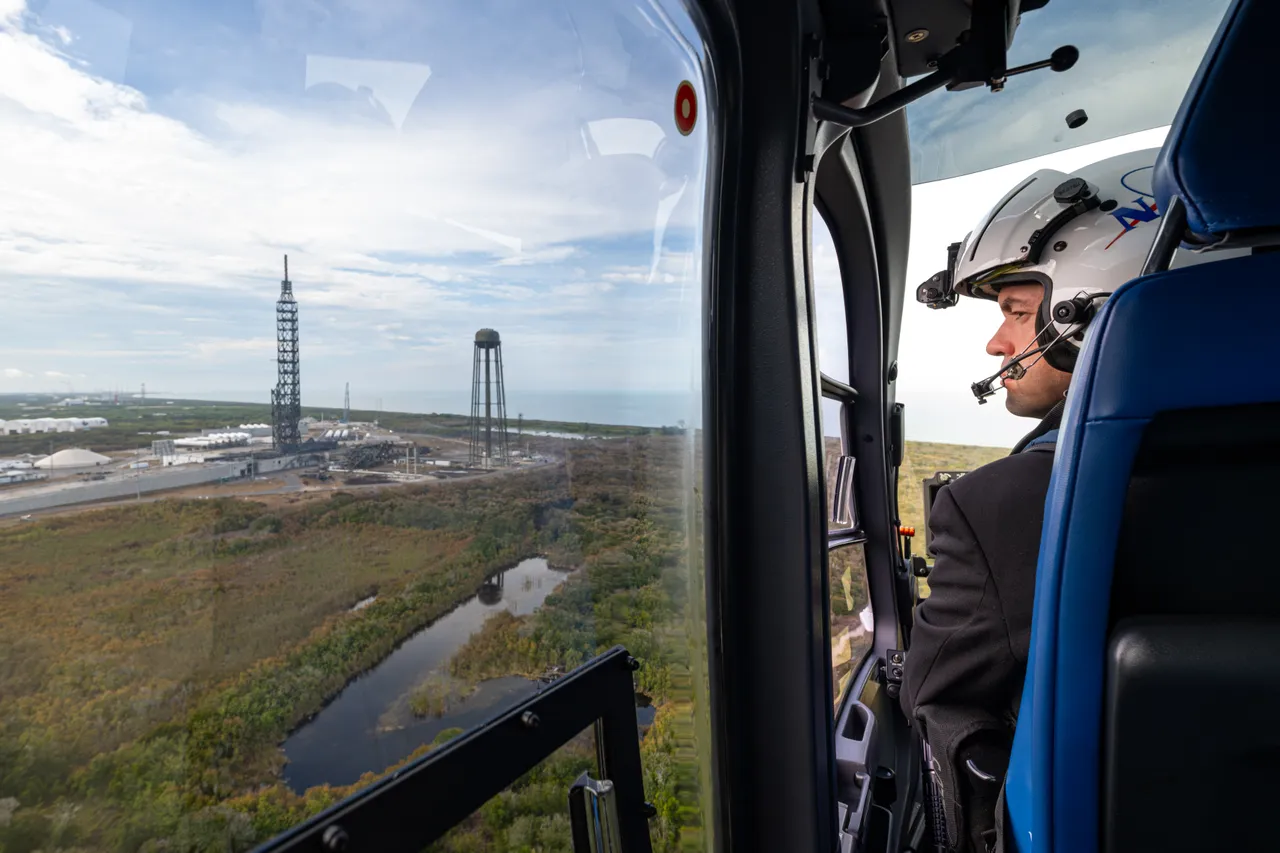
NASA Administrator Jared Isaacman surveys Launch Complex 36 by helicopter on May 29, 2026, the day after the New Glenn explosion.
At 9 p.m. on May 28, 2026, a New Glenn exploded during a static-fire test on Launch Complex 36, the engine firing that precedes a launch. It was being prepared to launch Amazon Leo internet satellites on June 4, the first of 24 New Glenn launches Amazon had bought; the satellites had not yet been brought to the pad. No one was hurt. The explosion appeared to destroy at least one lightning-protection tower and the transporter-erector that raises the rocket. Jeff Bezos, Blue Origin’s founder, wrote: “Very rough day, but we’ll rebuild whatever needs rebuilding and get back to flying.”11 NASA’s administrator flew over the pad the next day.13
In August Blue Origin traced the explosion to the main oxygen valve on one of the seven BE-4s. “We’re making small modifications to the valve that can be quickly retrofitted to existing engines,” said its chief executive, Dave Limp. Because Vulcan uses the same engine, ULA said Blue Origin would modify its BE-4s too, at ULA’s factory in Decatur, Alabama, and at Cape Canaveral. Blue Origin is rebuilding the pad around a new way of assembling the rocket and aims to fly New Glenn again before the end of 2026.12,16
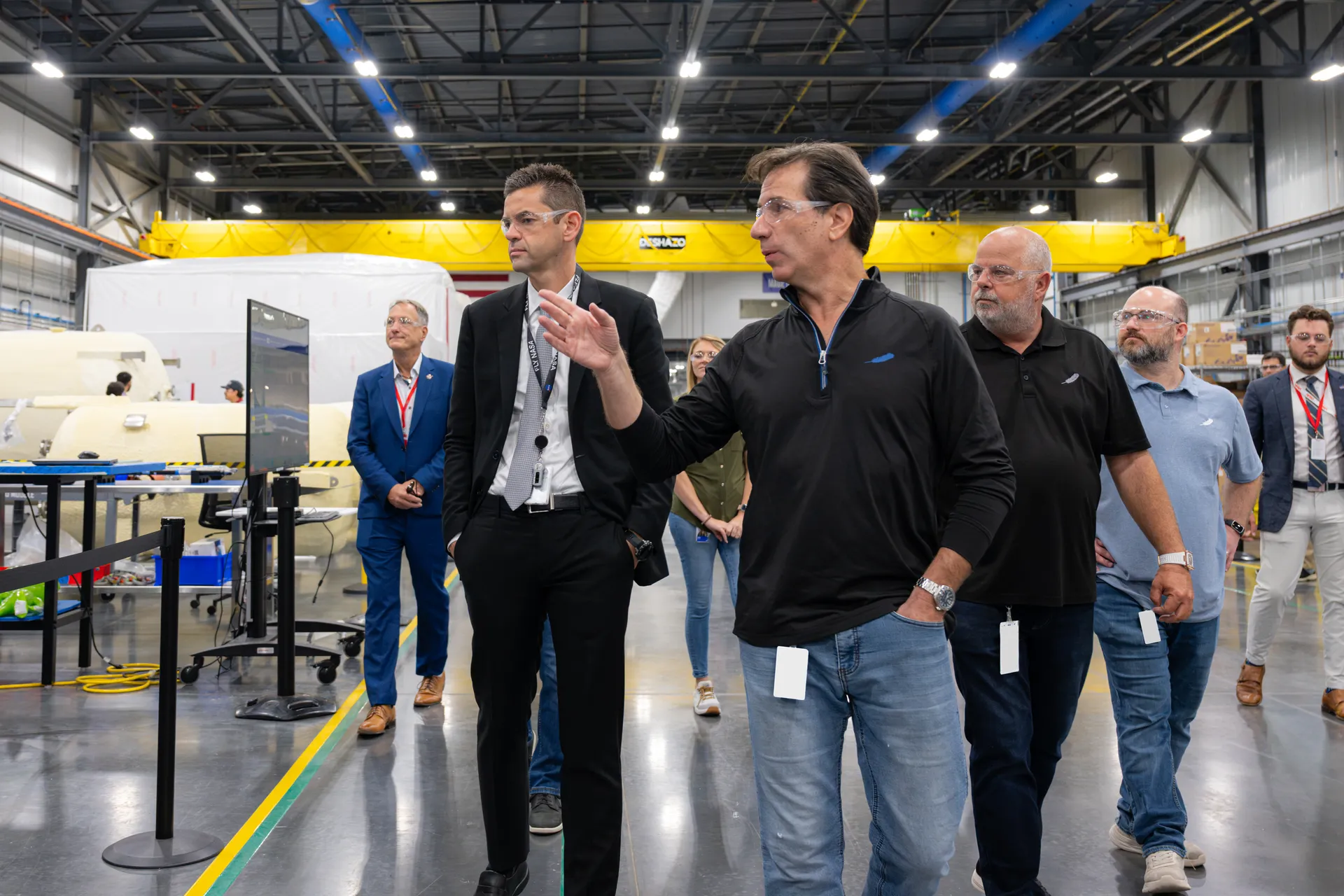
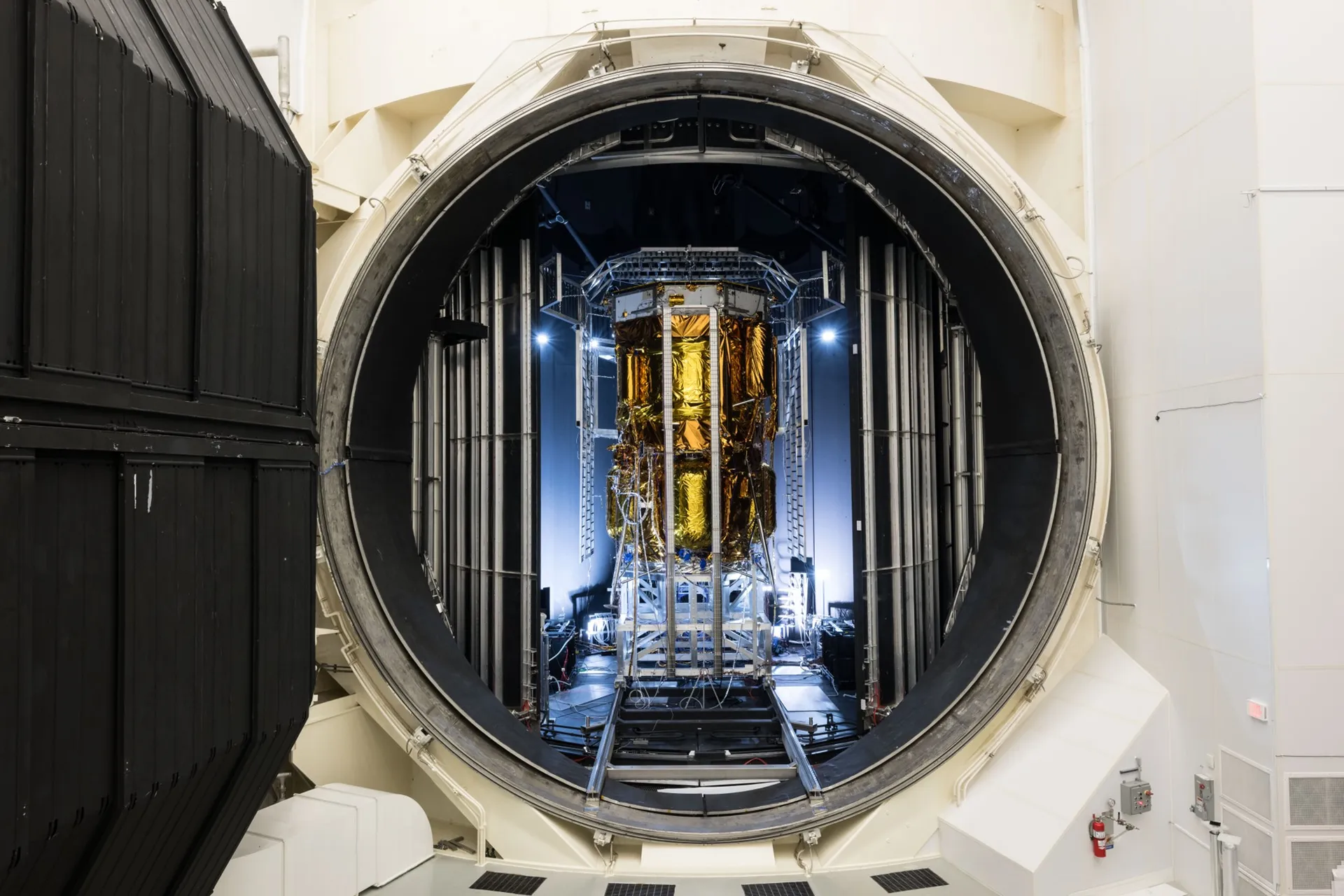
NASA’s plans run through the rocket. Blue Moon, the 52-foot lander Blue Origin is building for NASA under a $3.4 billion contract awarded in May 2023, is to launch on New Glenn from Cape Canaveral. Its BE-7 engines burn liquid hydrogen and liquid oxygen, and like SpaceX’s lander it depends on refueling: Blue Origin plans to put a transporter into low Earth orbit as a depot, fill it from a fleet of refuelers, and use it to fuel the lander for the trip to lunar orbit.18,19 GAO reported in July 2026 that Blue Origin had completed thermal-vacuum testing of its first, uncrewed Mark 1 cargo lander in a NASA chamber, and that NASA was tracking the risk that immature propellant storage and transfer technology could delay later Artemis missions.16
For the 2027 Artemis III test in Earth orbit, Blue Origin’s lander test article is to launch first and wait in orbit for up to 30 days for Orion and its crew.17
On September 29, 2026, NASA added a larger version, New Glenn 9×4, to its NASA Launch Services II contract, making it available for future NASA missions. The addition is not an order: NASA did not assign it a mission.14
Fifty-four national-security launches split three ways
On April 4, 2025, the Space Force awarded the second lane of its third National Security Space Launch competition: about $13.7 billion for an expected 54 launches to be ordered over five years and flown from fiscal 2027 to 2032. SpaceX was to receive 28, ULA 19 and Blue Origin 7. Lane 2 is for the heaviest and most critical payloads; providers must be able to launch from both the East and West coasts, place satellites directly into geosynchronous orbit and support vertical integration of payloads. Blue Origin had flown New Glenn once when the award was made.15
- 54
- National-security launches expected under Lane 2, fiscal 2027–203215
- 28 · 19 · 7
- Launches for SpaceX, ULA and Blue Origin15
- ≈25
- Defense missions waiting on Vulcan when it was paused6
- 4 · 3
- Vulcan and New Glenn launches through September 20263
Since early March 2026 the only one of the three able to fly those missions has been SpaceX’s Falcon 9. Both of the others say they will be back before the year ends, and the BE-4s on both rockets are getting the same valve fix. In mid-September a Space Force acquisition official said ULA was preparing to return Vulcan to flight with an Amazon Leo mission, and that the Space Force would review that flight before clearing Vulcan for national-security launches again.6,8,12,20
Sources
The text above is drawn from these 20 sources. Government works are adapted closely; company and press material is summarized. Numbers in the text point here. Last checked October 1, 2026.
Show all 20 sourcesShow fewer
- 1Back to the text
- 2Back to the text
- 3Back to the text
- 4Back to the text
- 5Back to the text
- 6Back to the text
- 7Back to the text
- 8Back to the text
- 9Back to the text
- 10Back to the text
- 11Back to the text
- 12Back to the text
- 13Back to the text
- 14Back to the text
- 15Back to the text
- 16Back to the text
- 17Back to the text
- 18Back to the text
- 19Back to the text
- 20Back to the text
Continue
Related stories
- Blue MoonIn May 2023 NASA awarded Blue Origin a $3.4 billion contract for a second way to land astronauts. The smaller robotic Blue Moon, Mark 1, is built and tested, and is waiting for New Glenn to fly again.
- Falcon 9NASA paid for milestones, not a rocket of its own design. The result now flies half the world’s launches and every American crew to orbit.
- Space Launch SystemCongress wrote SLS into law in 2010, with Shuttle engines and boosters and a 2016 goal. It first flew in 2022, at an estimated $4.1 billion a launch with Orion, and in 2026 NASA stopped upgrading it.