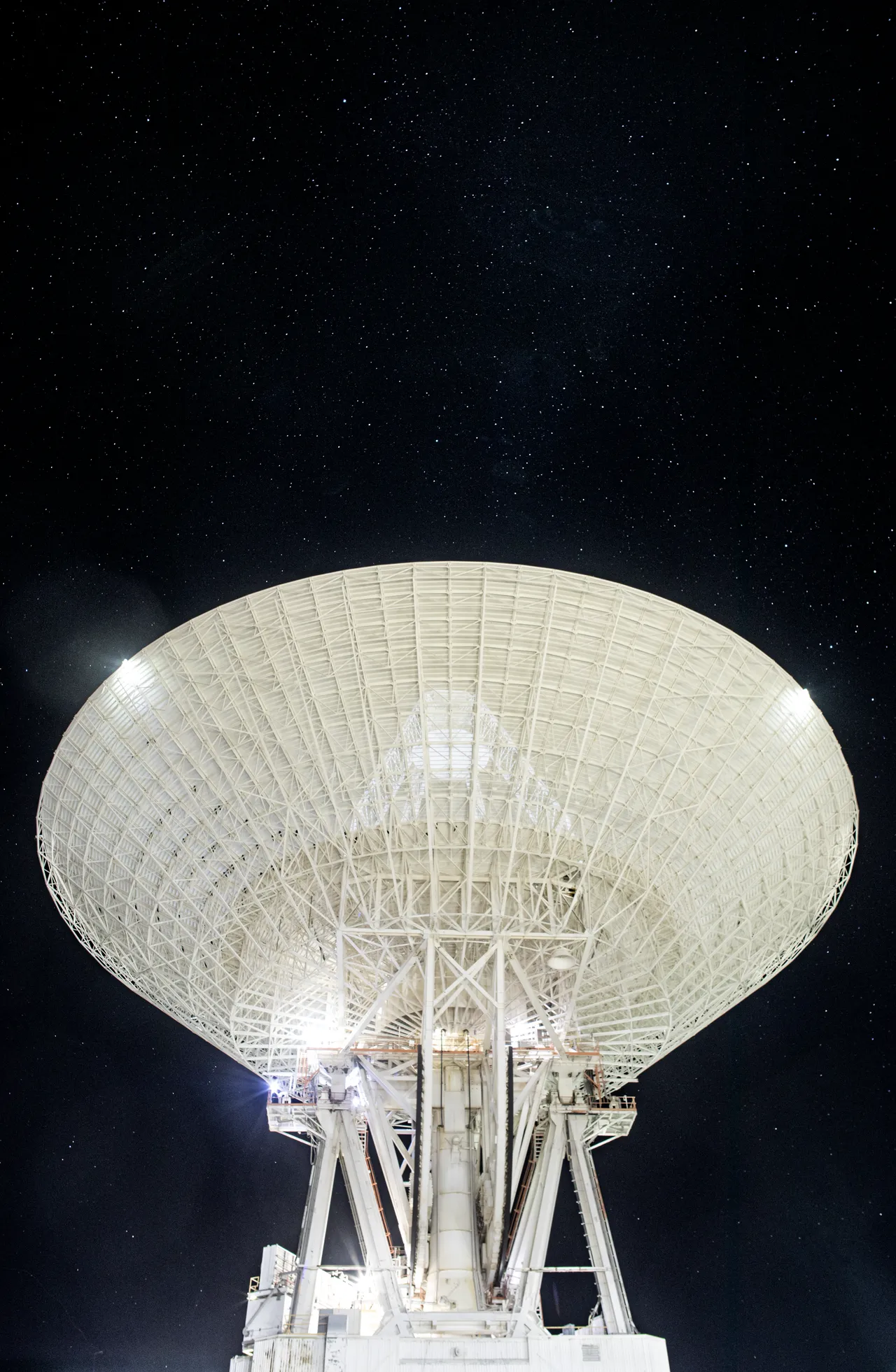
Deep Space Network antenna
One of three 70-meter dishes in NASA’s Deep Space Network, the largest antennas it uses to send commands to spacecraft beyond the Moon and receive their data.
- Status
- Operating
- In service since
- 1966
- April
- Size
- 70 m
- 230 ft
- Built by
- NASA
- 3
- sites: Goldstone, Madrid and Canberra
- 70 m
- the largest dishes, one at each site
- 2028
- Goldstone’s 70-meter dish expected back in service, after a 2025 accident
The Deep Space Network has three complexes about 120 degrees apart in longitude—at Goldstone in California, near Madrid and near Canberra—so that every spacecraft beyond the Moon is always in view of at least one. Each has a 70-meter antenna and several 34-meter ones.
The three big dishes were built 64 meters across, Goldstone’s first, in 1966, and all three were enlarged to 70 meters in 1987 and 1988 to keep in contact with Voyager 2 as it flew past Neptune. Canberra’s, DSS-43, is the only antenna on Earth that can send commands to Voyager 2, and Goldstone’s, DSS-14, is also NASA’s Goldstone Solar System Radar, used to observe asteroids that come close to Earth.
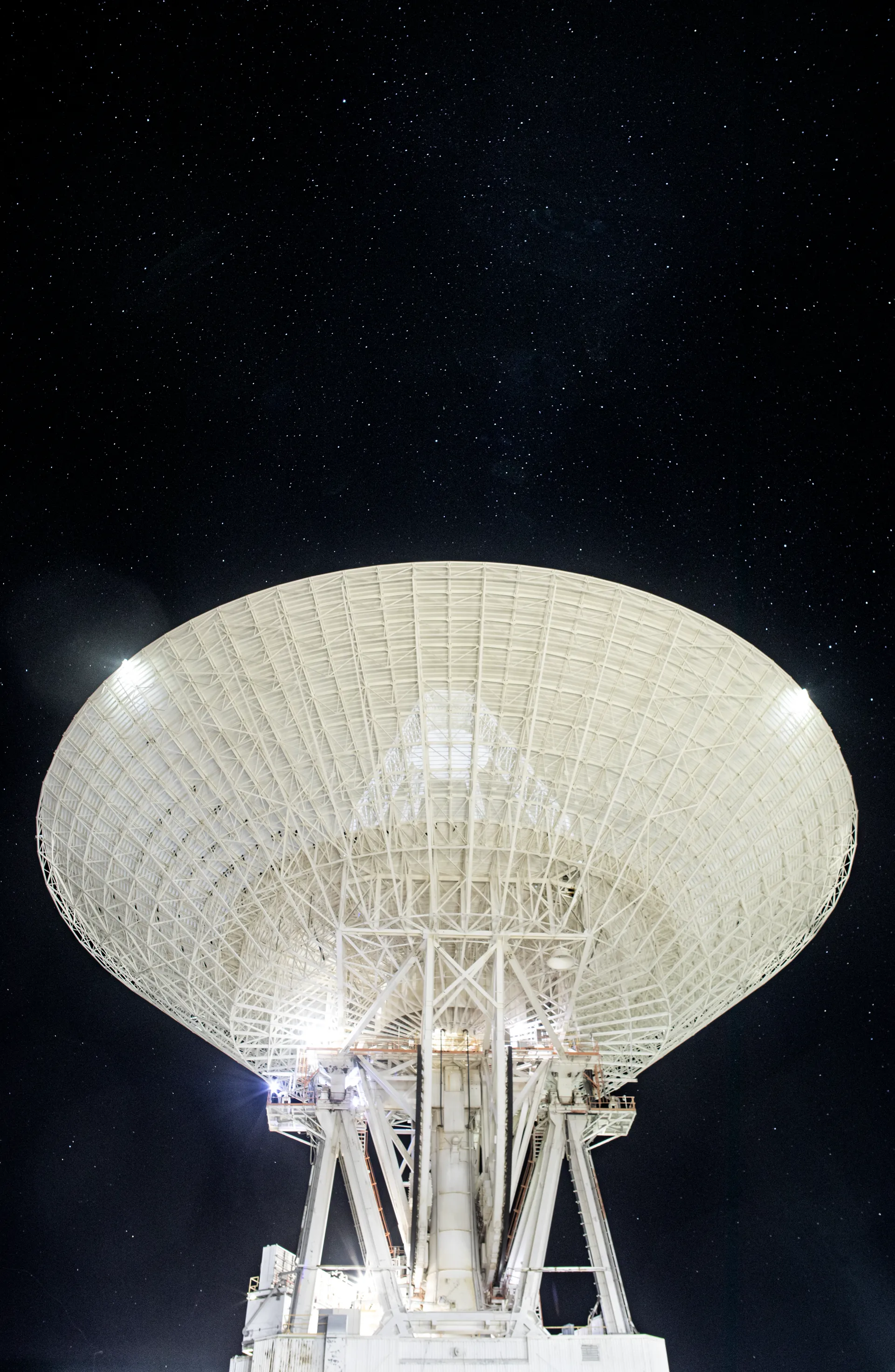
Goldstone’s 70-meter antenna has been out of service since September 16, 2025. While tracking the Juno spacecraft it rotated beyond its safe range, straining its cables and structure, and damaged fire-suppression lines flooded the facility. NASA estimated the repairs at $4.1 million to $4.6 million, and its investigation board traced the mishap mainly to software weaknesses, human error and a hydraulic limit system that had failed unnoticed. The antenna is staying offline for repairs and for upgrades already planned, which NASA expects to finish by October 2028; in June 2026 NASA said the network’s other antennas were covering all tracking needs.