RS-25
The Space Shuttle main engine, reused on SLS: four per rocket, expended each flight.
- Type
- Engine
- Status
- Flying
- Size
- 4.3 m (14 ft)
- 135
- Space Shuttle missions powered, 1981–2011
- 16
- Shuttle-era engines adapted for the first four SLS flights
- 24
- new engines under contract with L3Harris
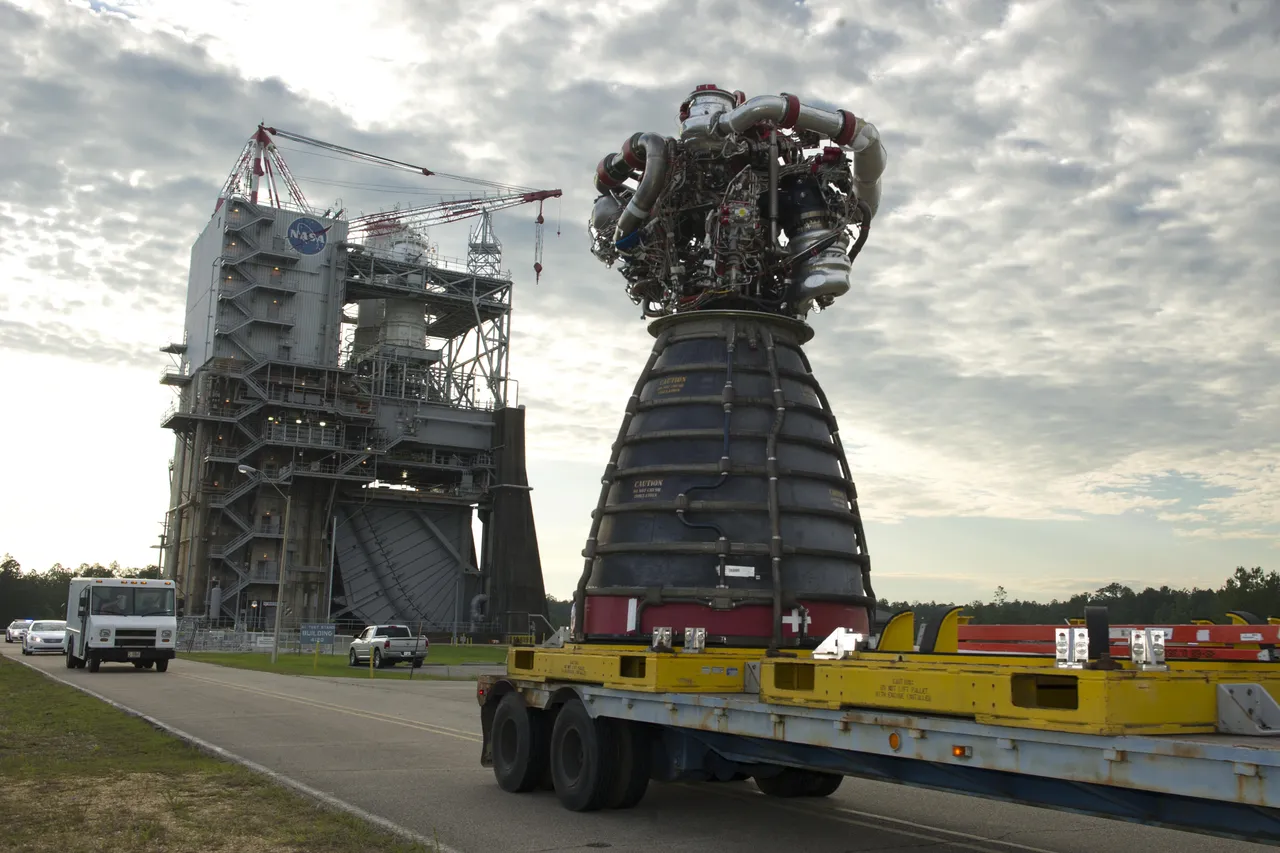
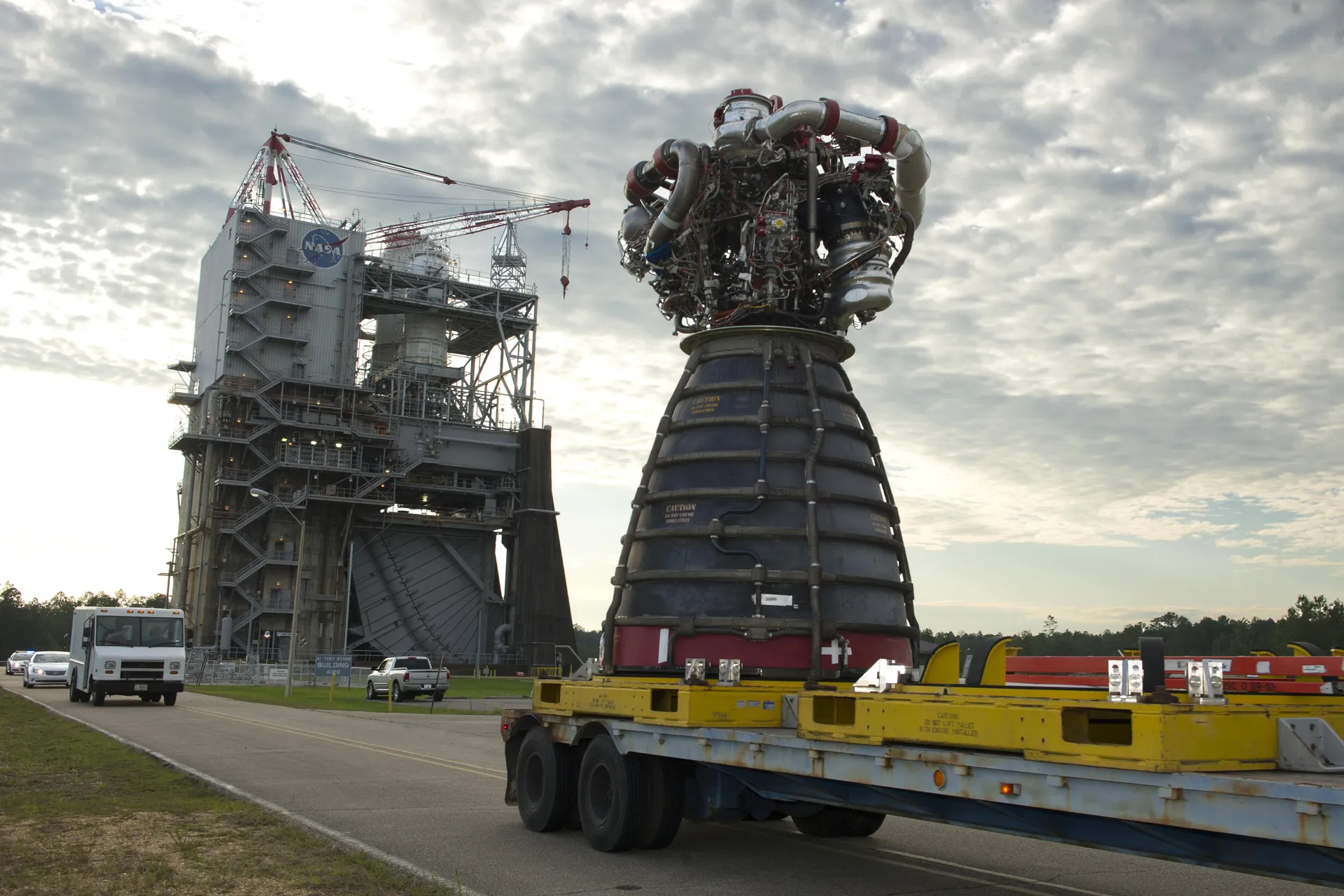
The RS-25, formerly the Space Shuttle main engine, burns liquid hydrogen and liquid oxygen. Three were mounted at the back of each Shuttle orbiter, and the engine powered the Shuttle for more than three decades and 135 missions. NASA calls it one of the most tested large rocket engines in history, with more than 3,000 starts and more than 1 million seconds of ground-test and flight firing time.
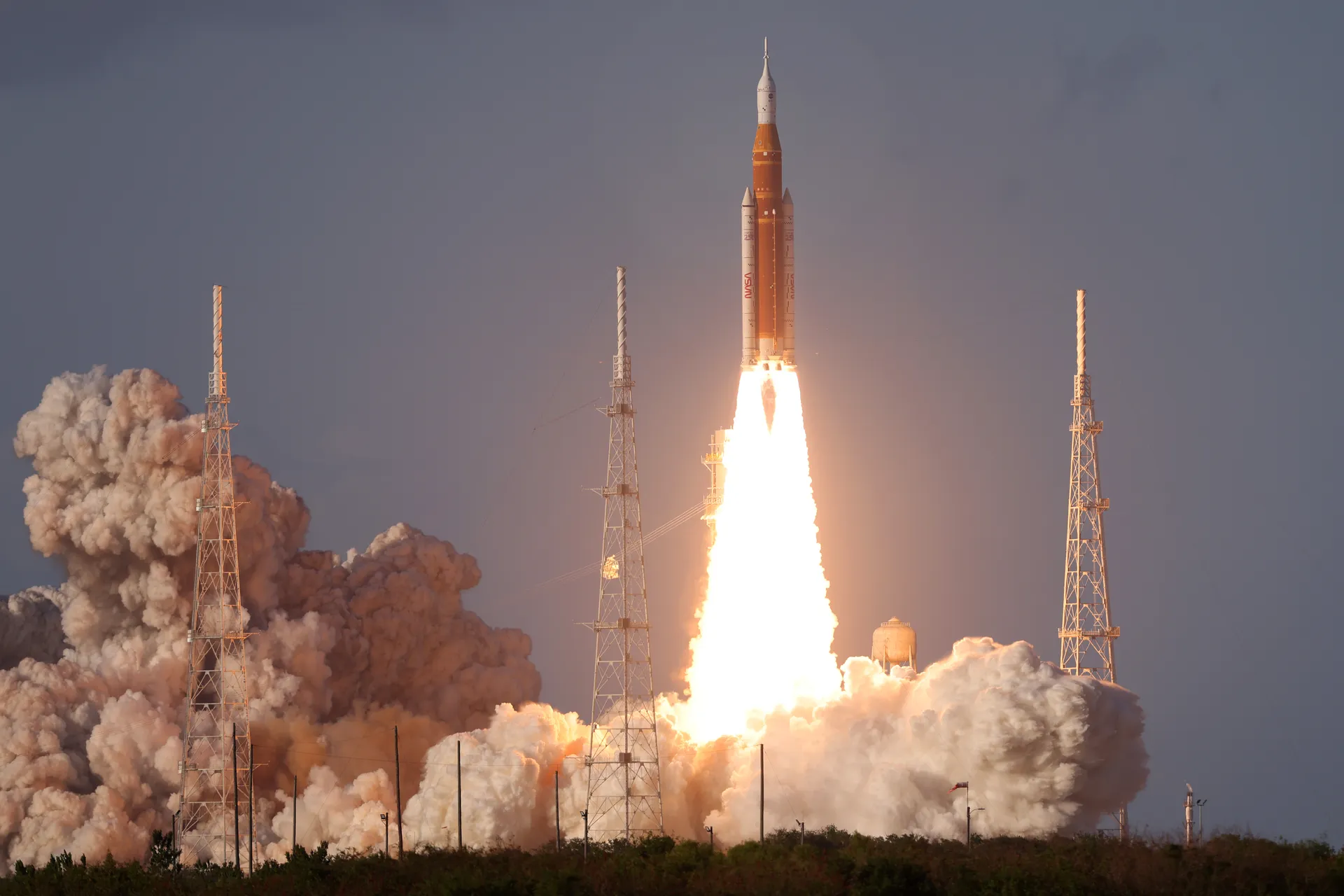
Four RS-25s power the core stage of NASA’s Space Launch System, producing more than 2 million pounds of thrust. The SLS program began with 16 flight engines transferred from the Shuttle program—enough for the first four flights—and fitted them with new controllers and added insulation to run at 109 percent of their original rated thrust. On SLS the engines are not recovered; they are lost with the core stage after each launch.
Aerojet Rocketdyne, now part of L3Harris Technologies, is building 24 new RS-25s with a simplified design and new manufacturing methods such as 3D printing, aiming to cut cost by 30 percent compared with the Shuttle engine. NASA finished certification testing of the new-production engine in April 2024 and has said the first new engines will fly on Artemis V.
Read more about RS-25
Sources
- 1
- 2
- 3
- 4